
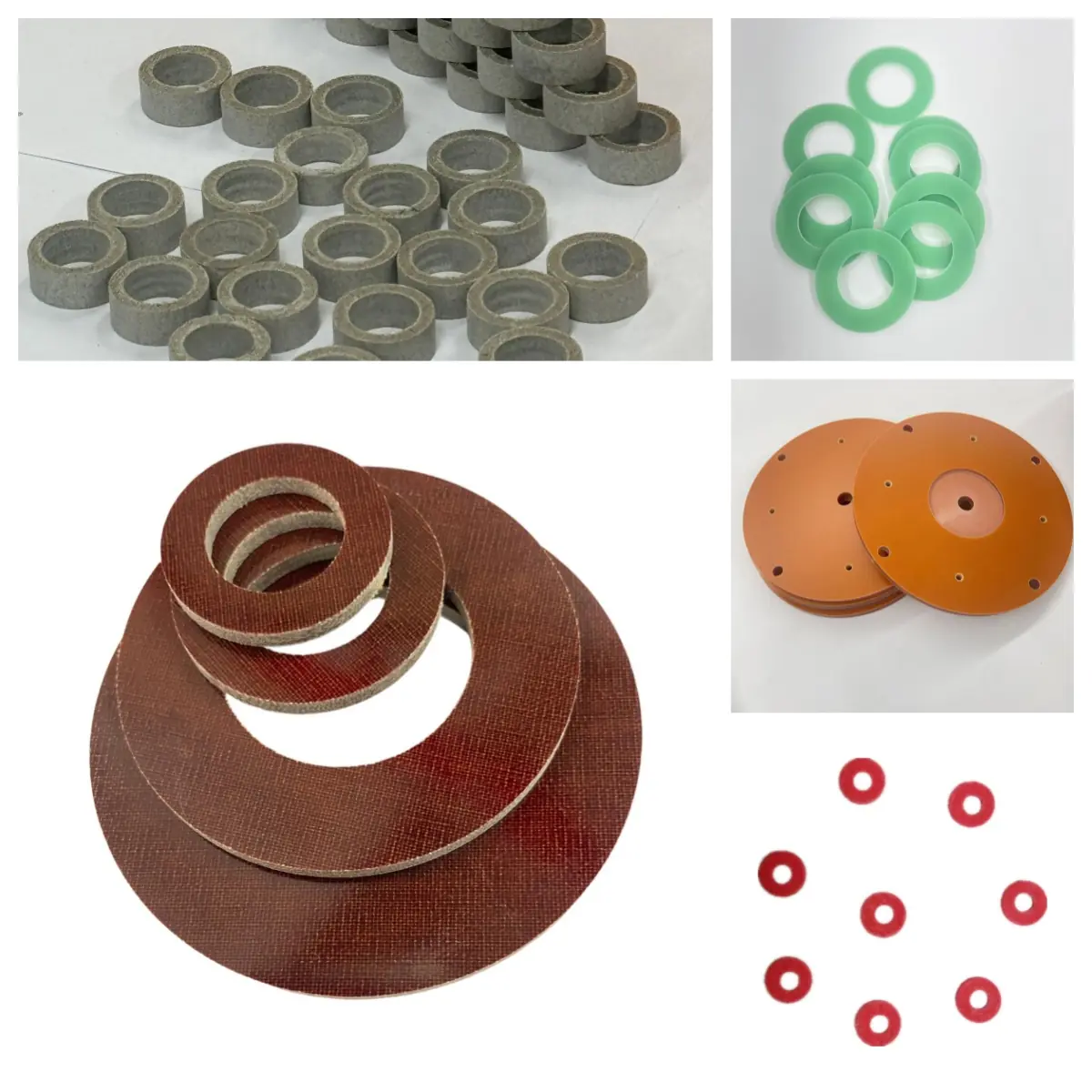
The smallest components in today’s electrical and industrial systems can affect the safety, reliability, and performance of systems. These essential components include insulation washers, which are special fastening accessories that are used to provide electrical isolation, protect surfaces, enhance assembly stability and to minimize vibration levels in electrical and mechanical assemblies.
Insulation washers can also be used to avoid unwanted electrical conductivity between parts and are more than just another type of metal washer that is used to distribute load. Insulation washers form a non-conductive layer between fasteners and the surrounding material, thereby reducing or eliminating the chances of electrical leakage, short circuits and unexpected current paths that could impair equipment performance.
Insulation washers also helps protect surfaces by protecting them from damage due to direct metal-to-metal contact, in addition to electrical insulation. They also help to improve the stability of the assembly by distributing mechanical loads more evenly, and by reducing wear and loosening that can occur in dynamic environments due to vibration.
The demand for high-performance insulation materials is on the rise as more and more industries transition to high-voltage systems, the use of sophisticated electronics, renewable energy infrastructure and electric vehicles. Today’s advanced usage often demands materials with multiple properties, including electrical, mechanical, thermal and environmental, that are difficult to achieve with traditional insulating materials.
This increasing need has prompted the use of improved composite materials like epoxy fiberglass laminate (G10 and FR4). They are highly resistant to electrical, physical, temperature and environmental stresses and are an excellent insulator for washers requiring long-term reliability.
As electrical systems grow more complex, and the need for high performance becomes ever greater, insulation washer has become an invaluable component, integral to the safety, efficiency and longevity of electrical operations.
Engineering of Composite Insulation Material
Modern insulation washers rely strongly on their advanced composite materials construction. One of the most commonly used materials is epoxy fiberglass laminate, which is an engineered composite with superior electrical insulation and mechanical strength.
These materials are based on fiberglass reinforcement systems. A multi-laminar woven fiberglass cloth provides a very strong internal structure to withstand mechanical stress, impact and compression. These fiberglass layers offer dimensional stability and strength in challenging operating environments.
The reinforcement layers are dipped in epoxy resin to convert fiberglass to a high performance composite. An epoxy is used as a bonding material and as a protective matrix, providing improved electrical insulation properties, moisture resistance and chemical resistance. After cure, epoxy resin forms a solid, even material, securely fusing the layers of fiberglass.
Curing processes are carefully controlled, using both heat and pressure to ensure the manufacturing process is performed correctly. Resin-saturated fiberglass sheets are under high temperature and high pressure during the production process. This process removes air pockets, provides full resin penetration and produces a dense laminate with very consistent performance.
Epoxy fiberglass laminates are used in many ways and are comprised of a number of industrial grade materials, including the G10 and FR4. G10 is known for its high mechanical properties and very good electrical insulating performance, while FR4 has been enhanced with flame-resistant additives for use in electrical applications.
These materials are categorized based on industry practice, which outlines the electrical, mechanical, thermal and safety performance requirements. They are known for their stability and reliability in diverse operating environments, which has led to their widespread use in many industries.
A combination of fiberglass reinforcement, state-of-the-art epoxy chemistry and precision manufacturing results in a material uniquely suited to insulation washer applications. This strength, durability and electrical properties combination is the reason why epoxy fiberglass composites are still widely used in today’s electrical systems.
Critical Performance Features for Electrical Insulation Components
Electrical Insulation Performance
The principal role of an insulation washer is to insure a good electrical separation of conductive parts. Unintended current paths can cause serious safety issues, damage equipment, and cause a failure of operation in electrical assemblies.
Epoxy fiberglass laminates boast an unusually high electrical resistance, or dielectrics, and can resist significant voltage without breaking down. This property renders them suitable for uses where separation of the electricity must be maintained under difficult operating conditions.
Insulation washers are used to prevent leakage currents and stray currents, helping to protect sensitive electronic systems and ensure the integrity of electrical circuits. They also have insulating properties that help prevent short circuits and expensive repairs or downtime.
High-performance insulation washers can be used in transformers, switchgear systems, battery assemblies or industrial control equipment to deliver reliable electrical isolation, ensuring long-term system reliability.
Structural Strength and Load Resistance
Many industrial applications require thermal insulation as well as electrical insulation. Fastening systems should also be able to resist mechanical load, vibration and continuous working stress.
Epoxy fiberglass insulation washers have a strong compression resistance and can work normally even under a large compression force. Unlike other softer insulating materials, fiberglass-reinforced composites do not change shape over time.
Long-term dimensional stability is especially critical in assemblies subjected to temperature changes, vibrations or cyclic loading. The performance of the component remains stable during its service life thanks to the fiberglass reinforcement structure which helps prevent cracking, warping and deformation.
This insulation and structural ability allows a composite insulation washer to be used as both an electrical and mechanical protection element in a complex system.
Thermal Resistance
Electrical systems can produce a lot of heat when running. Near components like transformers, motors, power electronics and high-current conductors, components must continue to perform in high-temperature conditions.
Epoxy fiberglass laminates have wide operating temperature range with excellent thermal stability. These have low thermal expansion properties which ensure dimensional stability and reduce thermal stresses arising from temperature changes.
This is particularly important in electrical assemblies where dimensional changes in the parts could affect alignment, press fit or insulation.
These materials are also able to handle regular thermal cycling cycles without major degradation and continuous exposure to heat. They can maintain mechanical and electrical properties at high temperatures, which is important for long-lasting performance.
Keep away from excessive moisture and chemicals. Avoid excessive moisture and chemicals.
Electrical components can be affected by the environment. Moisture can also affect the insulating properties, and oils, solvents and industrial chemicals can cause material degradation.
There are laminates that have low moisture absorption rates, such as G10 and FR4. Their dense composite structure is waterproof, which will help to maintain electrical insulation properties even when humidity or even in wet environments.
These materials also have high resistance to most industrial chemicals such as oils, fuels, cleaning agents and processing fluids. Chemical durability contributes to the maintenance of material integrity and contributes to the service life of materials in difficult operating conditions.
Another advantage is that it prevents corrosion. Insulation washers help extend the life of the system by helping to isolate metal parts and minimize moisture degradation.
Flame Resistance and Safety
Safety is a key issue in electrical products throughout industry. All materials in an electrical system should help to reduce fire risk and contribute to safe operation.
Epoxy fiberglass materials come in the very special FR4 grade that is formulated to deliver flame retardancy. These materials have a self-extinguishing effect which helps to prevent the spread of flame in the event of a fire starting from an ignition source.
This function helps to reduce the electrical fire risk and increase system safety. In applications where maximum protection is desired, such as battery installations, industrial control equipment and power distribution systems, flame resistant insulation washers are available.
Composite laminates have excellent electrical insulating, mechanical strength, thermal stability and fire resistance characteristics which help in achieving safer and reliable electrical assemblies.
Why Composite Laminates Are Ideal for Insulation Washer Applications
G10 and FR4 composite laminates have several properties which make them very suitable for use in insulation washer applications. One of their primary jobs is to contribute to the safer fastening and mounting systems. Electrical elements are frequently fastened to other assemblies and if the conductive hardware touches other assemblies in the immediate vicinity, it can create an unwanted electrical pathway.
Insulation washers are able to remove this risk by providing a secure insulating barrier. They have very good dielectric properties, which prevent short circuiting and electrical leakage which helps to protect sensitive electrical assemblies against damage. This form of protection is of particular importance in a system with a high voltage or high power content where electrical fault conditions can cause serious consequences.
Although the epoxy fiberglass laminates are very good at insulating, they are still light weight. They are also light weight which helps engineers to reduce the weight of their assembly without compromising on performance and strength. Moreover, there is excellent moisture, chemical, heat and mechanical resistance available with the composite insulators’ washers.
These characteristics lead to long term durability and reduce the need for maintenance and improve long term ownership costs. One other major advantage is the accuracy manufacturing compatibility. They can be produced with close tolerances and high quality with CNC machining and advanced fabrication methods. The precision ensures the dependable fit and performance of the critical electrical system.
These benefits combine for an ideal composite laminate solution in challenging industrial and electrical applications for insulation washers.
Industrial Applications of High-Performance Insulation Washers
Electrical Equipment Manufacturing
Insulation washers play a vital role in ensuring the safe and reliable functioning of electrical equipment in manufacturing processes.
Insulation washers are used in circuit breakers to isolate conductive parts and with mechanical fastening structure. They provide better electrical separation for enhanced system safety and performance.
Insulation washers are also widely used in the transformer industry. The components are electrically isolated from conductive parts and are resistant to heat and mechanical stresses produced during use.
High-performance insulation washers are used in various applications, including electrical panels, switchgear assemblies, busbar systems, and power distribution equipment. They are structurally strong and have a high degree of dielectric strength, which enables reliable long-term performance.
Renewable Energy Systems
The growing adoption of renewable energy technologies around the world has driven the demand for high-quality electrical insulation components. Materials that can withstand the harsh conditions of the environment are needed for solar power installations, wind turbines and battery storage systems.
During solar energy systems, insulation washers can be used to safeguard electrical connections from water, vibration and temperature changes. Wind turbine electrical assemblies also utilize high-performance insulating materials which are capable of enduring the constant mechanical forces.
Insulation washers are used in battery energy storage systems to electrically isolate conductive parts from each other and to keep the assembly together. They are reliable, which is essential for energy storage to be safe and efficient.
Electric Vehicle Industry
Advanced insulation materials are one of the fastest-growing applications for electric vehicles. As battery voltages continue to rise, the demand for electrical isolation in the EV system throughout the vehicle increases.As battery voltages continue to rise, the need for reliable electrical isolation throughout the vehicle also rises.
Typical applications for insulation washers include battery mounting systems, power electronics, charging systems, and high voltage electrical assemblies. They help prevent short circuits and electrical leakage directly to boost vehicle safety.
Epoxy fiberglass laminate is also lightweight which helps to meet the objectives established by the automotive industry to save weight and increase efficiency in vehicles.
Aerospace Engineering
Materials with outstanding reliability and low weight are required for aerospace systems. Insulation washers are used to achieve electrical isolation within the electrical systems on aircraft, and to reduce the overall electrical system component mass.
Some applications include electrical fastening systems, avionics assemblies, power distribution networks and communications equipment. Vibration and thermal cycling resistance, as well as environmental resistance, help ensure long-term aerospace performance.
Heavy Industrial Machinery
Motors, pumps, compressors, automation equipment and electrical control systems are often used in industrial machinery, and they can all require reliable insulation solutions.
Insulation washers provide these systems with added protection against electrical faults and compliance with mechanical fastening. They are also durable, making them resistant to vibration, weight, and harsh operating conditions, which are typical for industrial facilities.
Marine Electrical Systems
Electrical systems in marine environments are subjected to extreme humidity, saltwater and corrosive environments. Epoxy fiberglass laminate insulation washers have high moisture resistance and corrosion resistance.
They are often found in marine electrical panels, marine navigation systems, communication equipment, and offshore electrical systems. They are able to operate under difficult environmental conditions, resulting in increased reliability and lower maintenance.
Comparing Insulation Washer Materials
When choosing the appropriate insulating washer material, a number of performance factors must be taken into account.
| Property | Epoxy Fiberglass (G10/FR4) | Nylon | Rubber | Phenolic | Ceramic |
| Electrical Insulation | Excellent dielectric strength for high-voltage applications | Good insulation for general-purpose use | Good insulating properties but may degrade over time | Reliable electrical insulation in industrial settings | Exceptional insulation even under extreme conditions |
| Mechanical Strength | Excellent load-bearing capability and structural integrity | Moderate strength suitable for light-duty applications | Low structural strength and prone to deformation | Good rigidity and mechanical support | High strength but can be brittle under impact |
| Thermal Resistance | Excellent stability at elevated temperatures | Moderate heat resistance | Moderate performance under heat exposure | Good resistance to temperature fluctuations | Outstanding performance in extreme temperatures |
| Moisture Resistance | Excellent resistance with very low water absorption | Good resistance in normal environments | Moderate resistance; may absorb moisture over time | Good moisture resistance | Excellent resistance to water and humidity |
| Chemical Resistance | Excellent protection against oils, fuels, and industrial chemicals | Moderate resistance to common chemicals | Moderate resistance depending on compound type | Moderate resistance in industrial environments | Excellent resistance to most chemicals and corrosive substances |
| Flame Resistance | Excellent, particularly FR4 grades with self-extinguishing properties | Moderate flame resistance | Moderate resistance but may deteriorate under direct flame | Good fire-resistant characteristics | Excellent non-combustible performance |
| Dimensional Stability | Excellent stability under mechanical and thermal stress | Moderate stability under changing conditions | Low stability due to flexibility and compression | Good dimensional consistency | Excellent dimensional retention across temperature ranges |
| Weight | Lightweight while maintaining high strength | Lightweight and easy to handle | Lightweight and flexible | Lightweight with good rigidity | Relatively heavy compared to composite materials |
| Machinability | Excellent CNC machining and fabrication capabilities | Easy to machine and customize | Easy to cut and shape | Good machinability for custom parts | Difficult and costly to machine due to brittleness |
| Service Life | Long lifespan with minimal maintenance requirements | Moderate lifespan in demanding environments | Moderate lifespan due to wear and aging | Good long-term durability | Long service life when protected from impact damage |
Epoxy fiberglass laminates are far more durable, higher temperature resistant and more dimensional stable than nylon and other plastics.
However, rubber washers are rather flexible but not particularly suitable in terms of structural strength or temperature resistance for use in high-stress electrical applications. Phenolic materials offer excellent insulation, but may not possess the same moisture resistance and mechanical strength as epoxy fiberglass composites.
While ceramic components provide high electrical and thermal properties, they are sometimes more challenging to make, heavier and more fragile. Epoxy fiberglass laminates offer a combination of electrical insulation, strength, lightweight construction, and ease of fabrication that makes them suitable for many applications.
Manufacturing & Precision Fabrication Methods
Today’s insulators are made with state-of-the-art fabrication processes that produce exact dimensions and uniform quality.
The CNC machining can make insulation washers, which have complex geometry and tight tolerances, to a high degree of accuracy. This allows consistency of production runs, without compromising the integrity of the material.
The precision drilling and cutting process allows to produce holes of custom size, outer diameters and thicknesses depending on the application requirement.
Epoxy fiberglass laminates are particularly desirable because of their excellent precision fabrication properties of dimensional stability and good machinability. These properties enable manufacturers to develop parts which adhere to tight engineering specifications.
Further, custom dimensions and thickness options offer versatility in design and can be specific to the electrical system. Tight tolerance production guarantees tightness, predictability and ease of installation.
With the capability to produce highly customized insulation components it was no surprise that epoxy fiberglass materials have been widely used in the modern industry.
Factors to Consider When Selecting Insulation Washers
Choosing the right insulation washer involves considering system needs and environmental factors.
One of the key factors to consider is voltage requirements. Materials with higher dielectric strengths are generally needed for higher-voltage applications in order to ensure a reliable electrical isolation.
The operating temperature should also be taken into account. Parts that will be exposed to higher temperatures should use materials that will not be adversely affected by the heat.
Material selection is also affected by mechanical load conditions. For applications where there is considerable compression, vibration, or impact, washers should have high compression resistance and dimensional stability.
Another important factor is the environment exposure. Long-term performance can be influenced by moisture, chemicals, dusts and corrosive materials so resistance characteristics are an important selection criterion.
For some applications of electrical systems, such as in industry, transportation and power distribution, fire resistance may be required.
Lastly, engineers need to consider the thickness, diameter and general dimensions of the washers to guarantee that they fit the assembly they want to build. Targeting the most suitable material properties to the operating conditions guarantees maximum safety, reliability and durability.
The Future of Electrical Insulation Components
The insulation washers are linked to the overall development of the electric infrastructure and composite materials. The growing number of EV charging stations also requires more sophisticated insulation solutions for the higher voltage levels and increased safety regulations. Additionally, renewable energy systems are growing quickly, and provide new market possibilities for advanced insulation materials for solar, wind, and energy storage solutions.
The development of the composite engineering has led to increasingly high strength, improved dielectric properties and environmental properties. New resin technology and reinforcement structure would expect to improve the abilities of insulation washers further. Low weight developments of electrical components are still on the agenda for automotive, aerospace and industrial end users.
The benefits of advanced composites, with strength, durability and light weight, make them an attractive option. New technology that promotes enhanced thermal management and flame resistant formulation will play a crucial role in advancing electrical insulation products in the future as the industry continues to demand for higher levels of efficiency and safety.
Bottom Line
Insulation washers are small but crucial components of modern-day electric and industrial systems. They offer dependable electrical insulation, shield sensitive equipment and facilitate secure fastening assemblies, all of which directly impact system safety and performance. The more advanced epoxy fiberglass laminates such as G10, FR4 have turned out to be the most suitable material to be used as a material for insulation washer applications.
They provide a multitude of benefits over many conventional options due to their high dielectric strength, structural integrity, thermal resistance, moisture resistance and fire resistance. Reliability in harsh environments can be guaranteed in power distribution equipment, renewable energy, electric vehicles, aerospace or heavy industrial machinery, using high performance insulation washers.
With the rapidly evolving advancement of technology and increasingly complex electrical systems, the need for dependable insulation components will only continue to increase. Overall, the future of modern insulation washers is bright and promises to be a powerful tool for the industrial and electrical technology sector, with its numerous advantages making it an essential component.
If you want to know more about insulation washers and industrial plastic solutions, feel free to reach out to info@differentplastic.com.


