
Introduction
Electrical engineering has evolved. Let’s take a look at insulating materials used in the industry. What began with paper and oil-soaked cloth currently employs superior composites.
These operate at voltages and temperatures that were once a dream at best. Thankfully, engineers didn’t stop at that. That’s the beauty of science. It keeps evolving. Today, part of the new history is the various adaptations of these materials.
Let’s take it step by step.
Natural fibers came first. Cotton, wood, mica. Phenolic resins were introduced in the early 1920s. Bakelite was the starting point.
In the 1950s, manufacturers were using glass fibers together with synthetic resins. With every shift, heat endurance and insulation increased.
During the 1940s, epoxy resin entered commercial production. Its adhesion and chemical resistance were superior to those of all predecessors. The material forms a permanent structure when heated and exposed to moisture. Previous materials could do that. These lasted decades.
One of the most useful adaptations was the epoxy boards. The woven glass cloth is impregnated with epoxy resin and then laminated. The outcome manages electrical insulation and mechanical load. These boards are the foundation of circuit boards that most devices use today.
This guide will break things into simple bits. What separates long-lasting boards from those that end up failing very soon? You’ll soon see.
You will also learn which manufacturing differences suppliers are bypassing.
We include procurement information and requirements that handling most documentation does not. These are the details that prevent failures. Seize this opportunity while it lasts.
What Is an Epoxy Board?
We made a hint during the introduction. Now we shall take a closer look at epoxy boards.
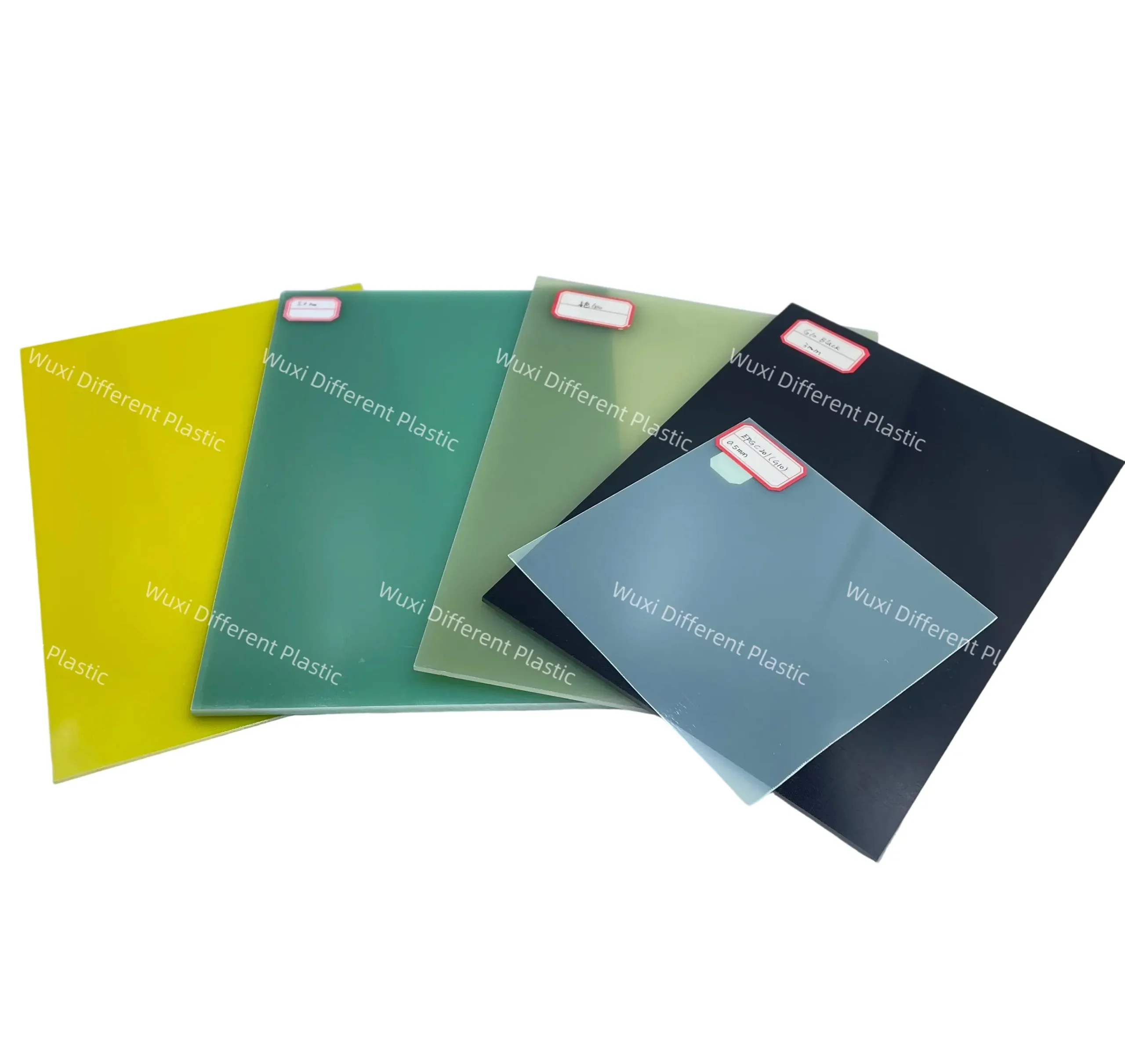
An epoxy board is a composite. Simply, this means it consists of more than one material. It is a mix of woven fiberglass cloth and epoxy resin. Each component serves different functions.
The fiberglass provides strength and shape stability. Epoxy resin serves differently. It had adhesive and insulating properties. It holds the layers together. Besides its insulating property, it makes the laminates resistant to moisture and chemicals.
This framework serves as the basis for popular grades such as FR-4, G10, and 3240. The different grades are developed to meet a performance requirement. Some are for flame resistance, increased strength, or constant electrical insulation.
Understanding the Material Structure of Epoxy Boards
Epoxy boards are not complex by accident. Their structure is carefully built to balance strength, insulation, and long-term stability. Each part plays a clear role. When one part is poorly chosen or processed, failure follows.
Let’s look at the structure piece by piece.
1) Reinforcement Materials Used
The core reinforcement is fiberglass cloth. Not ordinary glass, but electrical-grade fiberglass. It is woven into fabric before use. The weave pattern matters. It affects strength, resin flow, and overall consistency.
Fiberglass provides mechanical strength. It prevents bending, cracking, and deformation under load. It also keeps the board dimensionally stable when exposed to heat. Another advantage is insulation. Fiberglass does not conduct electricity, which makes it ideal for electrical applications.
E-glass is the most commonly used type. It offers a good balance of strength, insulation, and cost. Other glass types exist. However, E-glass remains the industry standard for most epoxy boards.
2) Epoxy Resin System
Epoxy resin acts as the binder. It holds the fiberglass layers together and seals the structure. More than that, it provides electrical insulation and chemical resistance.
Epoxy is a thermoset resin. Once cured, it cannot be melted or reshaped. This permanent structure is what gives epoxy boards their long service life. Heat, oils, and moisture have a limited effect on it.
The resin system may include additives. Flame retardants, curing agents, and stabilizers are common. These adjustments define grades such as FR-4 or G10. The resin content must be controlled. Too little weakens bonding. Too much reduces strength.
3) Laminated Composite Structure
Epoxy boards are built layer by layer. Sheets of resin-impregnated fiberglass are stacked to the required thickness. This stack is placed under heat and pressure.
During curing, the resin flows and fills all gaps. Pressure removes trapped air. Heat completes the chemical reaction. The layers bond into a single solid structure.
This process determines performance. Proper lamination improves strength, electrical reliability, and dimensional stability. Poor control leads to voids, warping, and early failure.
That difference is not immediately apparent. But it shows over time.
Key Advantages of Epoxy Boards
1)High Mechanical Strength
Epoxy boards undergo many modifications. But the most significant of them is the power to resist pressure and support weight. Epoxy boards have always performed well in flexural and compression strength tests.
The flexural strength is normally between 450 and 550 MPa. This is robust enough to hold heavy parts without bending.
2)Excellent Electrical Insulation Properties
Insulation is the main reason why epoxy boards can be used in electrical engineering. It is the only property that makes them popular.
Dielectric strength is typically 20 to 40 kV/mm. A board 3mm thick will insulate up to 60,000 to 120,000 volts. Even after immersion in water, the surface resistivity remains high. The boards made of epoxy are not destroyed by moisture, unlike others.
3)Low Water Absorption
As composites, these boards have a resin content that repels water and chemicals. This is particularly beneficial for appliances designed for outdoor, marine, and humid conditions. Within 24 hours, when the quality boards are underwater, they absorb less than 0.2 per cent of moisture. Phenolic substances may take up 1 to 2 percent. This disparity is important since electrical and mechanical properties are deteriorated by water.
4)High Thermal Stability
Normal epoxy boards are used continuously at 120°C. As a matter of fact, high temperature formulations are 150-180°C.
5)Good Chemical and Oil Resistance
As mentioned earlier, these boards are resistant to the corrosive nature of weak acids and bases. More concentrated chemicals may become a problem. This happens particularly after extended exposures. Nonetheless, in most operating conditions, epoxy boards are the best choice.
6)Flame Retardant Options Available
Epoxy boards are of various forms. One of these is FR4 epoxy. Do not forget that FR4 is famous and is specifically designed to be flame-retardant. These boards are options for applications that run at high temperatures.
They have a UL94 V0 rating. This means they self-extinguish within 10 seconds after exposure to fire.
7)Excellent Machinability and Surface Finish
In general, epoxies have a very fine finish. You may have come across epoxy flooring, for example. Epoxy boards are very appealing visually. They can also be easily cut and drilled with appropriate tools without disfiguring them.
Manufacturing Process of Epoxy Boards
Step 1. Raw Material Preparation
The first step is the precise selection of reinforcement materials. Glass fabric, or any other substrate, must comply with standards. The quality of raw materials impacts the finished products. So, pay attention to this step.
Material sourcing is always recommended from a reliable supplier. Notwithstanding, the fabric should be inspected for consistent weave patterns. Check the fibre size and scan for possible contamination. Any defects at this stage will compromise the final laminate.
When this is sorted, proceed to cut the cloth into the desired dimensions. Ensure the cloth matches the press dimensions exactly so as to prevent fraying. Fraying destroys the weave structure. Precision cutting equipment is recommended.
Step 2. Resin Impregnation
The prepared and cut glass cloth is then impregnated with epoxy resin. The process involves passing the glass through resin baths or between rollers. These beds serve precise amounts of resins.
As explained earlier, there must be a good balance of resin contente. Too much resin is a waste of material. Too little leaves dry spots.
After impregnation, the material is then moved to B-staging ovens for the next phase. Here, excess solvents are removed by heat in the oven. This step also enhances the cure.
Step 3. Lamination and Hot Pressing
After impregnating the material with epoxy, heat and pressure are applied. This is usually done under controlled settings. This solidifies the material and completes the curing process.
Before then, the prepreg sheets are stacked. You can layer as many sheets till the desired thickness is reached. Typically, a 3mm laminate might need up to 30 layers.
The stack is then placed in a heated hydraulic press where heat and pressure are applied. Heat completes the polymerisation reaction. Pressure also ensures the layers are well-glued.
The duration of this process depends on the thickness of the layers. Thin sheets take about 1-2 hours to cure, while thick boards may need up to 4-6 hours.
Step 4. Post-Curing and Finishing
After heating, the stacks are cooled gradually. Rapid temperature drops can cause thermal shock. It can also cause the laminate to warp due to internal stress.
Surface finishing may also be needed for some materials. However, it all depends on the requirements and the outcome.
Finished surfaces have better dimensional accuracy. Sanders or grinding may be required to smoothen the surfaces. Some sensitive equipment is often polished for better cleanliness.
Step 5. Quality Control and Standards
To ensure compliance with defined standards, periodic testing and inspection are done. And this should be at every stage of production.
For example, dimensional checks will reveal any thickness discrepancies. Visible defects, such as discolouration, can also be spotted. They often reveal a bigger problem.
Furthermore, test for mechanical properties, such as flexural strength, on sample materials. Statistical process control tracks trends before properties drift out of specification.
Key Properties of Epoxy Boards
1)Mechanical Properties
One of the characteristics of epoxy boards is mechanical performance. They have high tensile, flexural, and compressive strength. This is because they can resist continuous mechanical forces, which may crack or deform.
Here, the glass fibre reinforcement has a significant role to play. The load distribution is even across the board, and the weak points are minimised and impact resistance is enhanced.
2)Electrical Properties
Epoxy boards are good sources of electrical insulation. They maintain high dielectric strength and volume resistivity under both low and high voltage conditions.
These properties do not change with temperature, unlike those of other insulating materials. This guarantees reliability of electrical performance and minimal signal loss.
3)Thermal Properties
Another benefit is thermal stability. Epoxy boards can withstand high temperatures without decomposing very fast.
They are also able to withstand thermal cycling fairly well, i.e., repeated heating and cooling do not readily result in delamination or strength loss.
4)Environmental Performance
Service life is enhanced by environmental resistance. Epoxy boards are moisture-resistant and most industrial chemicals.
This helps preserve mechanical and electrical integrity in demanding indoor and outdoor conditions.
Types of Epoxy Boards
1)Glass Epoxy Boards
There are several types of glass epoxy boards. The distinguishing factor is their core material. Common types include G10, FR4, G11,, and 3240 boards. They have similar electrical and mechanical properties. However, they differ in some areas, as shown below.
| Property | G10 | FR4 | G11 | 3240 |
| Flame Retardant | No | Yes | Limited | No |
| Tg Range | ~130°C | 130–170°C | 160–180°C | ~130°C |
| Electrical Insulation | Excellent | Excellent | Excellent | Excellent |
| Mechanical Strength | High | High | Very High | High |
| Typical Use | Structural insulation | PCBs, electronics | High-temp insulation | Industrial electrical |
2) High-Temperature Epoxy Boards
These grades push operating limits beyond standard epoxy. Their continuous service reaches 180°C and above.
This is achieved by modifying the resin system. Although it significantly increases the cost. Therefore, their use is restricted to extreme industrial environments. For example, aerospace, automotive, under-hood electronics, and so on.
Common Applications of Epoxy Boards
1)Electrical and Electronics Industry
Although epoxy boards are not limited to electrical applications, this particular application accounts for a major share. It is a high-insulation material, which is significant for electrical equipment.
Motors employ epoxy boards in phase barriers and slot wedges. Generators are relied upon by terminal boards. They work as coil separators of transformers. They are applied to switchboards as bus supports and terminal blocks. The low operating temperature and self-extinction characteristics are safe.
2)Mechanical and Industrial Applications
Epoxy laminates emphasize their strength. These properties are due to the presence of epoxy resin and glass fiber. The bearing and bushings are of superior material.
Gears operate quietly and produce less vibration. The good thing about pulleys and sheaves is that they don’t wear out. It is efficient in dusty environments and with other lubricants.
3)Automotive and Transportation
Automobile Starter motors and alternators can be built using epoxy boards. They can be used as transmission systems, such as washers and thrust bearings. Their ability to withstand multiple conditions is an advantage for transportation applications.
4)Aerospace and High-Performance Engineering
The aircraft electrical systems require materials that are exposed to high conditions. Satellite parts have special formulations. The weight-to-strength ratio is also great. Stability at both ends of the temperature range is critical.
5)Custom Machined Components
One of the best things about this laminate is the fact that it can be customized to specifications. Epoxy boards are user-friendly. Manufacturers produce multipurpose shapes, such as gears and specialized insulators. Individual needs are created to have custom designs.
Epoxy Board vs Phenolic Board
Epoxy boards usually perform better than phenolic boards in terms of heat resistance. Continuous operating temperatures reach 150°C, compared with phenolic’s 120-130°C. Epoxy is also preferred for electrical properties. Dielectric strength is increased. Epoxy also improves mechanical strength.
Phenolic boards, on the other hand, are cheaper. They’re easier to machine. Phenolic still has a role to play in low-performance applications that do not require high performance.
Epoxy Board vs. Engineering Plastics
Plastics such as PEEK used in engineering provide better heat resistance up to 250°C and high chemical resistance. But the cost is much higher.
Epoxy boards are more suitable for electrical insulation. Engineering plastics prevail where high temperatures or high chemical resistance are required in mechanical applications. One of the key differentiators is cost. Epoxy boards are much more cost-effective in most applications.
When Epoxy Board Is the Right Choice
Select epoxy boards when electrical and mechanical strength are required. They are perfect for temperatures below 150°C. FR4 is the solution if flame retardancy is needed.
Epoxy boards are cost-effective and perform well in projects that require good performance. They perform well when machinability is considered. They have low water absorption in marine and humid environments.
FAQs:
1) What is an epoxy board used for?
Electrical and mechanical purposes. These are the main uses. They are used as insulation in transformers, switchboards, generators, and motors of the electrical system. They also bear weight and forces in pulleys, gears, bushings, and bearings.
2) Is epoxy board the same as FR4?
FR4 is just one type of epoxy board. However, some authors and manufacturers use them interchangeably. The difference is flame retardancy. Other epoxy boards include G10, G11, and 3240 epoxy boards etc.
3) Are epoxy boards waterproof?
Epoxy boards are very waterproof and not totally water-resistant. Their uptake of less than 0.2 percent water is achieved in 24 hours of immersion. This low absorption preserves the electrical properties of the wet climatic conditions.
4) Can epoxy boards be machined easily?
Yes, they can be drilled, milled, cut, and turned without special equipment. This helps to lower the cost of production and permits complicated custom parts.
5) What thicknesses are available in epoxy boards?
The boards can range in thickness from 0.4mm to 150mm. For PCBs, thickness commonly ranges from 0.4mm to 3.2mm. Thicker boards are for heavy equipment. Customization is also possible.
6) How long do epoxy boards last in industrial environments?
Properly specified epoxy boards can withstand for a few decades in an industrial setting. In most installations, the service life is more than 30 years. The secret is to work within the limits of temperature.
Final Thoughts!
Certainly, you’ve learnt a thing or two about epoxy boards. They have remarkable properties. The different types should be noted. Not all epoxy boards are the same. The major highlights are their electrical and mechanical properties. Also, note that they are not ideal for all settings. You may not need them for standard applications. However, where higher strength and operating temperature are needed, consider epoxy boards. Also, when moisture and chemical resistance are desired, they are a cost-effective option.
𝙁𝙤𝙧 𝙢𝙤𝙧𝙚 𝙞𝙣𝙛𝙤𝙧𝙢𝙖𝙩𝙞𝙤𝙣
📧Email:info@differentplastic.com


