
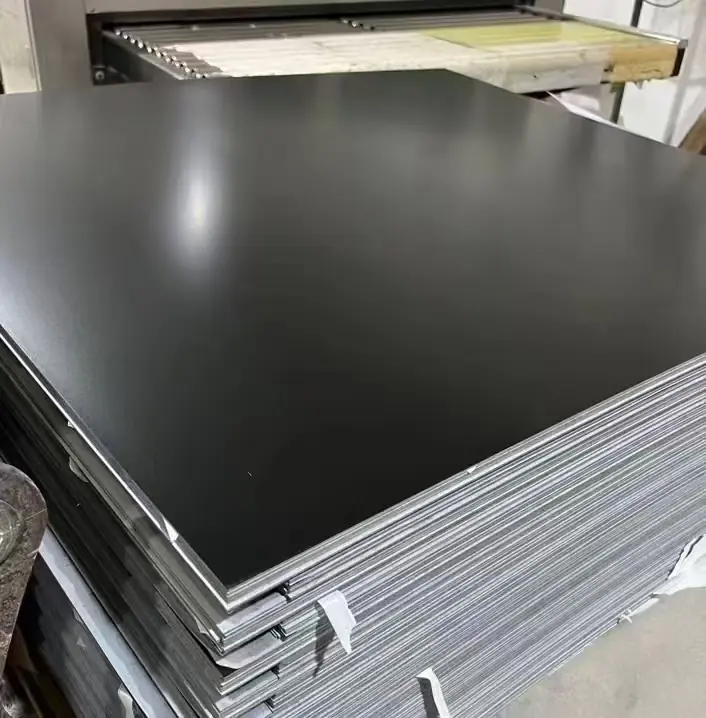
G10 laminate is a high quality laminate material commonly used in the industry. It is made from fiberglass and epoxy resin. This results in strength and good electrical insulation.
G10 is a popular choice for engineers when they require both support and insulation. It is pressure, heat and use-tolerant. It is useful for electrical and mechanical equipment.
Let’s find out what G10 is and why it is so popular. This article will go over its structure and all the factors to consider before you select this material.
Key Highlights:
- G10 is a fiberglass-reinforced epoxy laminate that is used for strength and electrical insulation.
- The material is made from glass cloth and epoxy resin, and is used to make a strong industrial laminate.
- G10 is stable enough to provide good support and also electrically separates and protects electrical components.
- It is suitable for sheets, rods, tubes and custom-machined industrial parts.
- Correct choice of grades enables G10 to function to its best under heat, stress, moisture and normal use.
What Is G10 Material?
G10 epoxy laminate is a fiberglass reinforced epoxy laminate. It is made by joining layers of woven glass cloth with epoxy resin. The layers are compressed under pressure and heat to form a solid and strong product.
The G10 is named after an industrial grade system for laminates. It is a type of glass cloth and epoxy material. G10 is an exceptionally strong and electrical insulating material.
G10 is an engineered material as opposed to regular plastic sheet. It’s crafted for industrial applications that call for strength and stability. Can hold parts and also prevent contact between electrical components.
G10 is a strong material due to the glass cloth in its interior. The layers are bound to each other by the epoxy resin and are protected by it. These materials, combined, provide a rigid and stable laminate.
G10 is not standard fibre glass panels. A fiberglass sheet may only refer to a general category of materials. A G10 is a specific grade having certain specified properties and uses.
Why Is G10 Different From Ordinary Plastic Materials?
G10 is a different type of plastic, as it’s reinforced with layers in its construction. These layers provide a more durable, strong, and insulating property. This gives G10 the right properties for heavy duty industrial usage.
Its construction enables its use in situations where traditional plastics can be problematic. The reasons for the unique properties of G10 are given below.
1) A Reinforced Material Rather Than a Single Polymer
G10 is made from glass fibers and epoxy resin. The function of each material is different in the final product. The fiberglass is used for strength and the epoxy is for bonding the layers.
The blend results in a durable, robust material. Can take loads that are superior to many conventional plastics. The reinforced structure also means that the shape changes less during use.
2) Thermoset Behavior
G10 is a thermoset material. This is because it is difficult to cure after it is made. It can’t be molded and made back into shape like regular plastics.
The property of this property is useful to maintain the shape of G10 under heat and pressure. It is useful for parts that require long time stability. Material remains firm when used normally in industry.
3) Direction-Dependent Performance
G10 has layers of woven fiberglass. These layers are oriented in a way that influences the response of the material to forces. Strength may be different in different directions when the loading is applied.
When designing parts from G10, engineers take into account the direction of the fibers. Good design enables the material to offer support. This is particularly important for precision components or structure parts.
4) Structural Strength with no Electrical Conductivity
G10 has excellent mechanical strength and is also an excellent electric insulator. This is helpful in electrical devices. G10 can work on parts without itself being a conductor of electricity.
One of the key reasons it is used in industry is this combination. While there are a lot of materials which provide strength and insulation, G10 provides both. It improves equipment performance.
5) Resistance to Permanent Deformation
It is a rigid material which gives G10 its shape. The fiberglass layers and cured epoxy minimize undesired bending. This helps the material to remain stable while in use.
This characteristic is desirable in parts where dimensions are important. The G10 can be used for a long time. This results in a broad range of applications as a good performer.
What Does G10 Look Like in Its Finished Form?
G10 is available in different shapes and sizes for industrial use. It is available from manufacturers in sheets, rods, tubes or custom parts.
Final form will vary according to needs of application. G10 can also be cut into shape and used to manufacture electrical and mechanical parts.
1. G10 Sheets and Plates
The most popular are G10 sheets and plates. They can be utilized in insulating panels, supports and machine parts. The flat pieces may be cut in various sizes.
There are various thicknesses of sheets. They can be drilled, cut, and machined as per requirements of the projects. They are therefore applicable to a number of industrial designs.
2. G10 Rods and Bars
If strength and electrical insulation are required, the parts are constructed from G10 rods and bars. They have a strong hard shape and can be used in supports and small parts. They can be also processed into custom parts.
Some of these forms are commonly employed in electrical and mechanical assemblies. They offer firm support and maintain separation of parts. That aids in making the equipment safer.
3. G10 Tubes and Cylindrical Components
A round shape will be required for G10 tubes. They insulate shafts, connectors and other parts. They have a hollow design that assists with special assembly requirements.
These tubes provide strength along with electrical protection. They can be used in places where metal parts are required to be insulated. Other sizes are possible as well.
4. Custom G10 Components
G10 can be cut into a variety of shapes. CNC machining, drilling and routing are some of the processes which manufacturers use to manufacture end parts. These processes are beneficial to the production of accurate parts.
Custom G10 parts are used in special industrial applications. They can be manufactured to a precise size and design. This flexibility allows G10 applications for a wide range of industries.
5. Color and Surface Appearance
G10 is typically found in green, yellow, black or natural colors. The colours are typically the result of the type of resin used and the production methods. Does not determine the value of the materials.
The G10 grade does not always mean that the product is of a particular color. The characteristics of the material should be verified with appropriate documentation. This enables the appropriate material to be chosen.
What Happens When G10 Is Exposed to Demanding Conditions?
G10 is formulated for industrial use, and may perform differently under other conditions. The material may be susceptible to stress, chemicals, moisture and heat over time.
By having an understanding of these conditions, an engineer will be able to select an appropriate G10 grade. Selecting appropriately can enhance safety and help extend the working life of the component.
1) Under Continuous Mechanical Stress
Due to its robust fiberglass construction, G10 can be used for regular loads. However, its shape can be noted to be slowly changing because of long term influence. The load level and part design is important.
The appropriate thickness is used to minimise stress in the material. Appropriate design can also help to reduce cracking and damage. This enables G10 parts to operate for longer durations without problems.
2) Under Elevated Temperatures
G10 will perform in hotter environments. But high temperatures can have an impact on the epoxy resin. This will reduce stiffness and modify the response of the material.
Before use, the operating temperature must be checked. The G10 grade might be more appropriate in warmer climates. This will help keep them strong and stable.
3) In Moist or Humid Environments
G10 is more resistant to moisture than many other materials. But its properties can be influenced over time in the presence of water or humidity. Moisture can also have an impact on electrical performance. In wet environments, it is essential to make the right material selection.
If installed appropriately, they can also help to reduce moisture issues. This assists in maintaining a reliable operation.
4) During Chemical and Oil Contact
G10 is resistant to most laboratory fluids and a wide range of industrial fluids. Performance will vary according to the chemical used, the length of time the product is exposed. There may be fluids that impact the epoxy resin.
Chemical compatibility should be determined prior to use. This prevents any unwanted changes in the material. It also helps to increase the life of the service in the industrial areas.
5) During Repeated Heating and Cooling
With temperature variations, G10 expands and contracts slightly. They have the potential to suffer from stress in the material when repeatedly heated and cooled. This could impact components that are employed in precision systems.
These effects can be controlled by good design. When choosing G10 components, engineers need to take temperature changes into account. This helps to assure the accuracy of the performance.
6) During Prolonged Outdoor Exposure
G10 may pose problems when exposed to outdoor conditions for extended periods. Time and sun might have an effect on the surface. Additional protection might be required in these settings. Use in the outside should be carefully considered prior to installation
The protection measures and material grade should be in line with the conditions. This will help to maintain the performance and appearance.
Where Does G10 Sit Inside Real Industrial Equipment?
G10 is used within a variety of industrial equipment. It is primarily used for supporting and separation of electrical parts. This comes in handy during situations where strength and insulation are needed.
Whether it’s supporting electrical components or making custom machine parts, G10 enhances equipment safety and performance. Because of its properties it is used in many harsh applications.
1. Busbar Supports and Electrical Spacers
One of the most popular busbar support materials is G10. It is used to maintain electrical conductors. This minimizes the chances of activation of unwanted electrical contact.
The material offers decent mechanical support, too. It is able to withstand the force generated by attached components. It is used in power equipment, electrical systems.
2. Transformer and Motor Insulation Components
The materials must be able to offer electrical protection for transformers and motors. G10 is used to separate and support internal parts. It provides a safe separation between electrical parts.
It is also very strong, so it is able to withstand mechanical stress within equipment. This means that G10 is dependable to be used for insulation components. It is used by many manufacturers for long-term use.
3. Precision Jigs and Industrial Fixtures
G10 is employed for making fixtures and jigs. These tools secure parts in place in the production. The material will help to ensure accuracy when repeated operations.
It is also an electrical insulator, which has properties beneficial in sensitive processes. It prevents any currents that do not want to flow between components. This will make G10 suitable for a special manufacturing environment.
4. Terminal Supports and Mounting Plates
G10 can be used for terminal supports and mounting plates. These components are used to secure connections and components of equipment. Material is a fixed foundation on which to install.
It is rigid which provides support to keep parts aligned. It also provides insulation between mounted components. This enhances safety and system reliability.
5. Insulating Bushings and Sleeves
G10 can be turned to make bushings and sleeves. These parts are used to separate the metal parts from electrical surfaces. They also offer assistance with fasteners and connectors.
These components can be used to achieve electrical isolation. G10 is strong, yet prevents electrical contact. This allows it to be used for a variety of equipment designs.
6. Custom Structural Insulation Parts
G10 is also available as custom made parts for special equipment requirements. The parts can be used for support and insulation simultaneously in a single part. This decreases the amount of separate materials required.
G10 can be cut into various forms and sizes at the manufacturer’s. Custom designs enable engineers to overcome equipment challenges. This allows G10 to be a material that can be used flexibly in industry.
What Should Be Written on a G10 Material Purchase Order?
The clear Purchase Order will assist to ensure the right G10 material is being provided. This should contain key information concerning grade, size and expected performance.
Delivering full information minimises errors during production and delivery. It also aids in assuring that the material will be suitable for the end use.
1. Material Grade and Specification
It is important to specify the required G10 grade in the purchase order. This will prevent getting a different laminate type. Appropriate specification makes sure the material is the right one for the job.
Any necessary standards or documents should also be discussed with engineers. This will help keep materials in check. It can be used to verify appropriateness of the provided content.
2. Required Stock Form
G10 comes in various shapes including sheets, rods, tubes and custom parts. This should be specified in the purchase order. This aids in the supplier preparing the proper product.
The choice of shape will depend on the requirements of the final application. Clear details minimize additional machining workload. It is also beneficial for boosting production efficiency.
3. Dimensions and Thickness Tolerances
Dimensions are very important to ensure a proper fit and assembly. The thickness, length, width and tolerance should be included in the purchase order. This way, part accuracy is maintained.
There is a possibility of equipment performance variations due to small size differences. To prevent any installation problems, be sure to provide the information on the measurements. It’s crucial for precision components.
4. Surface Finish and Edge Quality
The surface condition may influence the performance of a G10 part. Finish requirements – if applicable, should be noted on the purchase order. The edges and surfaces are smooth and clean, which improves the quality of the parts.
Machined parts might require particular parts information. These requirements should be communicated prior to the production process. This helps the suppliers to get the desired result.
5. Electrical and Thermal Requirements
However, there are some applications where the electrical/heat performance is of particular importance. This information will form a part of the purchase order. This helps to select the right G10 material.
There could also be a need for testing documents for critical uses. Clear requirements help in the selection of best materials. They also contribute to enhancing the safety of the system.
6. Inspection and Material Documentation
Any inspection information required should be stipulated on the purchase order. For industrial projects, material reports, test records and certificates may be required. These documents serve as a confirmation of materials quality.
Good records also provide good traceability. They enable groups to verify material information when needed. This is for safety and quality control purposes.
FAQs:
1) What Does G10 Stand for in Fiberglass Materials?
G10 is a type of fiberglass-reinforced epoxy laminate. It’s a glass cloth woven composite material made of epoxy resin. It is a strong and an electrical insulator.
2) Is G10 Considered a Thermoplastic or Thermoset?
G10 is a thermoset material. After the curing process it is difficult to melt and not re-meltable. This makes it easy to maintain its shape while in use.
3) Why Is G10 Commonly Green?
G10 laminate is often a green color. The resin and the process used to create them give the color. But color does not necessarily indicate the material grade.
4) Is G10 the Same Material as FR4?
G10 and FR4 are two similar types of fibre glass epoxy laminates. Both materials are glass cloth and epoxy resin. The difference is FR4 has good flame resistance.
5) Can G10 Be Used as a Structural Electrical Insulator?
Yes, G10 can be used as structural electrical insulator. It’s to keep the current from flowing, but mechanically supports the device. This is particularly useful in numerous electric circuits.
6) Does G10 Lose Strength When Exposed to Heat?
Over time, high temperatures can impact G10 performance. Excessive temperatures may lead to weakening of the epoxy. For high temperatures applications, a suitable grade should be selected.
7) Is G10 Electrically Conductive?
No, G10 is not a conductive material in general. Because of its good electrical insulation properties, it is used. This is ideal for isolating electrical devices.
8) Can G10 Sheets Be Converted Into Precision CNC-Machined Parts?
Yes, G10 sheets can be machined into custom parts. Accurate components can be made through CNC machining, drilling and cutting. This enables many industrial designs to be manufactured using G10.
Final Thoughts!
G10 is a good quality material which is utilized in various electrical and industrial applications. It is strong, stable, and insulated, making it ideal for challenging conditions.
The choice of right G10 material is related to the application requirements. Care must be taken in selecting for various factors, including temperature, load, moisture and electrical requirements.
G10 can be used to provide long service life if material selection and appropriate application are carried out. It continues to be an important solution for industries that need strong and insulating components.
If you want to find a solution to meet your needs in the industry, contact info@differentplastic.com. Our staff members can help you with material selection.


