
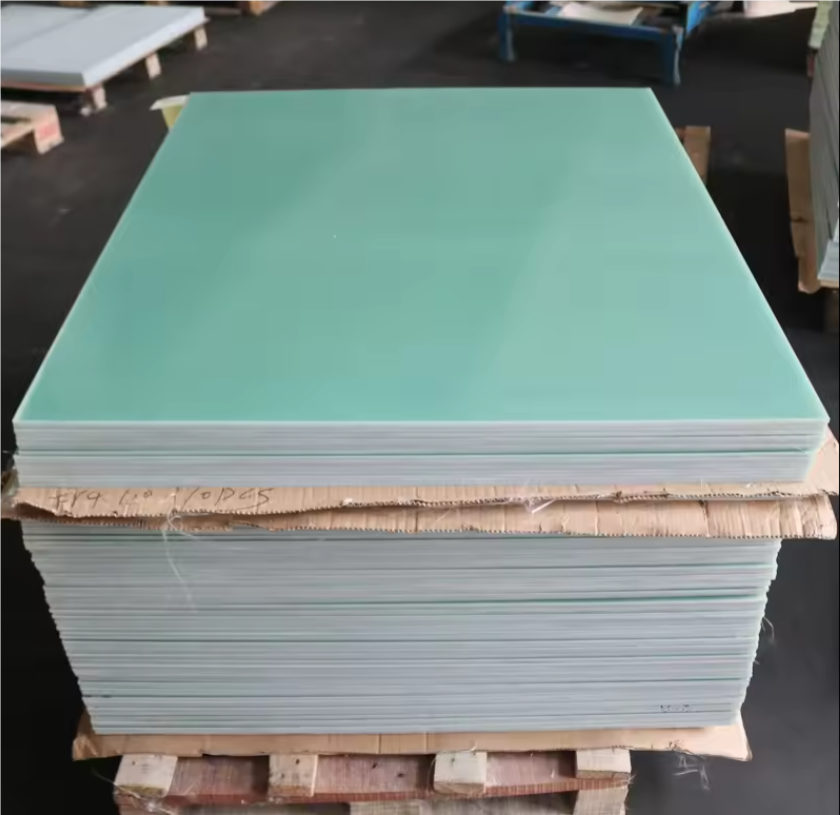
Global electronics use FR4 materials as strong basic elements in their products. FR4 keeps electric components operational across all electronics products, including tiny chipsets and heavy production equipment in industrial plants.
If you work with electronics, you will likely encounter FR4 at PCB production sites. This article explains why FR4 material is central to electronic products.
FR4 starts as woven fiberglass layers that the manufacturer bonds together using epoxy resin. Manufacturers depend on FR4 because it offers solid protection plus electric insulation, making it ideal for building PCB products.
The content explains every feature of FR4 while also showing how users can choose the right material type.
What is FR4?
The reinforced epoxy laminate composition of FR4 functions well within many operating conditions. An epoxy resin framework binds fiberglass weaves into a durable structure that stops electrical flows. Our special blend of fiberglass and resin creates a strong material that lasts securely through challenging situations.
FR4 is a unique material that prevents fires. Tests demonstrate that our product does not burn when the test criteria are met. Companies use FR4 mainly in electrical equipment because it provides complete safety.
Handcrafting allows designers to generate various sheet sizes and thicknesses directly from this material. FR4 is reliable as a PCB production material because it can handle intricate designs.
Properties of FR4
FR4 is an excellent material for tough conditions because of its best-performance capabilities. Here are some of the key characteristics that set it apart from other materials:
1. General Properties
Density: Despite the specific range of 1.98 to 2.08 g/cm³, dense FR4 material stays lightweight yet durable. Our users find it easy to handle FR4 material between different operational platforms because it preserves its load-bearing qualities throughout processing.
Water Absorption: Each 5mm sheet of FR4 material demonstrates better than 0.15% water absorption throughout testing periods. FR4 maintains superior moisture resistance and performs best when humidity shifts constantly.
Flame Retardancy: FR4 materials were tested according to UL94 V0 standards. They demonstrate superior fire ignition and flame spread resistance, making them necessary for protected electrical and electronic systems.
2. Electrical Properties
Electrical Strength (⊥): FR4 stands up to high voltages of at least 10.2 kV/mm when its thickness measures below 3 millimeters. FR4 rejects high electrical voltages effectively like no other material in power control and electrical protection systems.
Electrical Strength (∥): This material is an excellent insulator since it lasts longer under electric loads above 35 kV.
Tracking Resistance: FR4 maintains superior electrical protection during electrical stress because it resists the growth of conductive paths at 200 PTI and above. The strength of electrical devices depends on FR4’s electric insulation abilities to protect users against power hazards.
3. Mechanical Properties
Bending Strength: The material FR4 shows excellent mechanical strength when tested under pressures over 400 MPa, ensuring its usability as support material in electronic device components.
Tensile Strength: FR4 material shows long-lasting strength, passing tension tests without breaking until it reaches≥300 MPa. It performs reliably under conditions that produce intense force release.
Compressive Strength (⊥): Under pressure, the FR4 materials have a minimum compressive strength of 350 MPa, which prevents them from buckling.
Modulus of Elasticity: Apart from other materials, FR4 shows an impressive elastic response due to its ≥24,000 MPa modulus of elasticity. Our material handles environmental forces strongly and precisely.
Impact Strength (∥): The material FR4 resists significant energy impacts better than other materials by showing impact strength above 33 kJ/m². The material handles unexpected forceful collisions well by absorbing shock energy in demanding usage scenarios.
4. Thermal Properties
Thermal Characteristics: FR4 keeps its complete characteristics at or below 130°C when thermal disintegration begins. Under high temperatures, the material functions reliably throughout such applications.
Applications of FR4
FR4 serves all industries. Its unique combination of strength, flame resistance, and electrical insulation properties make it ideal for the following applications:
1. Industrial Wear Applications
FR4 demonstrates effective use in industries due to its three key features of superior strength, together with its ability to support power transmission mechanisms and mechanical frame components.
The mechanical durability of FR4 remains strong when engineers apply this material to movable machines. Factory environments pose no match for FR4, which enables equipment components to deliver lasting service to humanity.
2. Electrical Insulation
The manufacturing industry receives its biggest value from using FR4 insulation products—the small components of this material function as an efficient electrical barrier to stop signal transmission.
The application of insulation serves to secure electrical systems by safeguarding transformers and circuit boards. FR4 protects electronic devices from high power through its effective insulating properties, which prevent structural deterioration.
3. Screw Terminal Strips
The use of FR4 in screw terminal strip design depends upon its high capability to provide superior electrical insulation. People use this technological approach to connect electrical wires to screw terminal strips within our products for dependable power connections. The strength properties of FR4 protect electrical signals from damage by maintaining correct insulation operations.
4. Transformers
Functional and protective functions of transformers are provided by FR4, which also enables support structures during operational use. FR4 protects electrical elements when they perform demanding tasks. The FR4 material contains transformer flames to stop their expansion beyond a specific area during system failures.
During normal system operation, the material creates a strong resistance to maintain transformer components in their required positions.
5. Arc Shields
FR4 material is best for making arc shields because it has natural fire-blocking properties. The material protects electrical components from sparks.
Arc shields are vital for high-voltage areas because they trap electrical bursts until they arrive at safe locations, preventing the burning of panels and other electric components. FR4 retains its functional properties during hot operating temperatures.
6. Washers
FR4 washers stop electrical transfer and support equipment parts within electric grid systems. Each electrical part remains completely insulated through these structures. FR4 washers perform reliably under extreme temperatures and heavy load conditions, with system parts set to face intense vibrations.
7. Busbars
Power moves between electrical parts through conductor systems, where FR4 is the preferred building material. The material can handle electric power and stops energy from leaking to create power failures.
FR4 performs better than other materials because it remains operational at high temperature and pressure levels to shield busbars from electrical demands.
8. Standoffs
FR4 standoffs maintain precise electrical component positioning in electronic design arrangements. These insulated supports shield against electrical risks by keeping parts separated. FR4 standoffs secure electrical components and deliver proper thermal and mechanical support when the system operates.
9. Switches
FR4 insulates and supports all the parts within electrical switches. FR4 protects switches to block electric current and resist fires, ensuring proper functioning without causing electrical issues. FR4 material creates dependable switch operations because it resists mechanical stress when users press the button repeatedly.
10. Relays
FR4 protects relay internal components to stop electrical operations from malfunctioning. When electronics use power safely, the FR4 isolation shield guards contacts from accidental contact. In demanding conditions, FR4 shows its reliability because it copes with mechanical pressures and high temperatures equally successfully.
FR4 Advantages
FR4 materials come with a range of benefits that plead their case for use in many applications:
1. Cost-Effectiveness
FR4-based materials can weigh you down with performance problems and high costs, yet they deliver outstanding performance. FR4 is less expensive and, at the same time, ensures industry standards are met and matches electrical and mechanical characteristics of prime importance.
Also, the producers, who are the building blocks of the small-budget yet high-profit companies, are better off because FR4 costs them the least. Even if the companies are ordering FR4 at a reduced price, then they are capable of turning out world-beating products and thus enlarge their profits at the production pace only.
2. Durability
FR4 is noteworthy in respect to the fact that it is nigh indestructible compared to ordinary materials. Its products stay in good condition for a very long period, and they can be used in very harsh weather conditions; they can get into the water, they get in touch with chemicals, and the products’ effectiveness when we use them will not decrease.
FR4 reinforces the durability of the electronic component by giving it a strong structure and protecting board circuits and mechanical elements. It is also durable since it operates for a longer time compared to other materials but needs less maintenance.
3. Customizability
FR4’s technology ranges the field since it can offer custom materials. This means that different organizations may use the FR4 on other projects. Organizations now only need to choose from various thicknesses and color options to fit the right product specifications.
Engineers can achieve a stronger design by using FR4, which enables them to fit thin sheets of FR4 in small spaces. Otherwise, parts can be made of thicker laminates to produce durable components. The versatility of the flexible material gives FR4 its role in electronics, automotive, and aerospace applications.
4. Environmental Resistance
FR4 maintains dependable performance in difficult operating environments. Companies that sell to customers rely on FR4 materials because such materials can survive environmental factors at more than one temperature range. Electrical components at engine and production sites are also shielded from liquid and chemical exposure by FR4.
Our Guide Explains How to Choose FR4 Materials
Your project result will entirely depend on the selection of an appropriate FR4 material. Here are some factors to consider when choosing FR4:
1. Consider the Application
The FR4 material that you select is directly tied to the requirements of your application. All workplace processes require FR4 materials to withstand both heat and electric damage. If these applications are intended to operate at high temperatures or need high performance, then the selection of FR4 materials should have higher tan g values.
FR4 materials continue to be functional as they report their temperature limits (softening limits) when they are heated to soften in hot working environments.
2. FR4 Board Thickness
FR4’s operational capabilities depend directly on its manufacturing thickness. Lightweight FR4 boards are still effective in electronic devices that have spatial limitations to allow them to fit inside.
A dense FR4 design delivers greater physical durability and serves as an improved thermal release system under load or temperature shocks. Pick your preferred FR4 board thickness to achieve ideal results in your chosen design premise.
3. Dielectric Properties
You must choose FR4 boards backed by precise dielectric specifications to build effective high-frequency signal systems.
Materials receive dielectric indicator values that show how stored energy escapes as thermal output to measure electric storage performance. Picking FR4 materials that accept signals perfectly helps you design better circuits.
4. Thermal Performance
Our printed circuit boards maximize FR4 material performance by handling hot temperatures well. During testing, observe what temperature causes substances to deform. The material selection must withstand temperatures beyond those of other solutions.
The materials’ thermal expansion behavior strongly impacts their ability to resist damage during production and usage when temperatures change.
5. Mechanical Strength
FR4 material selection depends on physical strength capacity because the product must resist handling pressure throughout its life. The material’s FR4 rating indicates how much force is needed to warp or shatter.
Your PCB needs FR4 materials that stay strong under all working conditions because sheet failure can trigger system failure.
6. Cost-Effectiveness
The available FR4 materials allow us to achieve great cost-effectiveness, but the cost depends on the material producers and the properties used. When working on basic projects, you need materials with high-performance standards and low total costs.
Choose materials that balance your budget while fulfilling all system standards. Anyone who buys more FR4 material during one order will see reduced total purchase costs over several orders.
7. Availability
Your supplier’s shipping schedule determines which FR4 product type you must choose. To keep operations running on time, prepare all specific FR4 materials before starting your project. You must also assemble a dependable supply chain to acquire materials at the right time for your production operations.
8. Regulatory Compliance
Choose FR4 materials that follow all safety rules for your sector. Every item has to pass electrical insulation tests while following fire protection principles and environmental protection rules. The product must follow your sector’s basic safety rules and quality standards through Quality Control enforcement.
9. Contact the Manufacturer
To pick high-quality FR4 materials, work directly with the manufacturers of your choice. By describing your product demands to manufacturers, they will help you find the perfect material and work with you on production specifics.
When you buy FR4 materials directly from the producer, you get lower prices than wholesalers and enjoy better deals when you purchase them in larger amounts. When you discuss your order needs with your supplier, they help you get exactly what you want without extra expenses.
FR4 and Future Trends
Technological advances in electronics require high-quality FR4 materials to help push forward material science. The rising needs of electronics and electrical areas expand FR4’s usability to handle upcoming technical requirements. Here are some key trends that could shape the future of FR4 technology:
1. High-Speed PCB Designs:
Higher-speed electronics require products and components that process data quickly with minimal delay. Materials that make FR4 dielectrics better perform especially well for 5G technology and help data facilities and advanced network systems work at high frequencies.
Engineers develop new FR4 materials with lower dielectric values to minimize signal decay while improving output in fast electronic systems. The growing need for faster networking systems will push FR4 technology development to achieve these enhanced performance standards.
2. Sustainability Initiatives:
Due to rising environmental standards in electronics manufacturing, FR4 materials are receiving sustainability testing. FR4 producers study methods to make biodegradable materials and find new recycled materials that meet FR4 performance standards.
This is essential for manufacturing units that want to reduce electronic waste production. To support environmental standards worldwide, manufacturers must investigate renewable and eco-friendly raw materials for making FR4.
3. Advanced Fire Retardant Technologies:
Electronic devices in automotive, aerospace, and telecommunications need reliable protection against fire hazards. FR4 materials’ basic fire-resistant properties are enhanced through ongoing development efforts to create even tougher materials.
Research into better flame-retardant additives and materials will make FR4 safer in dangerous situations. The increasing dependence on electronic systems in safety-reliant applications will elevate FR4 materials’ fire-resistant role since that application will depend on them.
4. Miniaturization of Electronics:
Electrical components must be made of different materials to fit into tiny integrated consumer electronics designs. Engineers optimize FR4 materials for miniaturized devices to maintain insulation and physical strength while reducing thickness.
The shrinking size of electronic devices will boost space efficiency when developers use FR4 materials to create these items.
FR4 materials will advance electronics through their benefits for faster operation, safety gains, and sustainable technology growth.
Barriers When Using FR4 as a Material
FR4 provides strong versatility and durability while creating design problems because of its unique mechanical properties. These challenges must be addressed to ensure optimal performance in specific use cases:
1. Brittleness:
FR4 withstands most conditions until it is repeatedly damaged, making it break easily. Therefore, it is wise to choose FR4 material wisely, as it resists shock poorly. FR4 material producers enhance strength by combining different materials in one product or adding protective surface coatings.
2. High Manufacturing Cost for Special Variants:
Basic FR4 remains budget-friendly, yet custom high-tech designs for demanding uses push up the price tag. FR4 materials, which are reinforced with an increased thermal barrier strength in electrical insulation and improved speed retention, require substantial increases in cost.
Increasing demand for advanced FR4 technology has led to an increased amount of manufacturers strategically competing on quality and price for two years. Companies in the aerospace and telecommunications sectors that use FR4 materials must compare their investment levels with the benefits they gain from purchasing them.
3. Limited Flexibility:
FR4 performs exceptionally well on typical circuit boards yet lacks the right characteristics for flexible electronics applications such as wearable medical equipment and foldable tech. Thus, it remains unsuitable when products need flexible or bendable substrates for different industry applications.
Polyimide and flexible epoxy resins are better choices than FR4 because they are structurally adaptable and maintain excellent electrical performance under bending and stretching conditions.
4. Thermal Expansion Issues:
FR4 has a higher thermal expansion rate than metal-core PCBs and ceramic substrates. When temperature changes occur, FR4 warps, creating mechanical stress on the circuit board and reducing component efficiency.
FR4 has problems when used in power electronics and automotive systems because its tendency to expand from heat reduces performance. Manufacturers must select thicker laminates or find lower CTE materials to create products that withstand high-temperature procedures.
5. Potential Environmental Impact:
Despite many advantages, FR4’se fiberglass and epoxy resin elements generate substantial environmental damage in its recycling and disposal phases. FR4 cannot be easily recycled and adds more waste to electronic disposal sites unless recycling technologies work effectively in production facilities.
Organizations now research FR4 variations that recycle efficiently and protect Earth’s health as industries seek ways to lower their environmental impact.
FR4 maintains its key electronics role despite its current obstacles. Companies must combine FR4 material strengths with smart design choices to maximize its benefits with its known limitations.
Bottom Line
FR4 offers industry advantages by providing reliable strength at affordable rates. It demonstrates its superior position through its structural backing abilities, fire safety, and electrical insulation properties, vital for producing insulated circuit boards and parts.
You can better choose applications by learning what FR4 gives in performance and how it functions. Your projects will succeed when you use FR4 material for electronics development and manufacturing industrial equipment that needs electrical insulation.


