
UL 94 is a well-known flammability criteria for plastic and polymeric materials. It is used to determine the characteristics of a material when exposed to a controlled ignition source under controlled laboratory conditions. Important in industries where plastic parts might come into contact with electric, heat or potential ignition sources.
Flame resistance is a key factor in electrical equipment, electronics, automobiles, appliances, industrial machinery, lighting systems and many other products. UL 94 classifications provide a standardized method to compare certain flammability characteristics among materials so that engineers, manufacturers and designers can make appropriate material selections.
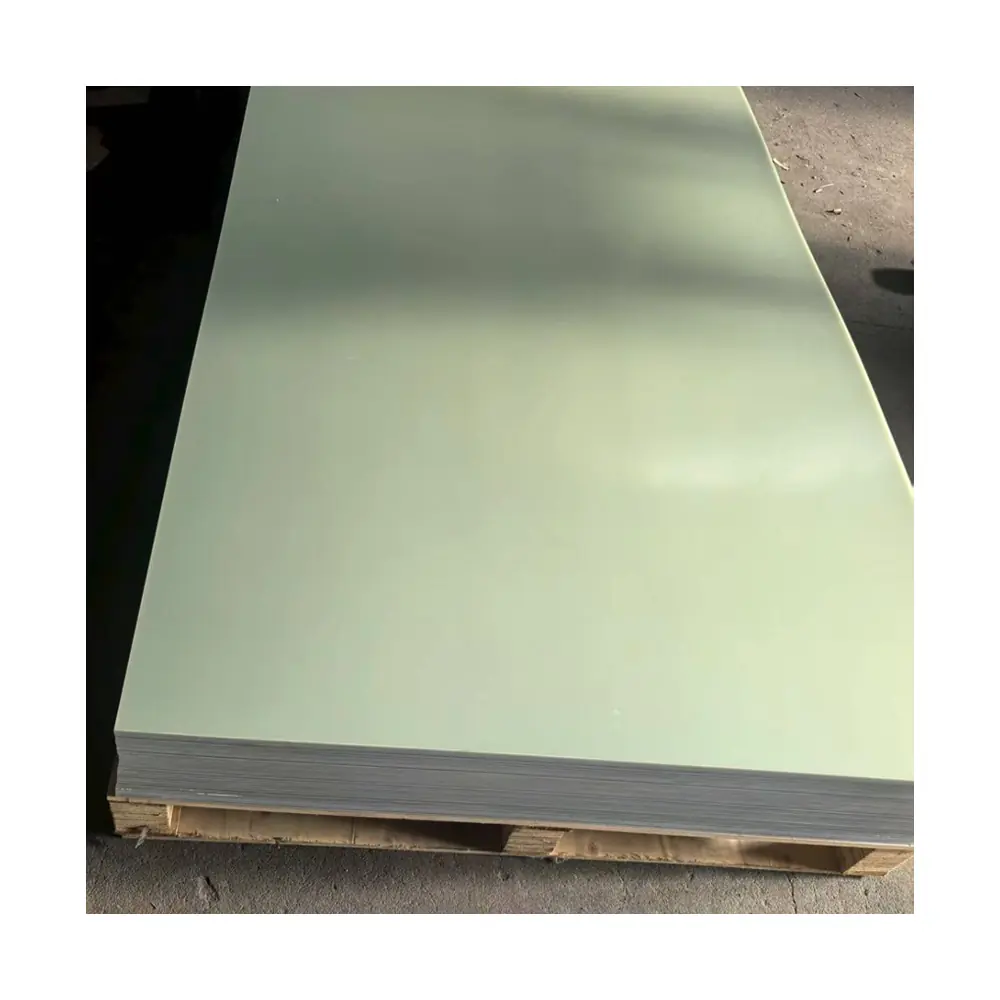
A notable example is FR4 Fiber Glass Laminate Sheet, a rigid composite material that is utilized in electrical and electronic applications due to its electrical insulation, mechanical strength, dimensional stability and suitable flame resistant properties.
A UL 94 rating, however, should not be considered a fire-safety test. The product design, operating conditions, thickness, ignition sources and other appropriate safety codes should also be taken into account.
What Is UL 94?
UL 94 is a standard covering tests for the flammability of plastic materials used in parts of devices and appliances. It offers a series of safe tests to study the response of polymeric materials to a tiny fire under laboratory conditions.
The Underwriters Laboratories, often referred to by its acronym UL, has been a key developer of safety standards and testing techniques in many industries.
UL 94 does not just determine if a plastic can burn, but captures several aspects of burning. Materials are then classified based on the appropriate test method and the results of the test.
What Does UL 94 Measure?
Depending on the type of test conducted, several properties may be evaluated during the UL 94 testing. These include:
After ignition, the way a fire burns.How a fire burns after it has been lit.
- Flame propagation
- Self-extinguishing characteristics
- Droplets of burning material, or particles that are burning.
- Afterflame duration
- Afterglow behavior
- Rate of combustion under certain conditions
The measurements enable the comparison of materials in terms of standard testing procedures, not by general description, like “flame resistant.”
Why Is UL 94 Important?
The UL 94 data can be useful for material selection and product development. Classifications can be used by engineers to find materials that might be appropriate for some uses that have a particular flammability requirement.
The standard may also facilitate regulatory and certification procedures, risk reduction, uniform tests, and material suppliers and manufacturer communications.
It is especially important with regard to electrical insulation, where parts in the vicinity of electrical circuits can be exposed to heat, electrical failures, sparks, or potential ignition sources.
Understanding UL 94 Flammability Ratings
UL 94 has a variety of classifications. Each classification relates to a particular test method and set of performance requirements. Thus, classifications should not be considered merely numbers and labels, but in the context of the test to which they apply.
UL 94 HB — Horizontal Burning
A horizontal burning classification is indicated by the letter “HB”. The specimen is placed horizontally in the test and subjected to a controlled flame.
The burning properties of the material are noted such as the speed of the flame as it progresses along the material under certain conditions.
The horizontal classification is considered to be a “basic” flammability classification when compared to the vertical classifications. It is suitable for some use when a higher requirement for vertical-burning is not necessary.
But not all materials will be appropriate for use under an HB classification. Further product requirements and operating conditions still need to be considered.
UL 94 V-2
Vertical burning testing is used to produce V-2. According to the test procedure the specimen is placed upright and exposed to a prescribed ignition source.
The test focuses on aspects of afterflame and material behaviour following the removal of the ignition source.
A significant attribute of V-2 is that flaming particles or drips are allowed as long as they are part of the requirements of this classification. This is different from the more limited vertical ratings.
UL 94 V-1
V-1 is superior in vertical-burning performance to V-2, for the conditions of the tests.
The material must meet more stringent requirements concerning its burning properties and afterflame time. The requirements with regard to flaming particles are also less stringent.
Therefore, V-1 may be suitable for use when a higher level of flame resistance is desired than V-2, but with the material meeting the other technical requirements for the application.
UL 94 V-0
V-0 is one of the most commonly used UL 94 ratings for materials with high self extinguishing properties in vertical testing.
The physical properties of a V-0 material must meet a number of requirements under the test procedure with respect to afterflame duration and flaming particles. Drips that ignite the indicator material are not allowed under classification requirements, even if they are flaming.
For this reason, V-0 is widely used in electrical and electronic parts.
Appropriate grades of FR4 Fiber Glass Laminate Sheet can offer V-0 performance. But, it is important to make sure to check the actual thickness and product grade classification of the
FR4 sheet, and not assume that all FR4 sheets are of the same performance.
UL 94 5VA and 5VB
5VA and 5VB are more stringent ratings with a greater level of flame exposure than the basic vertical ratings.
These tests determine the performance of materials to repeated flame exposures and look at properties such as burning characteristics and burn-through.
One major difference is with regard to hole formation or burn-through. The requirements are more stringent for the 5VA classification and burn-through is not allowed under the test conditions of the applicable plaque test, whereas 5VB permits burn-through in its test framework.
The classifications are therefore for applications that demand a very high degree of flammability performance.
UL 94 VTM Ratings
VTM classifications are intended for very thin materials where it may not be suitable to use conventional vertical specimen testing.
They are categorized as VTM-0, VTM-1 and VTM-2. These enable thin, flexible materials and films to be tested in a suitable testing configuration.
Like other UL 94 test classifications, the VTM classification should only be applied to those inserts given the UL 94 test requirements.
UL 94 Test Methods Explained
Horizontal Burning Test
The horizontal burning test is a test in which a sample is placed across and set to burn. The burning behaviour of the material is observed under a controlled flame, applied following a defined procedure.
The rate at which burning progresses along the specimen is an important measurement. This is the way that the HB classification is based on.
Vertical Burning Test
When checking the specimen vertically, it is placed in a vertical position. A specified flame is applied for a specified time, typically in repeated application of the flame in a manner consistent with the test method.
After each exposure, technicians observe characteristics such as afterflame time and afterglow behavior.
Another important consideration is flaming particles or droplets; burning material falling from a component might ignite nearby material.
The observations are used to determine if the specimen is V-2, V-1, or V-0.
5V Testing
5V testing is more stringent flame exposure. Multiple applications of a controlled flame are made to the specimen, and its response is monitored.
The process is used to analyse the burning behaviour and other properties under the test conditions specified. When comparing 5VA and 5VB, burn-through performance is very significant.
Thin Material Testing
Very thin materials may crumple, shrink, bend or act differently from thick rigid materials when subjected to flame exposure.
VTM testing is thus a test configuration particularly adapted for thin materials and films. A VTM-0, VTM-1, and VTM-2 performance rating is defined under these conditions.
Controlled Laboratory Conditions
The UL 94 test follows standard laboratory test procedures. Specimen size, specimen conditioning, material thickness, exposure to flame, specimen position and observational method are controlled.
This consistency enhances the value of test results.
It also provides an understanding of why a specific material needs to be assessed. Flammability performance may be affected if the formulation, reinforcement, additives, thickness or manufacturing process are altered.
UL 94 Ratings Comparison
The primary UL 94 classifications vary based on specimen orientation, test severity, burning characteristics and whether flaming particles must be controlled. The following simplified table provides a quick comparison.
| Rating | Test Orientation | General Performance | Flaming Drips | Typical Significance |
| HB | Horizontal | Basic flame performance | Varies by test | Basic classification |
| V-2 | Vertical | Self-extinguishing performance | Permitted under requirements | Improved flame resistance |
| V-1 | Vertical | Better self-extinguishing behavior | More restricted | Higher resistance |
| V-0 | Vertical | Strong self-extinguishing behavior | Igniting drips not permitted | Common high-performance rating |
| 5VB | Vertical / 5V testing | More demanding flame performance | Evaluated by test requirements | High flame resistance |
| 5VA | Vertical / 5V testing | More stringent performance | Evaluated by test requirements | Very high flame performance |
Factors That Affect UL 94 Performance
Material Composition
The chemistry of the basic polymer or resin used in making a material has a significant impact on flammability. To adjust the ignition and flame propagation properties, additives may also be added that will reduce flammability. Additives can also be added that will decrease flammability to adjust the ignition and flame propagation properties.
Other additives such as fillers and fibre glass reinforcement, and pigments, may also influence the behaviour of the material in testing. Thus, not all materials of the same polymer class will be the same UL 94 rating.
Material Thickness
One of the most key pieces of information is thickness. A thicker specimen might react differently to the same ignition source than a thinner specimen.
Thus, the thickness of a material can impart varying classifications. It is never allowed for an engineer to take a rating given for one thickness and apply it to another.
Processing Conditions
Material properties can vary due to manufacturing processes, moisture content, thermal history, curing, and manufacturing consistency.
So it is critical for manufacturers to have consistent flammability performance that depends on good process control.
Product Design
A finished product’s behavior is more than just the raw material. Fire related risks may be influenced by component geometry, ventilation, thickness of walls, nearness to ignition sources and overall assembly configuration.
Reinforcement and Composite Structure
Composite materials are made by the combination of a resin system with reinforcement. Mechanical, electrical, thermal and flammability properties can all be influenced by both.
An example of this is FR4 Fiber Glass Laminate Sheet. It is a combination of fiberglass reinforcement and resin system that forms a rigid laminate that can be used in heavy-duty electrical and industrial applications.
UL 94 and Flame-Retardant Materials
Flame retardant means a material which has been formulated or designed to inhibit ignition, flame spread or flame endurance under prescribed conditions.
Flame retardant additives can be incorporated into polymer families, or special resin systems, fillers or reinforcing materials can be used. The overall performance may also be affected by the composite construction.
Flame-retardant polymers and reinforced laminates are generally used in electrical engineering as components can be close to the current-carrying conductors or hot equipment. Flame retardant is not fireproof, however. Material may still burn or degrade, even if it is flame resistant.
UL 94 should thus be applied as part of a comprehensive assessment. Ignition sources, product geometry, surrounding materials, operating temperature, electrical conditions and applicable product-level safety requirements must all be taken into account by the designer.
FR4 Fiber Glass Laminate Sheet and UL 94
FR4 Fiber Glass Laminate Sheet is a rigid composite, usually produced through the process of applying an epoxy resin system to a woven fiberglass cloth.
Resin-impregnated fiberglass layers are pressed together in a controlled process of heat and pressure, which creates a strong laminate that is resistant to shape changes.
FR4 has been extensively used in the electrical and electronic industry due to its ability to provide electrical insulation, mechanical strength, heat resistance, dimensional stability and flame resistant properties.
Flame-Resistant Properties of FR4
One important property of FR4 is the resistance to fire as it is often employed in areas that contain electrical circuits.
UL 94 is a useful tool for obtaining information on the flammability characteristics of particular FR4 products. Appropriate flame-resistant FR4 grades are typically associated with V-0.
However, the classification must always be confirmed with the latest technical data for the actual FR4 thickness and grade applied.
Do not assume that all of the materials that are identified as FR4 will have the same UL 94 performance.
Key Properties of FR4 Fiber Glass Laminate Sheet
FR4 is also considered for its engineering properties, in addition to its flame properties.
It can offer excellent electrical insulation, beneficial mechanical strength, dimensional stability, heat resistance and resistance to moisture. It is also a rigid material, so it can be used to manufacture a variety of electrical and industrial parts.
The properties mentioned above make FR4 especially interesting in cases where both electrical insulation and mechanical support are needed in the same material.
Common Applications of FR4 Fiber Glass Laminate Sheet
The material FR4 is very well known as a printed circuit board (PCB) base material. Its applications go far beyond the production of PCBs, though.
It is also used in electrical insulation parts, switchgear, electrical panels, terminal boards, transformers, control systems, electrical insulating supports, fixtures, and industrial electrical equipment.
The appropriate grade should always be used based on electrical, thermal, mechanical, environmental and flammability requirements.
Applications of UL 94-Rated Materials
Electrical and Electronic Equipment
UL 94 is used for a number of electrical and electronic products.
This includes housings, connectors, switches, parts of circuit boards, power equipment, electrical insulation sheets and FR4 laminate parts.
Consumer Appliances
Housings, internal supports, connectors, control panels and switches are frequently found in household and commercial appliances in close proximity to electrical components.
Thus, suitable flammability properties can be incorporated into the material-selection process.
Automotive Applications
Today’s vehicles are filled with lots of electrical and electronic devices. Depending on automotive requirements, UL 94-rated materials can be used for connectors, housings, electrical components and selected interior applications.
9.4 Industrial Equipment
Polymer enclosures, insulators, electrical control systems, switchgear, terminal components, and other components designed to be used in industrial machinery.
Flammability performance might be a critical concern in equipment that is used in the presence of electrical power or high temperatures.
Other Applications
Materials with UL 94 ratings can also be used in lighting products, telecommunications equipment, computers, data equipment, power supplies and battery-related equipment.
The classification required is determined by the use, environment, material thickness, standard, and/or product design.
UL 94 vs. Other Flammability Standards
Material Rating vs. Product Certification
The UL 94 classification refers to the results of a material sample submitted to specific test conditions in the laboratory. Do not confuse with certification of a completed product. A complete product may have several materials, electrical systems, heat sources, ventilation openings and other safety factors.
UL 94 vs. IEC Standards
Along with UL 94, there are several other international standards for flammability testing. Other systems or IEC standards may employ other procedures, specimen configurations, flame sources and acceptance criteria. One classification system should not be equated with another.
UL 94 vs. Other Fire Tests
Some fire tests are used that do not probe UL 94 in as complete a manner. These may include the production of smoke, flame spread over larger surfaces, heat release, toxicity or the resistance of complete assemblies to the fire.
How to Choose a UL 94-Rated Material?
The process of selection should start with the application, and not limited to the UL94 rating that is available.
First, you need to establish the flammability requirement and know what thickness of material will be applied in the work.
The operating temperature, environment exposure, moisture, mechanical loading, electrical insulation, dimensional stability and other technical requirements should then be taken into account.
When choosing a laminate material for electrical applications, check if the reinforced laminate (FR4 Fiber Glass Laminate Sheet) has the necessary properties.
Next it is important to thoroughly review the manufacturer’s documentation. Ensure the UL 94 designation is for the specific resin formulation, material grade and thickness being purchased.
Lastly, decide if further testing, regulatory review or certification is needed for the final product.
Higher UL 94 classifications are not necessarily superior for all applications. There are many factors to consider – cost, mechanical properties, electrical properties, chemical properties, manufacturing and regulatory requirements all must be balanced.
Common Misconceptions About UL 94
Misconception 1: UL 94 Means the Material Is Fireproof
The first misconception is that UL 94 indicates that the material is fireproof.
This is incorrect. UL 94 is a test for specific flammability properties in a controlled environment. Does not indicate that a material is not capable of burning in an actual fire.
Misconception 2: V-0 is Always the Best Choice
V-0 is good for vertical-burning performance, but may be required for different applications. Product design and applicable standards should be used to determine the appropriate classification.
Misconception 3: UL 94 Rating is Applicable to All Thicknesses
UL 94 ratings may differ based on thickness. It is therefore advisable to verify the classification for the actual thickness in use.
Misconception 4: UL 94 = Product Safety
No material classification can guarantee the safety of a finished product.
Misconception 5: Ratings Are Always the Same for Materials That Are Similar
Results may vary based on resin formulation, additives, reinforcement and manufacturing processes as well as thickness. That is why it is necessary to verify such material as FR4 sheets with exact grades and thicknesses.
Benefits of Using UL 94-Rated Materials
The UL 94 rating is a standardized source of information for comparing the flammability characteristics of materials, helping engineers and manufacturers make decisions.
This will facilitate more informed and safer choices of materials, the development and compliance processes, and create a common technical language between suppliers, designers, engineers and manufacturers.
Another important factor is the selection of appropriate material which can effectively minimize potential fire hazards in application such as electrical equipment and possible ignition sources.
UL 94 data is extremely valuable for the analysis of electrical insulation sheets, plastic housings, connectors, reinforced composites and laminate materials.
The real advantage of applying UL 94 – however – is when it is applied as part of a larger examination that incorporates product design, operating conditions, material specification and applicable safety requirements.
Bottom Line
UL 94 is an important flammability test which helps manufacturers, engineers and designers appreciate the behavior of plastic and polymeric materials under controlled ignition sources.
The definitions of individual types of classification (HB, V-2, V-1, V-0, 5VB, 5VA, and VTM) are more useful than a generic statement that a material is “UL 94 approved.”
The performance could be affected by the material grade, formulation, reinforcement, thickness, processing conditions and intended end use. FR4 Fiber Glass Laminate Sheet illustrates the need to consider and consider only flame performance and electrical insulation, mechanical strength, dimensional stability, asnd other engineering attributes.
To ensure correct choice of material, manufacturers and engineers should check the latest technical documentation and relevant standards for the specific material under consideration.
In sum, UL 94 is a useful material-selection and comparison resource but should be used as part of a comprehensive product-safety/engineering/testing/compliance program.


