
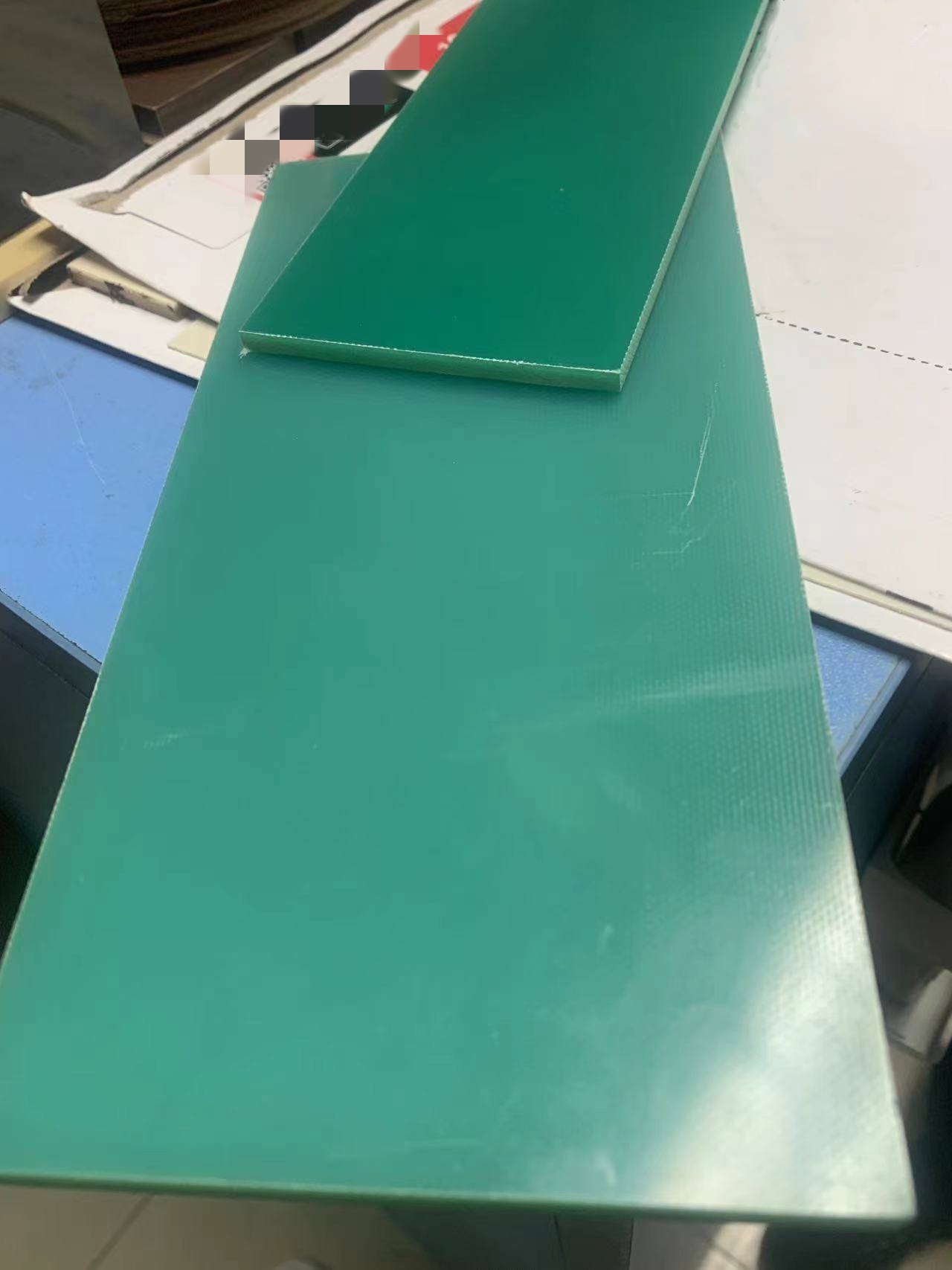
The insulation compound G11 epoxy provides high-performance benefits for various electrical, mechanical, and industrial applications. It stands out because it exhibits three superior characteristics: robust strength, heat resistance, and reliable electrical insulation.
G11 epoxy is a material solution for high-voltage applications or enterprises operating at extreme temperatures. This guide provides comprehensive information about G11 epoxy, including its characteristics, industrial uses, and advantages.
You will come to understand its position relative to G10 and FR4 laminates and what characteristics determine the suitable G11 epoxy choice.
What Is G11 Epoxy?
Advanced composite material G11 epoxy is produced by processing woven fiberglass cloth and epoxy resin. The material received recognition because it has good electrical insulation properties, high strength, and excellent mechanical thermal resistance.
Materials produced by a combination of a lamination curing process display superior durability and stability for demanding applications and high performance under extreme conditions.
Composition of G11 Epoxy
From a compositional standpoint, G11 epoxy includes two basic elements which are fiberglass materials combined with epoxy resin.
1. Fiberglass Cloth G11 epoxy requires fiberglass cloth as its main component since it serves to strengthen the material while enhancing its flexibility. The mechanical strength of the laminate improves through this addition because it demonstrates robustness against impact along with both bending and mechanical force. Woven fiberglass produces an organized structure which enhances the durability of the material.
2. Epoxy Resin: The binder portion of this material system is chemical and resin. The central structural integrity of the fiberglass layers depends on the epoxy resin. For both physical and chemical properties, this synthetic material gets its essential qualities from the G11 (high-performance) epoxy resin, which resists heat up to 180°C.
The G11 epoxy is nice for various electrical and electronic applications needed for the insulator materials. Along with certain chemical compounds that guard against moisture, solvents, and chemicals, the G11 epoxy bases promise performance in very severe industrial situations.
Manufacturing Process of G11 Epoxy
Different controlled manufacturing processes ensure the highest quality values from the G11 epoxy in the production stage:
1. Lamination To start, high-performance epoxy resin is incorporated into multiple woven fiberglass fabric sheets. Each layer is meticulously placed in position for proper uniform thickness and continuity.
2. Compression Curing The finished layers are put under very high pressure and high-temperature conditions. At the cure regimen, there is adequate hardening of the epoxy resin to provide necessary strength attributes along with heat resistance and electrical insulation properties to the laminate system.
3. Customization and Machining After curing the G11 material becomes ready for shaping into particular forms for industrial use. CNC cutting drilling and milling processes can be utilized to manufacture the material. Producers could create distinct mechanical electrical and aerospace components through this method.
Comparison with Other Laminates
The comparison between G11 epoxy and other epoxy-based materials especially G10 epoxy and FR4 epoxy occurs because of their similar chemical compositions. All materials possess specific characteristics that qualify them for specific applications in the market.
G11 vs. G10
The heat tolerance limits of G11 epoxy extend to 180°C whereas G10 epoxy reaches only 140°C. G11 stands out as the suitable material selection when heat exposure needs to be managed over extended periods. The mechanical properties of both materials are exceptional however G11 demonstrates slightly greater strength properties which allow high-load usage.
The market shows that G11 ranks above other materials for its use in high-voltage electrical systems together with automotive applications and aerospace. G10 serves predominantly as an insulation material for PCB boards and at the same time provides general electrical insulation requirements.
G11 vs. FR4
Both G11 and FR4 demonstrate excellent features as electrical insulation materials due to their fine dielectric characteristics. The heat tolerance range of G11 surpasses FR4 making this material suitable for environments with severe heat conditions. G11 meets UL 94V-0 industrial safety requirements while having well-established flame-retardant properties, just like FR4.
Salient Characteristics of G11 Epoxy
The combination of mechanical, thermal, and electrical attributes makes G11 epoxy the perfect option for high-performance industrial purposes. The following are its primary characteristics.
G11 epoxy demonstrates strong tensile along with flexural characteristics that enable it to withstand impacts successfully in addition to mechanical stress. It provides further structural strength in demanding applications since it operates successfully under hot conditions.
G11 has high-capacity electrical insulation due to its unique structure, which allows it to function well in high-voltage environments. G11 epoxy serves electric and electronic systems by providing safety protection and leak prevention while delivering long-term product reliability.
In comparison with G10 and FR4 laminates, G11 has a higher thermal-resistant performance because manufacturers designed it to survive heat up to 180 degrees Celsius. The market has chosen G11 for insulation needs in electrical installations, industrial applications, and aerospace because of its heat-resisting ability.
G11 epoxy presents fire resistance for industrial and electrical systems that fulfill UL 94V-0 requirements. G11 possesses good moisture resistance and chemical immunities due to its low level of water absorption.
In harsh conditions, G11 epoxy shows excellent resistance to corrosive substances, oils, and chemicals, giving it exceptional durability. G11 epoxy allows CNC processing machines to cut it along with drilling and shaping easily.
The ability of G11 to accept machining operations enables manufacturers to adapt it for specific industrial applications, which allows its use across the electrical engineering, automobile, and aeronautics sectors.
G11 Epoxy vs. Other Laminates (G10, FR4, etc.)
The selection of an epoxy laminate requires a thorough comparison between multiple options until you identify the material that delivers optimal requirements and satisfaction.
The unique properties of G11 epoxy distinguish it because of its strong mechanical performance along with high resistance to heat which makes it suitable for demanding applications. Study the following evaluation which examines G11 and G10 alongside FR4 laminates.
G11 vs. G10: A More Detailed Analysis
The popularity of G10 epoxy laminate does not match its performance compared to G11 when used in demanding high-temperature applications. Two materials exhibit different characteristics due to specific properties explained in this comparison.
| Feature | G11 | G10 |
| Heat Resistance | Up to 180°C | Up to 140°C |
| Mechanical Strength | Higher | Moderate |
| Electrical Insulation | Excellent | Excellent |
| Chemical Resistance | High | Moderate |
Heat Resistance: G10 works only at temperatures up to 140°C, while G11 offers exceptional heat resistance and can work at temperatures as high as 180°C. The short-chain branch configuration of its base chemical structure gives G11 better performance in hot application settings compared to aerospace and heavy-duty industrial operations.
G11 displays better mechanical strength when compared to G10 since its flexural and tensile strength outperforms G10. The material fulfills structural needs requiring strength performance because of its robust mechanical properties.
Electrical insulation functions as an excellent advantage in both G11 and G10 due to their exceptional ability to isolate electrical components. Better mechanical and thermal properties give G11 some benefits when used in harsh environments.
Because of the oily nature of exposure to water and chemicals, the chemical resistance features of G11 surpass that of G10. Therefore, it offers better protection against corrosion and moisture than G10.
G11 vs. FR4: Understanding the Differences
FR4 is a glass fabric epoxy that has drawn market notoriety because it is an essential component of printed circuit boards. FR4 and G11 exhibit good electrical insulating capability; however, G11 performs superior to them at higher temperatures.
The significant difference between the two lies in the ability to withstand high temperatures; hence, G11 outshines FR4, which can bear good numbers at elevated temperatures. While it is good, FR4 has better dielectric strength. Still, this material cannot endure harsh environments because it cannot withstand a higher temperature like G11, which can perform effectively up to 180°C.
FR4 is mainly used in electronic assemblies due to good flame retardant and electrical insulating properties. G11 is preferentially applied in tolling for industrial insulation components, generator components, and high-voltage insulators, as it provides both mechanical strength and heat resistance.
The durability of G11 material reaches extraordinary levels as it can function reliably under temperatures exceeding 180°C coupled with mechanical strain or contact of different fluids.
The material finds widespread use in industrial fields together with the military and aerospace sectors.
Which One Should You Choose?
The application of G11 shows more suitability when mechanical strength and high-temperature performance matter under demanding operating conditions. The cost-effective choice for PCB uses goes to FR4 material since it performs well in electronics manufacturing.
G10 will do when substituting for general-purpose insulation with mild thermal needs. The operating conditions, mechanical stress, and environmental exposure your application will be exposed to determine ultimately which material is best.
Applications of G11 Epoxy in Different Industries
G11 epoxy is widely used in various industries due to its exceptional thermal resistance, electrical insulation, and mechanical strength. Below are some key industries in which it plays a crucial role.
- Electrical and Electronic Applications – The G11 epoxy is used very extensively in all electrical and electronics applications, including switchgear, transformers, circuit breakers, and motors in which insulation properties and heat resistance are the only criteria. With its high electrical insulation in various high-voltage environments, its dielectric strength prevents electrical leakage, and as such, makes it an excellent material for application in power distribution and control systems.
- The extremely strong mechanical properties of G11 epoxy make it suitable for constructing structural components and generator parts and gears as well as fixtures. The material proves excellent for demanding mechanical resistance applications because heavy industrial equipment uses it to perform at high loads and temperatures. It has the ability to withstand extreme industrial conditions, coupled with humidity and chemical resistance.
- The aerospace and military sector chose G11 epoxy as the top material for aerospace defense work since it remains relatively lightweight while providing impressive strength and durability features.
- It provides thermal as well as electrical insulation for aircraft, radar components, and defense equipment by offering essential reliability features under extreme conditions. Even though essentially fire-resistant, G11 epoxy demonstrating the capability to withstand high temperatures operates to perfection as an advanced material in high-aerospace military programs.
- G11 epoxy is useful in medical diagnostic devices and renewable power solutions as well as powerhouse machinery in the medical and energy domains. As an excellent choice, G11 epoxy is useful in demanding thermal and electrically demanding applications such as power plant insulation along with medical equipment requiring precise electricity and heat resistance.
- Due to its resistance to chemicals, G11 epoxy effectively works in laboratory environments and cleanroom spaces. G11 epoxy is the chosen material for a variety of industries that focus on long-lasting performance combined with safety features and longevity.
Technical Specifications and Industry Standards
The G11 epoxy is a high-performance material that meets all stringent industry standards and technical requirements. Due to the excellent mechanical, electrical, and thermal properties of G11 epoxy, it performs very well in durability and reliability.
The product meets various specifications and has several industry certifications. If the requirements are specifically defined, G11 epoxy materials will provide epoxy laminates in standard sizes and thicknesses.
This material thickness generally ranges from 0.5mm to 100mm. G11 epoxy laminates go for all applications from thin sheets of insulation to thick structural components.
The product becomes available in basic sheet forms or tailored to fit precise project dimensions. Industry Standards Compliance – G11 epoxy meets various national and international standards to guarantee safety, performance, and reliability:
IEC 60893-3: This is the international standard for electrical insulating materials. This standard sets down the mechanical, thermal, and electrical properties of the material, which verifies G11’s usage in high-voltage applications.
GB/T1303.4-2009: This is the Chinese national standard for epoxy laminated sheets, which is in place to maintain quality control and performance.
UL94V-0 Classifies G11 as self-extinguishing material which prevents the spread of flame, and thus enhances safety in using electrical and industrial equipment.
Mechanical & Electrical Properties: G11 epoxy-based composites have been synthesized with high mechanical and electrical properties to withstand extreme conditions and find structural integrity over time.
Dielectric Strength – G11 offers perfect electrical isolation, hence ideal for high-voltage applications. The dielectric strength is highly effective, giving it the exceptional property of avoiding electrical breakdown and ensuring safe operation in transformers, switchgear, and circuit boards.
Tensile Strength – Superior mechanical strength, G11 has tensile and flexural strength to a very high extent. Mechanical stress and heavy loads can be endured without deforming or breaking down.
Flexural Modulus – G11 has high stiffness and resistance to bending forces that make it fit for structural applications where materials will have minimum flexibility and maximum rigidity.
Based on these technical specifications and standard compliance, epoxy G11 would be a desired material for all applications requiring strong insulation, hardness, and safe performance in any demanding environment.
How to Work with G11 Epoxy?
Machining & Customization G11 epoxy is a high-strength, heat-resistant material that can be shaped and customized for various industrial applications. Due to its fiberglass composition, working with G11 requires specialized machining techniques and proper safety measures to ensure precision and durability while minimizing health risks.
Machining Options
G11 Epoxy demonstrates high rigidity and strength together with its machinable properties and abrasively hard characteristics. Special tools need to be used to cut G11 Epoxy with precision together with smooth finishing requirements.
G11 Epoxy can be processed precisely by CNC machining equipment through cutting operations, shaping operations, and drilling operations. Component design allows customization of shapes and tight limits for electrical and mechanical part tolerances when creating complex geometries.
G11 epoxy needs diamond or carbide-tipped saw blades for cutting it because these tools produce smooth edges without material splintering. The process of laser cutting G11 Epoxy is discouraged because it produces chaff as well as dangerous ventilation fumes. The combination of carbide or high-speed steel drills serves to reduce tool wear while avoiding material delamination.
Drilling processes require an air-blast system or coolant setup to prevent overheating of the materials. G11 can be shaped through milling as well as turned and ground operations which require carbide tooling. There are precise grinding procedures for creating both a smooth finish and precise dimensions of essential component parts.
Customization Capabilities
During application-specific preparation, G11 epoxy allows modification of its shape’s dimensional specifications along with surface processing requirements. The manufacturing industry offers pre-cut dimensions of G11 sheets for users to easily select the correct sizes which serve as electrical insulation panels mechanical parts and aerospace components.
Custom Components require specialized parts like switchgear insulation plates, precision gears, and aircraft insulation panels which need precise specifications that get met through custom machining services.
Surface finishing processes including sanding polishing and coating operations become necessary to boost both the smoothness and chemical resistance of G11 epoxy.
Safety Precautions
When machining G11 epoxy with its fiberglass content it produces dangerous dust particles which are harmful to breathe in. Proper safety protocols are needed to ensure workers’ safety and a safe working environment.
Protective Gear: To avoid exposure to fiber dust, always use safety goggles, gloves, and a dust mask or respirator. Wearing long-sleeved clothing is recommended to prevent skin irritation.
Ventilation and Dust Extraction – Use a high-efficiency particulate air (HEPA) filter system and ensure proper ventilation within the workplace to remove airborne particles. Tool Maintenance – Regularly inspect and replace cutting and drilling tools for accuracy and prevention of overheating or tool wear.
By adhering to these machining procedures and safety protocols, you can effectively modify G11 epoxy for high-performance use while attaining a safe and efficient working environment.
Buying Guide: Choosing the Best G11 Epoxy for Your Needs
G11 epoxy is therefore commonly encountered in applications of electrical, mechanical, aerospace, and industrial domains and the selection of the proper material for your particular requirement, therefore, becomes indispensable.
Selecting G11 epoxy resin, one should take thickness and size, voltage rating, and supplier quality into consideration to achieve the best performing and long lasting solution.
Thickness and Size Based on Application
G11 epoxy resin can be obtained in a range of thicknesses, usually between 0.5mm and 100mm. Thin sheets (0.5mm-3mm) are useful for PCB insulation, electrical barriers, and thin-walled parts. Medium thickness (4mm -10mm) is typical for structural support in electrical cabinets and mechanical purposes.
Thicker sheets (10mm -100mm) deliver the greatest strength-to-insulation ratio and insulation for industrial high-stress applications like heavy machinery insulation and aerospace-grade parts.
Never select thickness unless and only if it complies with both mechanical and electrical needs of your application, in order to avoid unnecessary weight and inadequate shielding.
Voltage Rating for Electrical Uses
When you are using G11 epoxy as an electrical insulator, verify its dielectric strength so it can operate at the rated voltage. G11 has a high breakdown voltage (typically ≥45KV), making it suitable for transformers, switchgear, and circuit breakers.
In high-voltage applications, use the higher-grade G11 sheets that fit the dielectric performance required to operate safely.
Supplier Reputation and Product Certification
Whenever possible, purchase from consistent suppliers that provide certified G11 epoxy materials in order to maintain quality, durability, and compliance with safety regulations”.
Check for compliance with international industry standards, such as IEC 60893-3 – Standard for electrical insulating materials. GB/T 1303.4-2009 – Chinese national standard of laminated insulation sheets.
UL 94V-0 – Flame retardancy certification. Seek ISO-certified manufacturers who are strictly controlled in terms of quality.
Customization Options for Bulk Orders
When you have custom dimensions or pre-machined parts or need them in bulk, make sure your supplier has access to CNC machining and cutting.
There are also many manufacturers able to provide custom solutions for niche applications, such as pre-drilled panels, machined components, or coated surfaces, to increase robustness.
Recommended Suppliers and Manufacturers
For the highest quality G11 epoxy, buy from mills that specialize in industrial-grade laminates and have an excellent record of providing high-engineering materials.
Global Distributors: The top-tier G11 laminates can be found with international brands, including Rogers Corporation and Isola Group, as well as NEMA-certified manufacturers.
Online Industrial Suppliers: G11 sheets of various sizes and thicknesses are available from electronic platforms such as McMaster-Carr, Grainger, and Alibaba.
Custom Manufacturers: However, for precision-milled or pre-machined G11 epoxy components, select manufacturers who provide OEM options and custom fabrication services.
When considering a supplier, make sure to verify customer feedback, material certificates and technical support, to guarantee you are obtaining the highest quality G11 epoxy for the needs of your application.
Conclusion
G11 epoxy is a superior high-performance material used in electrical, mechanical, and industrial applications. With its exceptional thermal resistance, mechanical strength, and electrical insulation properties, it is a top choice for industries requiring reliability and durability.
When selecting G11 epoxy, think about your application requirements, thickness needs, and supplier reliability. Whatever use you require it for, high-voltage insulation, aerospace parts, or industrial equipment, G11 epoxy provides long-term performance and safety. Would you prefer to discuss customization or bulk orders? Contact a reliable supplier today!


