
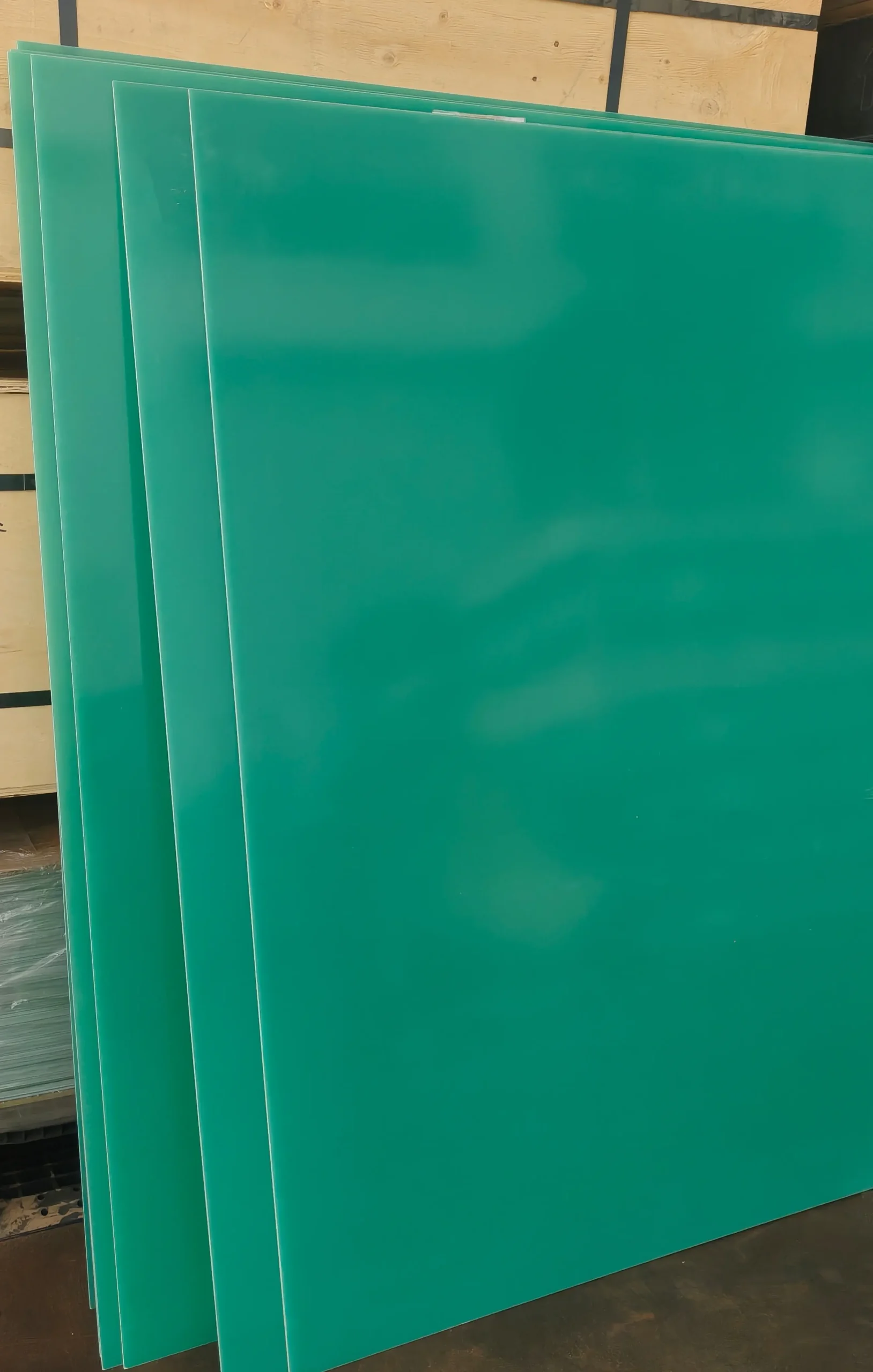
G10 is an engineering composite with a high-quality performance, characterized by outstanding mechanical strength, low weight, electrical insulation and waterproofing and chemical resistance. It was first produced as a high-pressure fiberglass laminate for electrical insulation, but is now used in a wide variety of industries including aerospace, marine, industrial manufacturing, electronics, medical equipment and consumer products.
G10 material is woven fiberglass cloth and epoxy resin, it has high mechanical strength, stability, corrosion resistance and light weight. It is characterized by its resistance to harsh environments and its ability to perform under mechanical and electrical stress; it is therefore suitable for parts such as structures, electrical insulation, and precision-machined parts.
Here we examine the composition, processing, important properties, benefits, uses, drawbacks, and comparisons of G10 to other engineering materials to gain insight of why it is one of the most trusted composite materials in the industry.
What Is G10 Material?
G10 is a high pressure fiberglass laminate that is formed by pressing layers of woven glass fabric together with the epoxy resin. After cure it is a dimensionally stable, electrically insulating rigid thermosetting composite material with excellent mechanical properties.
Thermoplastics are moldable, whereas G10 is not. It has permanent cross-links, which give excellent resistance to heat, moisture, chemicals, and corrosion and makes it an ideal product for harsh industrial applications.
G10 is a composite material made from fiberglass and epoxy resin that is strong, low weight and highly durable, maintaining functionality and shape even under high mechanical stress and in harsh environments.
Composition
G10’s exceptional performance is a result of the use of high-quality raw materials, each adding certain attributes to the composite material.
Fiberglass Cloth
The main reinforcement in G10 is woven fiberglass fabric. The high tensile strength, rigidity and dimensional stability is due to these tightly woven glass fibers. G10 has a fiberglass structure that enables it to resist large amounts of mechanical stress without bending too much.
Epoxy Resin
The fiberglass layers are bound together with epoxy resin. The resin cures to produce a hard, three dimensional network which results in the outstanding resistance of G10 to moisture, chemicals, heat and electric current. The mechanical load is also evenly distributed throughout the laminate, enhancing the laminate’s durability, due to the epoxy matrix.
Additives and Fillers
Manufacturers can add pigments, flameproofing agents or special fillers to achieve the desired properties for a particular application. Such additives can enhance the composite property of fire resistance, improve the fire resistance property, or enhance the appearance of the composite, while keeping the structural integrity of the composite.
Manufacturing Process
To achieve the precision manufacturing needed for the consistent quality and reliable performance of G10, it is essential to use precision manufacturing equipment.
Step 1: Preparing the Fiberglass
Fiberglass cloth sheets are carefully cut to size and checked for uniformity. It is critical to maintain the orientation of fibers in the laminate as it directly influences the laminate’s mechanical properties.
Step 2: Resin Impregnation
The fibers are fully impregnated with liquid epoxy resin for each fiberglass layer. Complete resin saturation will ensure air pockets are filled and provide good bond between layers.
Step 3: Layer Stacking
Resin coated fiberglass sheets are laid up in a specific order to create the desired laminate thickness. Careful alignment maximizes the strength and dimensional stability.
Step 4: High-Pressure Lamination
This stacked material is then transferred to a hydraulic press and heated to high temperatures and subjected to high pressure. The conditions push the layers together and start the curing process of the epoxy.
Step 5: Curing
The epoxy resin is chemically crosslinked and cannot be undone as the temperature is held. In this stage, the laminate becomes a rigid thermosetting composite material having very good mechanical and electric characteristics.
Step 6: Finishing and Inspection
Once cured, the laminate is cooled, cut to size and processed into sheets, rods, tubes or specially-shaped parts. Quality checks are conducted on each batch to ensure that the thickness, dimensional accuracy, mechanical strength, electrical insulation and surface finish are correct before the goods are sent.
Key Characteristics
G10 is a material with some special properties.
Exceptional Strength-to-Weight Ratio
The best thing about G10 is that it provides very high mechanical strength without compromising on the weight when compared with other metals like steel or aluminum. This is perfect for applications which require weight reduction in order to increase efficiency while maintaining durability.
Excellent Electrical Insulation
The dielectric strength of G10 is outstanding, and its electrical conductivity is very low. It is one of the most popular materials for electrical insulation, switchgear, transformer components, circuit boards, and high voltage equipment, among others.
Moisture Resistance
G10 has a very low moisture absorption rate compared to other materials like wood or some types of engineering plastics. This helps to keep it stable in terms of dimensions and electrical characteristics in humid and wet conditions, which is especially useful for marine and outdoor applications.
Chemical Resistance
G10 is resistant to a variety of oils, fuels, solvents and industrial chemicals, minimizing the potential for corrosion or degradation of material. This helps to prolong service life and minimise maintenance requirements in severe operating conditions.
Dimensional Stability
Temperature fluctuations and changes in humidity have minimal effect on G10’s size or shape. Precision-machined components are thus capable of operating within a tight tolerance for their life.
Machinability
G10 is extremely tough, but can be manufactured with conventional equipment with suitable tooling. Excellent structural integrity when being drilled, milled, cut, tapped and shaped into complex parts.
G10 has been one of the most trusted engineering composites today because of its properties. From electrical insulation, structural supports, precision components, and high-performance industrial equipment, G10 ensures consistent performance in challenging applications.
Physical and Mechanical Properties of G10 Material
G10 is highly appreciated for its outstanding mechanical, electrical, moisture/chemical resistance, and thermal stability properties. It is a material with good properties for challenging industrial and engineering applications.
Mechanical Properties
Stronger mechanical properties: G10 is capable of handling tensile stress, compression and flexural stresses without any permanent deformation, which is ideal for a wide variety of structural supports, machine components, tooling fixtures and load-bearing applications.
Excellent Rigidity: It is highly rigid and maintains dimensional stability, which is suitable for precision-machined parts, alignment tools and industrial spacers.
Excellent wear resistance: Worn plates, bushings, bearings and machine guides are good applications for G10.
Dimensional Stability: The material forms into the shape it is given and will not change shape due to temperature or humidity changes, which makes it ideal for precision tooling, aerospace components and electrical equipment.
Electrical Properties
G10 has been designed as an electrical laminate and is an excellent insulator.
Excellent Electrical Insulation: Low electrical conductivity suitable for high voltage equipment such as electrical panels, transformers, switchgear, bus bar supports, etc.
High Dielectric Strength: G10 is resistant to electrical breakdown under high voltage, ensuring safety and reliability of systems.
Arc Resistance: Resists electrical tracking and arc formation, protecting critical electrical parts.
Thermal Properties
G10 can be used effectively in a broad temperature range and offers good thermal insulating properties thanks to the low thermal conductivity. The properties make it an ideal choice for electrical devices, industrial machinery, automotive parts, insulation panels and mounting plates that are resistant to heat and flame.
Chemical Properties
G10 absorbs very little moisture and is resistant to oils, fuels, hydraulic fluids, solvents, mild acids and alkalis. It also resists rust and corrosion and is ideal for applications involving marine, outdoor, and chemically demanding environments.
Physical Characteristics
Although it is a high strength, G10 is light so it saves installation and transportation costs. It has a smooth, resistant surface, easy to drill, mill and machine for making complex parts for special engineering uses.
Advantages of G10 Material
G10 is one of the most versatile engineering materials available today, due to the outstanding combination of mechanical, electrical and environmental properties.
Exceptional Strength-to-Weight Ratio
G10 offers excellent structural strength and lightweight. This gives engineers the freedom of using lighter-weight components without compromising durability or performance.
G10 is often used in aerospace brackets, robotic parts and industrial machine fixtures, among others, where each kilogram of weight saved has a positive impact on the systems overall efficiency.
Superior Electrical Insulation
One of G10’s most significant benefits is its electrical insulation properties.
G10 is used to safely isolate electrical current, and provides long term reliability in demanding operating conditions for power distribution equipment, transformers, switch boards and electrical control panels.
Excellent Moisture Resistance
G10 does not lose strength or expand when exposed to water – unlike a lot of materials.
G10 is used in a range of applications including marine electrical systems, dock equipment, offshore platforms, and outdoor communication systems, as moisture has little effect on its performance.
Outstanding Chemical Resistance
Oils, fuels, solvents and cleaning chemicals are common components of industrial manufacturing.
G10 is resistant to many of these substances and is recommended for use in automotive equipment, food processing plants, industrial machinery and chemical processing plants.
Long Service Life
Due to G10’s resistance to corrosion and wear, as well as durability against moisture and environmental degradation, components can run for many years without the need for much maintenance.
This durability means fewer replacement expenses and less equipment downtime, resulting in substantial long-term savings to manufacturers.
Excellent Machinability
G10 is very strong material but can be precision machined into complex shapes and with very good dimensional stability.
Typical CNC machine tools are used to manufacture gears, insulating spacers, mounting plates, electrical barriers, custom brackets and special machine parts.
Robust operation under extreme conditions
The performance of G10 in many operating conditions is consistent over many engineering materials.
G10 is a reliable material that will not compromise or degrade in the event of being exposed to moisture, electrical loads, moderate heat, industrial chemicals or vibration.
Cost Effective Over the Product Lifecycle
While the initial costs of using G10 may be higher than some traditional plastics, the equipment saving that comes from the longevity and low maintenance of G10 could actually offset those costs over the life of the equipment.
G10 offers an investment that is cost-effective for industries looking to reliable long-term performance with less replacement needs and maintenance.
Common Applications of G10 Material
Due to its outstanding features, G10 is used in many industries. It is also known for its durability and reliability in harsh environments, making it a popular choice for electrical and structural uses.
Electrical and Electronics
Due to its high dielectric property and low electrical conductivity, G10 has been used as an electrical insulating material for electrical systems. Typical uses are bus bar supports, switchgear parts, transformer insulation, circuit breaker parts, terminal boards, control panels and printed circuit board (PCB) substrates.
Aerospace
G10 is utilized in the aerospace sector, going through the benefit of its high strength to weight proportion and dimensional stability. It is extensively used in aircraft bracket production, mounting plate manufacturing, insulation production, precision spacer production and structural panel production, which requires lightweight and sturdiness.
Marine
G10 is extremely resistant to moisture, salt water and corrosion, so it is suitable for use in marine applications. Uses range from electrical insulation to structural supports, deck hardware spacers, pump parts and marine electronics enclosures.
Industrial Machinery
G10 is used by manufacturers to make machine parts that resist wear including bushings, bearings, guide rails, mounting fixtures, machine guards, and structural support. It has a long life and is dimensionally stable, reducing maintenance and equipment life.
Medical Equipment
G10 is used in the medical industry for diagnostic equipment, lab instruments, medical device housings and precision fixtures. It is strong, chemically resistant and electrically insulating, making it ideal for the difficult medical environment.
Renewable Energy
Applications like wind turbines, solar inverters, battery storage and electrical distribution equipment are experiencing increased use of the G10. It is also highly resistant to the elements, providing long-lasting durability.
Consumer Products
Apart from industrial applications, G10 is a favored material for the applications of knife handles, tool handles, sporting goods and other high-performance consumer goods, among other applications. It is lightweight, durable and has a textured finish, which gives strength and grip.
G10 Compared with Other Materials
| Property | G10 | FR4 | Aluminum | Nylon | Phenolic (Bakelite) |
| Mechanical Strength | Excellent | Excellent | Very High | Good | Good |
| Electrical Insulation | Excellent | Excellent | Poor | Good | Excellent |
| Moisture Resistance | Excellent | Excellent | Excellent | Moderate | Good |
| Chemical Resistance | Excellent | Excellent | Moderate | Good | Good |
| Weight | Light | Light | Moderate | Very Light | Light |
| Machinability | Excellent | Excellent | Excellent | Good | Good |
| Impact Resistance | High | High | High | Very High | Moderate |
| Cost | Moderate | Moderate | Moderate | Low | Moderate |
Limitations of G10 Material
Although it has many benefits, G10 is not applicable to all uses.
One disadvantage is that it has a comparatively high machining hardness. The fiberglass reinforcement wears out very quickly cutting tool, and carbide or diamond tooling is necessary for efficient machining.
While G10 is effective at higher temperatures, its mechanical properties will decrease over time if temperatures are above its range of use.
The next factor to take into account is weight. G10 is much lighter than steel, but is normally heavier than some engineering plastics.
Fine fiberglass dust is generated during the machining process, and the dust must be properly ventilated and the operator should wear a dust mask.
Lastly, G10 may be priced higher than regular plastics like polyethylene or polypropylene. Naturally, the higher price of the material often outweighed by its longer life.
Maintenance and Handling Tips
G10 is very low maintenance during its service life.
To maximize performance:
- Use a soft cloth and mild detergent to clean surfaces.
- Don’t use abrasive cleaners that could harm the finish.
- Keep components in clean, dry area.
- Regularly check for excessive wear and mechanical damage.
- Use MEC 5700 dust removal equipment when cutting.
- Use safety glasses, gloves and respirators while cutting or grinding the material.
These basic maintenance practices enable the maintenance of mechanical and electrical performance and extend service life.
Future Trends in G10 Material
However, industries are still looking for G10 as it provides a mix of strength, durability, and electrical insulation.
Manufacturers are working on better formulations of epoxy with better resistance to heat, less harmful to the environment and better mechanical properties. Advanced manufacturing technologies are also allowing for more accurate machining and the creation of more complex components.
G10 is also well suited to further applications in high performance areas like the expansion of renewable energy, electric vehicles, aerospace and industrial automation.
Meanwhile, scientists are developing new resin types that are more efficient, environmentally friendly and sustainable, with new production methods for composites that cause less damage to the environment.
Bottom Line
G10 is one of the best engineering composite materials around the world. This unique property of being light weight, dimensionally stable, and resistant to chemicals, electrical insulation and mechanical strength make it an ideal choice for a wide variety of applications in industry and commerce.
G10 reliably works in extreme operating environments including electrical switchgear, aerospace, marine, medical devices, renewable energy and precision industrial machinery. The resistance to moisture, corrosion and wear allow the manufacturers to reduce maintenance costs, improve equipment reliability and service life.
Each of the materials listed as alternatives to aluminum or nylon or FR4 or phenolic laminate has its own advantages, but for a combination of strength, insulation, durability and versatility, G10 offers one of the greatest. As for precision applications with long life and harsh environments it is still preferred by engineers and manufacturers all over the world for its precision, reliability and ability to resist harsh environments.
G10 will continue to be an important engineering composite in the years ahead and as manufacturing processes and resin technologies continue to be refined, G10 will remain an important part of industrial advances.
Conatct Us
For more information about G10 material, you could contact us at info@differentplastic.com. Our staff will assist you in selecting the appropriate epoxy sheet, rod or custom cut epoxy fiberglass sheet parts for your industrial requirements.


