
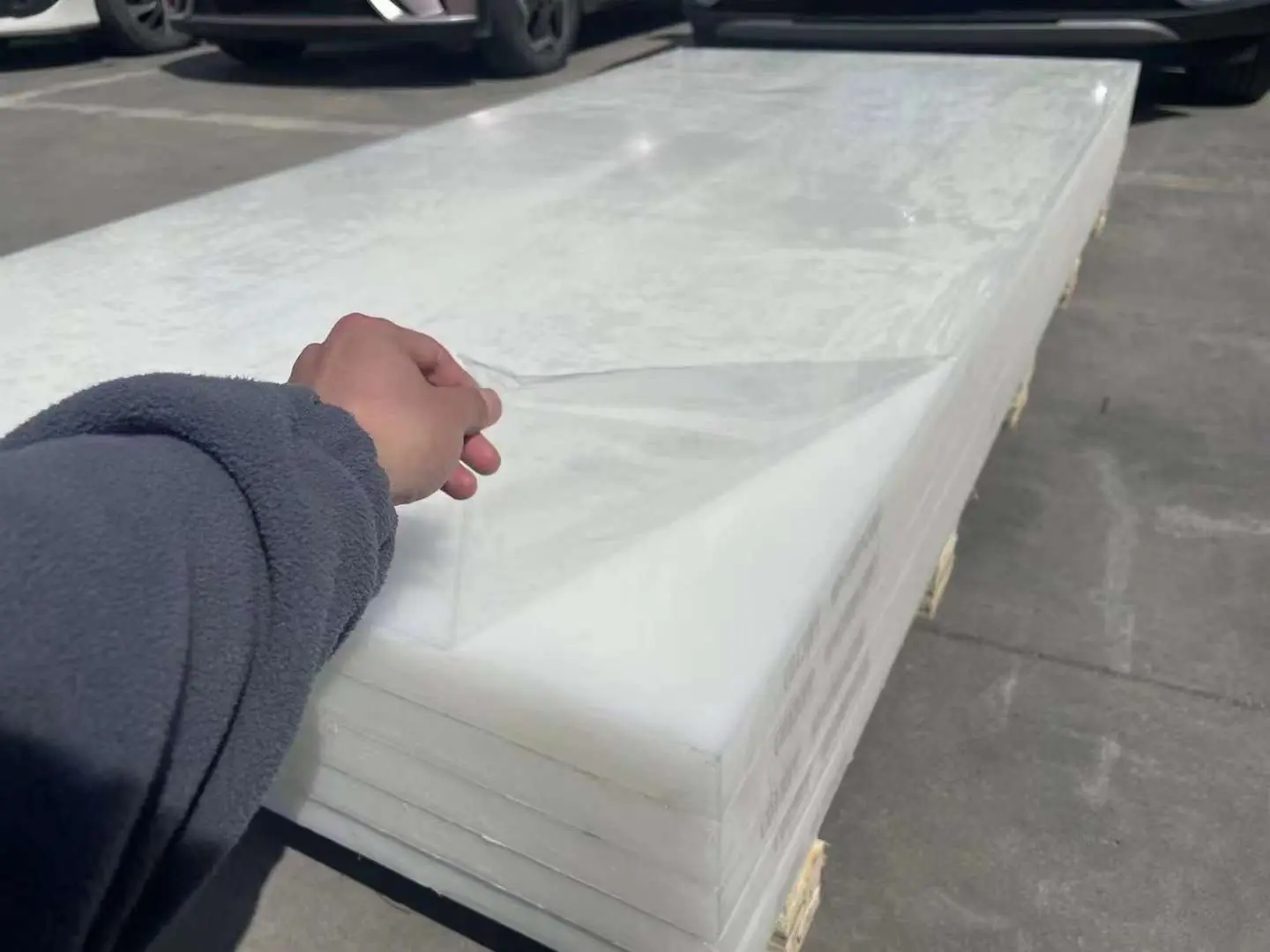
PP sheet is light weight plastic, which are used in a lot of industrial products. Manufactured by extruding polypropylene resin. The completed sheet is used for cutting, forming, machining or welding.
Many acids and cleaning chemicals are resistant to this material. It also takes in very little moisture. These features makes it useful for tanks and wall panels. Also used in food area and electrical parts.
PP sheet comes both in homopolymer and copolymer. The different grades have varying responses to heat or shock. The selection is based on working conditions.
This is a description of the manufacturing and testing of PP sheet. It also includes fabrication techniques and buying considerations.
Key Highlights:
- PP sheet is light and convenient to handle.
- PP-H has a greater stiffness for rigid parts.
- PP-C is more impact resistant and resistant to the cold.
- PP sheet is cuttable, formable and weldable.
- Appropriate heat and chemical exposure are required for the right grade.
PP Sheet: A Practical Material Overview
PP (Polypropylene) sheet is a material produced from polypropylene. A thermoplastic polymer that has many applications. When heated, it becomes soft and when cooled it becomes hard. This gives the sheet greater formability more than once in a controlled heat.
The material has a low density. The PP sheet has a lower weight than a lot of other hard plastic sheets. This can help to decrease the burden on frames and supports. It may also help to handle large panels.
PP sheet is resistant to many acids. It also resists most alkalis and cleaning fluids. Hence, it is utilized as chemical tanks. Also used in lab fittings and process equipment.
There is little water absorbed by the sheet. Does not expand readily in moist locations. This is applicable at washdown zones and food plants. It can also be cleaned without damage to the surface.
PP sheet can be easily cut and welded. Can be drilled with ordinary drilling tools. It becomes useful by bending or forming it with heat treatment. Fabricators can create tanks and covers using flat sheets.
The material comes in various grades. Use of homopolymer PP provides a stiffer sheet. Copolymer PP has increased impact resistance. Some grades are also UV stabilized or pigmented with approved pigments.
PP sheet is not suitable for all applications. May need additional UV protection for long outdoor use. Stiffness can also be decreased by high heat. The material must be selected for the actual working conditions.
The Performance Profile of Polypropylene Sheet
When it comes to light weight and functionality PP sheets are helpful. It is also well-tolerant of wet soils. Its value is evident when working conditions come to light.
1. Low Density and Lightweight Construction
The density of polypropylene is low compared to several other rigid plastics. This makes PP sheet light for its size in comparison. More convenient to lift and move large panels. This can help to shorten the time of handling during installation. It can also reduce the stress on frames.
Helps with mobile equipment as it is lightweight. It is also used for big tank linings and machine guards. Even with a light sheet, it is important to use the correct support. Thin panels can bend when load is applied. The thickness of the sheet should be in accordance with the span and fixing method.
2. Resistance to Acids, Alkalis, and Cleaning Chemicals
PP sheet is resistant to many common chemicals. Often it is very tolerant of acids. It also works with numerous alkalizing solutions. This is suitable for chemical tanks and process trays. Also applied in laboratory spaces.
Some chemicals may be resistant at one temperature and not at another. A fluid that is relatively harmless at room temperature can get more aggressive when heated. The strength of the chemical is also important. A spill of long duration may have a greater impact on the sheet than a brief contact. Material checks should take account of the actual working conditions.
3. Minimal Moisture Absorption
PP sheet has only a small amount of water absorption. Does not readily swell when coming in contact with moisture. This will allow the material to retain its form in damp areas. It is also suitable for stable use in washdown areas.
The sheet is suitable for the surrounding of water tanks and food equipment. Also appropriate for a lot of outdoor enclosures with the addition of UV protection.
4. Flexibility Without Excessive Softness
PP sheet has not the same rigidity as other plastics. May flex somewhat in response to stress but not fracture immediately. This may help the sheet to absorb light blows. It can also decrease the abrupt cracks near the fixed points.
When the thickness is correct, the material still retains its shape. May be used for guards/cover. It can also be bent to curves after heating.
The high temperature will soften the sheet. Additional support may be necessary around sources of heat.
5. Fatigue Resistance for Repeated Bending
Unlike many rigid plastics, polypropylene can withstand multiple bending. That’s why it’s sometimes employed in living hinges. If the thin section is designed correctly it can bend many times. Bend line should be smooth in shape. Cracks may begin at sharp corners.
This characteristic is beneficial in lids and folding covers. It may also be used to support moving components under regular use.
6. Reliable Electrical Insulation
The PP sheet is an insulator when it is in its normal dry state. Can be used as a barrier around electrical parts. It can be used in control panels and battery systems. It is further used in protective covers.
The entire assembly may be impacted if moisture is present on the surface. Dirt can also form a path for current.
7. Food-Contact and Hygienic Grade Availability
PP sheet is available in grades made for food areas. These grades feature controlled additives and approved resin. Smooth surface for easy cleaning. Has low water absorbency. This can minimize the accumulation of dirt.
Food Grade PP sheet is used for cutting surface and wall lining. It’s also found in storage bins. Not all PP sheets are food safe. The buyer shall ensure that the supplier provides the proper documents.
Homopolymer or Copolymer: The First Major Decision
PP sheet comes in two main grades families. They are called homopolymer and copolymer. The answer is related to stiffness and impact strength. Also influences the behavior of the sheet in cold regions.
1. PP-H Homopolymer Sheet
PP-H sheet is composed of one kind of polypropylene resin. It is well structured. This increases the stiffness of the sheet. The surface is also hard than PP-C sheet. This can facilitate the resistance to light marks during the normal use of the material. It also provides improved shape control of rigid parts.
PP-H is good at higher operating temperature. Retains its stiffness as temperatures increase. This makes it to be ideal for warm process areas.
2. PP-C Copolymer Sheet
PP-C sheet is a polypropylene compounded with other polymer. This change results in improved toughness of the material. The sheet is better able to absorb impact. It won’t crack as easily if it gets hit hard. This is beneficial when applied to moving components.
PP-C works more effectively in colder conditions. It is not as brittle in the winter outside or in cold rooms. The grade is often used for machine guards. Also provides for transport boxes and mobile equipment. PP-C can also be used for parts that are subject to vibration.
How the Two Grades Behave Differently in Service?
The main polymer used in PP-H and PP-C is the same. But they don’t work in the same manner. It should be based on the load and temperature. The risk of impact also is an issue.
1. Rigidity Versus Toughness
The stiffer grade is PP-H. It will flex less amount when subjected to the same load. This aids tanks and panels in maintaining their form. PP-C is more flexible. It can withstand a higher impact without cracking. This is great for places that could see knocks on parts.
The thickness of PP-H panel can be a factor to consider when deciding between PP-H and PP-C panels, as a thinner PP-H panel can be quite hard compared to a PP-C panel of equivalent size. PP-C, however, can be more persistent in areas where there is a sudden impact.
2. Temperature Sensitivity
PP-H is more effective in warm service. Maintains increased stiffness with rising temperature. PP-C is more effective in cold regions. It’s not as likely to become brittle at low temps. Both grades become softer when exposed to heat. If the load is maintained for extended periods the sheet may bend.
3. Crack Resistance
PP-C provides greater resistance to sudden cracks. Its structure allows it to absorb more impact. There are drilled holes or fasteners where this is helpful. Also is helpful in vibration exposed areas.
PP-H can break more easily following a hard hit. This risk increases in colder temperatures. Smooth corners can help minimise this risk. Small cracks can also be avoided by using the proper drilling technique.
4. Fabrication Behaviour
Both grades can be cut and welded. Can also be created under controlled heat. PP-H has great holding power after it is fabricated. This is suitable for square tanks and rigid frames.
PP-C may recover to a lesser or greater degree from bending. It can also be slightly displaced in the welding process. When heating, apply heat evenly. Warping can occur in either grade due to uneven heating.
5. Cost and Availability Considerations
PP-H is a material that is commonly used in industrial fabrication. Standard sizes can be more easily sourced. The price of PP-C can vary in certain markets. The price varies according to the thickness of the sheet and the grade.
But the lower price shouldn’t be the only factor in choosing the purchase. In the event of a cracked panel, the replacement may be more costly.
For rigid parts for use indoors, PP-H may be a more cost-effective option. PP-C may be more cost effective when impact or cold is an issue. Lead times should also be checked by the buyers. Some colours and approved grades may be subject to pre-order.
From Polymer Granules to Finished Sheet
PP sheet is initially produced as small resin granules. These granules undergo several stages of controlled processes. Every stage will impact on the final sheet. Weak areas or surface defects may be caused by poor control.
1. Resin Compounding
It all begins with the right PP resin. The grade can be PP-H or PP-C. Depending on the intended use, either or both of these options can be selected.
Colouring can be done with the addition of pigments. Sometimes stabilizers are added as well. They are used to increase the heat resistance of the sheet during the processing. UV additives are used for outdoor grades. Stiffness and/or cost can be modified by adding fillers. But excessive fillers will impact strength.
2. Melt Extrusion
The mixed granules are fed into an extruder. They are pushed through a heated barrel by a rotating screw. The heat makes the resin soft. The molten material is then mixed by the screw. This will help make the melt even.
The temperature should stay in the proper temperature range. Some low heat may remain unmelted particles. Excessive heat may adversely affect the polymer.
3. Sheet Formation and Calibration
The melted polypropylene is extruded through a flat die. The die rolls the material through a wide sheet. The thickness in between the die is the first thickness. The sheet is then taken to go through calibration rolls. These rolls are useful for determining the final size of these rolls.
There shall be no variation in roll pressure throughout the entire width. If not controlled properly, thick edges or thin spots may form.
4. Cooling, Stress Management
Hot sheet must cool down prior to cutting. Cooling rolls are used to cool in a controlled manner. Rapid cooling can induce stresses within the material. This stress can be the cause of warping later.
The problems can also arise as a result of slow or non-uniform cooling. The sides may not grow even. The cooling rate should be appropriate for the thickness of the sheet. Thick sheets require longer time than thin sheets.
A good cooling will keep the sheet flat. It is also used to decrease the motion of the cutting or welding piece.
5. Surface Treatment and Finishing
The surface texture of the sheet can be imparted after cooling. This can enhance the grip or cover up light markings. There are some sheets that require treatment prior to printing. One is the common method that alters the surface, causing the ink to adhere better.
A protective film can be applied to the sheet. The film will protect against scratching during transport. This is followed by trimming of the edges. Sheet is cut to desired width and length.
The final product should be the same size as the order. If the cutting is not done well, further fabrication can become somewhat complicated.
6. Batch Verification
Each batch must be inspected prior to release. Multiple thickness measurements are taken. Inspection of surface is also carried out. Problems with extrusion may be indicated by marks or bubbles.
To verify the material type, density can be measured. For tougher grades, impact tests can be employed.
Large panels need to be flat. It can be difficult to weld or machine a warped sheet. Length and width should not be outside of the stated limit either. Colour should be even throughout the batch.
In fact, Test Records are used for verification of Product Quality. They also aid in tracking down the issue if one occurs at a later time.
How PP Sheet Responds to Real Operating Conditions?
PP sheet has a high performance in challenging working areas. It has a heat and load dependent service life. The result is also influenced by chemical contact. When used outdoors, requires additional care.
1. Continuous Heat
The higher the temperature, the softer PP sheet will be. May begin to bend under sustained load. PP-H is suitable for warm service and has a better performance to PP-C. It maintains its stiffness at higher temperatures. But, no grading should be near an extreme heat.
A thicker sheet could have a greater resistance to bending. Additional support can also help to decrease movement. The design should be based on the normal working temperature. It should not be solely based on a short term heat limit.
2. Cold Environments
PP sheet may lose its flexibility at low temperatures. PP-H may become brittle in very cold areas. PP-C offers enhanced impact strength in cold service. Commonly found in cold rooms and outside equipment.
A cold sheet can break when a sudden blow occurs. This risk can be increased by sharp corners. Sheet must be allowed to warm before forming. For cold material, it can split during bending. Lowest working temp is a requirement when purchasing. The storage conditions also must be taken into account.
3. Chemical Contact
PP sheet has a good resistance to many industrial chemicals. It is compatible with acids and alkaline solutions. This depends on the strength of the chemical. The same goes with temperature, as it affects the reaction of the material.
Minor spills may not be visually detectable. Extended contact can be more of an impact. Welds should be part of the complete system. A joint may be weaker than a sheet and cause a tank to fail.
4. Sunlight and Outdoor Exposure
It is possible for the strength of standard PP sheet to decrease due to extended exposure to the sun. Surface may turn brittle or fade. UV-stabilized grades are more suitable for outdoor applications. These grades are formulated with additives that retard damage from sunlight.
Dark colours can absorb more heat. This can be helpful in stimulating surface movement during warm weather.
5. Repeated Loading
With a good part design, PP sheet can withstand repeated bending. Thin sections may work as living hinges. Slow movement is possible with heavy loads. This is known as creep. Over time, the sheet can bow, even with the same load.
This effect can be minimized with a thicker panel. This can also be helped by having closer support points. Vibrations can cause stresses around holes and welds. Rounded corners can reduce cracking potential.
Fabricating PP Sheet Without Compromising Performance
When proper technique is applied, PP sheet can easily be fabricated. If the tools are not controlled properly the edges may be damaged. Warping can also be caused by too much heat. The steps should be appropriate to the grade and thickness of the sheet.
1. Cutting and Sawing
PP sheet can be cut by the standard workshop cutting tools. Circular saws are good for straight cuts. Band saws are good for curved designs. Blade should be sharp. A dull knife will cause heat to build up and cause rough edges. May also pull the sheet when cutting.
When combined with fine teeth, this can produce a clean finish. The speed of the blades should not be too fast. If the speed is too high, the cut edge will be softened.
The sheet needs to be well supported. Large panels may move if the table is too small. This can cause inconsistencies in cut.
Protective film could remain on workpiece during cutting. Helps keep scratches away. Film must not be allowed in the blade path.
2. CNC Routing and Machining
CNC routers can be used to create detailed parts made out of PP. They are able to make slots and cut curves. These can also form pockets. Carbide tools are frequently used and are very sharp. The cutting tool should be used to cut chips but not generate excessive heat.
Inadequate removing of the chips may make the surface soft. Melted chips may stick to the tool. This can cause a lower cut quality. Chips may be removed with the aid of air flow. It can also help to maintain the cutting area cold.
The speed at which the feed moves should correspond to that of the tool. When feeding slowly, heat may be produced. A very rapid feed can result in a ragged edge.
3. Drilling and Hole Preparation
Standard drill bits can be used on PP sheet. The bit should be clean and sharp. Sheet should be on a flat back board. This will prevent any damage to the outside when the bit comes out.
The holes should be drilled in steps in large holes. This causes heat to be less near the edge. It also provides more control. When movement is required, the hole should be slightly bigger than the fastener. PP expands with an increase in temperature.
Cracks can form in a slot with sharp corners on the inside. Rounded ends are safer. The drill should NOT cut through the sheet. A cleaner hole is achieved through the light pressure. Chips should be raked frequently.
4. Thermoforming and Heat Bending
PP sheet is soft when heated. It can then be bent or made to take shape over a mould. Heat needs to be evenly distributed over the bend area. Ripples can form due to differential heating. Can also induce internal stresses within the sheet.
The line bending can be done on a narrow heater. When thick sheet is being heated, both sides must be heated. Material can rebound after cooled. A small allowance for the bend angle may be necessary.
PP-H typically retains a formed shape. PP-C can exhibit greater spring back. Sheet should be supported during cooling. The final angle can be altered with early movement. Excessive heat will harm the surface. It can also cause the sheet to become thin in the area around the bend.
5. Hot-Gas, Extrusion, and Butt Welding
PP tanks and ducting are extensively welded. The edges of the sheet are heated so that they become soft. Matching PP material is then used to form the joint. Hot-gas welding is welding with hot air. A welding rod is fed into the joint. This method is suitable for repairing small parts.
Melt PP is placed in the joint during the process of extrusion welding. It is helpful for thicker sheets. Also suitable for long seams. Butt Welding is a type of welding in which two flat edges are being welded. The edges are heated up to a hot plate. Afterwards they are squeezed together.
Sheet and welding rod should be compatible. Normally PP-H rod should be used in conjunction with PP-H sheet. This applies also to PP-C.
The joint area should be free of dirt. The weld can be weakened with oil or dust. Heat and pressure should be kept under control. The polymer can be burned by excess heat. Low heat can cause bonding to be incomplete.
6. Mechanical Fastening
Bolts or screws can be used to repair PP sheet. The fixing method should provide for movement of the sheet. Spread the load by using washers. They also help to minimize hole pressure.
Don’t over tighten fasteners. The sheet can be crushed under high pressure. It may also cause cracks over time. Long panels require space for expansion. This movement can be aided by slotted holes. The support frame should not be bent. A bent frame may cause the panel to become out of shape.
Chemical areas may require metal fasteners to be protected. The material of the fastener should be appropriate to the environment where the fastener will work. A seal may be required for mechanical joints. Seal material must be compatible to PP and chemical used.
7. Surface Treatment Before Printing or Bonding
The surface of PP is low energy. There are many inks and adhesives that do not adhere to untreated sheet. Flame treatment is also available. Both methods affect the outer layer of the sheet.
The treatment should be uniform. If not strong enough, weakness in bonding. Over treating can damage the surface. Printing should be done immediately after treatment. The effect can diminish while in storage.
Sheet must be free from grease. Before printing, dust should also be cleaned. Adhesive bonding of PP is challenging. Special primer may be required. The glue needs to be polypropylene specific.
Often times welding is better than gluing. Mechanical fastening may also provide superior performance. A test of a small scale should be carried out prior to full production. This can help ensure the selected ink or adhesive will stick.
PP Sheet Compared Through a Decision Lens
PP sheet is many times contrasted with HDPE, PVC, and ABS. The service range of each material is different. The selection of the right one will depend on the use of the part.
When PP Sheet Is the Better Choice
- Chemical tanks and process equipment are made of PP sheet. Also suitable for wet conditions.
- The material is not as heavy as PVC. In many applications it can also withstand higher temperatures than HDPE.
- PP is a good option for a material with a need to weld. It is also helpful if the part has to be bent multiple times.
- Food-contact grades are readily available. This renders PP valuable for food plants.
When HDPE May Be More Suitable
- HDPE has excellent impact resistance properties. It is also cold hardy.
- Typically used for cutting boards and wear strips. Also widely used in tank linings.
- HDPE seems softer than PP. May bend more when under the same load.
- It is more desirable where toughness is more important than stiffness.
When PVC May Be More Suitable
- PVC sheet is rigid as compared to PP. It is able to span a greater distance without changing shape.
- Glues and prints more easily. It can be used for sign or wall panels.
- Chemical ducts are also made from PVC. However, its weight is higher.
- There are PVC grades that are susceptible to impact embrittlement. The grade level shall be appropriate for the operating temperature.
When ABS May Be More Suitable
- The surface of ABS is hard. It also provides excellent impact resistance.
- Easy to thermoform material. Usually employed for covers and interior panels.
- A smooth surface finish is obtained with ABS. It also has a greater ability to take paint and print than PP.
- It’s not the first pick for strong chemical contact. Tanks or process equipment are typically better made from PP.
There are no one-size-fits-all use cases for sheets. PP provides good chemical balance for chemical work and welded parts. HDPE is suitable for high impact areas. Rigid panels are PVC suits. The parts produced were finished clean by ABS.
FAQs:
1. Is PP sheet rigid or flexible?
PP sheet is stiff, but not hard. It has the ability to flex under pressure without instant fracture. This is the harder grade: PP-H. PP-C is softer and less rigid, and has the ability to absorb more impact. The result is also dependent on the thickness of the sheets. The thicker panel will provide a lot more support than a thin panel.
2. What is the difference between PP-H and PP-C sheet?
PP-H is a material composed of polypropylene homopolymer. It provides a greater stiffness and improved shape control. PP-C contains a copolymer component. This increases the impact strength of the sheet. PP-H is suitable for rigid tanks and fixed panels. PP-C suits parts that are subject to knocks or cold.
3. Can polypropylene sheet be used for chemical tanks?
Yes. PP sheet is used extensively for chemical tanks. It withstands a lot of acids and alkaline fluids. Can also be welded in big structures. The correct grade should be used for the chemical stored. The strength and working temperature of the fluid should also be tested. The thickness of the tank must correspond to that of the liquid pressure. Quality of the welds is also critical.
4. Is PP sheet suitable for outdoor installation?
The regular PP sheet isn’t suitable for prolonged outdoor applications. Over time sunlight can cause the surface to become compromised. A UV-stabilized grade should be used outdoors. Includes additives which slow damage caused by sunlight. The design should also provide for expansion of the sheet. Panels can move due to the outside heat.
5. Can PP sheet be glued, welded, and thermoformed?
There are numerous methods of welding PP sheet. For small welds, hot-gas welding is used. Bigger thickness can be joined by extrusion welding. The sheet can also be formed by thermoforming. It can be bent or shaped with a mould, by controlled heating. Gluing is more difficult. Untreated PP is not very adhesive with standard adhesives. May require use of a special primer. The bonding can also be enhanced by treating the surface.
6. How does temperature affect polypropylene sheet?
PP Sheet is softened by heat. Sometimes the loaded panel may bend during prolonged heat exposure. PP-H retains greater stiffness in warm regions. PP-C is better suited to the cold region. Extremely cold temperatures can contribute to cracking. This is more likely to happen with PP-H. The complete working range must be understood prior to choosing the sheet.
7. Is PP sheet safe for food-processing environments?
PP sheet for food contact is available. Made of approved resin and controlled additives. Surface absorbs very little water. It’s also simple to clean. The buyer shall ask for the proof of food-contact approval. Standard industrial sheet may not be able to comply with the rules required. The surface should be smooth. Dirt can build up in deep scratches.
8. What causes fabricated PP panels to warp?
Warping is a problem that often results from uneven heating. One side of the sheet can stretch out more than the other. But insufficient cooling can result in stress being trapped within the panel. This stress can manifest itself after cutting or welding. Welds have the tendency to distort a sheet. This problem is worse with excess heat.
Final Thoughts!
PP Sheet is a useful material that can be used in a number of industrial projects. Easy to fabricate, light weight. It also grows in damp conditions. The type of grade used should correspond to the conditions of work. PP-H suits parts requiring greater stiffness. PP-C is suitable for parts subject to impact and/or cold.
The behavior of the sheet can vary with temperature. Can be softened with the heat. Cold can increase the chance of cracking. Careful chemical contact checks also must be made. It is the strength of the fluid that is important. Soap up time is important too.
As important as the grade selection is good fabrication. The welding may be poor and make the tank weak. Warping can occur due to uneven heating. Please check thickness and surface finish before ordering. They should also check the necessary approvals.
A properly-drafted PP sheet can offer extended service life. It can also minimize the need for repairs and production waste.
For more information about PP sheet grades and sizes, please contact info@differentplastic.com. Our staff can assist you to choose the appropriate sheet for your project.


