
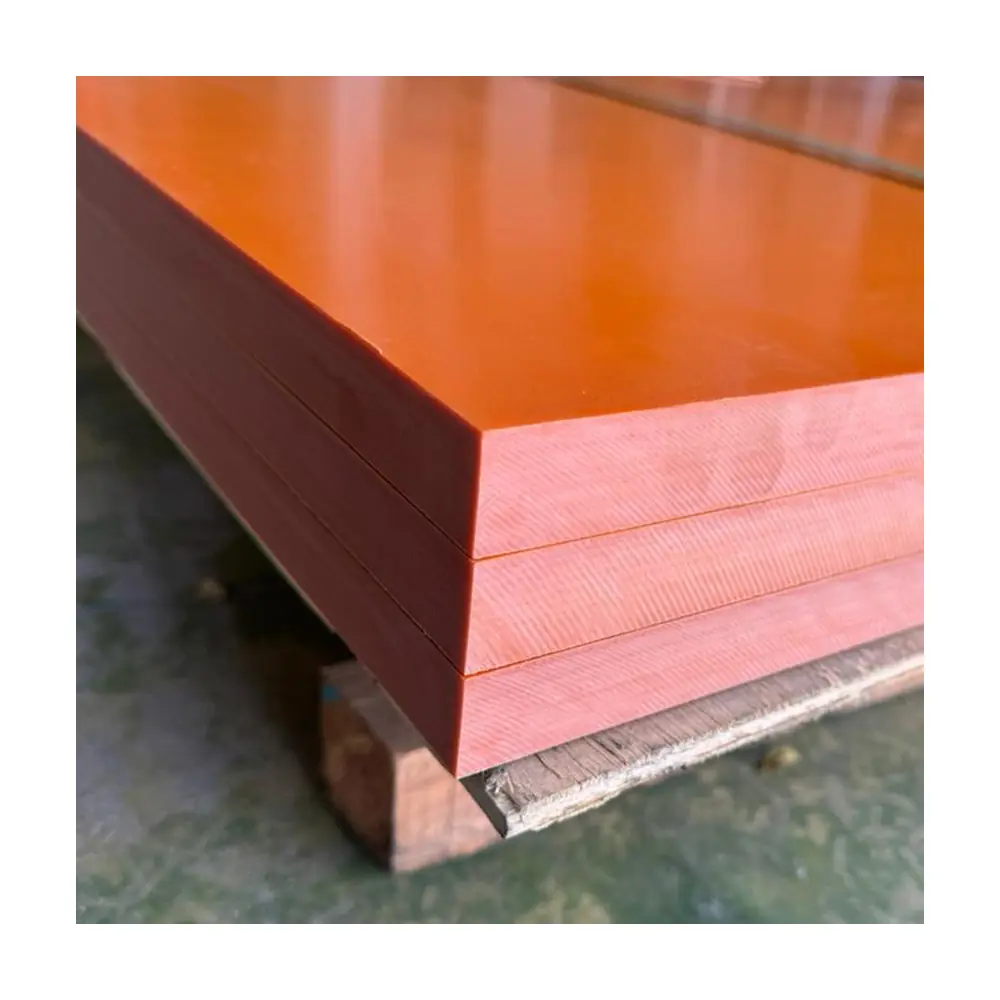
One of the more widely used materials for industrial use is phenolic resin. It’s effectively used for years. Tolerant of heat. It also imparts good strength and electrical insulation.
The material can be made into sheets and molded parts. Also used in coating applications and bonding systems. There are grades of various different types for different jobs.
The purpose of this article is to discuss the phenomenon of phenolic resin. We will also look at some important points to consider before using this material.
Key Highlights:
- Phenolic resin is a resin synthetized from phenol and formaldehyde.
- Provides a good electrical insulating property and heat resistance.
- Strength can be enhanced with paper, cotton and glass.
- Phenolic resin as used in sheets, molded parts, coatings and bonding systems.
- Right grade in accordance with load, heat, voltage and work area.
Phenolic Resin Material: An Overview of One of the Oldest Engineering Polymers
Phenolic resin is one of the oldest man-made plastics. The first use was in early 1900s. Popular due to its heat resistance. It was also hard and tough.
It was the first material used in electrical parts. Also found in switches and handles. With the years, its application expanded to numerous sectors. Difficulty new grades for harder jobs. The phenolic resin is thermosetting. This is to ensure that it will become hard when it is cured.
After curing, it is no longer able to be melted down and reworked. Unlike many common plastics. This behavior provides the material with a good heat control. It is also useful in preserving the shape of the part.
Phenolic resin may also be fire resistant. Not so easy to burn as many other plastics. It also provides a good electrical insulation. Hence it is still employed in electric circuits. The material can be combined with other materials. Examples include paper or glass cloth.
Some grades can be made from cotton fabric as well. These materials added will enhance strength. The resin can also be filled with fillers. They will aid in wear and heat control.
There are various applications where modern phenolic materials are used. Can be converted to sheets and moulded parts. They’re also added to coating and bonding products.
The use of phenolic resin has been continued as it yields a consistent result. Also it is suitable for hot and hard working areas. Another reason for its use is its cost. Can be cheaper than some premium materials.
Today, phenolic resin is used in electrical parts and machine parts. It is also found in transport and industrial equipment. It’s not like it doesn’t have a long history so that’s why it’s not good. It is still valuable in applications where thermal, mechanical and insulating properties are required.
The Chemistry Behind Phenolic Resin Performance
Phenolic resin gets its main properties from its chemical structure. This is synthesized by a reaction between phenol and formaldehyde. When cured the resin is hard. It is tough, coping with heat and stress.
1. Phenol and Formaldehyde Reaction System
Phenol and formaldehyde are the main raw materials. These react with each other to produce the resin. In this case, small molecules are linked together. As the reaction progresses they create longer chains.
These chains later join with each other. This forms a very robust 3-D network. The network imparts the hard form to the resin. It also enhances the material’s heat resistance. The outcome of the final product will be determined by the control of the reaction. The ratio of phenol and formaldehyde might have an impact on the resin.
Also the kind of catalyst has an impact. Stable material is achieved through good process control.
2. Thermosetting Behavior and Permanent Cross-Linking
Phenolic resin is a type of thermoset material. It is permanently altered during curing. The resin chains become linked together by heat. The links are called cross-links. When these links are established, the resin becomes hard. Could not be melted or reshaped.
This is not the same for thermoplastics. Thermoplastics are the materials that can be softened by heating. Most thermoplastics can be reshaped. Phenolic resin is not as effective.
It has a set-up construction that keeps it stable when heated. It also aids in maintaining the size and shape of the material. This renders the phenolics a valuable hot working material. It can also be held up to repeated heating.
3. Resin Formulations and Modification Methods
Pure phenolic resin is not necessarily appropriate for all applications. It is often combined with other materials to enhance its attributes. The resin is often mixed with fillers. They can enhance the hardness and wear resistance.
Some fillers can also help reduce the cost. The kind of filler used depends upon the end use. For added strength, glass fiber can be added. Some grades use paper, as well as cotton fabric. They are used to help the resin structure. They are also able to enhance the strength of the completed item.
A few additives are added to enhance resistance to flames. Others can enhance the surface or molding process. The final resin mix will vary with the job. There may be a need for improved insulation in electrical parts.
Parts for machinery might require increased strength and durability. Better heat control may be required for parts that are exposed to heat. That is why, phenolic resin is produced in various forms. Each form is made for a certain type of use.
Why Phenolic Resin Materials Are Still Used in Advanced Engineering?
Many demanding jobs are still using the phenolic resin. It provides a good balance of thermal regulation, durability and insulation.
1. Reliable Performance Under Heat Exposure
Phenolic resin can withstand heat to a greater extent than many simple plastics. Resists shape alteration on heating. This can be beneficial near motors and hot machine components. This is also offered in components that are subjected to constant heat.
2. Natural Flame Resistance Characteristics
Phenolic resin is fairly flameproof. Not as readily flammable as many commonly used plastics. It also has a tendency to burn to a char layer when heated. This layer can help inhibit further combustion.
3. Excellent Electrical Safety Performance
Phenolic resin is a good electrical insulating property. This prevents the current from flowing through the material. This comes in handy for switches and control components. It is also applied in panels and other electrical systems.
4. Resistance Against Chemicals and Industrial Fluids
Phenolic resin is able to withstand a lot of oils and common fluids. It can also withstand certain light chemicals. This is helpful in factory and machine areas. Actual resistance will vary depending upon grade. May be damaged by strong acids or harsh solvents. Before using check for chemical contact.
5. Stable Performance Under Mechanical Stress
Phenolic components are good for normal loads. They can be supplemented with added fabrics or fibers to increase their strength. This increases the material resistance to bending and wear. Find application in guides, supports and machine parts.
6. Long-Term Dimensional Accuracy
After curing, phenolic resin will maintain its size well. It cannot be softened again with normal heat. This keeps parts closer to their desired size. It’s helpful when fit and spacing are a factor. Low shape change is also helping towards a long service life. This is crucial in machine, electrical components.
7. Cost Advantage Compared With High-End Engineering Materials
The cost of phenolic resin is lower than some high-tech materials. But it may still perform well on many industrial occupations. This can help to reduce parts and sheets expenses. It can also help to make large production runs more feasible.
Don’t always choose the cheapest grade. It should correspond to the heat, load and safety requirements of the material.
Different Forms of Phenolic Resin Materials
There are several forms of phenolic resin. Different forms are given for different jobs. Depending on the resin preparation, the final shape is obtained. It also relies on the work requires and added material.
1. Phenolic Laminates
Phenolic laminates consist of layers that are joined together. May use paper, cotton cloth or glass cloth. The layers are filled with phenolic resin. Heat and pressure are then used to form a hard sheet.
The paper-based laminates are found in the making of basic electrical parts. Machine parts are often manufactured using cotton grades.
Grades based on glass provide greater strength. They are also able to withstand more demanding conditions. Phenolic laminate sheets can be cut in a variety of shapes. They are frequently utilized in plates, washers and support parts.
2. Phenolic Molded Components
Phenolic resin also can be molded. This is done under heat and pressure. The resin is put into a mould. It is then cured to the desired form. Filling can be done prior to molding. These can be added to enhance strength, heat resistance, or wear control.
Electrical products are commonly made with molded phenolic parts. They are also used in machine and automobile parts. This approach can be applied for the manufacture of many similar products. It can also minimize the amount of additional cutting.
3. Phenolic Resin Coatings and Bonding Systems
Phenolic resin is also used for coatings. These coatings are able to shield a surface from hot and/or chemical agents. They’re commonly applied to metal and industrial components. The coating can also help to minimize wear.
Phenolic resin also can serve as a bonding compound. Can be used to join wood, fabric, and other materials. Some industrial products are produced using these bonding systems. They are also employed in situations with a requirement for heat resistance.
The final resin mix is dependent upon surface and work area. Cure time and heat level should be also monitored.
How Phenolic Resin Materials Behave in Industrial Conditions?
In many industrial areas, phenolic resin can be a good material. It is grade dependent and dependent on the working conditions. The material can be impacted by heat, load, voltage and moisture. The following should be assessed prior to use.
1. Mechanical Performance
For many machine parts, phenolic resin is capable of giving good strength. Reinforced grades are suitable for higher loading. Resin can be mixed with paper, cotton or glass. These materials can be used to enhance strength and wear control.
Phenolic sections can withstand normal loads to prevent bending. They may additionally maintain their shape throughout their normal use.
The strength varies according to grade. Size and thickness of the part also play a role.
2. Thermal Performance
Unlike many of the simple plastics, phenolic resin is able to withstand heat. Is firm in a broad operating temperature range. After curing the material will not melt. This assists it in maintaining its form in the vicinity of heat sources.
The resin can still be affected by long exposure to heat. Safe limit varies according to grade. Harder jobs will require high grades of heat. Test data should be verified for use.
3. Electrical Performance
Phenolic resin is a good insulator of electricity. Resists the flow of current through it. This makes it good for switches and control parts. Also used in electrical panels and supports.
Over time moisture can impact insulation. There are some grades which are more suited to wet areas. Also check the level of voltage. The proper thickness should correspond to the electrical requirement.
4. Environmental Performance
Phenolic resin is able to withstand a wide range of commonly used oils and fluids. It similarly does well in countless workplaces inside. Moisture resistance varies with the grade. Paper-based grades can absorb more moisture than other types of grades.
The resin can be damaged by strong chemicals. Harsh solvents (except where grade is designed for them) should not be used for long contact.
Outdoor use requires care, too. The surface can change over time due to sunlight and weather. The entire work area should be checked prior to selection. This lessens early wear and part failure.
Phenolic Resin Material Selection Based on Engineering Requirements
There is a correct phenolic resin for the task. Each grade may exhibit different behaviors. They should be tested for load, voltage, heat and method of production. These factors helps reduce the options.
1. Choosing According to Mechanical Loads
The part should be able to withstand the anticipated load. Also, it needs to hold its form when operating. Light duty components can be graded using paper. One of the higher loads might be better off with a cotton or glass grade.
Strength is also dependent upon thickness. The thicker the part, the more force it can typically apply. Also, wear should be taken into consideration. Better wear control grades may be required for moving parts.
2. Choosing According to Electrical Requirements
Good insulation is important for electrical parts. The resin grade should correspond to the voltage level. Some grades give better electrical performance than others. Insulation can also be impacted by moisture.
The part thickness should be checked as well. It should be adequate for the entire electrical load. Test Data can be used to validate the appropriate grade. This is necessary for high voltage applications.
3. Choosing According to Temperature Conditions
One important selection criterion is the heat level. There are some phenolic grades that are able to withstand greater heat than others. The first check should be the normal working temperature. Also brief periods of intense heat should be taken into account.
For long-term use, repeated heating may affect. In these situations a higher heat grade might be necessary. The substance should remain stable at the temperature expected. It shouldn’t weaken too rapidly.
4. Choosing According to Manufacturing Needs
The material should be appropriate for the intended method of production. There is some cutting and drilling required for some parts. Moulding or bonding is required for other parts. The grade selected should be compatible with that process.
Quality of the machining is also significant. The edges of the sheet should not fracture. Close fit parts should be checked for control of size. Surface quality may also play a role in bonding and coating.
The best grade will perform well in the production and use.
Industry Standards and Quality Considerations
Phenolic resin components should comply with the appropriate quality rules. These rules are used to ensure that the material is suitable for use. There is no specific standard; it depends on the industry. Electrical and mechanical components can be tested using different testing methods.
1. NEMA Phenolic Material Grades
NEMA grades are often used for phenolic laminates. They assist with the classification of materials according to the type of bases and performance. Popular grades include paper, cotton and glass-based. Each grade is intended for a specific purpose.
The name of the grade provides a general indicator. However, the complete material information should be consulted by the buyer.
2. Electrical Insulation Standards
The insulation tests are required for electrical grades. These tests determine the material’s ability to resist the flow of current. One of the common tests is that for dielectric strength. Alternatively, the insulation resistance can be tested.
Electrical results may be impacted by moisture. Because of this, some tests are performed post moisture exposure. The method of test should be similar to the end use. This is particularly crucial for the components with higher voltage.
3. Mechanical Testing Requirements
Mechanical testing helps to determine the strength of parts. They can indicate the material’s response to loading. Sheet materials frequently have their flexural strength tested. Alternatively, tensile or impact tests can be performed.
Moving parts can benefit from wear tests. Specific test required varies by job. The comparison of test values must be made with the grade limit. They should also be appropriate for the design need.
4. Dimensional Inspection Parameters
The size of parts should not exceed the required size. The thickness is one of the most frequently performed checks. Length and width can also be measured. Sheet parts may be important to be flat.
The quality of hole and edge should be checked after machining. This is critical for close fit parts. Proper size control minimizes assembly issues. It also ensures proper fitment of parts as per plans.
5. Industrial Quality Control Practices
The first step in quality control should be the raw material. Quality of resin and reinforcement needs to be assessed prior to production. Controlling the curing process must also be done. Heat and pressure should not exceed or fall below the set range.
Cracking and/or surface imperfections should be inspected on finished sheets. Any gaps on the inside should also be avoided. Test records should be kept for each batch. This allows for tracking of quality and identification of production issues.
Even results are obtained from a stable process. This also helps to reduce the chance of early part failure.
FAQs:
1) What Is Phenolic Resin Material Made From?
The major components of phenolic resin are phenol and formaldehyde. These chemicals react to each other to form a hard resin. Fillers or fibers may be added to the resin as well. Strength and heat control can be enhanced with these materials.
2) Which Is Stronger: Phenolic or Epoxy Resin?
That is dependent on the grade and the kind of load. Phenolic resin is a material that is good at resisting heat and has a good stiffness. There are many applications in which higher bonding strength can be obtained from epoxy resin. The best option will depend on the end result.
3) Is Phenolic Resin Suitable for Electrical Insulation?
Yes, phenolic resin can provide a good electrical insulation. It is frequently applied in support parts, panels and switches. The insulation level will vary according to the grade. Result may also vary based on moisture and thickness.
4) Can Phenolic Resin Materials Withstand High Temperatures?
Phenolic resin can withstand hot temperatures, which is more than can be achieved with many common plastics. Additionally, it retains shape post curing. Safe temperature range is grade dependent. Even with high heat, it should always be based on test data.
5) What Industries Use Phenolic Resin Materials?
Electrical or machine parts are made from phenolic resin. Also used in automotive and industrial equipment. Certain grades used in coatings and bonding products. Others are applied in the form of sheets and molded parts.
6) Is Phenolic Resin Material Easy to Machine?
Cutting and drilling of many phenolic laminate grades is possible. They can also be milled to desired shapes. Appropriate tools should be used when performing the machining operation. Rough edges and cracks can be caused by poor tools.
7) How Long Do Phenolic Resin Components Last?
Service life is dependent on the working area. The material may be affected by heat, load, moisture and chemicals. A good grade should last for many years in normal use. With the proper design and routine inspection, a service life can also be extended.
Final Thoughts!
Phenolic resin is still applied in a variety of industrial applications. It has good heat control, strength and electrical insulation. It can be produced in various forms. These are in the form of sheets, molded parts, coatings and bonding systems.
The right grade should correspond to the working conditions. All four factors – heat, load, voltage, and moisture – should be checked. Good production control is a factor in the quality acquired. Testing and curing can serve to enhance the end product.
Phenolic resin isn’t necessarily the best choice for all applications. But it continues to be a good option for a bunch of electrical and machine components. Appropriate grade selection can make a difference in service life. Can also be used for decreasing part failure or additional cost.
For more information about the phenolic resin materials, contact info@differentplastic.com. We have a professional team that can provide you with the most suitable material.


