
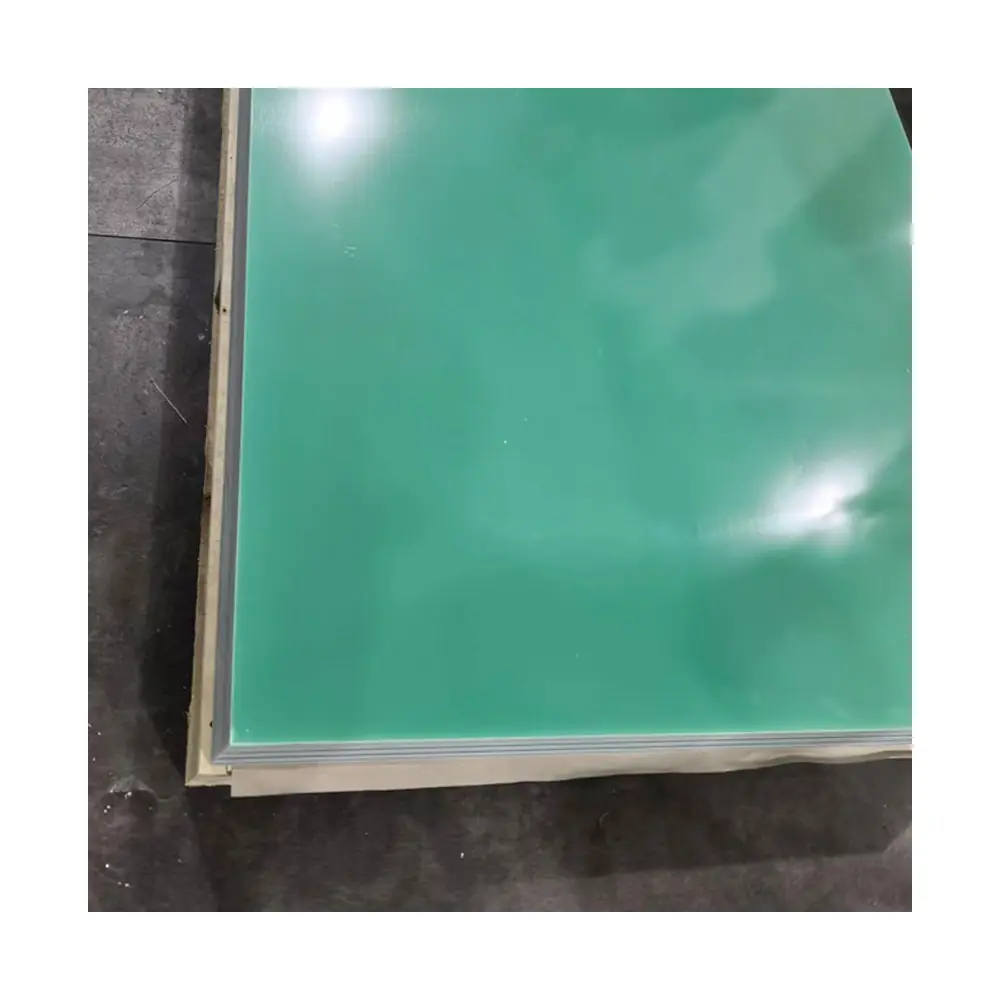
G10 is a high pressure fiberglass laminate that is utilized in lots of industrial uses. Constructed of woven glass fabric and epoxy resin. The material is characterized by good strength, high electrical insulation and stable performance.
G10 is used when mechanical support and electrical isolation is required. It is also effective where moisture, heat and industrial fluids are present.
This article will discuss what the G10 is and how it is made. It will also explore its properties and considerations for using this material.
Key Highlights:
- Know the meaning of G10 material and how the glass epoxy laminates are produced.
- Understand how the strength and insulation properties of G10 are provided by glass fabric and epoxy resin.
- Discuss the pros and cons of G10 and FR4 in various Industrial applications.
- Learn how G10 reacts under a thermal load, humid conditions, electrical stress and mechanical stresses.
- Know where G10 is used and what things to consider when choosing this material.
What Does “G10” Actually Mean?
G10 is a commonly used term in the composite materials industry. It is a particular kind of fiberglass laminate. Made by weaving the glass fabric together with epoxy resin in high heat and pressure.
1) Meaning of the G10 Grade Designation
G10 means that the material is reinforced with glass. The number indicates the grade of the material in a set of fiberglass laminates.
G10 is not a trademark. It is a grade of material which is used by manufacturers and engineers. The grade is the fundamental construction and properties of the laminate.
2) Relationship Between G10 and Glass Epoxy Laminates
G10 is a type of glass epoxy laminate. It is reinforced with glass fabric and bonded with epoxy resin.
The layers of glass give it strength. The layers are bound together and insulated electrically by the epoxy resin.
This combination renders G10 with its special properties. It can serve to carry mechanical loads while maintaining a separation of the electrical current.
3) Difference Between a Material Grade and a Commercial Product Name
G10 is the material specification. It does not refer to a particular company or product.
G10 sheets may vary slightly in quality and performance from different manufacturers. Resin content, thickness control and production techniques can all impact the final sheet.
It is the buyer’s choice and responsibility to verify technical information, and not only the name G10.
4) Why G10 Is Often Confused with FR4?
The structure of G10 and FR4 is the same. They are both made with glass fabric and epoxy resin.
The main difference is flame resistance. Standard G10 may not be the same as FR4 which has flame-retardant properties.
The two materials can be confused due to the fact that they look alike. The selection will depend on the safety requirements of the application.
5) Industries and Specifications That Commonly Use the G10 Designation
G10 is applied in various industrial applications where high nonconductive properties are needed. These involve electrical devices, equipment and machinery, aerospace systems, laboratories and industrial manufacturing.
This G10 rating is a way for users to identify a material that has construction and performance properties.
How G10 Achieves Its Composite Performance?
The performance of G10 is in the interaction of its materials. The strength comes from the glass fabric and the epoxy resin is used to bind the fabric together. The manufacturing process is also very important.
1) Woven Glass Fabric Backbone
The woven glass fabric is the main reinforcement in G10. Glass yarns are woven in a pattern to distribute loads over the sheet.
This helps withstand bending and pulls. The fabric layers also impart greater strength to the laminate than do the plain resin materials.
The performance of the glass layers depends on the direction of the layers. Material direction should be considered when designing parts.
2) Epoxy Resin Binding Network
The glass layers are joined together by epoxy resin, forming a solid structure. In production, the resin polymerizes to a rigid thermoset.
The resin also enhances the ability of G10 to withstand electrical stress, chemicals and moisture. It also helps to hold the glass layers in place while in use.
A good resin system contributes to overall quality of the laminate.
3) High-Pressure Lamination
G10 sheets are manufactured by applying resin to the glass and compressing the glass under high pressure and heat.
This process eliminates any unwanted gaps between layers. It also aids in distributing the resin uniformly all through the materials.
With proper lamination, resulting sheets are of uniform thickness and have good mechanical properties.
4) Fiber-to-Resin Balance
G10 properties are determined by the quantity of glass fiber and resin. Increased fibre will enhance strength and stiffness.
Too much resin can reduce mechanical strength. Insufficient resin may impact the surfaces and insulating properties.
This balance is under control of the manufacturers to obtain the desired properties.
5) Layer Orientation
Laminate layers may be oriented in a direction that may affect strength and machining performance.
Correct layers orientation will aid performance of parts that are subjected to certain loads. It also has an impact on drilling, cutting, and edge strength.
When designing components made out of G10, engineers need to take into account the material structure.
The Performance Profile of G10
G10 is appreciated for its capability of supporting electrical and mechanical demands. It is made of fiberglass and epoxy and can withstand most industrial environments.
1) Strength Without Metallic Conductivity
G10 is able to carry mechanical load and is electrically nonconductive. It is, therefore, suitable in locations where electrical hazards could be present because of metal components.
It is widely applied in insulating supports, mounting plates and structural parts. The material is able to maintain holding parts while preventing the flow of current.
2) Stability Across Temperature Changes
G10 resists being distorted through normal temperature variations. It has low expansion when compared to many plastics.
It is not easily softened by normal operating temperature. This is useful in ensuring that industrial parts are properly sized.
But, the chosen grade level should correspond to the temperature range of the application.
3) Low Moisture Sensitivity
G10 is moisture resistant, compared to many other insulating materials. Can preserve its size and electrical properties in humid conditions.
Proper sealing and surface protection can further improve its performance in wet environments.
4) Resistance to Oils and Industrial Fluids
G10 is compatible with many industrial fluids. It will withstand contact with lubricants, oils and certain chemicals.
This renders it suitable for use in equipment and machinery that is likely to come into contact with fluids regularly.
The chemical resistance varies as per the type of fluid and the duration of exposure.
5) Consistent Machined Dimensions
G10 can be precision machined. It can be cut into precise shapes to be used as industrial parts.
Used for spacers, fixtures, supports and insulating parts where exact dimensions are required.
Clean edges and accuracy are achieved through good machining practices.
6) Long-Term Fatigue Behavior
When operated within its design limits, G10 is able to withstand repeated loading and vibration. It is extremely stiff and will retain shape over extended use.
Used in equipment where parts are subject to repeated forces or frequent movement.
To extend service life it is important that they are designed and have the correct thickness.
G10 and FR4: Similar Materials with Different Priorities
G10 and FR4 are similar materials. They are both constructed from woven glass fabric/epoxy resin. But they are created for different needs.
This knowledge about difference will help in choosing the proper material for the use of the engineers.
1) Basic Composition
The construction method of G10 and FR4 is similar. Glass fabric is laminated with epoxy resin under heat and pressure.
Strength provided by the glass fabric. Epoxy resin is used for bonding and as an electrical insulator.
They are often confused with each other due to their appearance.
2) Flame-Retardant Difference
The principle difference between G10 and FR4 is flame performance. FR4 contains fire-resistant qualities. This difference matters for applications that have to meet fire safety standards.
The type of material used should be based on the safety requirements of the equipment.
3) Mechanical Performance
In many cases, the mechanical performance of G10 and FR4 can be comparable. They are good in terms of strength and stiffness.
Either material can be suitable for parts like supports, spacers, brackets, etc.
The final decision will depend on the environment, safety rules and specifications.
4) Electrical Performance
Both materials are good electrical insulators. These are used to isolate electrical parts and minimize the risk of current leakage.
Their dielectric strength and insulation resistance is a function of thickness, surface condition, and quality of material.
5) Temperature and Moisture Response
G10 and FR4 have good performance under many industrial conditions. They are tolerant of humidity and changes in normal temperature.
For the requirement of flame resistance, FR4 is commonly chosen. G10 can be used where the flame requirements are not an issue.
6) Material Selection Implications
G10 vs FR4 will depend on the needs of the application.
G10 can be a good choice for general mechanical and electrical uses. When certification to a flame resistance standard is required, FR4 is preferred.
It is important to check the technical data sheet before choosing either material.
How G10 Behaves Under Different Loads?
G10 is used for parts that are subject to various mechanical stresses. Although it is a fiberglass construction and is able to carry many loads, proper design is still important.
1) Tensile Loading
Tensile loading is a loading which is applied to a material in opposite directions. Thanks to its glass fiber reinforcement, G10 is effective in resisting pulling forces.
Strength may vary based upon the direction of fiber layers. Parts should be designed to consider the direction of reinforcement.
2) Flexural Loading
Flexural loading is when the part is bent under load. G10 is of good stiffness and is suitable for panels, brackets and support plates.
But over bending strength will result in cracks. The thickness and shape of the component should correspond to the load to be expected.
3) Compressive Loading
In a lot of applications G10 will withstand compressive forces. For spacers, blocks and support components.
Even loading distribution is optimum. If not designed properly, it can lead to stress points and damage to the part.
4) Shear Loading
Shear forces are applied parallel to layers of the material. These forces occur around holes, joints and fasteners.
Appropriate drilling techniques and the appropriate edge distances minimize damage. Failures can be prevented through component design.
5) Impact Loading
Strong and rigid as G10, but not suitable for heavy impact conditions. Sudden shocks may result in cracking as the material is not very flexible.
If the application has a lot of impact, a different material may be required.
6) Repeated Vibration
G10 is ideal for use in equipment that is vibrated frequently. It is stable and maintains shape for extended periods of time.
Used in electrical and mechanical applications where components need to be permanently secured when in service.
The thickness and mounting technique are used to enhance the vibration performance.
Electrical Reliability Beyond Basic Insulation
G10 is broadly used since it is able to stop the flow of electricity. But resistance to electrical current flow is not enough for good insulation. Performance is also a function of surface condition, design and operating environment.
1) Dielectric Strength
Dielectric strength is a measure of the resistance of a material to electrical breakdown. The high dielectric strength of G10 is due to its glass epoxy construction.
The amount is based on such things as thickness and test direction. Some uses may require more protection than a thinner sheet offers.
2) Surface Insulation Resistance
G10 is processed on the surface to prevent unwanted current flow. Dry and clean surfaces have improved insulation properties.
Surface resistance can be lowered by dust, contamination and moisture. Proper cleaning and protection are important in electrical equipment.
3) Arc Resistance
Arc resistance is a measure of the response of a material to an electrical discharge. G10 has the ability to withstand short electrical arcs when suitable conditions exist.
But, over time repeated arcing can be harmful to the surface. The design should minimize the likelihood of electrical discharge.
4) Tracking Resistance
Tracking is the formation of a conductive path on the surface of a material. This can be further risked by moisture and dirt.
G10 offers fair protection, requiring surface protection and spacing.
5) Creepage and Clearance Design
A good insulating material will not eliminate the need for adequate electrical design. The separation of conductive components is still critical.
Correct Creepage and Clearance distances are important to prevent electrical failure.
6) Performance After Machining
If damage to the surface occurs during the machining process, this can impact the electrical performance. Rough edges and exposed glass fibers can diminish the insulation effectiveness.
By using the correct cutting techniques and finishing, the electrical properties of G10 parts are preserved.
What Happens When G10 Is Machined?
G10 is available in various shapes to be machined into industrial parts. Its fiberglass content, however, makes it not a common plastic for machining. Proper tools and methods are needed to achieve clean results.
1) Cutting Behavior
G10 is a hard glass fibre which can prematurely wear cutting tools. Proper cutting techniques will not be followed, which may lead to rough edges and small chips.
Cleaner surfaces are achieved with the use of appropriate tools and cutting speeds.
2) Drilling Performance
When drilling G10, there are certain precautions that must be taken. It is possible for the break to occur on the exit side of the hole, causing it to chip if not supported properly.
Good hole quality is achieved with sharp drill bits and backing support. The proper drilling technique also assists in the maintenance of proper dimensions.
3) Milling and Routing
The most common methods of custom G10 parts are milling and routing. The final surface quality is influenced by the feed speed and condition of the tool.
Dull cutting tools can result in rough edges and poor accuracy. Additionally, proper dust control is necessary since fiberglass particles may be generated during machining.
4) Turning Round Components
G10 Rods and tubes can be processed to make cylindrical components like bushes and spacers.
Machinists should employ appropriate tools and cutting techniques. A careful control ensures to prevent surface damage and to keep accurate sizes.
5) Threading and Fastener Retention
G10 only supports direct threading to a certain extent. Loosening and retightening repeatedly can cause damage to the material in the vicinity of the threads.
Metal Inserts are preferable for parts that are used often for assembly.
6) Surface Finishing
G10 surfaces may require further finishing after the machining process. Sanding and edge treatment can enhance the finished product and eliminate sharp edges.
Some applications may require the edges to be sealed to keep moisture out.
G10 in Component-Level Engineering
G10 is applied to manufacture lots of components in industries. It is chosen when a part requires strength, insulation and a consistent dimension. The material can be shaped according to the application by machine.
1) Structural Electrical Supports
G10 is a standard material for electrical supporting parts. It can retain parts and prevent electrical contacts.
Common applications are mounting plates, insulating frames, busbar supports and terminal structures.
2) Precision Spacing Components
Many machines must be spaced accurately between the piece parts. Applications for G10 include spacers, washers, shims and alignment blocks.
It has a stable size which is conducive to correct positioning during operation.
3) Mechanical Wear and Guidance Parts
Guides, strips and support elements can be made from G10. In low speed applications, some grades will offer good wear resistance.
It can be used to prevent direct contact of metal components and to minimize wear.
4) Testing and Manufacturing Fixtures
G10 is a material that is used in the manufacture of jigs, fixtures and inspection tools.
It does not change shape when used again and again. It also provides electrical isolation during testing processes.
5) High-Strength Nonconductive Hardware
G10 provides the strength without electrical conductivity and is suitable for parts.
Machining can be used to produce brackets, clamps, handles, and special structural parts.
6) Specialized High-Performance Equipment
G10 is a material used in a wide variety of high-tech applications that demand high insulation and strength.
Marine applications, laboratory systems, railway systems, energy systems and industrial machinery.
These applications are well served with the correct grade and design.
How to Read a G10 Material Datasheet?
A G10 datasheet shows vital details of the material’s performance. These values can be used by the engineer to choose a particular grade for a given application.
1) Flexural Strength
The flexural strength is a measure of the force required to bend a material before it fails.
The higher the value, the higher the bending loads that the sheet can support. This information is helpful in the design of brackets, plates and parts of support.
2) Compressive Strength
Compressive strength is a measure of G10’s ability to resist pressure under direct load.
Important for parts like spacers, blocks and clamped parts. It can assist engineers in determining if the material will be able to withstand the anticipated force.
3) Dielectric Strength
Dielectric strength is an indication of the resistance of G10 to electrical breakdown.
Details regarding the sheet thickness and test conditions may vary the reported value. Careful review of the data is advisable to make sure it is suitable for the intended application.
4) Water Absorption
Water absorption is the amount of water absorbed by the material under the test conditions.
G10 has a low water absorption that allows it to have stable dimensions and electrical performance in humid environments.
5) Insulation Resistance
Insulation resistance is an indicator of the ability of the insulation to resist leakage of current.
This value may vary if moisture or contamination is present. This will make the environmental conditions important during selection.
6) Glass Transition Temperature
The glass transition temperature, or Tg, is an indication of where the resin structure begins to change when heated.
Tg should not be regarded as the same as the continuous working temperature. The actual service limit will be determined by the complete material design.
7) Flammability Rating
The flammability rating indicates the reaction of a material if it gets into fire conditions.
Not all standard G10 will be of the same flame rating as FR4. Prior to purchase, buyers should verify the certificate they require.
8) Dimensional Tolerances
Dimensional tolerance information indicates thickness, flatness and surface quality tolerances.
These details are crucial for precision parts. Correct dimensions are needed to make sure that pieces fit together correctly when assembling.
When G10 Is the Right Material—and When It Is Not
G10 is a useful material for many industrial applications. But it isn’t necessarily the best solution in all cases. The working conditions and design needs should decide the material selection.
1) G10 is Well Suited For
G10 provides strong electrical insulation and is a good choice for parts requiring such performance. Suitable for use in electrical equipment that needs mechanical support as well.
Ideal for precision nonconductive parts like spacers, fixtures and mounting pieces. The material also has a low moisture sensitivity, making it suitable for use in humid environments.
G10 is frequently used for custom made-machined parts requiring stable dimensions. It is able to withstand numerous mechanical loads without losing its shape.
It can also be used in applications where resistance to oil and industrial fluids is required.
2) Consider Another Material When
G10 is not suitable if certified flame resistance is required. In these situations, FR4 or other suitable materials may be suitable.
It could also not be suitable for very high continuous temperatures. Materials used for extreme heat should be thought of in extreme hot conditions.
Tougher materials may be required for applications requiring high impact flexibility. G10 is tough and will crack if it receives a sudden heavy blow.
G10 can also not be used where high thermal conductivity is required. The use of special heat transfer materials or metals may be more effective.
If transparency and/or frequent thread fastening are required, another material might be more suitable.
If not properly protected, long outdoor exposure can also impact the performance of G10. Always choose the appropriate materials for the specific working conditions.
FAQs:
1) What Type of Material Is G10?
G10 is made from fiberglass and epoxy laminate. Made by integrating woven glass fabric and epoxy resin at high pressures and temperatures.
It can be used for parts that require strength, electrical insulation and dimensional stability.
2) Is G10 the Same as FR4?
The structure of G10 and FR4 are identical. They both are made from glass fabric and epoxy resin.
The main difference is flame resistance. The FR4 is a material that has a flame rating, which is not necessarily applicable to standard G10.
3) Is G10 Electrically Conductive?
G10 is actually a nonconductive material. Generally used for electrical insulation parts.
It isolates electric parts and minimises risks of unwanted current flow.
4) Can G10 Absorb Water?
G10 is low with regards to moisture absorption when compared to many materials. But it can absorb a bit of water over time.
Sealability and right material selection enhances performance in wet conditions.
5) Is G10 Suitable for Outdoor Use?
G10 can be applied for some purposes in the outdoors. But, it is recommended that prolonged exposure to weather, moisture and sun should be taken into account.
Further protection for severe outdoor conditions may be required.
6) Can G10 Be Machined With Standard Tools?
G10 can be machined, however it is more difficult to work with because of its fiberglass content.
Good results can be obtained with the use of special cutting tools and with the correct machining process.
7) Does G10 Contain Fiberglass?
Yes, G10 has woven fiberglass. The glass fabric adds strength and enhances the laminate’s mechanical properties.
8) What Temperatures Can G10 Withstand?
Grade and application temperature limits vary.
G10 is suitable for normal industrial heat, although the exact temperatures should be checked in the datasheet.
9) Can G10 Be Used for Structural Parts?
Yes, G10 is suitable for a lot of structural components. Ideal for brackets, supports, spacers and other components where strength is desired but electrical conduction is not.
10) How Can Buyers Confirm That a Sheet Is Genuine G10?
The material grade, thickness details, and manufacturer information should be checked by the buyers in a technical datasheet.
A good supplier should be able to give out good product details and quality information.
Final Thoughts!
G10 is a good choice for applications requiring strength and electrical insulation. Its glass epoxy construction ensures excellent durability in a variety of industrial applications.
The correct grade selection is important. These should be verified before use (e.g. temperature, moisture, mechanical load and safety requirement).
G10 is not a substitute for all materials. Yet, it is still a viable option for a wide variety of electrical, mechanical and precision parts.
G10 can be used in demanding industrial applications to deliver stable performance if it is designed and made properly.
Get in touch with info@differentplastic.com to discuss your G10 laminate needs. Get expert assistance from our specialists.


