
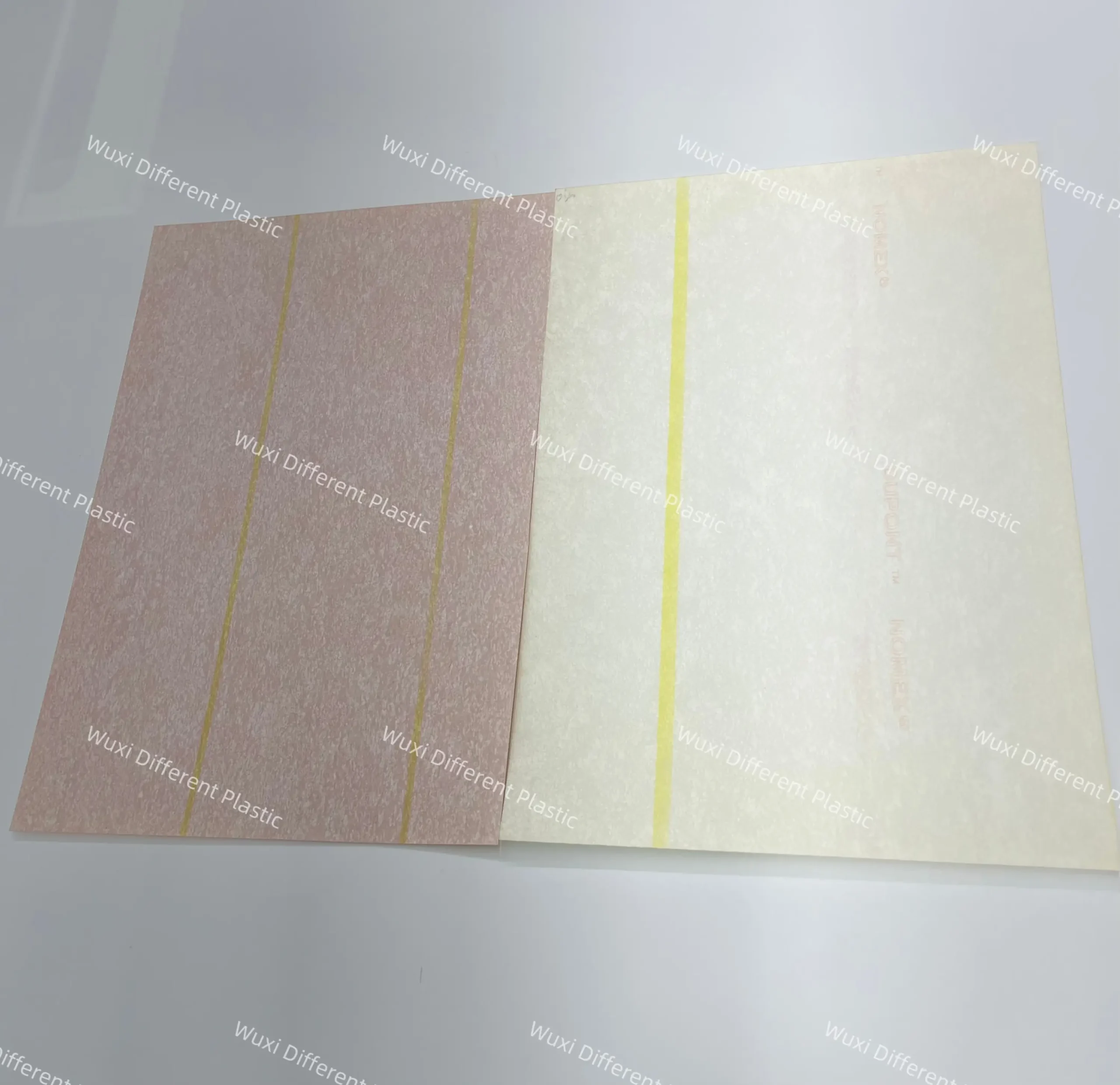
On opening electrical equipment such as a transformer or motor (or even a set of domestic appliances) you may be unaware of the thin sheets of paper concealed in between. However, these layers are very important in ensuring that everything is running smoothly and in a safe fashion. This material is insulation paper which is apparently ordinary.
Insulation paper is fabricated to withhold the circulation of electricity and heat. It eliminates short circuits, prevents electrical breakdowns and undesired heat transfer. That is, it stores electricity in its place, where it is supposed to be, in wires and coils, and it does not allow heat to destroy extremely fragile components.
In every industry, insulation paper is essential. It finds application in power generation, automobile systems, telecommunications, consumer electronics and even renewable energy technologies. In its absence, the electrical systems would be useless, overheat or become unsafe.
Even though at first glance insulation paper may seem a product of extreme simplicity, it is a product of very specific engineering and material science. The secret of each roll is behind a series of powerful fibers, heat-resistant coverings, and the latest technology. We shall in the passages that follow discuss the manner in which this wonderful substance operates, how it is prepared and why it remains to this day one of the most reliable of electrical and thermal protecting materials.
Science Behind Insulation Paper
Essentially, insulation paper is a barrier, and it prevents electrical current that is not desired and also holds effective heat.
1. Electrical Insulation
Dielectric strength, which is the property of a material to withstand electrical breakdown, is the key principle of insulation. Good insulation paper does not allow current leakage between conductors when the voltage is applied. This assists in preventing short circuiting and equipment breakdown.
2. Thermal Stability and Thermal Resistance
Besides preventing electricity, insulation paper should be able to resist heat as well. Electrical gadgets produce heat when they are used and the paper should not be sensitive to elevated temperatures that it will start fading. Certain insulation papers may resist up to 200°C without losing their strength and ability to insulate.
3. Mechanical and Chemical Characteristics
Durability is key. Insulation paper is tear resistant, has the ability to control moisture uptake and it is also resistant to chemical corrosion. These characteristics make it dependable even when in a very adverse environment such as inside transformers that are full of hot oil or the ones that are close to electric motors that run continuously.
4. Key Performance Parameters
In order to measure insulation paper, engineers use a number of parameters:
- Dielectric constant – indicates its ability to hold electric energy.
- Breakdown voltage –Voltage that causes insulation failure.
- Thermal conductivity – its efficiency in conduction of heat.
- Tensile strength- its ability to sustain force during pulling.
- Thickness/density- uniformity of performance.
It is all these properties that make insulation paper so fascinating scientifically as well as essential in the industry.
Composition and Process of Manufacturing
Insulation paper can be a deceitful appearance, yet the process of creating this item requires sophisticated technology to guarantee electrical and mechanical stability.
1. Base Materials
Base fibers are of three kinds:
- Cellulose fibers are made out of wood pulp or cotton and are traditional and environmental friendly.
- Synthetic fibers such as Nomex have high heat resistance (aramid).
- Composite blends are made of mica and polyester fibers, as well as other fibers, which give a blend even greater strength.
2. Additives and Coatings
The manufacturers incorporate flame retardants, resins, and protective laminations to increase performance. These enhance dielectric strength, resistance to moisture and smoothness of surface.
3. Manufacturing Steps
- Pulp Preparation: Pulp is made out of natural or artificial fibers.
- Sheet Formation: Paper machines are used to spread out and press the pulp into thin homogeneous sheets.
- Impregnation and Drying: Sheets are impregnated with resins or oils to enhance the ability of insulating the sheet before being dried to eliminate the moisture.
- Calendering and Finishing: The paper goes through the rollers in order to attain the required depth, smoothness and strength.
4. Quality Control
Prior to packaging, the paper is put through rigorous tests regarding:
- Electric resistance (resistance to dielectric strength, dielectric strength)
- Moisture content
- Thickness uniformity
- Paper that is used in critical electrical systems is only permitted to be used when it is of accurate standards.
Types of Insulation Paper
Insulation paper can be of different varieties and each type is tailored to the requirements and environment.
1. Cellulose Insulation Paper
This one is manufactured of high-purity wood pulp or cotton fibers, and is used in transformers and switchgear.
Pros: Inexpensive, versatile and very efficient in oil absorption.
Limitations: Cannot be operated at very high temperatures (over 120°C).
2. Nomex Aramid Insulation Paper (Nomex ®)
Aramid paper is made of synthetic fibres and it is very durable, and heat resistant- it is used in aerospace, motors and generators.
Pros: Fireproof, will work at 220°C.
Disadvantages: It is more expensive than cellulose.
3. Polyimide-based and Polyester Based Papers
The materials provide a compromise between mechanical strength and flexibility. They can be used as slot liners and coil insulators in generators and motors.
4. Mica-Insulated Papers
A mixture of flakes of mica glued to paper or movie. Mica papers are of great arc resistance and dielectric strength, which is why they are suitable in high voltage systems.
5. Composite Laminated Papers
These are composite constructions of cellulose, aramid and polyester. This leads to the creation of a hybrid paper that is the best of all materials, which includes flexibility, strength and thermal stability.
6. Crepe Paper and Pressboard
Crepe paper is wrinkled and therefore gives flexibility and mechanical cushioning, and is commonly applied in windings of transformers. On the other hand, pressboard is of greater thickness and is used as structural insulation.
| Type | Dielectric Strength (kV/mm) | Temp Range (°C) | Cost |
| Cellulose | 8–12 | Up to 120 | Low |
| Aramid | 15–20 | Up to 220 | High |
| Polyester | 10–15 | Up to 155 | Medium |
| Mica | 20+ | Up to 500 | High |
| Composite | 12–18 | 120–200 | Medium |
| Crepe Paper | 8–10 | Up to 120 | Low |
Electrical Properties and Performance Characteristics
1. Dielectric Strength and Breakdown Voltage
Dielectric strength is used to determine the limit of voltage insulation paper. As an example, the cellulose papers normally support 812kV/mm and aramid papers support above 15kV/mm.
2. Electrical Resistance Insulation and Moisture
Insulation may be highly influenced by humidity. In the event that paper absorbs moisture, the resistance is reduced and this can result in short circuits. This is why it is essential to store them properly and impregnate them.
3. Thermal Endurance Classes
The insulation materials are grouped by international standards into classes based on temperature (IEC and UL):
- Class A: Up to 105°C (Cellulose)
- Class B: Up to 130°C
- Class F: Up to 155°C
- Class H: Up to 180°C (Aramid)
4. Aging and Stability
With time insulation paper can be damaged due to heat and electric stress. In the battle against this, papers are impregnated with oils or resins which prolong their life.
5. Oil and Resin Impregnation
An example of an example is transformer oil, which helps in increasing electrical performance and oxidation inhibition, which helps in long term reliability.
Applications of Insulation Paper
Almost all the electrical and electronic devices contain insulation paper.
1. Power Transformers
Insulation paper is used between windings and coils to avoid short circuits and it also serves as a barrier/spacer. It is compatible with transformer oil and this increases dielectric strength.
2. Electric Generators and Motors
Insulation paper is used as slot liners, phase barriers and coil wrapping material in motors. The flexibility and heat resistance are also important since motors are used in high mechanical loads.
3. Cables and Conductors
High voltage cables involve the use of insulation paper which is used to wrap around the conductors to provide safe separation of current paths. With telecommunication, it facilitates signal integrity dielectric separation.
4. Capacitors
Paper capacitors are made of metal foils which are insulated with dielectric paper to enable them to store electric energy safely.
5. Automotive and Aerospace
Insulation paper is used as a thermal shield in small power systems in electric vehicles and aircraft since it is a lightweight thermal shield resistant to heat.
6. Electronics and Appliances
Insulation paper is used in insulating circuit boards, battery packs and sensors to prevent shorting or overheating of the delicate electronic components.
7. Renewable Energy Systems
Solar inverters as well as wind turbines use the insulation paper to ensure the stability of electricity in harsh outdoor conditions.
Comparison with Other Insulation Materials
| Comparison Category | Insulation Paper | Alternative Material | Key Differences / Remarks |
| 1. Insulation Paper vs. Plastic Films (Mylar, Kapton) | Eco-friendly, porous (ideal for oil impregnation), and biodegradable. | More durable and highly temperature-resistant but less breathable. | Paper offers better sustainability; films offer higher mechanical durability. |
| 2. Insulation Paper vs. Pressboard | Flexible and easy to wrap around windings. | Thicker and mainly used for structural support. | Paper is better for wrapping and layering; pressboard suits rigid insulation needs. |
| 3. Insulation Paper vs. Mica Sheets | Cost-effective, easy to handle and cut. | Superior arc resistance but more expensive and difficult to work with. | Mica provides higher performance; paper offers practicality and affordability. |
| 4. Environmental Impact | Made from renewable fibers, recyclable, and biodegradable. | Many synthetics are non-biodegradable and harder to recycle. | Paper stands out as a sustainable, eco-friendly choice for modern insulation. |
Advancements in Insulation Paper Technology
Modern technology has gone way back in relation to the usual application of the insulation paper.
1. Resistant Papers Used in High Temperatures
New development of aramid and nano-cellulose enables very high temperature operation without reducing dielectric strength.
2. Eco- Friendly and Biodegradable Developments
Manufacturers are looking into sustainable sources of fibers and chemical-free manufacturing as a way of reducing the impact on the environment.
3. Nanotechnology Integration
The modification of dielectric strength, moisture resistance, and heat dissipation is enhanced by incorporating nanofillers (silica or alumina) into the materials.
4. Hybrid Composites
Next-generation insulation papers incorporate both organic and inorganic layers in order to work in extreme transformer and motor conditions.
5. Electronic Production and Accurate Control
With automation and digital sensors, all batches now have the required level of thickness and quality, thus better efficiency and less waste.
Testing and Standards
The reliability of insulation paper also requires it to be tested in international quality.
1. Key Standards
IEC 60641- Presspaper and Pressboard Electrical Purposes.
ASTM D202/D2418 Dielectric strength and thermal aging.
UL 94 – Flammability testing.
2. Testing Methods
Dielectric strength test- Dielectric strength.
Tensile strength test- Provides durability.
Moisture test- It ascertains water resistance.
Thermal aging test- Simulates long-term performance.
3. Certifications and Compliance
The manufacturers need to adhere to the ISO, REACH and RoHS standards, in order to be safe, environmentally responsible.
Factors to Consider When Selecting Insulation Paper
In selecting insulation paper to be used in a project, there are some important factors that engineers put into consideration:
Temperature Class: Find the match between the paper and the operating range of your system.
Electrical Requirements: Papers with better dielectric strength are required by higher voltage systems.
Moisture and Oil Compatibility: Assure that it is compatible with dry or oil filled environments.
Mechanical Strength: Select according to flexibility and tear resistant.
Lifespan: There are papers that can remain tens of years in case of their preservation.
Cost and Availability: Trade performance requirements with budget requirements.
Storage, Handling and Installation
Insulation paper needs to be stored and handled properly so as to maintain full electrical and mechanical functioning. Since it is susceptible to moisture, temperature and contamination, attention should be paid starting the moment it reaches a facility up to the time it is installed.
Storage
Insulation paper must be kept in a clean, dry and a temperature-controlled place at all times. It may be absorbed by high humidity reducing its dielectric strength and its effectiveness in general. Preferably, it is to be stored at 20-25°C (68-77oF) and relative humidity less than 60%. Rolls or sheets must not be exposed to ambient air, when storing, they should be in sealed packaging. In case the paper is moistened, then one needs to dry it first in a regulated oven and then install it.
Cutting and Shaping
Sharp and clean instruments like precision knives or paper cutters are to be used when preparing insulation paper to use. Blades that are dull might result in fraying or uneven sides, which will result in holes or holes on the insulation layer. In complex electrical parts, laser or die cut parts guarantee uniformity of shapes and uniformity of dimensions.
Installation
Wipe down any surface before installation, make sure it is dust and oily free. Position the sheets in a very precise manner so that they do not overlap each other or have air pockets as trapped air can result in a partial discharge or hotspots during operation.
In multi-layered systems such as transformers or motors, the insulation paper is to be mounted in evenly pressured manner to ensure the windings maintained the same level of thickness.
Safety
Certain insulation papers are resin-coated or varnish impregnated which can be releasing slight fumes or may contain chemicals. Use protective gloves and glasses whilst handling. In large installations, provide adequacy in the working area. Safety measures assist in ensuring the safety of workers and the integrity of products.
General Problems and Resolutions
Despite the proper handling, insulation paper might encounter a number of real-life challenges either whilst in use or storage. Learning about them and the ways to avoid them will guarantee increased life and consistent electrical functionality.
1. Moisture Absorption
Problem: Insulation paper, particularly those that are made of cellulose, can absorb the moisture in the air by nature. This results in lower dielectric strength and could result in electrical leakages or incomplete discharges.
Remedy: Use always sealed packaging and store paper in a humidity free place. The paper should be pre-dried in low temperature (usually 90-105°C) to get rid of any moisture absorbed in it before it is used in sensitive equipment such as transformers.
2. Aging and Breakdown
Problem: Insulation paper deteriorates due to continuous exposure to electrical stress, heat and oxidation. The fibers become weak and dielectric properties decrease.
Solution: Insulation systems can have a very long service life if they are regularly maintained and oiled. The quality of oils or varnishes used will minimize oxidation and the aging process.
3. Shrinkage or Expansion of Thermal Deposition
Problem: There is a possibility that some insulation papers can slightly contract or expand under extreme temperature variations that will be able to loosen the windings or bring pieces of gaps.
Solution: Choose materials that are not prone to shrinkage with temperature like the aramid based composites that are stable over time. Thermal movement is also reduced by proper curing and pressing during the production process.
4. Contamination and Dust
Problem: the presence of dust, fibers or oil on the surface of insulation may decrease the dielectric performance and raise the chances of partial discharge.
Remedy: Cleanroom environment or filtered air systems to be used in the production and assembly. One should use clean gloves and not in touch with contaminants.
5. Supply Chain Variability
Challenge: Unreliability of suppliers may affect the project timing and reliability of the products due to inconsistency of their quality and delays.
Solution: It is always recommended to source reputable, certified manufacturers that comply with the standards of ISO, IEC or UL. Regular suppliers mean that the quality of materials is the same and that there is reliable delivery.
With these typical issues taken into consideration with preventative actions and material choice, industries can attain the maximum efficiency, safety, and usefulness of the insulation paper in every type of electrical and thermal systems.
Market Overview and Future Trends
1. Global Demand
The renewable energy, electric vehicles, and smart grid technologies are significantly contributing to the increasing demand of insulation paper.
2. Leading Manufacturers
The key manufacturers are DuPont (Nomex 2 ), Weidmann Electrical Technology, and 3M, the leaders in the high-performance electric insulation material.
3. Regional Growth
The Asia-Pacific region is the dominant producer and consumer in the globe due to robust advances in manufacturing and energy industries.
4. Emerging Trends
Sustainability is becoming the new reality- there will be more biodegradable finishes and recyclable materials.
5. Future Outlook
As the global industries demand increased efficiency and an eco-friendly design, insulation paper will keep on developing with the use of nanotechnology, advanced composites and computerized quality control.
Bottom Line
The insulation paper may not appear to be a complex item but it is a silent giant in the context of electrical engineering. Whether it is transformers that supply the power to cities or the electronics we use day by day, this material has kept us safe, reliable and performing.
With the future of industries going toward sustainability and efficiency, insulation paper has gone in line with it- integrating science, technology, and environmental sensitivity.
Eventually, this simple paper will remain as a mixture of simplicity and sophistication, which is safeguarding our contemporary world, yet quietly, working behind the scenes, driving the progress.


