
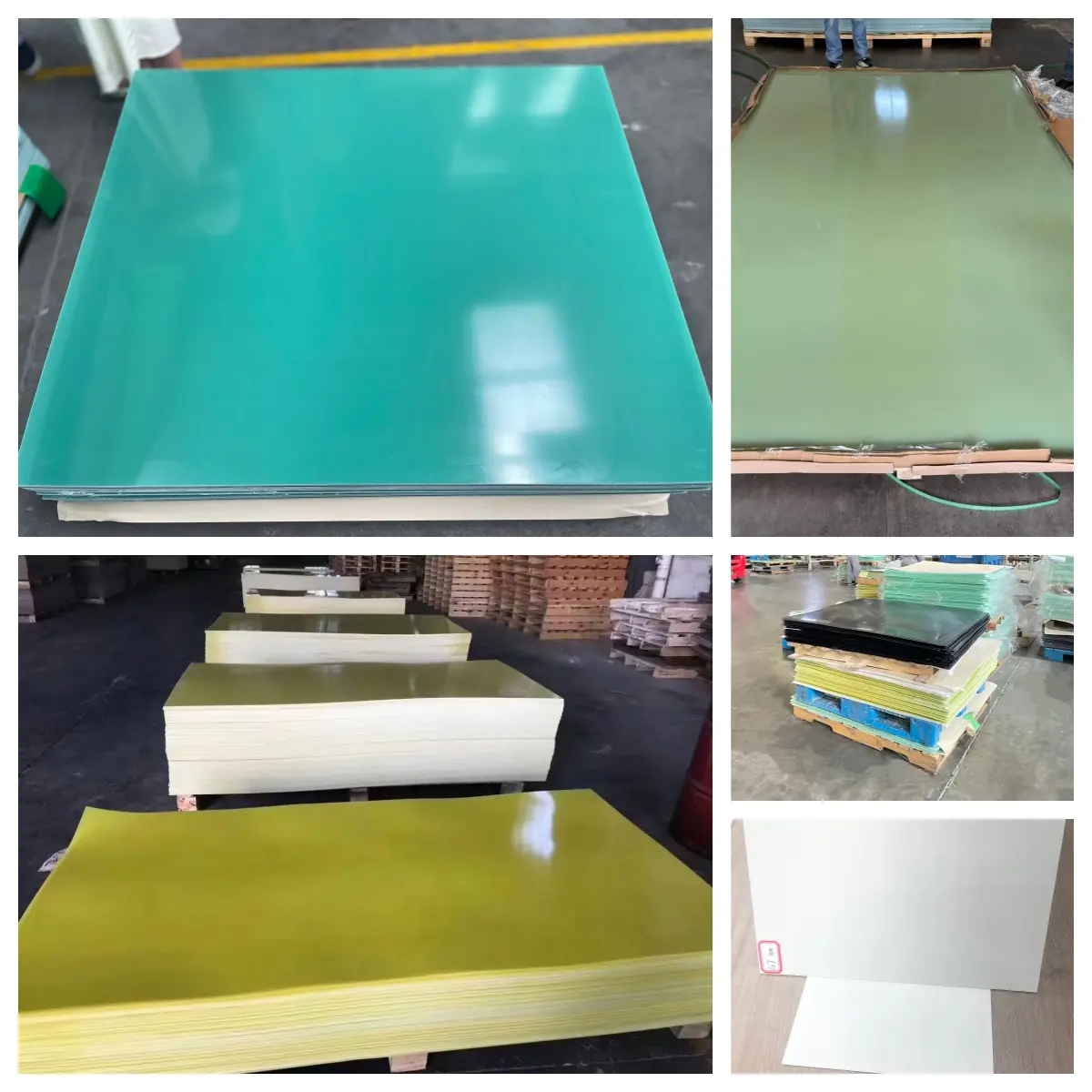
Garolite is a range of rigid laminate composites. There are many industrial applications where electrical insulation and mechanical strength are needed.
It’s not a straightforward plastic sheet of material. Constructed of reinforcement layers. The layers are united with thermoset resins. The heat and pressure are used to crystallize the structure. When cured, the material cannot be remelted.
This is what makes Garolite stable under load. It is not readily softened by heat. It also helps to retain the shape for extended service life. These are properties that are important in engineering environments.
Garolite is applied in cases where metal parts cannot be used. Does not have the ability to conduct electricity. It also aids in preventing short circuit in electrical assembly. Meanwhile, it has the ability to bear mechanical loads under controlled conditions.
Garolite comes in a range of grades to meet various needs. Electrical insulation is the main emphasis at some grades. Some are made to be heat resistant. Others are designed for use in machining and construction.
With this range Garolite is found in a variety of industries. It’s used in precision machine parts, mechanical machinery and electric panels. It is also employed in conditions where moisture or temperature variations would adversely impact the normal plastics.
The significance of Garolite is due to its well-balanced performance. Offers a combination of rigidity, insulation and dimensional stability in a single material system. It is chosen for electrical and mechanical uses because of this balance.
Key Highlights:
- Garolite is a laminated composite of electrical insulating and mechanical supporting material.
- It is made using layered reinforcement and thermoset resin systems.
- Different grades, such as G-10, FR4, and G-11 are used for different conditions of work.
- It has high dimensional stability under load and in temperature.
- Is commonly utilized in electrical panels, machining parts and industrial assemblies.
What Makes Garolite Different from Ordinary Plastic?
Garolite is no ordinary plastic. It is different in both structural and thermal aspects. It is not molded as a single mass! This gap results in variations in its actual performance in practical use.
1) It is a thermoset laminate, not a melt-process plastic
When heated, most common plastics will become molten. These can also be reshaped. Garolite is not like that. It is a heat resistant material. It is fixed when cured. Can’t be re-melted. This means that it is stable in working environments. Maintains shape even at warmer temperatures.
2) It contains reinforcement layers for added strength
Garolite is a material constructed from stacked reinforcement materials. These layers can be made from glass cloth, paper or fabric. Every layer contributes to the structural strength. The result is a sheet that is stronger than normal plastic. It also is resistant to bending under load.
3) It offers better dimensional stability under load
Some plastics de-form when they’re under stress for extended periods of time. Garolite is a material which does not have this type of behavior. Maintains form more reliably. This is a significant property in precision parts. Even a small change in shape can result in poor performance for machines.
4) It performs well in electrical and mechanical environments
Garolite is a popularly used material in electrical applications. It is a nonconductor. This renders it suitable for its use as insulating material. It also acts in mechanical systems at the same time. When well designed, it can be used as load bearing. This is a quite uncommon phenomenon for many common plastics.
5) It can be machined into precision industrial components
Garolite isn’t only a sheet material. Can be cut, drilled and shaped. Usually CNC machines are used for doing this. After machining, the material retains its edges without problems. It also ensures a fine tolerance on the assemblies. This is ideal for industrial applications such as mounting blocks, insulating blocks, and spacers.
The Engineering Logic Behind Garolite
The internal structure of garolite is responsible for its working. Is not a random combination of materials. A controlled stack of layers and resins. A clear engineering role for each part of the structure.
1) Reinforcement Layer System
Garolite is manufactured in layers of reinforcement. These layers are typically glass cloth, cotton fabric or paper. The mechanical strength is increased with every layer. The layers are piled in a controlled manner. Such stacking is very effective in establishing a good base structure. This also works to prevent cracking when under stress.
2) Resin Bonding Network
Resin systems are used to bind the reinforcement layers together. Epoxy, phenolic, silicone and melamine are common resins. The resin is used as a bond matrix. Sits in between layers. It also keeps it in place once cured. After the resin is hardened, it is not allowed to flow or melt. This is what makes Garolite thermoset.
3) Pressure-Bonded Laminate Body
Manufactured under heat and pressure. This is an important step. It is used to squeeze the layers together to form a compact solid sheet. Air gaps are eliminated by the pressure. Enhances bond between layers. This yields a compact and stable laminate body. This is more robust than a glued sheet. It acts like one man-made substance.
4) Directional Strength Behavior
Garolite does not have the same characteristics in all directions. It may differ in strength depending on the direction of the layers. It is important in machining and design. Edge may be affected by cutting direction. It may also affect the part’s response to loading.
This is taken into account by the engineers in designing a component. Good orientation is required for durability and performance.
5) Surface and Core Consistency
A good Garolite sheet is of uniform structure from the surface to the core. When manufactured properly there are no weak internal zones. The uniformity enhances the insulation function. It also allows for constant machining results. The uniform bonding minimizes the risk of failure in the inner. It also extends the service life in industrial applications.
Garolite Grade Families Explained
Garolite isn’t one material. It is available in various grades. Every grade has a specific grade of use. The original concept remains unchanged. The only difference is the reinforcement and resin system.
1) G-10 Garolite
G-10 is made of glass-epoxy laminate. It is renowned for its mechanical strength. It also serves as an excellent electric insulator. It does well in dry and moderately humid situations. Commonly applied to support structures parts. Usually used for industrial fixtures and mechanical spacers.
2) FR4 Garolite
The structure of FR4 is similar to that of G-10. The main distinction is its ability to resist flames. FR4 is designed to be a material that won’t burn under certain conditions. Commonly used in electrical systems and electronic assemblies. It is a material that is commonly used in circuit boards. This provides a combination of insulation, strength and safety.
3) G-11 Garolite
G-11 is formulated to resist higher temperatures. A heat resistant resin system is used. It remains strong even in the face of higher exposure to heat. Also, it maintains electrical insulation under thermal stress. Heavy Electrical Equipment Grade.
4) FR5 Garolite
The flame retardant version of G-11 is called FR5. It does not only provide heat resistance but also offers enhanced fire protection. It’s used in high performance electrical environments. It is chosen when heat and flame resistance is necessary.
5) G-7 Garolite
The G-7 is silicone-glass reinforced. Provides greater heat resistance than many epoxy grades. Has a good thermal stress resistance. It also exhibits insulative stability. This grade may be used in the heating system and where high temperatures are encountered in components.
6) Phenolic Garolite Grades
Phenolic grades are reinforced with paper, cotton or canvas. These are more economical options. They offer some insulation and abrasion resistance. Not suitable for extreme conditions. They are widely used in simple mechanical parts and inexpensive industrial products.
Garolite Performance by Working Environment
Garolite is chosen depending on the condition for which it is to be used. Garolite is chosen depending on the condition for which it is to be used. The material is not uniform and it varies in performance during in-service according to its grade and internal structure.
1) Electrical Cabinets and Panels
Garolite is commonly found in electrical applications, including switchgear and control panels. It is used as an insulating barrier to prevent leakage of current between components. It’s also found in the support blocks and terminal boards. This way, shorting hazards are minimised in a compact electrical design.
2) Mechanical Load Zones
Garolite is recommended for areas subject to constant mechanical loading. It is used to hold parts apart and aligned. Used for spacers, washers and support plates. These parts deliver load without making contact with metal. This material is used to minimize friction between two moving parts.
3) Heat-Exposed Areas
Some environments are constantly providing heat to materials. Depending on grade, Garolite has good performance in moderate to high temperatures. Applied in fixtures and insulation plates close to heat sources. Unlike many thermoplastics it does not soften. This helps to stabilize hot operating zones.
4) Moist or Humid Conditions
There are some plastics that can absorb moisture and become weaker. There are grades of Garolite which are more resistant to this effect. Glass-epoxy grades are suitable for use in humid environments. They retain their form and insulation. This makes them suitable for outdoor and industrial conditions of dampness.
5) Friction and Wear Areas
Garolite is used in cases where there is a requirement for moving parts. It decreases direct contact with metal. Used for guide plates and low friction support surfaces. It is more wear resistant than many soft plastics. This will extend the service life of moving assemblies.
6) Precision Fabrication Work
Garolite is often used in CNC machining. May be sheared into exact shapes. For custom components, such as brackets, rings and inserts. It maintains good tolerances. Thus, it can be used in assembly of precision-engineered assemblies.
Where Garolite Creates Real Industrial Value?
Garolite is not used, simply because it exists. It is used because it addresses particular engineering issues. It’s worth because it takes the place of weak points in the electrical and mechanical systems.
1) Reduces metal-to-metal contact
Wear occurs in assemblies where metal is in contact with metal. It also causes problems with vibration in some systems. Garolite is a protective material between metal components. Breaks direct contact. This decreases surface damage with time. It also assists to decrease noise in moving assemblies.
2) Prevents electrical shorting
When unwanted paths of current occur, electrical systems fail. These paths can be created by metal supports. Garolite is an insulating material. It can be used as insulating support material. It maintains current in the circuit in which it is designed to flow. This increases safety of electrical panels and devices.
3) Adds strength without heavy weight
But metals provide strength, which also contributes to weight. Weight is a restriction for many systems. Garolite offers medium level structural strength. Much lighter than metal parts. This will decrease the weight of the system without compromising stability.
4) Maintains shape better than many softer plastics
Soft plastics will bend when a load is applied for an extended period. They also crawl over time. Garolite resists deformation. Maintains shape when constant force is applied. This renders it more dependable for long-term use. It can be used in parts requiring dimensional stability.
5) Supports custom part fabrication
Custom parts are needed for industrial systems. The materials that are used in the standard cannot always be used in a design. Garolite can be cut to intricate shapes. It is used for drilling, routing and turning. This versatility enables the engineers to produce accurate components.
6) Works across electrical, mechanical, and thermal requirements
The majority of materials excel at one aspect of their performance. Garolite has a variety of functions. Resists electrical insulation, mechanical loads and moderate heat exposure. This multi-role behavior results in less material change in system design. Makes engineering decisions easier in many industrial applications.
Choosing Garolite by Problem, Not by Name
When choosing a Garolite grade, it is not about selecting a popular grade. The question is how to make joint use of the behavior of the material and the actual working situation. Each grade level will have a different engineering challenge.
1) Need flame resistance? Consider FR4 or FR5
Some systems must be compliant with fire safety. In this instance the behaviour of the flame is critical. For this use, FR4 and FR5 are developed. They retard the spread of fire. They also hold up structure when subjected to control fire. These grades are found in electrical safety systems.
2) Need higher heat resistance? Consider G-11, FR5, or G-7
Stable materials are required for high temperature environments. Many plastics get weaker as the temperature rises. G-11, FR5 are more thermally stressed. Because of its silicone base, G-7 also works well on hot days. Used in electrical and thermal equipment these grades.
3) Need economical insulation? Consider phenolic Garolite grades
There isn’t a need for high performance materials in every application. Others require only basic insulation at a lower cost. Basic insulation is provided by phenolic grades. They are also reasonably wear resistant. They are applied in a mechanical system with low load.
4) Need strong machined parts? Consider G-10 or FR4
Strength and stability are required for machined parts. It should not easily chip or bend. G-10 and FR4 have good machining characteristics. They do not lose their shape after cutting and drilling. These grades are commonly utilized in structural parts.
5) Need electrical support in humid areas? Check glass-epoxy grades
Weak insulation materials can be impacted by moisture. It can cause a decrease in performance over time. Grade of glass-epoxy can withstand moisture. They retain their insulating properties in moist conditions. They find applications in outdoor and industrial electrical systems.
6) Need wear-resistant non-metallic parts? Match grade with load and friction conditions
Conditions of wear are different in different systems. Some require low friction. Some require long-term surface stability. The Garolite grades have different responses to friction. The type of selection is based on load level and type of movement. Choosing the correct grade will lead to longer part life and less maintenance.
Garolite Sheet, Rod, Tube, and Fabricated Parts
Garolite is available in various physical forms. The different forms are used for different types of engineering applications. The material properties remain constant. Just the form changes.
1) Sheets for insulation boards and flat machine parts
The most popular Garolite product is sheet. These are used in flat structural applications. These sheets are divided into panels and mounting plates. They also serve as a barrier of electrical insulation. They can be easily machined to make custom flat parts.
2) Rods for turned components and round spacers
Cylindrical shapes are required with rods. They are turned on lathe machines. They’re typically employed as spacers, standoffs, and bushings. It maintains its strength when it is turned. This renders the rods to be of use in mechanical assemblies.
3) Tubes for insulating sleeves and structural supports
Hollow shapes are produced by using tubes. They provide both structure and insulation. As sleeves around mechanical or electrical parts. These also serve as protective covers. They shape helps in routing and alignment system.
4) Cut-to-size plates for equipment assembly
There are lots of sectors that need parts which are prepared for use. Fabrication time is reduced with cut plates. They are pieces that have been cut in advance according to the design requirements. They are directly applied in assemblies. This enhances production speed and consistency.
5) CNC machined profiles for custom engineering use
Garolite is easy to work with CNC machines. It is possible to form it into more complicated profiles. This includes precision edges, grooves and slots. Applies to engineered components and tool parts. Tight dimensional control can be achieved with CNC machining.
6) Small precision parts such as washers, bushes, rings, and standoffs
Garolite is also employed in the manufacture of small parts. Many times these parts are utilized in high precision assemblies. These serve as insulators and spacer elements. They also lessen the wearing of mechanical contact points. These components play a significant role in small-sized systems.
Mistakes to Avoid When Buying Garolite
The material Garolite will perform well only if the right grade and specification is chosen. A great deal of failures in actual uses are due not so much to the material as to the wrong choice of material.
1) Ordering only by color instead of grade
Garolite sheets are frequently alike in appearance. Performance isn’t about color. Grade 1 and grade 2 can appear virtually indistinguishable. Depends on the type of reinforcement and resin. Selection should be made on the basis of technical grade, NOT appearance.
2) Confusing G-10 and FR4
G-10 and FR4 are considered to be the same. They’re not the same. FR4 is available with flame retardant. G-10 is not flame resistant. The improper use can result in unsafe electrical practices.
3) Ignoring temperature requirements
There is a maximum and minimum temperature limit per grade. After that, performance decreases. Certain grades are not as strong when heated. Others remain stable. The temperature range should correspond to the actual operating temperatures.
4) Using the wrong grade for flame-sensitive areas
Occasionally, electrical systems must be flame resistant. Not all grades of Garolite have this property. This use of non-flame grades in such areas raises risks. Instead, FR-rated grades should be used. Selection is always to be made in line with safety standards.
5) Assuming all Garolite grades machine the same way
Machining response vary between grades. Others are more brittle and harder. The condition of the tools and the finish of edges may vary. It is necessary to modify cutting parameters. Failure to do this may result in inadequate surface finish or damage to the work piece.
6) Not checking moisture and chemical exposure
A few locations have chemicals or moisture. These may impact performance. Glass-epoxy grades are more moisture resistant. It may be integrated through the years into other grades. Before selection, environmental exposure needs to be assessed.
7) Skipping tolerance details for finished components
Garolite parts are often used in precision assemblies. Fit problems can result from minor mistakes. Tolerances should be well established prior to machining. Surface finish is also important. This can cause assembly misaliment and rework if not taken into consideration.
Information to Give Supplier Before Ordering
Garolite thrives on clear specifications. Suppliers rely on the proper input for selecting the appropriate grade/process. Lacking information can result in the wrong materials being chosen or substandard machining work.
1) Required grade or working environment
The first is the application condition. The supplier needs to be aware whether it’s electrical, mechanical or thermal use. This is an input that is necessary when selecting grades. It is essential to avoid having the wrong type of laminate supplied.
2) Sheet, rod, tube, or machined component requirement
The physical form must be established at an early stage. Garolite isn’t just in sheets. Can be provided in rod, tube or finished parts. There is a different method of production for each form.
3) Thickness, diameter, length, or part drawing
The exact size should be specified. Garolite is often used in tight tolerance applications. Technical drawing is more useful than a text description. Helps to minimize production errors.
4) Electrical insulation requirement
If the part is to be used for electrical applications, its insulation requirements shall be specified. The grade selection and safety compliance depend on several factors such as Voltage level and Purpose of insulation.
5) Operating Temperature Range
The temperature conditions should be explicitly stated. Heat affects the strength and stability of materials and some grades perform better at high temperature. This information is important for accurate selection.
6) Load, friction, or wear conditions
Mechanical stress information is crucial. The behavior of continuous load is not the same as impact load. Friction conditions also affect material wear. This can aid in the selection of the reinforcement type.
7) Flame-retardant requirement
Fire safety requirements are needed in some environments. This is not the case for all the Garolite grades. Where flame resistance is essential, then a flame resistant (FR) grade has to be specified.
8) Required tolerance and surface finish
Precision components require tightly controlled dimensions, as even minor variations can affect assembly and performance. In sliding or fitted parts surface finish is also of importance. This should be clearly established.
9) Quantity and delivery expectations
Order volume is crucial to production planning. Batch scheduling may be necessary when handling large production volumes. Delivery timing impacts production process and product choice. Supply reliability is increased through clear planning.
FAQs:
1) What is Garolite made of?
Garolite is manufactured using a layer of reinforcement material. Thermoset resins are used to bond these layers. Typical reinforcement materials are glass cloth, cotton, or paper. There are many types of resins, such as epoxy and phenolic systems.
2) Is Garolite the same as G-10?
Garolite No. G-10 is 1 of many grades of Garolite. Garolite is a group of materials. One such type of glass-epoxy is called G-10.
3) What is the difference between G-10 and FR4 Garolite?
They are both made with a glass-epoxy structure. FR4 is a flame resistant material. G-10 is more oriented towards mechanical strength. For electrical safety, FR4 is the best material which is used.
4) Can Garolite be used for electrical insulation?
Yes. Garolite is a popular insulating material. It is not electrically conductive. It finds applications in panels, switchgear and supports.
5) Is Garolite waterproof?
Not completely waterproof. However, Glass-Epoxy grades are moisture resistant. They can keep stable in moist areas.
6) Can Garolite be CNC machined?
Yes. Garolite is a material that is frequently worked on by CNC machinery. It can be cut and drilled into the desired shape to make precise parts.
7) Which Garolite grade is best for high temperature?
G-11 and FR5 have good performance at higher temperatures. Depending on design requirements, G-7 can also be used in heat-resistant applications.
8) Is Garolite stronger than nylon?
Yes. Garolite is usually stiffer and stronger than nylon. It also has better shape retention while under load.
9) Does Garolite replace metal parts?
In some cases, yes. It can be used to replace the metal in insulating and low to medium load parts. Not used where high metal strength is desired in the structure.
10) What industries use Garolite components?
Applications in the fields of electricity, electronics, mechanics and industry manufacturing. Also used in aerospace and automation systems.
Final Thoughts!
Garolite is not a homogeneous substance. A family of structured industrial laminates. Each grade has a particular condition of service.
It’s worth is the balance. It is an electrical insulator. It also provides mechanical strength. Many grades are also heat and moisture resistant.
This combination does not occur in simple plastics. It also cannot be easily substituted by metal in insulation applications.
The actual performance of the Garolite will depend on proper selection. An incorrect selection of grade leads to decreased efficiency. The correct grade provides stability and longer service life.
GAROLITE is not designed for use as a substitute for engineering. Different properties are required in each application. That is why the choice of grade is more important than familiarity of material.
Garolite works best if applied carefully to the specific environment. It is not universally applicable. It is a specific type of engineering materials system.
If you want to know more about Garolite materials and industrial plastic solutions, feel free to reach out to info@differentplastic.com. and seek technical support and product advice from our technical team. Contact us for any special needs and grade requirements, as well as precision machining parts.


