

With industrial and electrical engineering, one must know the material that can be used, as it can make a difference between a system that will actually work and one that will fail. Having a variety of special materials on the market, G9 sheets can be remembered as reliable, high-performance product. These sheets comprise a form of glass cloth reinforced epoxy laminates with their remarkable electrical insulation, mechanical strength including heat and moisture.
G9 sheet is particularly useful where stresses, thermal and electrical are prevalent. It can take tough applications and still last long and perform. The application of G9 extends to important and technical though to non-technical areas as in aerospace assemblies, marine equipment, etc.
The article is an informative handbook to the engineers, fabricators and procurement experts who wish to know the capabilities of G9 sheets completely. We will look at its structure, its characteristics, how it compares to other grades, its uses in different industries, how to machine it, its certification requirements and where to get it.
What is G9 Sheet Made Of?

Originally made by layers of woven glass cloth laminates with epoxy resins, G9 sheet is now manufactured in a resin transfer mould. Through the process of manufacturing these materials undergo intense pressure and temperature to produce a hard dense laminate whose mechanical and electrical properties are superior. The epoxy resin applied serves as a binding factor whereas the glass cloth offers a structure support.
This thermoset material is produced by high pressure heat-curing process which guarantees continuity, retain the dimensions, and the sheet has even thickness. What is obtained is a strong and resilient sheet which can work in harsh conditions.
G9 tend to be compared to other laminate grades like G10, G11 and FR4:
. G10: Corresponds to G9 in basic composition with only modest decreased resistance to heat.
. G11: It has greater temperature resistance which can be less economical.
. FR4: Non-combustible and commonly used in PCBs with very similar performance characteristics albeit slightly differing.
What is unique to G9 is the flame-retardant as well as mechanical and dielectric strengths; hence it can be used specifically and ideally.
Key Properties
G9 sheets are high performance driven. The following are the important properties and technical findings that render them applicable in complicated industrial and electrical applications:
Great mechanical strength: G9 has got good strength and stiffness. It is structurally stable to pressure, vibration and mechanical stress.
. Electrical Insulation: G9 has a superior dielectric characteristic, favorable when it comes to high-voltage conditions. It does not allow electrical arcing, and short circuits, thus it is suitable to use as insulation.
. Flame Resistance: G9 is UL 94V-0, that is, it has the ability to self-extinguish once they are ignited, and do not provide sustenance to the fire.
. Heat Resistance: G9 sheets have the functionality of continuous operations between 130C to150C. This thermal resistance is reliable at high temperature.
. Moisture Resistance and Dimensional Stability: Low water absorption and high dimensional and dimensional stability of G9 means that once in a humid environment (or when put underwater) the material does not warp.
. Chemical Resistance: Exposure to a wide variety of chemicals, oils and solutions are resistant by G9. It is mostly employed in the extreme condition of chemical setting where resistance to corrosion is demanded.
Applications of G9 Sheet Across Industries

G9 sheets can be utilized in a broad spectrum of industries due to their multiplicity. The main industries and their applications are as listed below:
1. Electrical and Electronics
. Circuit Boards: G9 is used as an equivalent of FR4, but on specialty circuit boards where a higher heat or flame resistance is needed.
. Insulating Components: The high-voltage electrical equipment such as transformers and switchgear are insulated using it.
. Bus Bars and Terminal Board: In power distribution systems, G9 grid sheets are used to mount and electrically isolate power switch contacts.
. High-voltage Insulation: G9 is high in dielectric strength hence popular in high voltage equipment insulations.
2. Defense and Aerospace
. Structural Parts that Resist Vibrations: G9 has rigidity and strength properties, which make it applicable as support material in aircrafts and defense tools.
. Radar and Satellite Shielding: This electric and flame resistant qualities make it useful in aerospace electronic and shielding applications.
3. Machinery, industrial
Spacers, Gaskets, Bushings: G9 is one of the materials used to make components that need dimensional stability as well as insulation.
. Arc barriers and Switchboard panels: They are based on the resistance to electrical arcs and thermal stress of G9.
4. Green Energy
. Wind Turbines Insulation: G9 sheets assist in insulating interior wiring and electronics of turbines that are in different types of weather.
. Solar Inverters: Solar inverters used along with housing and insulation of inverter components since it possess superior thermal and dielectric characteristics.
5. Marine and Automotive
. Moisture-proof Parts: Suitable in marine electro parts that will be exposed to both salt water and humidity.
. Electrical Insulators in Severe Environments: G9 is applicable in engine compartments and under hood electronics applications of automobiles.
All these industries depend on G9 in terms of durability, safety and resistance to the environmental conditions.
G9 vs. Other Laminate Grades
Application requirements are factor in deciding on what grade of laminate to use. This is how G9 is compared to popular substitutes:
G9 vs. G10: Both are glass-epoxy Laminates. G10 is less heat resistant and will not have flame-retardant features as G9 does. Apply G9 in a situation where UL 94V-0 is needed.
G9 vs. G11: G11 out performs G9 concerning thermal performance (up to 180°C ) thus can be used in high temperature electronics. G9 however is cheaper and adequate in medium range thermal usage.
G9 vs. FR4: FR4 is majorly employed in making PCBs. FR4 could not be as strong and thermally stable as G9 even though they both have good dielectric properties. Employ G9 in a situation whereby mechanical burdens and the environment are of concern.
Comparison Table:
| Property | G9 | G10 | G11 | FR4 |
| Heat Resistance | Medium | Medium | High | Medium |
| Flame Retardant | Yes | No | Yes | Yes |
| Cost | Moderate | Low | High | Low |
| Dielectric Strength | High | High | High | High |
| Machinability | Good | Good | Moderate | Good |
When to Choose G9: Opt for G9 when you need a balance of flame resistance, mechanical strength, electrical insulation, and moisture resistance at a moderate cost.
Benefits of Using G9 Sheet
There are numerous benefits to using G9 sheets in the field of engineering that makes it a potential material of choice in the field that requires high performance and a safe environment.
1. Life Span and Stability
G9 sheets are crafted in a way that they have to be tested by time. They preserve their structural and electrical characteristics even under permanent mechanical loads or vibrations or unfriendly environmental influences like humidity or corrosive elements. This is what makes them perfect in terms of long time usage in equipment that requires high levels of reliability on a regular basis.
2. Performance in Adverse Environment
G9 works excellently whether it is subjected to high temperatures, wet or harsh chemicals. Not only is it resistant to thermal degradation and chemical corrosion, but it also has unhindered performance even in utmost industrial or environmental conditions. This is what makes it particularly applicable in such fields as aerospace, marine, and renewable energy.
3. Cost-Efficiency
Although G9 might be more expensive to buy than the lower grades of laminates, it provides greater value in the long run. Its long assumed service life translates into fewer replacement, lower maintenance costs, and a minimized downtime, thus a smart cost effective investment of extending the service life in long term applications.
4. Understandability to Machining and Fabrication
Easy fabrication is one of the greatest advantages of G9. It may be cut, drilled, machined or shaped using common tools so that both engineers and manufacturers can develop exact custom parts without destroying the integrity of the material. It is very reliable with tight-tolerance designs because it has dimensional stability during machining.
5. Safety Assurance
G9 has an outstanding flame-retardant rating of UL 94V-0 that is well suited in sound deadening and protecting electrical systems. It enhances general safety of the equipments and minimizes fire and electrical risks- which are very important in high-voltage or other risky uses.
Machining, Fabrication, and Handling Tips
The correct handling and manufacturing of G9 sheets are significant in order to achieve all possible performance, safety, and long lifetime of final components. Having a reinforced epoxy covered glass cloth construction, the G9 sheets demand a certain set of tools and methods to achieve the best results.
1. Cutting
Using diamonds blade or carbide blades tend to be important when cutting G9 sheets since it has to deal with the hardness of the material and reduce tool wear during the process. Cutting speed should not be too high because it might produce excessive heat, which may lead to fraying of edge, smearing of resin or even delamination. Faster, increased feed rate contributes to less clean cuts and damages the structure of the sheet.
2. Drilling
Tungsten carbide or diamond-tipped drill bits are the most suitable in drilling holes. These cutting tools are sharper and have a longer shelf life thus diminishing stress on the materials. Use of coolant or air blasts when drilling has the effect of dissipating heat and limiting possibility of cracking or chipping the laminate. Each time a sheet should be secured to avoid vibration or motion during drilling.
3. Forming
G9 sheets, though rigid, may be shaped by being preheated to approximately 120°C ( 248 F). This increases flexibility of the material to bend into preferred designs. But care should be taken not to overheat, and thereby weaken the epoxy and cause delaminating. Forming should be done under gradual, constant pressure.
4. Binding and Setting
During the assembly of the parts, epoxy-based adhesives provide good compatibility with G9 sheets and they are very strong and durable. Pre-drilled holes will be important in order to avoid cracking of spots mechanically mounted, particularly at edges or when stressed. Do not excessively torque nuts and bolts because it can damage the sheet.
5. Handling Precautions
When cutting, drilling or sanding, glass dust (carrying the glass fines) is brought to the air, and it might irritate the skin, eyes, and respiratory system. One should wear protective clothing such as safety goggles, dust masks or respirators and gloves at all times. Work in well-ventilated properties or employ the dust extraction systems to observe the safe working environment.
6. Disposal and Recycling
G9 sheets are thermoset piercing material, which cannot be remelted and then reused as thermoplastics. Thus recycling is minimal and disposal should be as per the rule of the local environment. There are manufacturers who provide take-back or waste management schemes of off-cuts and used materials.
These best practices enable engineers and fabricators to make G9 components reliable, safe to handle and able to meet the required quality in harsh applications.
Industry Standards and Compliance
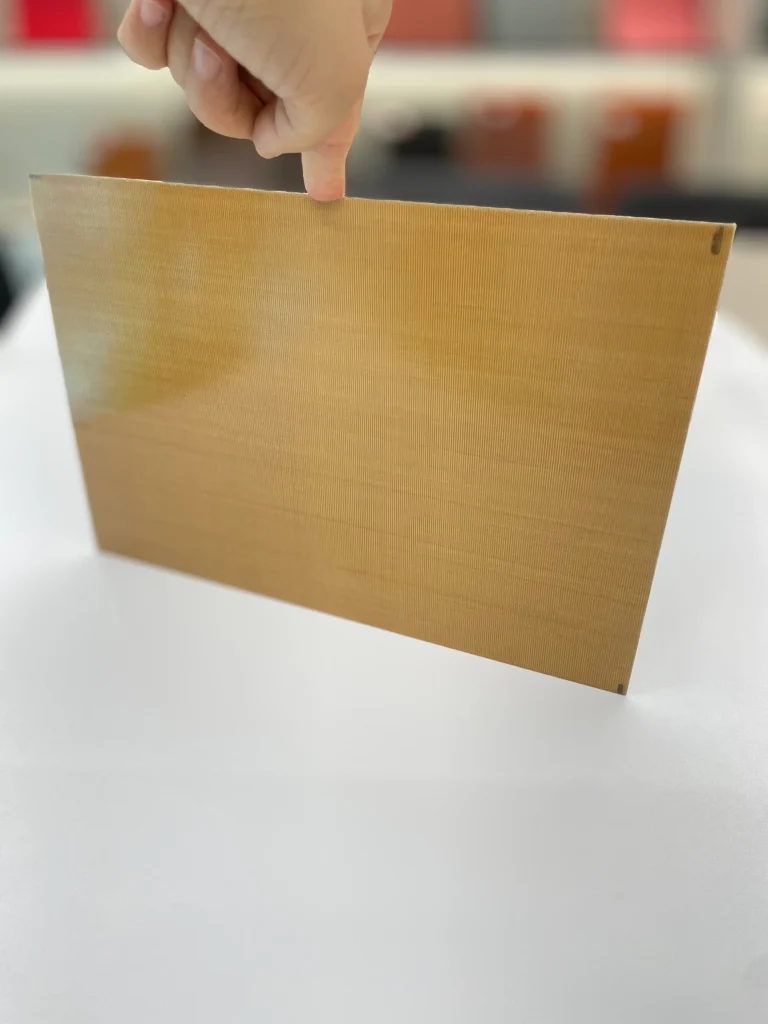
Besides developing the G9 sheets to be performance oriented, it is also designed in accordance to the main industry standards, which ensures that the sheets are reliable and globally accepted in serious engineering undertaking.
These approvals help guarantee that the material has been tested to exceeding safety levels, would maintain themselves environmentally friendly and their competitive functionality is high, which is especially evident in industries where this would be needed like electrical engineering, aerospace, and industrial manufacturing.
1. UL 94V-0 Flame Retardency
In my opinion, the most important G9 sheet certification is the UL 94V-0 that is provided by underwriters laboratories. The property that is classified this way is that the material is highly flame-retardant material once ignited it will extinguish itself through self-extinguishment in 10 seconds and will never drip flaming particles.
Such a property is critical in the electrical insulation application where there is need to minimize the risk of fire. G9 Components are commonly employed in switchboards, transformers, circuit boards and other high voltage devices because of this reason.
2. NEMA G9 Spec
A certain set of performance characteristics is also identified by the National Electrical Manufacturers Association (NEMA) as applied to every laminate grade. The parameters involved in standard of G9 contain mechanical strength, electrical insulating material, weathering dampness and heating resistance.
Compliance with the NEMA standard means that all G9 sheets will present similar levels of quality and performance expectations, and this standard makes the sheets predictable to engineers where they can specify them technically.
3. RoHS Compliance
G9 sheets are normally RoHS-acceptable, i.e. they received no of the harmful chemicals that are prohibited under the EU Directive on the Restriction of Hazardous Substances (RoHS). This involves wastes such as lead, mercury, cadmium and some flame retardants.
G9 conforms to the RoHS therefore this makes G9 a more sustainable and safer choice, particularly, those who manufacture electronic products and would need to export them to Europe and other regulated markets.
4. REACH Compliance
Regulation of chemical usage in the manufacturing process The European Union regulation of the usage of chemical substances in the manufacturing process is the REACH ( Registration, Evaluation, Authorisation and Restriction of Chemicals ) regulation.
The G9 sheets, having completed the REACH requirements, are also tested to be without substances of very high concern (SVHCs), as it is environmental friendly and safe to the human health in the handling processes and usage.
How to Source High-Quality G9 Sheets?
Selection of supplier of G9 sheets is a very important step which directly impacts the quality of your end product, its performance, and its reliability.
No matter what project it is, be it a small prototype or a major production run, your sourcing needs to be associated with established and reputable customers because they can help you produce the material out of which it is made to fill all the requirements in terms of the technical standards and compliance.
1. Trusted Manufacturers
The first approach is to look at well established manufacturers that have a track record of producing high performance industrial laminates. Other companies, such as Norplex-Micarta, Rochling, IEC (Industrial Electrical Company), and Panasonic Industrial Devices, are known by their good level of quality, their technical knowledge, and their adherence to the industry standards.
By selecting this kind of suppliers, you will ensure that they are low risk to deliver substandard materials and ensuring that you are getting the real deal certified G9 laminate.
2. Product Specifications
It is advisable to check the technical datasheet offered by the supplier, before placing the order. Note important features like sheet thickness, glass content, dielectric strength, flame rating (UL 94V-0) and thermal resistance. Ensure that the product is NEMA G9 compliant because without it, the material integrity and your application compatibility is in jeopardy.
3. Pricing Factors
The cost of G9 sheets can be different depending on a few factors such as:\n- size and thickness of the sheet – the quantity being ordered – special finishing or finish of the coating on the sheets – or compliance certificates.
Although G9 is usually costlier when compared to other grades of laminates, such as G10 or FR4, chances are that initial costs are recouped over time due to its durability and high performances. Never compromise the performance-price to get the best out of these two aspects and get the most out of it respectively.
4. Custom Orders
Customization is provided by many suppliers, including precision cutting services, CNC machining, or the manufacture of more of a pre-assembled parts. This becomes particularly useful when you are after tight tolerances or special geometries. Also bulk orders may reduce the cost per unit, which is conducive with large scale production or cases of second time use.
5. Lead Time and Delivery
Any engineering or manufacturing time table cannot delay. Deal with suppliers with stable delivery times, unbound shipping and after-sales services. A supplier that has an effective logistic system can minimize the possibility of delays due to the project and consider an urgent request.
Bottom Line
G9 sheets are a very scalable and reliable material product of the contemporary engineering problems. G9 material has high mechanical strength, high dielectric strength, fire retardance, and environmental resistance that are among the outstanding features of laminate grades.
G9 is reliable and safe in tough applications, whether you are designing an aerospace, industrial machinery, or renewable energy systems. It is a great investment on custom components and critical applications because of its machinability and long operating life.
With the knowledge of the properties of the material, extracting findings and comparing with other materials, and getting other sources of reliability, the engineer can make a right decision and will improve the performance and cost-efficiency. G9 is not a material, G9 is a solution to some of the most challenging needs of engineering.


