
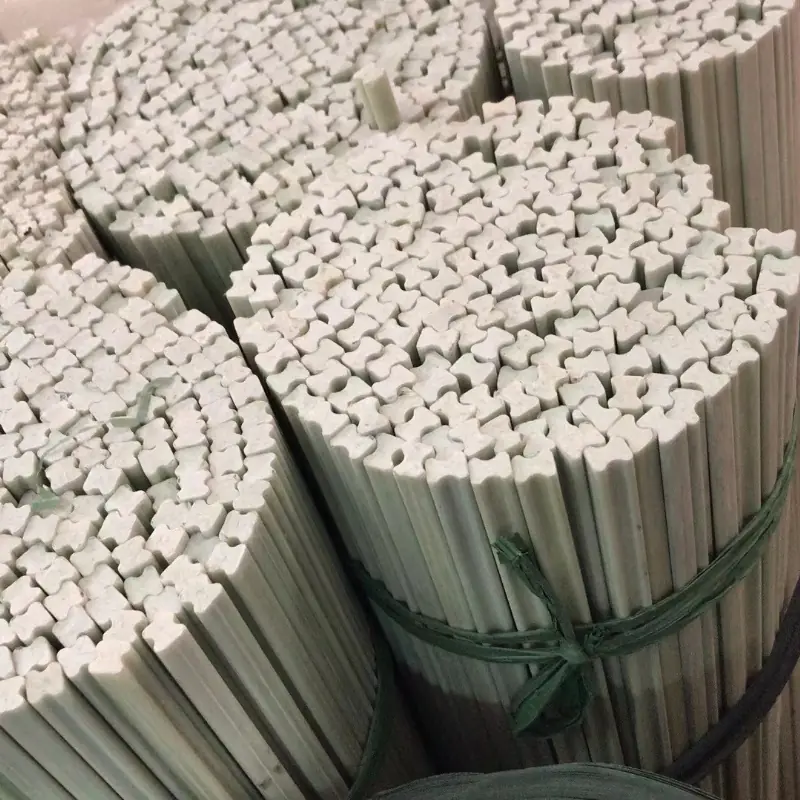
The Fiber Reinforced Polymer (FRP) composites have become synonymous in modern engineering owing to their unrivalled combination of strength, light weightiness and variability. While industries continue to seek for materials that provide superior performance and resiliency, FRP composites have been coming in the limelight especially those based on fiberglass. As one of the numerous FRP composite applications, one of the most critical and newfangled innovations is the fabrication of fiberglass dogbones that are largely utilized in material testing.
Dogbone shapes, a common item to engineering and testing, are fundamental parts to test the mechanical properties of materials under stress. These shapes, of the shape of a bone of a dog, are important in estimating tensile strength, elongation, fracture resistance, and fatigue at controlled stress. Though dogbones operate with a variety of materials, fiberglass material provides certain advantages that select it as the best material for structural testing components.
Due to its outstanding mechanical properties and given its capability of withstanding extreme environments, fiberglass dogbones is used in several industries such as aerospace, automotive, constructions, and marine engineering. This article will look at the properties, manufacturing processes, Applications and the future of FRP fiber glass dog bones these being important in today’s engineering and structural testing.

Understanding FRP Fiberglass Dogbones
What is FRP Fiberglass?
Fiber Reinforced Polymer (FRP) composites refer to material connected by using the reinforcing fibers and polymer matrix. Such fibers are mostly glass, carbon, or aramid, and they increase the mechanical strength and durability of the material so the composites are stronger than traditional materials such as metals and ceramics in many applications. One of the FRP composites which has increased in popularity due to its high strength to weight ratio, corrosion resistance and affordability is fiberglass.
Fiberglass in its turn is produced by drawing glass into thin fibers. These fibers are thereafter woven in the mats or rovings and impregnated with a resin like polyester, epoxy or vinyl ester. The ensuing composite material is, not only lightweight, but sturdy as well, with the fiber serving to bear the load and the resin giving it structural support. Fiberglass composites have a number of distinct advantages.
High Strength-to-Weight Ratio: This is the property that makes fiberglass composites an ideal material for the applications where the minimization of the weight without a compromise of strength is crucial. This feature specifically is the core of the automotive and aerospace industries that use it to optimise fuel efficiency and performance.
Corrosion Resistance: Fiberglass composites are very durable to weathering due to moisture, chemicals, and UV radiation. Fiberglass does not corrode regardless of the intensity of the environment unlike the metal which may corrode due to environment over time.
Electrical Insulation: The fiberglass composites are non-conductive, hence suitable for electrical and electronic uses where insulation is needed.
Thermal Resistance: Fiberglass is able to withstand high temperature therefore applicable in applications in areas such as engine components or heat exchangers.
What is a Dogbone Shape?
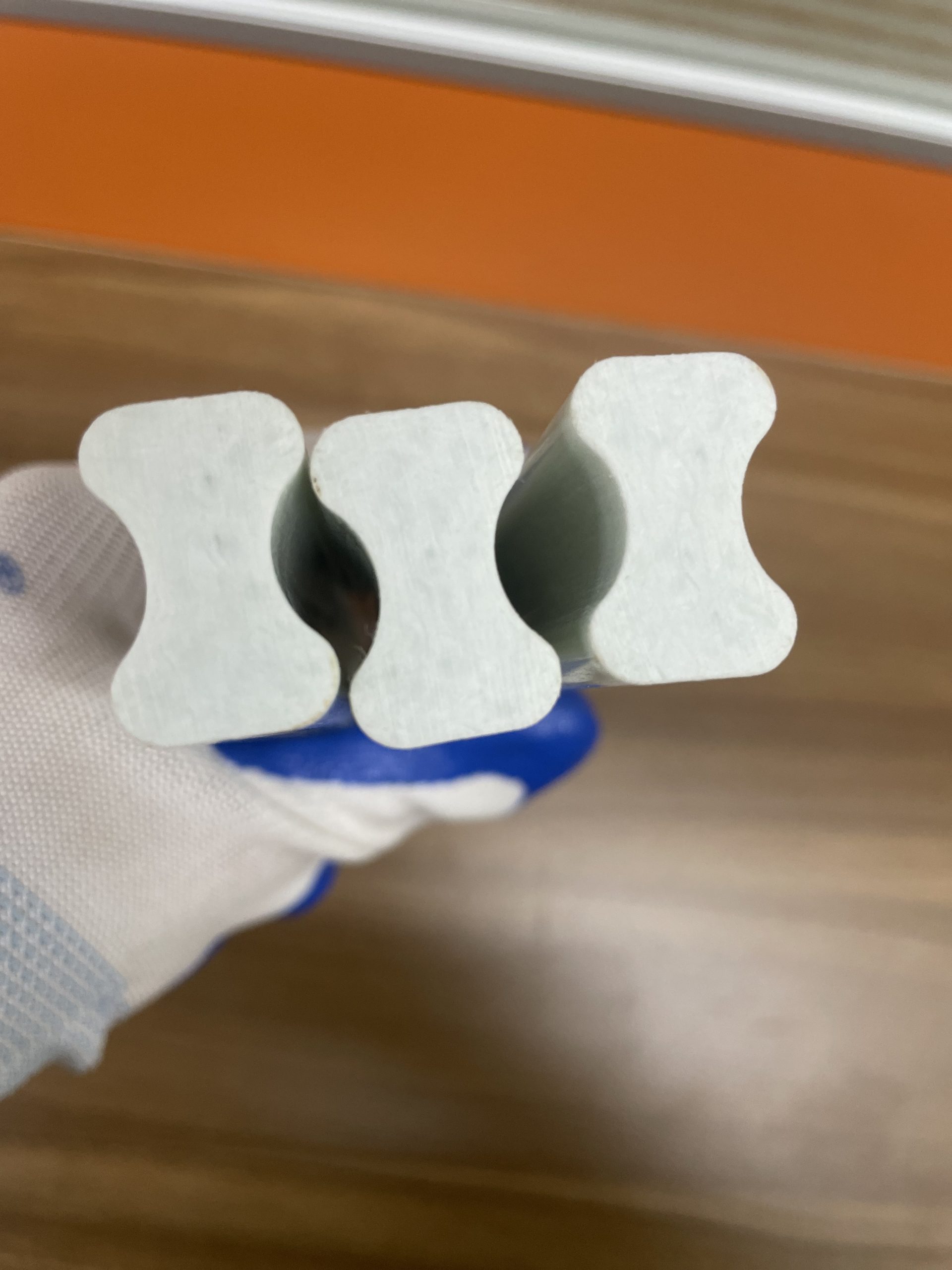
The shape of the dogbone in engineering refers to the specimen with a narrow part in the middle and wider ends. This form is carefully designed so as to induce stress at the center and hence allowing the material to fracture in a predictable manner under constrained conditions during tensile tests. The uniqueness in geometry leads to a uniform and reproducible failure mechanism which is critical in accurate testing of materials.
The main reason behind the dogbone shape is to provide an opportunity for uniform testing of materials under tensile load. The pinch of the dogbone guarantees application of stress over the area that is normally subjected to failure. The ends of dogbone are wider to make them easy to grip by testing machines without introducing unnecessary stress peaks at the grip.
Dogbone shape is mostly used in:
Tensile Testing: In tensile testing, a specimen of materials is taken and pulled until it breaks. The stress-strain data obtained as a result of such procedure allow engineers calculate the ultimate tensile strength, yield strength and elongation at break of the material. The dogbone shape therefore enables to make these measurements at a specific position, thus making it repeatable.
Fatigue Testing: Dogbones are also applied in the fatigue tests when the tested material is loaded and unloaded numerous times in order to determine its endurance under cyclic stresses. The dogbone has a controlled geometry, and hence the results are reproducible and accurate.
Fracture Toughness Testing: With the use of a dogbone geometry, it is possible for engineers to understand how materials are able to withstand the crack propagation, a very important characteristic for several structural use.
Manufacturing of FRP Fiberglass Dogbones
1. Materials and Components
The initial one is the choice of materials for the production of FRP fiberglass dog bones. It is the particular type of fiberglass and resin used in loading that can have a great influence on the mechanical characteristics of the final product.
Fiberglass Selection (E-glass, S-glass)
There are certain features that depend on the fiberglass type choice and they rely on its intended usage and performance characterizations. E – glass is the most used type of the fiberglass because it- balances in they cost and strength.
It does very well for many structural purposes. However, in applications that need a better performance, S-glass can be applied. S-glass has superior tensile strength, higher elongation, and offering better heat resistance thus preconditioning it for hard applications like aerospace or automotive engineering.
Options in Resin Matrix (Polyester, Epoxy, Vinyl Ester)
The selection of resin plays an important role in mechanical properties of the end composite.
Polyester Resin: Polyester resin is affordable and is widely utilized in applications where there is no need of high strength. The material is easy to work, it has good chemical resistance and is applicable for general use.
Epoxy Resin: Mechanical properties of epoxy resin are superior especially the tensile strength and the adhesion. It is applied in cases where better performance is required, especially in aerospace and high-stress applications.
Vinyl Ester Resin: Vinyl ester resin possesses good combination of properties – the strength of epoxy resins and processability of polyester resins. It is frequently selected for the applications where strength and corrosion resistance are required.
2. Production Methods
The process of production of FRP fiberglass dogbones consists of various techniques that have their own advantages. The most popular ones include pultrusion, filament winding, and compression molding methods.
Pultrusion
The continuous manufacturing process that is known as pultrusion involves the pulling of the fiberglass rovings through a resin bath and into a heated die where they undergo curing to become a composite material. Pultrusion is excellent for fabricating parts with the constant profile of cross-sections as the dogbones. The process supports the production of high strength, uniform parts with accurate dimensions with high efficiency. The major benefit of the process of pultrusion is that producers can create long lengths of composite material that are even and consistent.
Filament Winding
In a process of filament winding, continuous fibers are winding in a helical manner around a mandrel. The strands are saturated with resin as it is wound while the final product is cured in an oven. This process is especially well-suited to cylindrical or tubular forms, but may be modified for other forms. Filament winding means that the fibers of fiberglass point in the direction of stresses that the final product will be subjected to, thus making it efficient.
Compression Molding
Compression molding is a process in which pre measured amount of fiberglass and resin are placed in a mold and heated and pressed to give it the final shape. This method is used to generate complex geometries (dogbone shape) and give a close control over the thickness and orientation of fibers. Compression molding is appropriate for high-volume production, which can produce a high volume of parts in a short span of time.
3. Quality Control and Testing
After the production of the fiberglass produced dogbones, it undergoes a series of tests concerning the quality control in order to meet the desired mechanical properties and specifications. This could be dimensional checks, visual checks for defects, and strength, elasticity, and durability testing. Industry standards such as ASTM and ISO give guidelines for these tests in order to have consistency in different manufacturer’s applications.
Key Properties and Advantages
1. High Strength-to-Weight Ratio
Fiberglass composites are distinguished as its strength to weight ratio is superior, a most important attribute of industries where the reduction of mass while maintaining strength is important.
This distinctiveness is due to an unusual composition of fiberglass, where lightweight glass fibers are joined by a resilient polymer matrix. A combination of these two leads to composite material exhibiting high tensile and compressive strengths of parts with drastic reductions on overall weights of components.
For instance, in aerospace engineering, minimization of the weight of components goes straight into fuel efficiency and performance. More lightweight materials enable aircraft to load higher payloads, have longer flight range, use less fuel, which results in cheaper operation cost and carbon emission. Dogbones for structural testing, known to be made out of fiberglass, are an example of the principle.
They allow for the evaluation of mechanical properties of materials such as tensile, compressive and flexural strength without significant addition of mass that will skew the results. This becomes integral when simulating the real world stress conditions so as to have accurate data collection for high performance applications.
2. Corrosion and Chemical Resistance
Fiberglass composites show outstanding resistance to corrosion and chemical destruction, thus, being priceless in severe environments with aggressive chemistry. Unlike metals, which may corrode, oxidize, or weaken with time when it exposed to salt water, acidic solutions , or industrial chemicals , fiberglass’s structural integrity remains with time.
This property is because of the non-porous nature of the polymer matrix and the Chemically inert nature of the glass fibers that combine to provide a rugged, strong shield against deterioration by the surrounding environment.
This resistant corrosion quality makes fiberglass dogbones ideal for tests in such industries as marine engineers and chemical processors, as well as companies engaged in waste water treatment. For instance, in offshore platforms and chemical plants, materials are always in contact with corrosives that will quickly deteriorate metallic materials.
Fiberglass composites are suitable to withstand these severe conditions where they offer dependable service for long periods without regular service and replacement that go a long way in reducing long term operation costs.
3. Thermal and Electrical Insulation
Fiberglass is a good insulator in regards to heat and electricity, and is very suitable in applications calling for high temperature stability and electrical isolations. This property is due to the low thermal conductivity of glass fibers and insulating character of polymer matrices that provide a barrier to the migration of heat and electrical conduction.
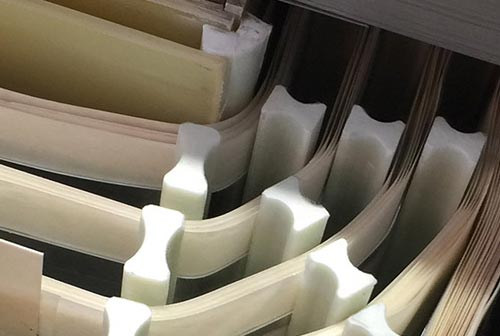
Fiberglass dogbones are applied in the testing of materials to cater for their usage in areas that are sensitive to thermal and electrical instability of materials. For example, in power generation, in such electrical transformers, or high-voltage equipment, a material has to endure extreme heat and obstruct electrical arcing or short circuits.
Fiberglass dogbones stress testing ascertains that these materials remain uncompromised in their operations at their extreme environments, yielding the data of great significance to engineers who are involved with safety-critical systems.
4. Durability and Low Maintenance
The fiberglass composites are characterized by high durability and small maintenance requirements, providing a long-term structural stability in harsh surroundings. Unlike metals, which can get rusted, corroded, and fatigued after some time, fiberglass does not change structurally even when it comes into contact with moisture, UV radiation as well as mechanical stress.
This durability is what makes it a good pick for places where remedial care is hard or pricey, which includes offshore structures, wind turbines or remote facilities.
The durability is reflected in the use of fiberglass dogbones in material tests. They present high repeatability under stress test allowing them to withstand wear for extended intervals without loss of readings. This reliability guarantees engineers to reliably evaluate their long-term performance in application conditions.
5. Customizability and Design Flexibility
It can be said for sure that one of the key benefits of fiberglass composites is that they are adjustable. Unlike metals and ceramics that have fixed material properties, fiberglass has a capability of being adapted to specific performance needs. Engineers have the control over the choice of fiber orientation, type of resin, thickness of the laminate, which allows the composite to be optimized for certain testing conditions.
For instance, using fibers can be made to strength in maximum direction as tensile strength or it can be woven in the form of multi directional weave to give balanced strengths in different directions.
This being of great value in material testing arrangements in which dogbones must represent the mechanical response of final components to the best extent. This flexibility also goes along with the additional use of additives, coating, or hybrid fiber types to obtain desirable electrical, thermal or chemical resistance properties.
The output is a testing component that is very flexible to accommodate a broad range of industries’ specific requirements.
Applications of FRP Fiberglass Dogbones
1. Structural Testing
Fiberglass dogbones are invaluable parameters in the determination process of composite materials. Their distinctive geometry enables accurate and standardized testing in different industries where materials employed in the critical applications would meet the performance level. It is important to test for tensile strength, fatigue resistance and fracture toughness involving the use of dogbones made of fiberglass in the development of new materials and technologies.
2. Aerospace and Automotive
In aerospace and automotive enterprises, every part has to bear enormous pressures and conditions. Fiberglass Dogbones are utilized for the materials testing such as composites in air plane wings, as well as, automotive body parts or chassis component. By measuring the tensile strength, fatigue resistance, and fracture properties, the manufacturers can be sure that they are producing stable, durable, and high-performance vehicles and aircraft.
3. Construction and Civil Engineering
The construction industry uses fiberglass dogbones in examining materials used in the construction of buildings, bridges, and other important infrastructure. Engineers can test materials such as concrete, steel reinforcement, and fiberglass composites to guarantee that such materials will perform well with loads and stresses that they will experience during their life-span.
4. Marine and Offshore
Marine environments are especially brutal, and materials are subjected to saltwater, high levels of moisture, and they are in a constant state of motion. Fiberglass dogbones are also applied for the examination of composite material applied in shipbuilding, for offshore platforms, etc. With such a high corrosion resistance, fiberglass is the right choice for these environments.
Bottom Line
FRP fiberglass dogbones are an essential tool of modern engineering which can be used as a standardized method of testing materials for a vast number of industries. Their strength, portability qualities, lack of corrosion vulnerability, and versatility makes them necessary to ensure performance and safety of materials used in aeroplane, vehicle, water, and building processes.
With the trend of evolution of composite materials, fiberglass dogbones would still be an asset to the development of structural testing, opening frontiers to material science and engineering developments.
Further development of FRP composites as well as developing technologies such as 3D printing and nanotechnology hint at low prospects of further differentiation and optimization of fiberglass dogbones in the years to come. From testing new materials to development of established designs, fiberglass dogbones will greatly influence engineering in the future.
𝙁𝙤𝙧 𝙢𝙤𝙧𝙚 𝙞𝙣𝙛𝙤𝙧𝙢𝙖𝙩𝙞𝙤𝙣:
WhatsApp: (+86)18094277239
Email:info@differentplastic.com


