
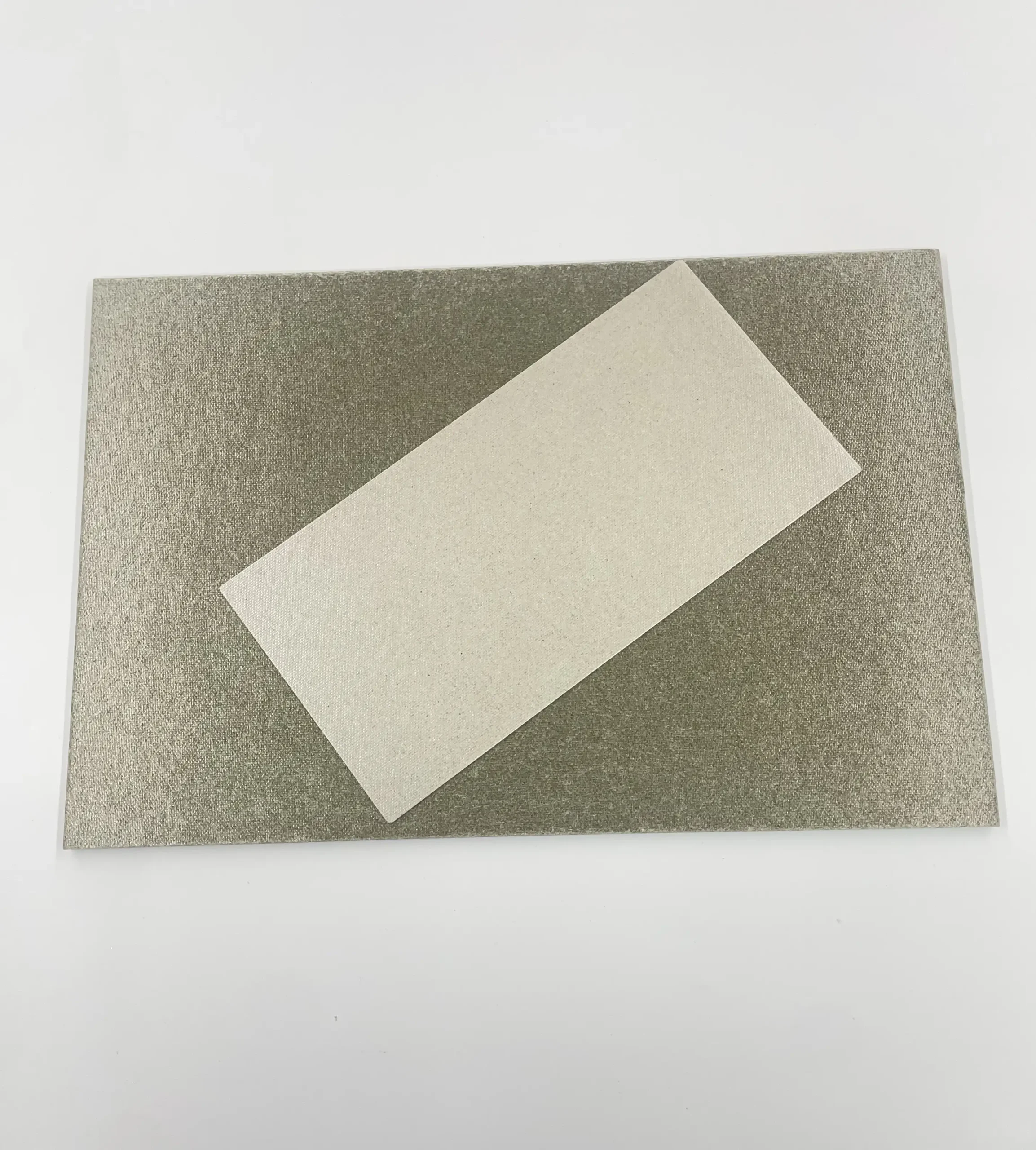
Mica is among the most interesting natural minerals that are utilized in the contemporary industry. Layered structure, heat resistance, and insulating property are some of the characteristics of mica that have made it not just a mineral that is found in the rock formation but also a very important material in engineering. The mica plate is one of the most significant products of electrical insulation, thermal protection, and special technical uses among numerous other forms of its industry.
A mica plate is a rigid and flat type of mica material that is applied in the areas where there is need of stability, high temperature and also dielectric performance. It can be produced using natural mica, processed sheets or even synthetic and composite forms based on the applications that are aimed at. The mica plates are not to be used as loose mica flakes or as thin flexible films, but rather they are created to be used in structured applications in which the performance and the shape maintenance is relevant.
Mica plate is important because it has a balance of properties. It can withstand high temperatures, withstand electrical currents, withstand numerous chemicals as well as it is lightweight in comparison to a number of other insulating materials. This is applicable in electrical equipment, industrial furnaces, heating, laboratory equipment, and high-performance parts, which have to perform safely in harsh conditions.
Mica is a material in insulation which is seldom mentioned but it has a much wider and more specialized role as most people might assume. This article will give a detailed overview of mica plate, covering its history, composition, production process, important characteristics, main uses, strengths, and weaknesses, and potential of mica plate in the contemporary engineering practice and industry.
The History and Background of Mica
Mica is a mineral that has a long and an extraordinary history. It is a part of a group of silicate minerals with a sheet crystal structure. This is what enables mica to fracture into extremely thin sheets, which is what has been very helpful with its use over centuries. Mica is a mineral that is found among igneous, metamorphic and sedimentary rocks and that has been mined in most regions across the globe to be used in decorative as well as industrial purposes.
Mica was first used surprisingly in a wide range in the ancient civilizations. It was used in decorations, religious items, colours and primitive decorative finish due to its reflective and glittering look. Others appreciated it as it could be broken into thin clear sheets and it was used in opening of a window, panels and in artworks. People knew about the mica being an odd and handy substance even prior to the science gaining the knowledge of its entire nature.
With time, the purpose of mica evolved to contain decorative and traditional applications to technical and industrial applications. The heating equipment, mica became significant as an insulation material as electrical systems developed, along with mechanical technologies. It was discovered that engineers could tolerate heat and electricity significantly more than most common materials. This resulted in the application of it in motors, transformers, furnaces, and electrical assemblies.
Mica can today be found in natural and synthetic forms. Natural mica is extracted directly out of geological deposits and refined into geological products. To obtain more controlled purity and performance synthetic mica is produced. Both types have settled in the modern industry.
It is this transformation of mineral to engineered material which makes mica plate such an interesting subject. It is the reworking of a naturally found material into an essential element in the advanced industrial apparatus.
Composition and Types of Mica Plate
Mica plate may be composed of other variants of mica and the performance is greatly influenced by the mineral contents as well as form of processing. In general, there are natural mica plates and the synthetic ones, and further differentiation according to the thinness, rigidity, and shape.
A. Natural Mica Plate
There are usually two types of mica minerals used to create natural mica plate and they include muscovite and phlogopite.
One of the most commonly used and most common ones is the mica muscovite. It is appreciated on the basis of high electrical insulating, high dielectric strength, and moderate thermal resistance. Muscovite is commonly used where electrical insulation is particularly needed and under operating temperatures that are within its performance.
The use of phlogopite mica is more inclined towards higher heat. It is usually more thermal enduring than muscovite and is more applicable in very hot industrial service conditions. Its electrical characteristics are also high, although its thermal withstanding ability frequently causes it to be the component of preference when high-temperature insulation frameworks need to be constructive.
Natural mica plate still has much of the benefits of the mineral itself. It is a good heat resistant material that has high dielectric performance, is chemically stable and relatively light. One of the factors that make it so effective in insulation application is its crystal-based structured layers.
B. Synthetic Mica Plate
Synthetic Mica plate is produced using engineered processes as opposed to splitting the metal minerals directly. It can either be mica-based composites or reconstituted mica or specially treated materials impregnated with binding systems. They frequently have a greater uniformity, mechanical consistency, and predictability of the industrial performance of these products.
Control is one of the major advantages of synthetic mica. Natural mica may be irregular in different pieces, whereas synthetic materials may be produced to more precise requirements. This is capable of enhancing dependability in high-end industrial or electrical usage.
C. Physical Forms
Mica is also found in very thin sheets and also in thicker and more rigid plates. Where there is a need to have a certain degree of flexibility or thin layer, sheets are typically utilized whereas plates are used in case of structural or shaped insulation. Thickness may be widely variable as per the usage, and the standard industrial sizes will normally be chosen in terms of machinery, electrical systems or fabrications.
Manufacturing Process
The manufacturing of mica plate is dependent on the nature or syntheticity of the material, yet both the directions should lead to the production of a flat product with consistent electrical, thermal, and mechanical characteristics.
In case of natural mica plate, the procedure starts with the mining of the mineral. Mica is extracted in rock formations where it occurs in the form of layered crystals. After extraction the raw mica is graded, sorted with regard to grade, clarity, thickness and size. The good quality mica that can be processed in industry is refined further.
The second process is splitting and cutting. The ability of mica to cut along its natural crystal planes is one of the rare properties of this mineral to be split into thin layers. The mineral is then separated into sheets, with the needed thickness, by workers or machines. These sheets could then be cut into any shape or size according to the end product.
In order to turn these sheets into plates, some other processing procedures can be used. Stability or elimination of moisture can be enhanced by heat treatment. Where there is a need to be smoother or more transparent, polishing can be applied. Layers can be bonded or stacked many layers together in composite or built-up forms to produce stronger and thicker plates.
Synthetic mica plate takes slightly another direction. Mica is produced not only by relying on naturally cleaved sheets of minerals, but also by directing chemicals or composite process. This may include making mica like substances, adding mica particles into binders or fabrication of engineered plates that have more uniform characteristics. Synthetic approaches allow a higher level of control in terms of thickness, purity and consistency.
Quality control is necessary in a natural and synthetic production. Plates are inspected in terms of cracks, delamination, and thinness, surface, electrical, and thermal tolerance. The significance of standardization lies in the fact that the mica plate is frequently employed in the critical insulation programs where failure may occur in case of inconsistency. The manufacturing process, though diversified, is aimed at maintaining the natural strengths of the material and transforming it to meet the tough industrial requirements.
Properties of Mica Plate
Mica plate is a preferred product in the sense that it is a material that incorporates a number of beneficial characteristics. Its performance is across electrical, thermal, mechanical and even optical performance making it more diverse than a single purpose insulation material.
A. Electrical Properties
The mica plate is also identified with great electrical insulation. It has a good dielectric strength which implies that it is capable of withstanding electrical breakdown when electrical failure is exerted on it at a considerable voltage. This is best applicable in the components that are required to isolate conductive parts or guard systems against undesired flow of current.
One of its best strengths is the insulating property. Mica can still be used in applications that are subjected to heat or mechanical stress, and still maintain its electric operation when other materials fail. That is the reason why it has been many years in use in motors, transformers, heating elements and electrical assemblies.
B. Thermal Properties
Heat resistance is another great strength of mica plate. Mica is not easy to burn and lose its vital insulating property as it can withstand high temperatures. It is this stability that makes it come up in furnaces, heating systems and hot industries.
Its thermal conductivity is not as high as that of metals and this allows it to be utilized in some systems as a thermal barrier. More to the point, it is structurally and electrically stable at a large range of temperatures. In electrical equipment operating at a high temperature, such a combination is very valuable.
C. Mechanical Properties
The mica plate is a balance of flexibility and durability and this is subject to form and thickness. Flexible plates are thinner with mica layers whereas those thicker are more firm. It has no impact toughness comparable to certain synthetic composites but is very effective in fixed-plant assemblies.
Mica is also resistant to chemical corrosion. It is also resistant to quite a number of industrial chemicals compared to some lower grade insulation materials and this facilitates an increase in service life.
D. Optical Properties
A small portion of the mica plates particularly the natural high quality ones exhibit a level of transparency or translucency. Their reflective property can also be used uniquely due to their stratified mineral structure. These optical properties are not the driving force behind industrial applications, but are handy in scientific and specialty applications.
E. Other Notable Properties
Mica plate is very light in terms of performance it presents. It is also commonly considered to be environmentally acceptable, at least in a finished state, and the sourcing and sustainability are important factors, unlike some highly processed types.
Applications of Mica Plate
The applications of mica plate are very diverse since it is good in environments, heat, and electricity projects. It plays a crucial role particularly in the areas where ordinary plastics, papers, or plain laminates could not perform.
A. Electrical and Electronics
Electrical insulation can be cited as one of the largest applications of mica plate. It has applications in transformers, motors, capacitors, switch assemblies and heating systems in which reliable dielectric performance is needed. The material is useful in these environments to isolate conductive parts and to sustain safety in an electrical loaded environment.
Mica plate is also popular in heating elements. Due to its resistance to both heat and electricity, it finds application in appliances, industrial heaters and thermal devices. The material may serve as a support and insulator which makes most systems easy to design.
B. Industrial Uses
Mica plate is frequently used in high temperature applications in industrial settings. It may be utilized in furnaces, kilns, heat shields and in thermal equipment where other insulators may fail. It does not easily get ruined under heat conditions and this is the reason why it can be used in intense services.Mica plate is also important to the chemical industry due to its ability to withstand chemical attack. Equipment: Because of the exposure to oils, solvents, or the chemicals used in the process, mica can perform better over the long-term than the simple insulation boards or organic materials
C. Scientific Applications
Mica has been in use on scientific equipment. In laboratory equipment, mica plate is available in the application where thermal and electrical stability is required. It has found other applications as a window material in electron microscopy and other applications requiring a high degree of smoothness and layered-consistency since thin mica can be formed with a high degree of smoothness and consistency in layers.
This scientific usefulness is not simply due to insulating effectiveness but also due to the capacity of mica to occur in highly fine and stable states which can be predicted to react in specific ways with specified instruments and settings.
D. Decorative and Miscellaneous Uses
Mica is also used decoratively as well as in specialties beyond the heavy industry. Art, crafts, decorative finishes and specialty design work can be performed with mica plate, or mica based materials due to their shine and natural layered beauty.
Mica is also a relatively significant component in the cosmetic industry, but as a powdered material not a plate material. To make beauty products develop a shimmer and light-reflective effect, mica powder is utilized. Although this one is not a case of industrial use of the mica plates, it demonstrates the versatility of the family of materials.
In general, mica plate is important as it is able to reconcile the natural mineral characteristics and the industrial engineering needs. Not many materials can work in electrical systems, thermal systems, scientific devices and adornment purposes in the same manner.
Advantages of Using Mica Plate
Mica plate has a number of strong points that make it still stay in the industrial and technical use despite the rivalry of the modern composites and polymers.
High thermal stability is one of its best strengths. Mica is able to provide resistance in temperatures that would otherwise ruin or bend most ordinary insulation material. It is particularly helpful in heating equipment, furnaces, motors and other systems that are subjected to continuous thermal stress.
It is also very good electrical insulation. One of its primary reasons why it has been so persistent is its dielectric performance. Mica plate has been used in most electrical systems as a reliable way of separating conductive components with low chance of compromising safety and performance.
The other significant advantage is that it is not vulnerable to chemical and environmental degradation. Mica is not an easily corrosive material and can withstand well in a humid or chemically exposed environment when compared to other materials. This helps in increasing the service life in high industrial conditions.
Mica plate is also lighter in weight and is comparatively easy to handle than the heavier ceramic or metallic insulation components. This simplifies the process of fabrication, transportation and installation.
Another good strength is longevity. Mica plate, when chosen and used correctly, has the ability to serve over long periods, and is most useful in non-portable or semi-portable use, that is, when mechanical shock is restrained. It is not as tough as any current engineered laminate, and frequently it performs better than other plain insulation materials in heat soaked and electrically demanding environments.
Last but not least, mica plate presents an exclusive combination of natural mineral functionality and industrial functionality. It is a mixture of insulation, heat resistance, low weight, and chemical stability which is cut, shaped and fitted into numerous systems. It is the balance that makes it have long-term value in the traditional and modern industries.
Limitations and Considerations
Although mica plate has numerous merits, it has several shortcomings, which should also be taken into account when choosing the material.
A major weakness is that it becomes brittle when exposed to extreme mechanical stress. The mica plate is not recommended in the application where there are frequent shocks, impacts or rough mechanical loading despite the fact that the product might be durable in service. It is most effective in situations where the stability is of priority over toughness.
The second problem is the price of natural mica of good quality. Natural mica of premium grade which is very clear, very constant, and very strong in structure can be costly particularly in situations requiring bigger plates or specialty requirements. This may impact its competitiveness in low cost applications.
Availability and sustainability issues exist also. Natural mica is a material that is supplied through mining and environmental issues, including ethical concerns, are becoming a significant aspect of the materials market across the world. This has promoted synthetic mica and synthetic alternative growth.
In a comparison of both natural and synthetic mica, both of them have trade-offs. Natural mica has the authenticity and performance of the natural mineral but can be of different quality. Synthetic mica can offer greater consistency and controlled production characteristics, however, it can be at an alternative cost regime or be chosen to serve more specialized functions.
Due to these reasons, engineers and purchasers tend not to consider mica plate as a universal solution but as a special purpose material that can work extremely well in the conditions.
Mica Plate vs Other Insulating Materials
| Material Comparison | Mica Plate | Other Material | Key Difference |
| Mica Plate vs Fiberglass Sheets | Better heat resistance and strong electrical insulation | Better mechanical toughness in some cases | Mica plate is preferred for high-temperature electrical insulation |
| Mica Plate vs Ceramic Plates | Lighter, easier to handle, good insulation | Higher temperature resistance but more brittle | Mica plate offers a better balance of insulation, weight, and usability |
| Mica Plate vs Plastic/Polymer Insulators | Strong thermal stability and dielectric performance | Easier to machine and more impact-resistant | Mica plate performs better in high-heat environments |
| When Mica Plate Is Preferred | Best for combined heat resistance, electrical insulation, and chemical stability | Other materials may suit lower heat or higher impact needs | Mica plate is ideal for demanding thermal and electrical applications |
Maintaining and Handling of Mica Plate
Mica plate should be handled well. It is brittle and therefore should be stored well. The plates must be stored in dry and clean environments and they must be stored flat or in safe shells that minimize the possibility of crack propagation, edge damages, or bending stress.
In handling, an overload of impact or point loading must be prevented. A high quality plate can drop and crack, or clamp too aggressively. The workers are expected to treat it with care particularly when cutting, fitting or installation.
The process of cleaning ought to be gentle with non-abrasive procedures that are appropriate on the mica plate type. Mica may last long in normal working conditions, however the life expectancy varies with temperature, electrical, vibration and mechanical exposure. Mica plate can be a long dependable service in the stable conditions.
Future Trends and Innovations
Synthetic mica and engineered mica composites could probably lead the future of mica plate. These inventions are intended to have higher uniformity, more reliable and more controlled operation of technical use.
The market is also being affected by environmental issues. Synthetic alternatives and more appropriate processing are also influencing importance as industries are demanding more responsible sourcing and enhanced sustainability.
New industrial opportunities are also coming up. The demand on materials capable of withstanding heat and electrical stress in smaller dimensions exists in renewable energy systems, outstanding electronics, miniature heating technologies and miniature electrical elements. Mica plate, in particular, in more engineered forms can be applied even further in these emerging areas.
Bottom Line
Mica plate is a fantastic substance that combines the capabilities of a mineral of nature and the requirements of contemporary machinery. Its main characteristics are being a good electrical insulator, thermally stable, a good chemical resistant material, light and useful over extended periods of time in challenging environments.
In transformers and motors, furnaces, scientific equipment, and customized industry components, mica plate is a very useful commodity in several industries. Although it has its shortcomings, particularly in the aspects of brittle and sourcing, in most cases, its benefits surpass these issues in the appropriate use.
The selection of the appropriate mica plate is determined by the operating circumstances which include heat, voltage, mechanical force and exposure to the environment. Natural or synthetic mica plate is still a useful substance in the contemporary industry, and still demonstrates that some of the most sophisticated engineering solutions are still starting with an earth mineral.


