
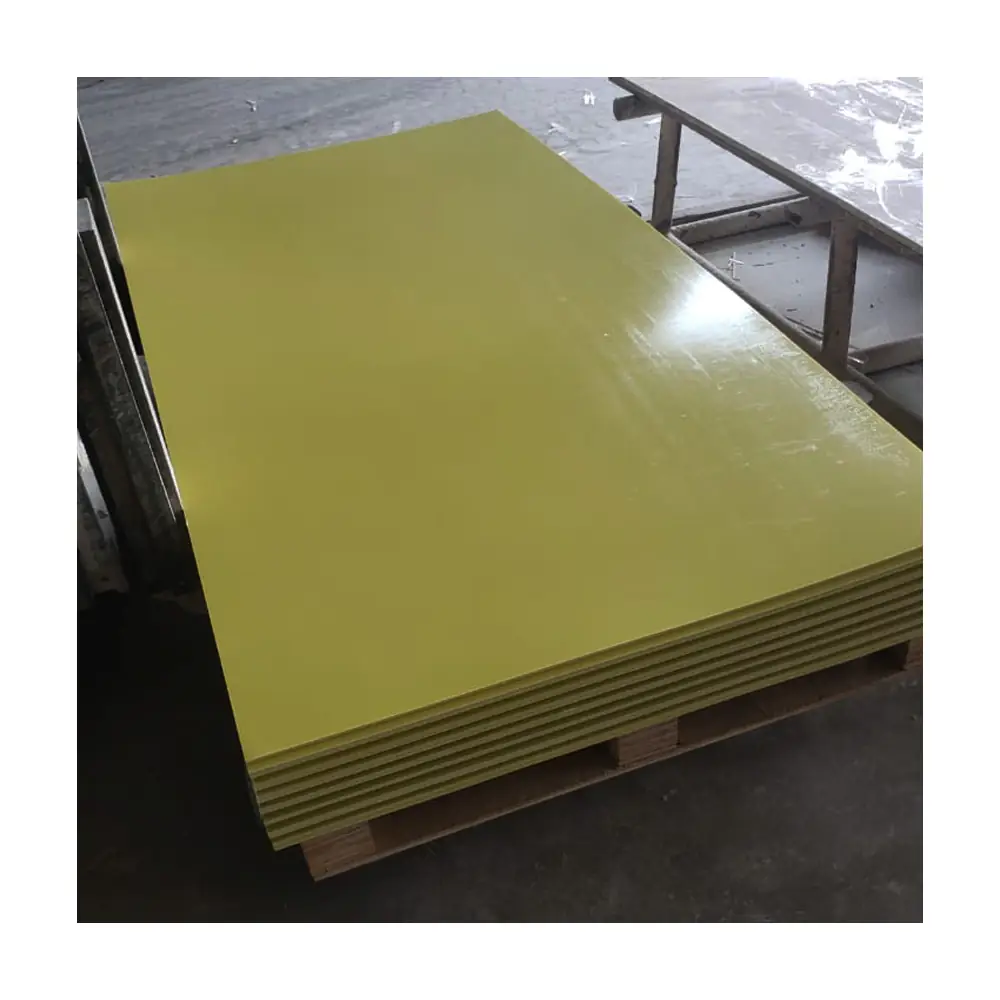
There is a greater reliance on materials in modern engineering that can provide strength, durability, and mobility while minimizing weight. Fiberglass epoxy is one material which has come into an increasingly useful form in many industries. The composite material is a structurally strong combination of fiberglass and epoxy resin, which gives the material reinforcing strength, bonding properties and protection from the environment and electricity.
Fiberglass epoxy is NOT just fiberglass with a coat of resin. It is a manufactured composite of two major materials which function together. Most of the structural reinforcement is provided by the fiberglass, and epoxy resin surrounds and bonds the fibers, carrying loads between them and shielding the fiberglass reinforcement from environmental exposure. The resulting composite can have a close to optimum combination of strength, stiffness, weight, corrosion resistance and dimensional stability.
Fiberglass epoxy is so versatile that this is why it is so widely used. It is used in marine applications like boat hulls and decks, aerospace, automotive, construction reinforcement, electrical insulation, wind turbine components, sporting goods and industrial machines. Additionally, various fiber orientations, resin types, fabrication processes and cures can be chosen to provide unique performance characteristics.
This article discusses how fiberglass epoxy is made, its properties, major types, advantages and disadvantages, applications and the relative strengths and weaknesses of fiberglass epoxy compared to other composite materials. It also covers selection and maintenance issues of fiberglass epoxy systems, sustainability issues and new developments to watch out for in the future which have the potential to influence the composite engineering industry.
What Is Fiberglass Epoxy?
Fiberglass epoxy also known as fiberglass reinforced polymer composite is a composite material composed of fiberglass reinforcement and epoxy resin matrix. Fiberglass provides strength, epoxy is used to bind the fibers together, and it aids in load distribution.
It is helpful to separate the fiberglass, the epoxy resin and the finished fiberglass epoxy composite. Fiberglass is a material that is made of extremely fine glass fibres, chiefly from silica-based glass. These fibres can be combined into fabrics, mats, or fibres which can be used as fibres for directional reinforcement.
Polymer systems that solidify through chemical curing process are known as epoxy resin, typically consisting of a resin and a hardener. The advantages of epoxy are its strong adhesion, chemical resistance and dimensional stability.
If fiberglass reinforcement is soaked in epoxy resin and cured appropriately, it will provide a fiberglass epoxy composite material. The end properties for the finished product will only be determined by the proportion of ingredients, fiber orientation, manufacturing technique, curing conditions, and the quality of the final laminate.
Composition
There are several components in a typical fiberglass epoxy system:
Fiberglass reinforcement: Tensile and structural reinforcement.
Fibers: Carries the load. Epoxy resin matrix: Binds the fibers together and transfers loads.
Hardeners: Interact with the epoxy resin to form a cross-linked, hardened structure.
Fillers: Can be used to adjust viscosity, strength, thermal properties or cost.
Additives: May enhance processing, flexibility, UV, flame resistance or other properties.
How It Works?
The interaction between the reinforcement and matrix is the reason for the effectiveness of fiberglass epoxy. Applied load causes the epoxy matrix to transfer the forces to the fibre glass fibres. The fibres then bear a large portion of the load.
One of the key factors is fiber orientation. Fibers oriented in the main direction of loading can offer high strength in that direction, and woven or multiaxial constructions can offer a more balanced reinforcement.
The epoxy matrix also resists the fibres from being abraded, damaged by chemicals, damaged by moisture and mechanical damage. When combined, the composite material can be engineered to meet particular requirements.
How Fiberglass Epoxy Is Made?
There are a number of controlled stages to the manufacture of fiberglass epoxy. The exact process will depend on the final product, the quantity of items to be produced, their geometry, and their desired performance.
Step 1: Manufacturing Fiberglass
Fiberglass is made of molten glass. The molten glass is then pulled through extremely fine openings to produce continuous fibers. The fibres can be processed with particular coating and woven into yarns.
The fibers can then be woven in fabrics, made into mats or used in unidirectional and multiaxial configurations. The choice of reinforcement pattern can significantly affect the mechanical properties of the final composite material.
Step 2: Mixing Up the Epoxy Resin
The epoxy system is ready made by choosing the appropriate resin and hardener. Operating temperature, cure rate, viscosity, chemical compatibility and mechanical characteristics are all factored into the formulation of epoxy systems by manufacturers.
It is very important to get the correct ratio of resin to hardener. An improper ratio may cause noncuring and/or decrease the mechanical and environmental properties of the component’s performance.
Step 3: Lamination Process
Fiberglass reinforcement is mixed together with liquid epoxy resin during lamination. There are a number of manufacturing processes.
Hand lay-up is relatively easy process where fiberglass sheets are laid in a form mold and then resin poured in by hand. Can be used in low volume production and repair.
Vacuum bagging utilizes the pressure of the vacuum to squeeze the laminate, expelling excess resin and air. This can lead to more uniform F/R ratio and less voids.
Resin infusion is the process of recirculating resin through dry fiberglass reinforcement with a vacuum pump. Can be used for larger composite structures and can offer good control of resin distribution.
Compression molding is the process of putting the material under pressure within a mould. It can be useful for the creation of repeatable parts, especially in mass manufacturing.
Step 4: Curing
After impregnation of fiberglass, the epoxy should cure. There are several systems that can be cured at room temperature, and there are systems that require higher temperatures for curing.
Chemical reaction can be accelerated by heat curing and can help to obtain specific mechanical or thermal properties. Some high performing systems also are post-cured in which they are subjected to additional controlled heating after the initial cure to further improve the properties of the material.
Quality Control
Quality control is crucial as defects in a composite can cause it to perform poorly. Manufacturers can test strength, check laminates for voids and delamination, assess adhesion and check dimensional accuracy.
Consistent product quality is achieved through the proper distribution of resin, alignment of the fibers, cure conditions, and thickness of the laminate.
Key Properties of Fiberglass Epoxy
Fiberglass epoxy is a good choice because it offers a number of desirable properties in one material system.
Mechanical Properties
It is one of the most significant strengths, because it is incredibly strong, considering its weight. The epoxy matrix will transfer loads from fiber to fiber and fiberglass reinforcement will take up a lot of load.
Fiberglass epoxy has also high flexural strength which is beneficial for panels, beams, shells, etc. where bending forces are applied. Properly designed laminates can offer good impact resistance and fatigue performance as well.
Mechanical properties are greatly influenced by fiber orientation. For instance a laminate with one direction of high strength could be used in a direction, a woven laminate or multiaxial laminate could be used in multiple directions.
Thermal Properties
In general, epoxy composites will be thermally stable under operating conditions of the resin used. Many polymers have a high coefficient of thermal expansion, and fiberglass can help improve dimensional stability.
But, fiberglass epoxy is not heat-proof. The maximum service temperature is very much dependent upon the type of epoxy used and curing procedure.
Electrical Properties
Another major advantage of fiberglass epoxy is its insulating characteristics. If the laminate is manufactured properly, it can have high dielectric strength and be resistant to electrical arcing.
For electrical insulation panels, circuit-board substrates, switchgear components, transformers, and other applications where electrical isolation is critical, this is where fiberglass epoxy comes in handy.
Chemical Properties
The epoxy matrix can offer excellent protection against moisture, corrosion and most chemicals. Fiberglass epoxy is not a metal, and therefore will not corrode, which is especially appealing in marine and chemically harsh applications.
The chemical resistance depends on the resin formulation and the chemistry itself. Some epoxy surfaces may also need to be coated or finished for outdoor use as they can wear over time due to UV exposure.
Physical Properties
Fiberglass epoxy provides a nice balance of weight and stiffness. It has a good dimensional stability so it remains stable in many environmental conditions.
The material can also be used to give a smooth finish and be a decorative finish if the right molds and finishing are used. It can also be made into complex shapes, making it even more versatile.
Types of Fiberglass Epoxy Composites
Various reinforcement arrangements provide various kinds of fiberglass epoxy composites.
Woven Fiberglass Epoxy
Woven fiberglass is made from fibers that are interwoven in a cloth. This set-up offers relatively even reinforcement in two main directions and can result in a uniform surface texture.
Boat construction, panels, automotive parts, sporting goods and repair uses where multidirectional reinforcement is advantageous are typical uses for woven fiberglass epoxy.
Chopped Strand Mat with Epoxy
Chopped strand mat is a mat of short strands of fiberglass. Molded components and applications that do not need a high amount of directionality can benefit from it.
It is relatively simple in construction making it possible to be an economical choice for certain composite products. But its mechanical properties are, in general, distinct from the well-oriented continuous-fiber reinforcement.
Unidirectional Fiberglass Epoxy
Unidirectional fiberglass is fiberglass that has the majority of its fibers going in the same direction. Arrows indicate the direction of reinforcement. In this way, the designers can focus on the reinforcement where it is needed most.
It is particularly suitable for beams, structural elements, reinforcement strips, and other elements subjected to strong directional forces.
Multiaxial Fiberglass Epoxy
Multiaxial fabrics are made with fibers oriented in a variety of directions (0°, 90° and diagonal).
This can be reinforced in multiple directions and enhance load bearing capabilities in complicated structures.
When loads are applied in a direction other than the ‘longitudinal’ axis, multiaxial fiberglass epoxy may be used for more demanding structural applications.
Fiberglass Epoxy Laminates
Fiberglass epoxy laminates are composite layers of fiberglass reinforcement cured in an epoxy resin. They are commonly employed in industrial sheeting, structural panels, electrical insulation boards and fabricated machine components.
They can be tailored for specific needs according to the thickness, fiber orientation, and resin type.
Advantages of Fiberglass Epoxy
The performance and versatility of fiberglass epoxy have made it popular.
Exceptional Strength-to-Weight Ratio
The material is very strong yet lightweight, compared to many materials used in building. This can be helpful in the case of weight reduction.
Outstanding Corrosion Resistance
Unlike steel, fiberglass epoxy does not rust, and depending on resin system can be used in wet or corrosive environments.
Excellent Adhesion
Epoxy typically bonds well to fiberglass, and will bond well to many other surfaces if they are prepared appropriately.
Long Service Life
Fiberglass epoxy components that have been designed and manufactured well, can offer extended service life, especially if exposed to minimal amounts of UV and harsh environmental conditions.
Superior Electrical Insulation
It exhibits good electrical insulation properties and is used in electrical and electronic purposes.
Low Maintenance
Many components fabricated from fiberglass epoxy have relatively low maintenance requirements, due to the materials inherent resistance to corrosion and dimensional changes.
Good Fatigue Resistance
Engineered composites can be loaded repeatedly over a long period of time, and are appropriate for transportation, marine, energy, and industrial applications.
Design Flexibility
Fiberglass may be laid up in a variety of orientations and can be used in conjunction with various epoxy types that enable engineers to design a composite for a particular use.
Cost-Effective Performance
Epoxy systems are more expensive than some of the traditional resin systems, but the durability and low maintenance requirements, and performance, may make it economically attractive over the life of a component.
Limitations of Fiberglass Epoxy
Although fiberglass epoxy offers numerous advantages, it is not the best material for all uses.
It may be more expensive than some of the other traditional materials used or cheaper composite materials. Specialized equipment and skilled labor may be needed when manufacturing.
Under severe conditions, fiberglass epoxy can fail in a brittle manner like many composites. Unlike conventional structures, an overloaded composite structure can crack, delaminate, or lose its structural integrity without showing significant deformations.
Depending on the formulation and processing conditions, epoxy systems can also have relatively long curing times. Another factor to consider is the outdoor environment, which can cause deterioration of unprotected epoxy surfaces over time when exposed to UV radiation.
Recycling fiberglass epoxy is difficult because the resin is cross linked and is not melted and formed as can be done with many thermoplastics. Finally, it is important to carefully control resin mixing, fiber placement, curing and surface preparation to achieve consistent quality.
Common Applications of Fiberglass Epoxy
Due to its versatility, fiberglass epoxy can be used in various industries such as transportation, energy, construction, electronics, and more.
Marine Industry
One of the most recognized applications of fiberglass composites is for the marine industry. Use fiberglass epoxy in boat hulls, boat decks, bulkheads, marine panels and structural repairs.
It is especially useful for its corrosion resistance in areas where metals are constantly exposed to water and salt and can quickly corrode. Epoxy is also highly adhesive, which can be beneficial in composite repair/reinforcement applications.
Aerospace Industry
In the aerospace field, lightweight materials with strong mechanical properties are required. Selected aircraft parts, interior panels, fairings, covers and other structures may be constructed from fiberglass epoxy.
While carbon fibre is being considered for extremely high stiffness or strength-to-weight ratio applications, fiberglass is desirable when cost, electrical characteristics, impact characteristics and a balance of performance is significant.
Automotive Industry
Fiberglass composites are used in the automotive industry in body panels, aerodynamics, structural reinforcement, and special vehicle parts, as well as in racing teams.
There is an advantage to making components lighter, which can help to improve vehicle efficiency and performance. Fiberglass epoxy can also be used to form complex shapes, making it useful for creating custom components.
Construction Industry
Fiberglass epoxy is suitable for structural strengthening and repairing in the construction field. Concrete, bridges, beams, columns and other structures can be reinforced with composite reinforcement systems.
Architectural panels and specialty construction components can be reinforced with fiberglass as well. It has excellent corrosion resistance characteristics, particularly in situations where other steels have been found to be susceptible to corrosion.
Electrical Industry
Fiberglass epoxy laminates are used for electrical and electronic industries as insulators and structural elements. Some PCB substrates are made with fiberglass reinforced epoxy because of their mechanical strength and electrical insulative properties.
It also serves as insulation for components, switchgear, electrical support structures, and more.
Wind Energy
The wind turbine blades are large composite structures which are subjected to repetitive mechanical loading and exposure to the environment. Blades are often made of fiberglass composites due to their combination of strength, weight, durability, and cost.
Structural supports and other renewable-energy parts are also applications for fiberglass epoxy.
Sports and Recreation
Fiberglass epoxy is used extensively in sports because of its lightweight yet not necessarily weaker properties. Some applications are surfboards, kayaks, bicycles, fishing rods, protective equipment and recreational structures.
Manufacturers are able to vary fiber orientation and laminate thickness to produce products having particular stiffness and flexibility properties.
Industrial Equipment
Industrial uses encompass storage tanks, pipes, protective covers, machine parts, platforms, and special structural parts.
Fiberglass epoxy can be used as a replacement for metals or other materials where moisture, corrosion and chemical resistance are a key consideration. Being able to be made into a variety of custom shapes also adds to its versatility for special equipment.
Fiberglass Epoxy vs Other Composite Materials
Selecting the right composite requires understanding how different materials behave under specific conditions.
| Comparison Factor | Fiberglass Epoxy | Polyester Fiberglass | Carbon Fiber | Vinyl Ester | Phenolic Composites |
| Strength & Stiffness | High strength and stiffness with balanced performance | Moderate to high strength; suitable for general applications | Very high strength and exceptional stiffness | High strength and good stiffness | Moderate to high strength |
| Weight | Lightweight with an excellent strength-to-weight ratio | Lightweight | Very lightweight with outstanding strength-to-weight performance | Lightweight | Lightweight |
| Durability & Resistance | Excellent corrosion, moisture, and general environmental resistance | Good corrosion resistance and durability | Excellent durability; performance depends on resin system | Excellent chemical, moisture, and corrosion resistance | Good durability with strong fire and heat performance |
| Adhesion & Processing | Excellent adhesion; requires accurate mixing and curing | Good adhesion and generally easier processing | Requires precise manufacturing and quality control | Good adhesion and relatively straightforward processing | Requires controlled and specialized processing |
| Electrical Properties | Excellent electrical insulation | Good electrical insulation | Electrically conductive | Good electrical insulation | Excellent electrical insulation |
| Cost | Moderate to high | Generally lower | High to very high | Moderate to high | Moderate to high |
| Fire & Heat Performance | Good with specialized formulations; standard systems have moderate heat resistance | Generally moderate | Depends largely on the resin system | Good with specialized formulations | Excellent fire, flame, and smoke resistance |
| Common Applications | Marine, construction, aerospace, automotive, electrical, wind energy, and industrial equipment | Boats, body panels, molded parts, and general-purpose composites | Aerospace, racing, high-performance vehicles, and advanced sporting equipment | Marine structures, chemical tanks, pipes, and industrial equipment | Aerospace interiors, transportation, and fire-sensitive industrial applications |
How to Choose the Right Fiberglass Epoxy System?
The first step in selecting a fiberglass epoxy system is to establish the requirements of the application.
Strength is the initial factor to be taken into account. Identify if the component is under tension, compression, bending, impact, vibration or fatigue loading.
The same applies to environmental exposure. Sometimes a marine component needs moisture resistance and resistance to salt water, and sometimes a chemical resistance is required for an industrial component.
The temperature factor should also be taken in account since the service-temperature range is different for various epoxy formulations.
The type of resin is to be chosen in accordance with the mechanical, thermal, chemical and processing properties of the resin required. Another important factor is the direction of the fibers. Depending on the loading direction, unidirectional reinforcement can be used, or woven or multiaxial fabrics may be suitable for multidirectional loading.
Another aspect of the manufacturing approach should also be taken into account when choosing materials. Hand lay-up system may not be the best system for resin infusion or automated production.
Last, but not least, of course, budget is a factor. The lowest cost material may not be the cost effective solution if it is subject to maintenance on regular basis or has a short life. Both the costs and performance of the equipment must be taken into account by the engineer.
Maintenance and Care of Fiberglass Epoxy Components
Proper maintenance can greatly prolong the life of fiberglass epoxy parts.
Cleaning should be done regularly with suitable cleaning agents which are not harmful to the surface of the resin. Regularly clean-up dirt, salt, chemicals and contaminants, particularly on marine and industrial components.
Cracks, scratches or signs of damage, such as delamination or discoloration, can be detected on the surface and before they create a problem.
Minor damage to be repaired by application of compatible composite repair materials and suitable surface preparation. If the cracks are deep and/or the structure appears damaged, it should not be dealt with as a cosmetic problem and should be assessed by a qualified professional.
Protection from UV rays is also essential for those components that will be subjected to sunlight. Protection coatings, paints or UV resistant finishes may minimize surface degradation.
To store fiberglass epoxy parts, unnecessary exposure to extreme temperatures, moisture, chemicals and direct sunlight should be avoided. Careful storage and periodic checking will help ensure appearance and performance.
Sustainability and Environmental Considerations
Sustainability is gaining more and more significance in the development of composite materials. The long service life of fiberglass epoxy may be able to bring benefits to the environment.
It can also be low in weight, which can lead to energy savings in transportation applications. Lighter components, for instance, can lower the energy use for vehicle, vessel and other equipment movement.
The product life can also be extended and material use reduced over time due to reduced maintenance and corrosion resistance.
There is a huge problem with recycling fiberglass epoxy, however. The traditional cured epoxy is a thermoset that cannot be melted and reshaped. Technically, it can also be challenging to separate the fiberglass from the resin matrix.
Hence, scientists and producers are looking into alternatives to epoxy resins, to better recycling techniques, and to more sustainable processes for manufacturing epoxy. While bio-based feedstocks are able to contribute to a decrease in use of fossil based raw materials, their overall impact on the environment depends on their sourcing, manufacturing, durability and end-of-life management.
Another sustainable manufacturing option could be minimising material waste, maximising resin usage, enhancing the efficiency of production processes and creating composite parts with extended lifespans.
Future Trends in Fiberglass Epoxy Technology
Fiberglass epoxy’s future is tied to improvements in materials science and manufacturing technology.
An exciting research opportunity is in the realm of nano-enhanced epoxy systems. The inclusion of well-designed nanostructures can enhance properties such as toughness, electrical, thermal or other.
Another new field is that of smart composite materials. The exploration of composites into which sensing technologies are embedded to monitor strain, damage, temperature or structural health.
However, re-use of composites is becoming a growing focus. The materials used in composite structures could become easier to recover at the end of the useful life due to new resin chemistries and advanced recovery methods.
Automation is also anticipated to have an impact on composite production. The automated fibre placement, robot lamination, digital process control and advanced inspection technologies can help to enhance consistency, reduce labour and material waste.
New opportunities for fiberglass epoxy parts that combine weight, cost, electric insulation and structure may also exist in the electric vehicle market, and lightweight, high-performance composites are likely to continue being required in aerospace applications.
Another major sector of growth is renewable energy. The trend towards bigger and more complex wind turbines and other energy systems will continue to require composites for lightweight and durable structures.
Bottom Line
As the combination of the reinforcing property of fiberglass and the bonding property, protectivity and dimensional stability of epoxy resin, fiberglass epoxy has become an important material in modern engineering. A composite of the resulting material gives a desirable combination of strength, light weight, corrosion resistance, durability, electrical insulation and design flexibility.
It has applications in marine, aerospace, automotive, construction, electrical, wind energy, sports and industrial equipment. Its performance can be further engineered by choosing fibres with various orientations, different resin types, laminate constructions, and manufacturing processes.
While there are drawbacks to fiberglass epoxy such as higher initial costs, sensitivity to UV, curing requirements and recycling issues, the material still provides significant long-term value in challenging applications.
These composites are expected to become ever more useful and eco-friendly in the future. All of these are helping to shape the evolution of composite engineering.
With industries always looking for materials to provide high-performance in a low maintenance and lightweight package, fiberglass epoxy is well poised to be another major material of the future in engineering and high-performance applications.


