
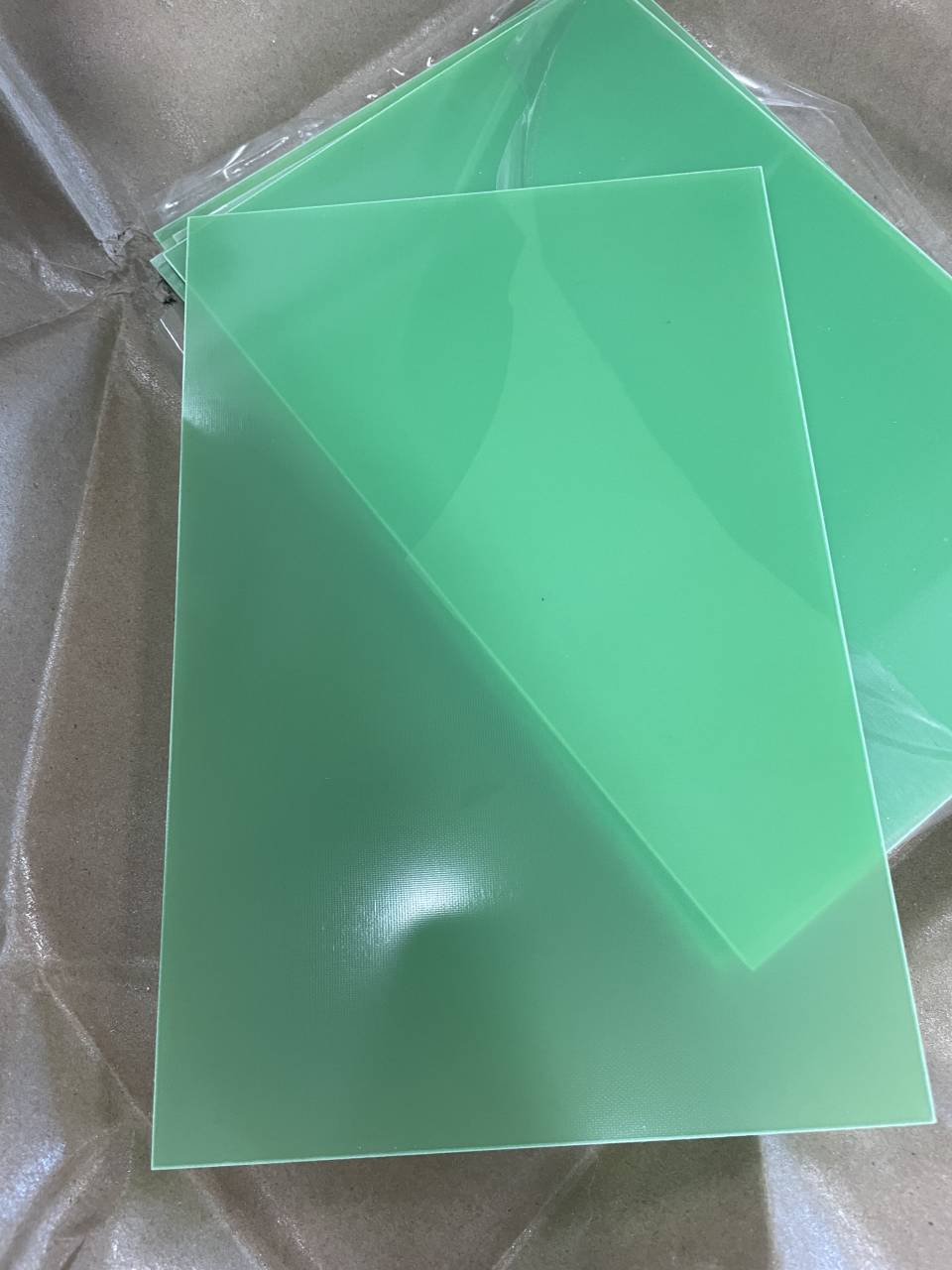
EPGC203 stands out as a high-performance epoxy fiberglass laminate sheet because it delivers exceptional mechanical strength alongside electrical insulation while providing thermal resistance.
The electrical and mechanical industries depend on EPGC203 due to its optimal performance characteristics for tough operations. EPGC203 is the most suitable material for insulation requirements in electrical systems and structural requirements in mechanical equipment.
This document reviews EPGC203’s characteristics and technical abilities, discussing different kinds of laminate and various production settings. It establishes EPGC203 as the most beneficial high-performance engineering solution.
Understanding EPGC203 Epoxy Fiberglass Laminate
What Is EPGC203?
Specialized epoxy fiberglass laminate EPGC203 serves applications requiring exceptional mechanical durability and electrical insulation alongside heat resistance properties. The material serves diverse industry sectors, including electrical engineering, automotive and aerospace, and power generation, because it shows resistance to high temperatures.
The innovative laminate EPGC203 shows no weakness in demanding situations because it was engineered to handle persisting electrical strain and mechanical loading in addition to high-temperature exposure.
Composition: Epoxy Resin + Fiberglass
The principal elements of EPGC203 consist of epoxy resin mixed with fiberglass cloth. All elements in the laminate structure impact the total endpoint performance.
Epoxy Resin: The built-in binding agent serves to conduct multiple functions by maintaining structural stability. The laminate endures heat well because its design allows safe operation at temperatures up to 155 degrees Celsius. Offers excellent resistance to moisture, chemicals, and fire hazards.
Fiberglass Cloth: The material structure receives extra strength together with superior impact resistance because of the reinforcement elements. By including this material, the tensile strength and flexural strength values receive notable enhancement.
The laminate’s properties are consistent throughout the structure’s length. EPGC203’s distinct material ingredients help it create superior durability, temperature resistance, and harsh condition resistance.
Manufacturing Process: EPGC203 receives its production through hot pressing procedures, which produce high-performance results and consistent quality levels. The production steps include:
Material Preparation: Manufacturers choose alkali-free, high-quality fiberglass cloth because it is pure and strong. Epoxy resin is formulated with additives to increase its operational potential in terms of thermal and electrical properties.
Impregnation Process: The breakdown procedure utilizes epoxy resin to coat fiberglass cloth, allowing the fabric to absorb the resin evenly. Full resin saturation of each fiberglass layer eliminates weak areas from appearing in the final layered product.
Layer Stacking: Several impregnated fiberglass cloth layers are stacked into one structure to build the target thickness. The laminate’s mechanical strength, alongside its insulation power, is determined by the number of glass fiber fabric strata used.
High-Pressure Curing: The materials that undergo high-temperature compression receive extreme pressure because they rest inside the press. During this process, undesired resin and air pockets evaporate to create an improved, denser, and stronger final material output.
Cooling & Cutting: Stable results emerge after cooling treatment following the curing phase because it helps prevent material warping. After the cooling process ends, manufacturers produce standard products of 1020×1220mm and 1220×2440mm, or they cut products to specific dimensions requested by customers.
Proper manufacturing standards of EPGC203 maintain standard consistency and durability, which makes this product a strong choice for industrial applications.
How EPGC203 Differs from Other Epoxy Laminates?
EPGC203 demonstrates superior mechanical properties than FR4 and G10 epoxy laminates because it exhibits excellent dielectric behavior and high thermal resistance. Below is a detailed comparison:
| Feature | EPGC203 | FR4 | G10 |
| Composition | Epoxy + Fiberglass | Epoxy + Fiberglass | Epoxy + Fiberglass |
| Thermal Resistance | Up to 155°C | Up to 140°C | Up to 130°C |
| Mechanical Strength | Superior | High | Moderate |
| Electrical Insulation | Excellent | Very Good | Good |
| Flame Retardancy | Yes | Yes | No |
| Water Absorption | Low | Moderate | Moderate |
| Primary Use | High-performance electrical and mechanical applications | PCBs, electrical insulation | Industrial mechanical parts |
Key Differences:
- The thermal resistance of EPGC203 reaches 155°C because it demonstrates superior performance compared to FR4 and G10 materials.
- EPGC203’s tensile and flexural strength outperforms G10 and FR4, making it a suitable option for building structures.
- EPGC203’s electrical properties deliver superior dielectric strength, which can be used to develop better insulation systems and safety features in electrical equipment.
- EPGC203’s fire retardant capabilities exceed G10 measures because it satisfies the experimental safety criteria of the UL 94 V-0 flammability standards.
With EPGC203, the union of heat-resistant properties, excellent insulation capabilities, and outstanding mechanical durability make this material an optimum choice for use in applications demanding these critical design factors. No other material proves to be superior in terms of reliability and efficiency as EPGC203 when used in transformers, generators, and high-performance machinery.
Main Features and Characteristics of EPGC203
Material EPGC203 has excellent attributes for industrial utilization. It displays outstanding mechanical strength along with unmatched resistance to high temperatures, electrical insulation properties, and chemical durability. The paper elaborates on vital material characteristics and details.
1. Excellent Mechanical Strength
The strongest attribute of the strength of EPGC203 material is its performance at a high operating temperature range. Because of their superior qualities, this material makes for ideal functioning in advanced applications.
The properties ensure durability in stressful situations that expose materials to a lot of workloads and various impacts.
Durable, reliable, long-term parts of electrical and mechanical systems comprise EPGC203 because of their structural features.
EFGC203 will not degrade shape or durability with the precision process of part machinery since it does not affect its original CNC machining shape.
The tensile strength values of this laminate exceed 280 MPa in the vertical direction and 200 MPa in the horizontal orientation, which offers dependable performance in structural applications.
2. Excellent Thermal Resistance
- EPGC203 maintains high operational efficiency even when subjected to thermal conditions below 155°C in numerous heat-intensive situations. Unlike other laminates, if exposed to extended heat conditions, its mechanical and electrical performance remains fully intact.
- The properties of EPGC203 prove advantageous under the following conditions:
- The thermal dissipation properties of motors and generators depend heavily on this material.
- Efficient high-voltage switchgear needs insulation materials that avoid deterioration at elevated temperatures.
- The material serves automotive and aerospace sectors that encounter many heating situations during operation.
- EPGC203 epoxy resin exhibits a high glass transition temperature that protects the material from deformation during extended exposure to heat without causing any softening effects.
3. Superior Electrical Insulation
One of the most critical properties of EPGC203 is its exceptional dielectric strength, which ensures that electrical current does not leak or cause short circuits. It features:
- Vertical dielectric strength of ≥14.2 KV/mm (1mm thick).
- The breakdown voltage is≥45 KV, making it highly resistant to electrical arcing.
- Low dielectric loss factor (≤0.04 at 50 Hz), meaning minimal energy loss in electrical applications.
Because of these properties, EPGC203 is widely used in:
- High-voltage transformers and switchgear for insulation and protection.
- Electrical motors and inverters ensure efficient energy transfer.
- Circuit breakers and control panels, where high insulation properties are required for safety.
Its electrical insulation properties remain stable during high-moisture conditions, making it a trustworthy material for outdoor and industrial electrical systems.
4. Excellent Moisture and Chemical Resistance
- The designers of EPGC203 developed this material to function in severe environmental situations, including increased humidity, transformer oil contact, and chemical exposure. EPGC203 has a water absorption capability below 0.5%, eliminating swelling and preserving insulation functionality even when exposed to moisture.
- The material possesses attributes that make it suitable for the following situations:
- EPGC203’s physical strength stands especially great in saltwater and moisture applications of marine and offshore settings.
- Chemical processing plants contain materials used in the insulation of such processes; hence, such insulations have to withstand corrosive contact.
- Insulation of electrical transformers and enclosed equipment will require that the material used maintain its stability within the oil-filled system.
- Chemical degradation is prevented, thereby being less often serviced or replaced since EPGC203 can sustain itself longer.
5. Flameretardant Material EPGC203
Flame resistance grades for electrical and industrial applications strictly fall under EPGC203. This means that it:
Self-extinguishes on fire exposure, thus preventing the spread of flames.
Complies with flammability standards, such as UL 94 V-0, for high safety levels.
It offers additional protection in electrical systems, minimizing the fire hazard.
Such properties make EPGC203 a prime material for:
- Electrical components in hazardous industrial areas require flame-resistance capabilities.
- High-voltage electrical enclosures, where insulation must prevent fire risks.
- Aircraft and rail transportation, where fire safety regulations are stringent.
Technical Specifications and Industry Standards of EPGC203
The engineering of EPGC203 epoxy fiberglass laminate conforms with industrial demands for industrial operations requiring extreme and severe conditions.
Manufacturers employ this material, in many instances, due to its exceptional physical profile in conjunction with superior electrical transmission capabilities in order to provide insulation and heat-protection products for numerous mechanical industrial operations.
The document showcases technical specifications about EPGC203 in conjunction with its industry standards compliance
1. Physical Properties of EPGC203
The physical stresses, combined with environmental exposure and continued operations, ensure the effective long-term performance of the EPGC203 material.
EPGC203 offers excellent mechanical strength and structural stability because it presents a density range of 1.8 – 2.0 g/cm³. The weight efficiency of EPGC203 results from its optimal density range, which simultaneously delivers strong structural durability that is important for applications requiring performance with low mass.
The water absorption rate of EPGC203 stays below 0.5%, allowing the insulation material to retain its mechanical performance uninjured in humidity or immersion applications.
This kind of material offers superior resistance towards water absorption, and it also finds applications where underwater marine environments, electrical transformer parts, and industrial machines are exploited in wet industrial locations.
The constant dimensions of EPGC203 possess better environmental resistance than other products since they become insensitive to moisture damage.
The tensile strength of the material is above 280 MPa in vertical orientation, and 200 MPa horizontally marks its breaking threshold through stress measurements.
The tensile strength measurement in EPGC203 from female-to-male and male-to-female directions allows this material to survive high-stress situations at values exceeding 280 MPa and 200 MPa, respectively.
The material possesses adequate strength for usage as structural components in heavy-duty electrical equipment, aerospace applications, and precision-engineered insulation parts.
2. Electrical Properties of EPGC203
The wide recognition of EPGC203’s superior insulation capabilities makes it suitable for top-voltage applications and protective electrical enclosure use.
Dielectric Strength: ≥14.2 KV/mm (1mm thick)
Materials determine their breakdown resistance against electrical stress through their dielectric strength.
EPGC203 has a superior insulation functionality through its ≥14.2 KV per millimeter dielectric strength which stands to protect electrical equipment safely in high-voltage operating conditions.
The vital insulation property of EPGC203 allows its use in power transformers as well as switchgear elements and circuit protection equipment.
Breakdown Voltage: ≥45 KV
An insulation material ruptures when subjected to breakdown voltage thus enabling electrical current to pass through its construction phase.
The safety and operational integrity of EPGC203 remains unaffected by severe electrical conditions because it exhibits at least 45 KV breakdown voltage.
Being resistant to high voltage impacts makes EPGC203 a suitable insulation safeguard for both high-voltage running equipment and control units which protect electrical system elements.
Insulation Resistance: ≥1.0 × 10¹² Ω.m
The capability of any substance to prevent stray electrical currents establishes the measurements of insulation resistance.
The insulation resistance value of EPGC203 exceeds 1.0 × 10¹² Ω.m to provide absolute protection against electrical energy loss in frameworks.
The necessary material characteristic enables high electrical efficiency while also providing short circuit protection.
3. Industry Standards Compliance
The reliability standards of EPGC203 comply with internationally renowned safety and performance specifications. The material passed extensive industrial and electrical requirement tests through its official certifications.
IEC 60893-3:2003
The IEC 60893-3:2003 standard details the technical requirements covering electronic properties, including rigidity-related properties of industrial laminated sheets based on thermosetting resins.
EPGC203 secures customer satisfaction by performing tough tests of electrical insulation performance, as well as mechanical strength, according to this standard.
GB/T 1303.4-2009 Compliance
Chinese national specifications, GB/T 1303.4-2009, give technical specifications that also encompass testing requirements and quality control procedures for epoxy glass fiber laminated sheets.
This product complies with full standards that would ensure both operational reliability and operational safety since it follows strict manufacturing requirements.
Comparison: EPGC203 vs. Other Epoxy Laminates (FR4, G10, etc.)
It is great to consider the necessary properties of epoxy fiberglass laminate alternatives between EPGC203, FR4, and G10. Although these materials have some similar features, such as mechanical stability to strength, electrical properties with respect to insulation, and resistance to chemicals, they differ with respect to their qualities in thermal capability, use applications, and structural properties. Analyzing each option in detail is shown below:
1. EPGC203 vs. FR4
FR4 is one of the most widely used epoxy laminates, mainly applied in printed circuit boards. On the other hand, EPGC203 is designed for high-performance insulation and structural applications and not for electronic circuit boards.
Key Differences:
| Feature | EPGC203 | FR4 |
| Primary Use | Electrical insulation & structural applications | Printed Circuit Boards (PCBs) |
| Thermal Resistance | Can withstand up to 155°C without losing mechanical strength | Operates well below 140°C |
| Mechanical Strength | Higher bending and tensile strength than FR4 | Strong but primarily designed for electronic applications |
| Moisture Resistance | Excellent; can be used in transformer oil & humid environments | Good but not ideal for high-humidity industrial applications |
| Flame Retardancy | High, meets industry safety standards | High, often flame-resistant (UL94 V-0) |
| Dielectric Strength | Superior, ensuring high-voltage insulation | High but optimized for PCB functionality |
Which One Should You Choose?
- Select EPGC203 if you want a material with high mechanical and thermal endurance for transformers, switchgear, and insulating structural parts.
- FR4 is selected whenever PCB manufacture is a priority, where flame resistance and electrical insulation for parts of the circuit are necessary.
2. EPGC203 Vs. G10
The G10 is the second widely known epoxy fiberglass laminate. It is impressive for both its mechanical strength and its electrical insulating property, but it is less functional when placed in high temperatures or harsh exposure to environments when compared to the EPGC203 material.
Key Differences:
| Feature | EPGC203 | G10 |
| Primary Use | High-performance thermal & electrical insulation | General mechanical applications & knife handles |
| Thermal Resistance | Withstands up to 155°C, maintaining structural integrity | Lower thermal endurance (below 140°C) |
| Moisture Resistance | Excellent, works in humid & submerged conditions | Moderate; may degrade over time in wet environments |
| Mechanical Strength | Stronger than G10 in high-temperature conditions | Very strong at room temperature, but weakens under heat |
| Chemical Resistance | Resists chemicals, oils, and transformer fluids | Good, but less resistant to transformer oils & industrial fluids |
| Flame Retardancy | Flame-resistant, meets strict industry safety standards | Not inherently flame-retardant unless treated |
Which One Should You Choose?
- EPGC203 would be the best option when you need a material with a prolonged lifespan and resistance to extreme temperatures, electrical insulation, and chemical compatibility for transformer components, aerospace systems, and industrial equipment.
- G10 meets your requirements for solid mechanical laminate performance when building hand tools structural components or general engineering pieces since it lacks outstanding thermal resistance characteristics.
Applications of EPGC203 in Various Industries
1. Electrical Industry
The good insulation properties of EPGC203 enable extensive use in transformer and generator, and switchgear components.
2. Mechanical Engineering
The material serves as insulating parts for machines that need to maintain high structural integrity.
3. Automotive & Aerospace
The heat-resistant properties enable EPGC203 to serve as an insulating part in vehicle and aircraft components.
4. Medical Equipment
The installation of EPGC203 happens in medical tools combined with diagnostic systems to maintain their essential insulation and stability features.
5. Renewable Energy
EPGC203 is applied in wind turbine generators and solar inverters, among other renewable energy applications, in order to ensure high performance under extreme conditions.
Customization and Processing Capabilities
1. OEM Services
EPGC203 can be customized in size, thickness, and color to suit specific industrial requirements.
2. CNC Processing
Through CNC machining, EPGC203 can be precisely cut to exact specifications, which makes it suitable for most applications.
3. Surface Finishing Options
The surface modifications of EPGC203 enable the improvement of its operational capabilities as well as extension to applicability in various conditions.
Why Choose EPGC203 for Your Applications?
- High mechanical and thermal stability
- Excellent electrical insulation
- Moisture and chemical resistance
- Customizable to meet different industry needs
Cost-Effectiveness
The performance level of EPGC203 matches other materials at low costs.
Durability in the Long Term
The strength and the mechanical and electrical properties of EPGC203 make it fit for harsh applications.
Conclusion
The engineering field of high performance benefits extensively through the implementation of EPGC203 epoxy fiberglass laminate technology, which is a novel solution.
EPGC203 can fulfill a wide variety of application needs as it withstands thermal changes and retains strength as an electrical conductor. The durable, high-quality material solution you require can be found in EPGC203.


