
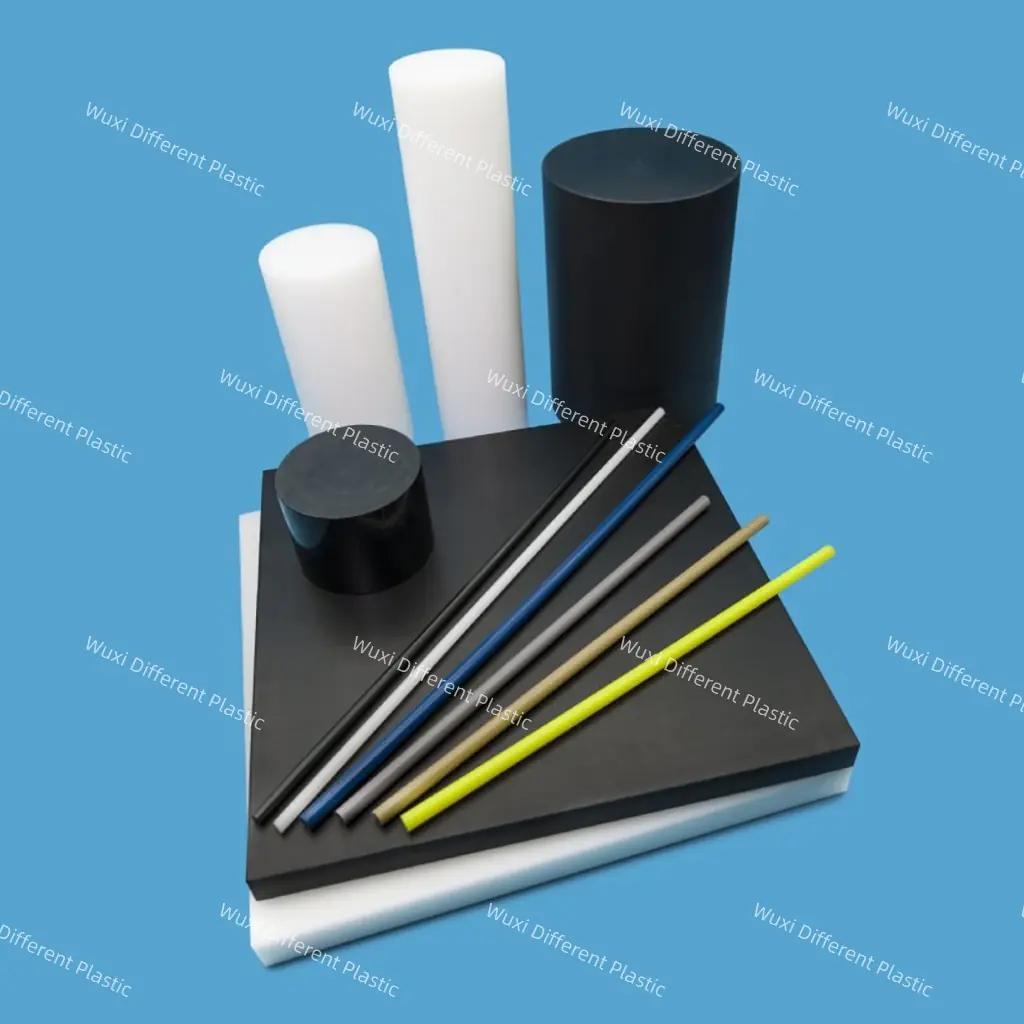
1. Introduction to Engineering Plastics
Whether it is in the cars we drive or the planes we board and the smartphones we carry around in our hands, sophisticated plastics have become integrated in almost every part of modern life.
These materials are silent drivers of innovation in motor industries, aerospace, electronics and medical services. Most of the lightweight, high-performance and durable technologies that we enjoy today would never have existed without them.
Most of us are aware of commodity plastics such as acrylic (PMMA) and polystyrene (PS) in products that we use every day, whether it be packaging, cutlery, or signage. But they do not perform so well, they are generally brittle, soften in the heat, and cannot stand chemically aggressive conditions. Conversely, engineering plastics were meant to be able to live up to far higher standards.
1.1 What Are Engineering Plastics?
Engineering plastics are a high-performance polymer types which have been invented to replace conventional materials like metals, glass and ceramics in demanding tasks. They possess a great level of strength, hardness, resistance to heat and permanence in size of commodity plastics.
This makes them preferable in sections which must endure cyclic mechanical stress, corrosion due to high operating temperature or those that are chemically corrosive.
1.2 Importance
The importance of the engineering plastics lies in their ability to compromise the mechanical strength and thermal resistance with the chemical durability and remain light and easy to work with. Their properties make them necessary in the industries to realize the lightweighting, energy and sustainable innovation strategies.
The future of the modern design lies between the engineering of plastics, be it in the case of the batteries of an electric vehicle, or in the case of aerospace insulation systems, the crossing point of performance and development.
2. Engineering Plastics History and Development
2.1 Early Polymers
The first activity in engineering plastics was of natural plastics, such as celluloid in the late 19th century, followed by Bakelite in 1907 a fully synthetic plastic by itself. Advanced plastics were to play a vital role in technology, but Bakelite was helpful to the electrical systems due to its insulating quality.
2.2 Post-WWII Expansion
The synthetic polymers developed faster after World War II. New materials like nylon (polyamide), polyester and polycarbonate were introduced and they were stronger, with better heat resistance than the commodity plastics.
These new engineering plastics contributed to the boom in the automotive and electronics sector after the war, which allowed lighter car developing components, robust machine gears, and secure electrical enclosures.
2.3 Modern Era
Towards the end of the 20th century, the engineering plastics were essential. In the modern world, attention is paid to sustainability, such as the creation of recyclable polymers, bio-based plastics, and the creation of plastics of super engineering, which will have unlimited performance capabilities.
The scope of use of modern composites has expanded to include aerospace composites and medical implants, indicative of the increased sophistication of the business.
3. Key Characteristics of Engineering Plastics
3.1 Mechanical Strength
Plastic engineering is very high in tensile and flexural strength and is usually better than metals in strength to mass ratio. They can withstand cracking caused by impact unlike brittle commodity plastics, and thus can be used as gears, bearings, and safety equipment.
3.2 Thermal Properties
These polymers are able to operate under much higher temperatures than commodity plastics. Having a glass transition temperature (Tg) and melting points greater than 150-250°C, they can be used to good and reliable effect in engines, turbines, and electronic housings where heat is a constant stress factor.
3.3 Chemical Resistance
The plastics used in engineering are stable to oils, fuels, solvents and acids. Their resistance renders them the choice of material when it comes to the automotive fuel systems, chemical processing equipment and industrial pumps where exposure to harsh chemicals is unavoidable.
3.4 Dimensional Stability
Engineering plastics have better dimensional stability as compared to commodity plastics which shrink or distort under stress. They resist creep and deformation which ensures accuracy in their parts such as gears, seals, and structural housings.
3.5 Electrical Properties
Numerous engineering plastics offer an outstanding dielectric strength and therefore cannot be ignored in electrical and electronics industry. They are designed in connectors, circuit breakers, switchgear and insulation systems where the safety and reliability are most important.
4. Classification of Engineering Plastics
4.1 Standard Engineering Plastics
These materials are used in moderately demanding applications and are very common because of their cost/performance mixture. Common examples include:
- Polyamide (PA, Nylon): This is a fabric with high wear resistance and is tough.
- Polycarbonate (PC): It is impact resistant and transparent.
- Polyoxymethylene (POM, Acetal): It is characterized by stiffness and dimensional stability.
- Polyesters (PET, PBT): Chemical-resistant and low moisturizing.
4.2 High-performance (Super) Engineering Plastics
In case of extreme conditions, the super engineering plastics provide excellent performance. They store properties at high temperatures and stresses. Examples include:
- PEEK (Polyetheretherketone): Unbelievable strength, chemical inertness and biocompatibility.
- PPS (Polyphenylene sulfide): Immune to fuels and high temperatures.
- PSU (Polysulfone): Resistant to hot water and sterilization cycle.
- Liquid Crystal Polymers (LCP): Ultra-high frequency telecoms.
- PI, PAI (Polyimides): Can withstand temperatures up to 250°C.
4.3 Thermoplastic vs. Thermosetting Engineering Plastics
Thermoplastics are also meltable, removable and reusable. These are nylon and polycarbonate.
Thermosets are hard, cross-linked, and non-removable plastics. Examples include epoxies and phenolics, which are desirable because their dimensional stability is excellent and they are heat resistant.
5. Major Types of Engineering Plastics
5.1 Polyamide (PA / Nylon)
Nylon has a reputation of being tough, low in friction, and wear resistance. It has a wide usage in the automotive parts, gears and bearings. Its lubricating qualities are self lubricating, which ranks it as a good material to move components subjected to stress.
5.2 Polycarbonate (PC)
PC is a composite that is transparent and impacts extremely strong, and half the weight of glass. Its applications are in bulletproof glass, safety helmets, electronic housings, and medical devices.
5.3 Polyoxymethylene (POM / Acetal)
It is a type of plastic, a homogeneous polymer that is frequently utilized in the production of automobile headlights. Polyoxymethylene (POM / Acetal) is a homogeneous polymer, a type of plastic that is commonly used in making automobile headlights.
Acetal has been appreciated as being brittle, fatigue resistant, and having low friction. It is used in precision gears, fuel system parts and mechanical springs where precision and life span is essential.
5.4 Polyesters (PET, PBT)
PET and PBT are very good in dimensions and chemical resistance. These find application in electrical connector, automotive electronics and packaging. PET, available in bottles, is also used in the textile and engineering-grade films.
5.5 Polysulfone (PSU)
Polysulfone has the advantage of thermal resistance and hydrolytic stability. It is typically seen in sterilizable medical instruments, filtration membranes and hot water handling systems.
5.6 Polyetheretherketone (PEEK)
PEEK is among the toughest engineering plastics and it has high heat resistance, chemical inertness and strength to weight ratio. It finds application in aerospace parts, oil and gas machinery and surgical implants.
5.7 Polyimides (PI, PAI)
Polyimides can withstand temperatures higher than 250 degree C without degradation of their mechanical integrity. They find application in aerospace insulation, flexible printed circuits as well as high performance sealing systems.
5.8 Liquid Crystal Polymers (LCPs)
It represent a type of polymer consisting of liquid crystals.Liquid Crystal Polymers (LCPs) Liquid Crystal Polymers (LCPs) are a form of polymer that is made of liquid crystals.
LCPs offer enhanced dimensional stability and dielectric characteristics and are necessary in connector applications with 5G technology, high-frequency telecommunications, and miniaturized electronics.
6. Manufacturing and Processing of Engineering Plastics
The engineering plastics are very versatile to handle.
6.1 Processing Methods
Injection molding: Best in high volume production of complex components.
Extrusion: It makes pipes, sheets and profiles.
Blow molding: It is used in hollow components such as bottles and tanks.
Thermoforming: It is a process whereby huge sheets are converted into appliances or panels.
The high-performance plastics such as PEEK need special high temperature molds.
6.2 Machining and Secondary Processes
Some plastics like POM and nylon can be machined with milling, drilling and turning to make precision parts. Performance is further enhanced by secondary processes such as coating, welding and bonding.
6.3 Additives and Reinforcements
Glass fiber reinforcement increases the strength and stiffness. Flame retardants UV stabilizers increase safety and durability and fillers decrease wear and increase cost.
7. Benefits of Engineering Plastics
7.1 Lightweight Substitute of Metals
Engineering plastics are much lighter as compared to steel and aluminum, which are metals and thus it is an ideal substitute in automotive, aerospace, transportation, and other industries. They are applicable in reducing the total weight hence leading to minimizing fuel use, emission and operating expenses and also improving performance in the aspects that demand economy and maneuverability.
7.2 Performance Under Stress
Unlike the commodity plastics, the engineering plastics are not affected by extreme working conditions to an extent of losing their properties. They are stronger, stronger, can withstand heat, wear and tear, and are more precise in terms of dimension and therefore can be used in parts that are subjected to heat, friction, and mechanical forces. This resilience is reliable in the critical industries that include industrial machinery and electronics.
7.3 Versatility
Flexible character of engineering plastics in design can be termed as one of the strongest points of the plastics. They can be made transparent, electrically insulated, chemically resistant, or rigid based on the application they are to be applied in. This allows the engineers to trade-off between different materials to a single high-performance plastic which reduces trade-offs and also makes the product design process simpler.
7.4 Cost vs. Performance Balance
Engineering plastics cost more than commodity plastics, and are significantly less expensive than metals and high-tech composites.
Their capability of integrating strengths, durability, and specialization features present a good cost-to-performance ratio, particularly in those industries that want to balance low cost, performance, and long-term reliability.
8. Limitations and Challenges
Engineering plastics have both benefits, but they are not without problems:
8.1 Higher Cost
The high cost of engineering plastics is one of the key challenges of engineering plastics. Although they do perform better, they are priced higher, making them less appropriate in a mass-market or low-end application, e.g. disposable goods or low-end packaging. This restricts their applications to those industries in which the extra cost is justified by the performance.
8.2 Processing Complexity
The plastics that are needed in engineering are often the plastics that need special processing methods, which are more demanding compared to those needed in commodity plastics.
High-performance grades e.g. PEEK or PPS require high-temperature molding, high precision machining and sophisticated equipment making them more expensive and time consuming to produce. Small manufacturers may be put off by this complexity.
8.3 Environmental Concerns
The vast majority of engineering plastics are based on petrochemicals, which question the environmental impact and their sustainability. Although they are useful in that they are durable and they resist chemicals, they are not easily recycled.
They are not always well-established in recycling systems as is with some of the plastics of a commodity. To overcome these problems, development of bio-based alternatives and recycling solutions that operate in a closed loop is necessary.
9. Applications of Engineering Plastics Across Industries
9.1 Automotive and Transportation
Plastic engineering materials have revolutionized the automotive industry because they have substituted the metals used in the parts like gears, engine housings, fuel system, and interior trims.
They are strong, have low friction, and have resistance to oils and fuels, making them suitable to be used under the hood. They are especially useful in electric vehicles (EVs): lightweight materials lower the total weight of a vehicle, thus improving energy efficiency and driving range directly, and flame-retardant plastics are used to deliver essential insulation to high-voltage batteries.
With the ever-increasing pace in the transformation to EVs, engineering plastics are becoming inevitable as the technology aims to balance their performance, safety, and cost-effectiveness.
9.2 Aerospace and Defense
Aerospace design is mainly concerned with weight reduction and fire safety, so engineering plastics are needed. Polyimides and PEEK materials are high temperature resistant and superior flame retardant. They are applied to aircraft interiors, wall panels, cabin insulation, wiring supports, and structural brackets instead of metals, saving fuel consumption, and emissions.
These plastics are used in defense to offer durable non-corrosive materials in components in harsh environments that are very critical in terms of safety and reliability in mission critical systems.
9.3 Electrical and Electronics
Dielectric strength, dimensional stability and flame resistance of engineering plastics is very important in the electrical and electronics industries. They usually find application in insulators, circuit breakers, connectors, and switches and printed circuit boards (PCBs).
The use of high-performance plastics is increasing with the development of the 5G network, smart gadgets, and renewable energy systems since they can be miniaturized, operate at higher frequencies, and have a long lifespan. They are non-conductive and hence, a workhorse of safe and efficient management of power.
9.4 Medical Devices
Plastics like PEEK, polycarbonate, and PSU are also gaining popularity in healthcare, as they are biocompatible, able to withstand sterilization, and have a strength to weight ratio. They are perfect to be used as surgical tools, diagnostic equipment enclosures, catheters and orthopedic implants.
They do not corrode or affect imaging technologies such as MRI, as do metals. They are a reliable choice in highly sensitive medical settings, since they can be used in autoclaving and sterilization over and over again without deterioration.
9.5 Industrial Machinery
Engineering plastics have a toughness, wear resistance and self-lubricating properties that are beneficial to heavy-duty equipment. Their wide use is in bearings, gears, bushings, and conveyor systems parts, in which they decrease friction and increase service life over metals.
Also, their chemical, oil and cleaning agent resistance give them reliability in tough industrial environments. To manufacturers, engineering plastics contribute in reducing maintenance, noise and energy usage when running machines.
9.6 Consumer Goods
Engineering plastics can provide a trade-off between durability, safety and performance in consumer markets. They are implemented in sporting equipment (helmets, pads of protection, racquets), in home appliances and electronics, as well as in safety clothing.
Such materials as polycarbonate have the unfortunate reputation of being not only transparent but also impact-resistant, commonly used in eyewear and helmets. Durable appliances like handles, switches and casings are manufactured using nylon and PBT.
Engineering plastics enable manufacturers to create products that satisfy their functional and lifestyle requirements by creating products that are strong, attractive, and easy to process.
10. Comparison with Other Material Classes
10.1 Engineering Plastics vs. Commodity Plastics
The plastics used in engineering are more durable and more resistant to heat. Commodity plastics are less costly but are unable to satisfy the industrial requirements.
10.2 Engineering Plastics versus Metals
The stiffness and strength of plastics are lower than the metals, but the materials are lighter, corrosive, and inert to other substances. They tend to add instead of to substitute metals.
10.3 Engineering Plastics vs. Composites
Composites may be stronger than engineering plastics but they are more difficult to process and recycle. Plastic engineering are more economical in terms of cost to performance and manufacturability.
| Comparison | Engineering Plastics vs. Commodity Plastics | Engineering Plastics vs. Metals | Engineering Plastics vs. Composites |
| Durability & Strength | More durable and heat-resistant | Lower stiffness and strength than metals | Generally less strong than composites |
| Cost | More expensive than commodity plastics | Cheaper than metals | More economical than composites |
| Weight | Similar range, but optimized for performance | Much lighter than metals | Lighter, but composites can also achieve weight savings |
| Performance | Suitable for industrial and high-stress applications | Resistant to corrosion and chemicals; adds to metals rather than replaces them | Balanced performance with easier processing |
| Processing | Requires more advanced techniques than commodity plastics | Easier to process than metals (molding vs. machining) | Easier to process and recycle compared to composites |
| Applications | Used in automotive, aerospace, electronics, medical devices | Used alongside metals for weight reduction and durability | Preferred when cost, recyclability, and manufacturability matter |
11. Future and Trends of Engineering Plastics
11.1 Market Growth
Engineering plastics are on a fast growing trend worldwide with increased demand on the product in the electric vehicle, renewable energy and electronic sector. EV manufacturers are also starting to use lightweight flame-retardant plastics in battery enclosures and structural parts, wind turbines need insulating materials that are strong, and solar inverters need lightweight, durable insulating materials.
In electronics, 5G networks, automation, and miniaturization are increasing the adoption. In any given industry, the lightweighting trend, which involves maintaining strength despite a reduction in weight, is making engineering plastics a central facilitator of efficiency, and modern design.
The company is committed to becoming a greener business that recycles and replenishes resources efficiently and effectively, avoiding harm to the environment and ecosystem.
11.2 Sustainability and Recycling
The company will engage in becoming a greener company that recycles and replenishes resources in an effective and efficient way that does not impair the environment and surrounding.
Sustainability is changing the plastics business by manufacturers developing renewable-based polymers with renewable feedstocks and developing closed-loop recycling systems, such as automotive and electronic, which are high value.
The response of engineering plastics to the influence of recycling is not as easy as the part of commodity plastics, and this stimulated chemical recycling and reformulation of materials. These efforts alongside a reduction in the use of fossil fuel are making engineering plastics increasingly aligned towards a circular economy.
11.3 Emerging Innovations
The engineering plastics are also going to be developed in the future with nanocomposites, self healing polymers and other sophisticated means of reinforcement. Nanotechnology enhances the strength of products, their heat resistance, and effectiveness in performing the barrier functions, and self-healing materials increase the life of the products.
Fiber-reinforced hybrids increment plastics to the next level of toughness compared to metals, with a low weight. This direction, where material science strives to achieve sustainability, is certain to ensure that engineering plastics remain at the head of the next-generation design and manufacturing.
12. Bottom Line
Plastics engineering is now a significant aspect of the industrial world offering strength, light construction and versatility. Not only are they a superior material to use in place of commodity plastics, but they are also a cheaper substitute to metals and composite materials in many applications. They continue to support the new technologies in the electric cars and the aerospace systems.
As all the industries shift their focus on sustainability, recyclability, bio-based sources and innovations may be the focus of engineering plastics in the future. These materials are not only shaping the present day technology, they are shaping the future industries.


