
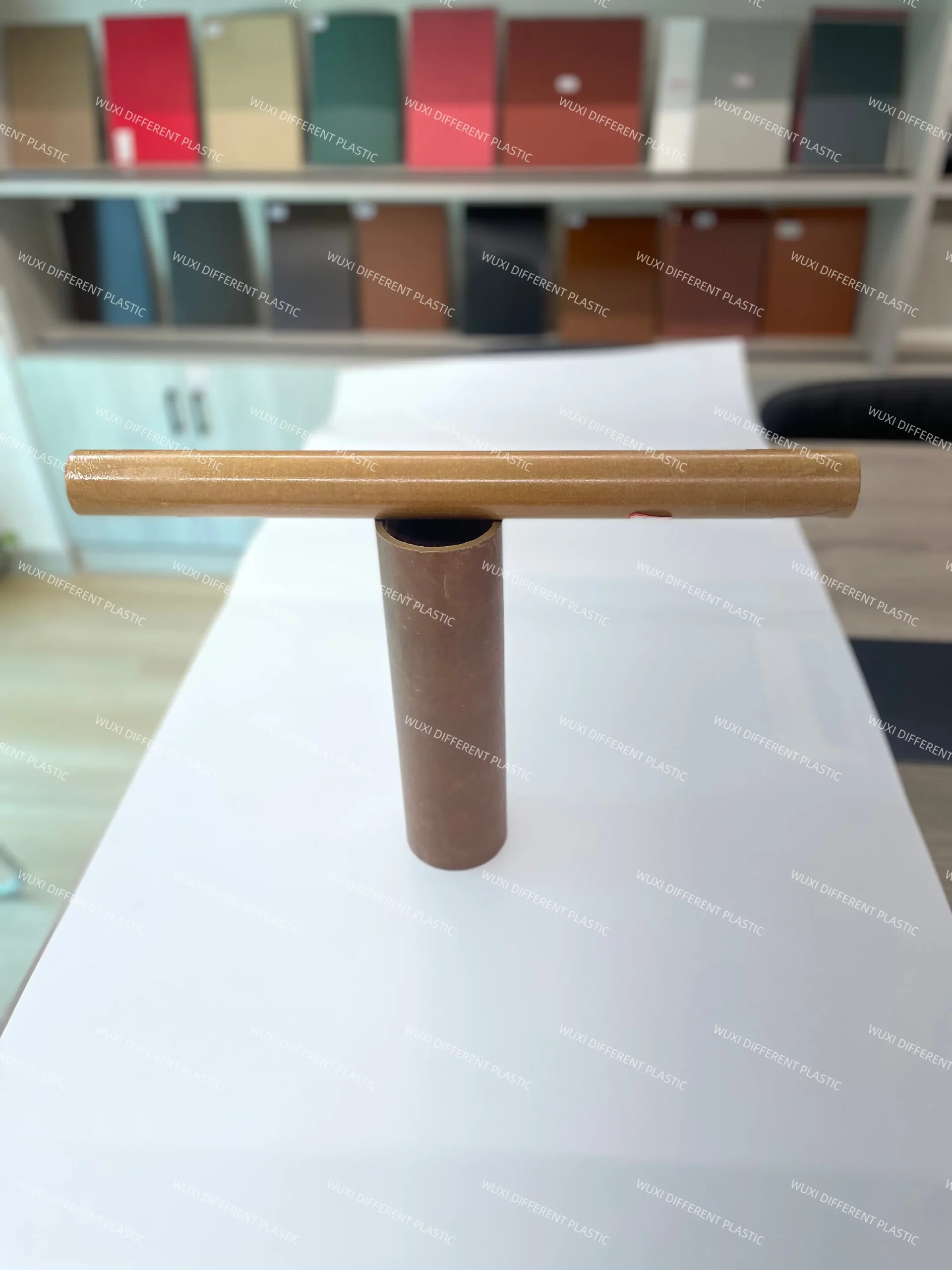
Introduction
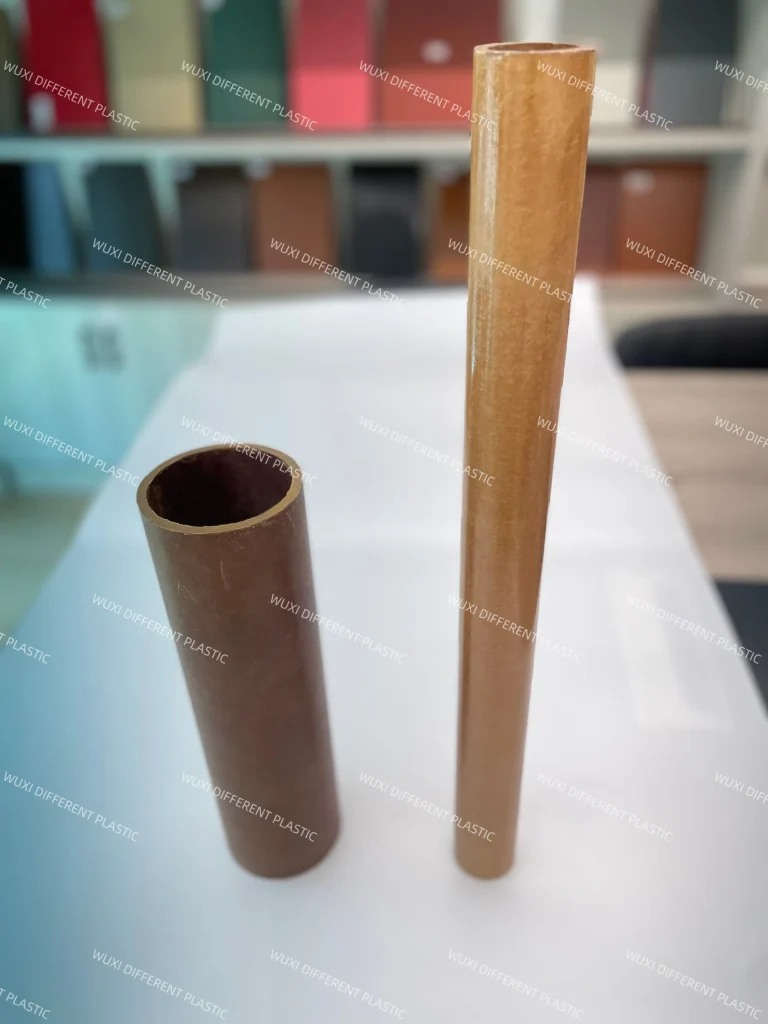
Bakelite made history in 1907 as the world’s first fully synthetic plastic. Leo Baekeland’s revolutionary invention changed manufacturing forever.
It’s been over a century now. Yet, Bakelite tubes continue to serve critical roles in industrial applications.
These tubes represent a specific form of phenolic resin products. They combine the original Bakelite formulation with modern manufacturing techniques. This results in a material that handles extreme conditions where other plastics fail.
Many people think of Bakelite as vintage radio cases or old telephone components. That’s only part of the story.
Industrial Bakelite tubes are behind many power plants, chemical facilities, and heavy machinery. They provide electrical insulation, thermal barriers, and chemical resistance.
The question isn’t whether newer materials exist – they do. The question is whether they can match Bakelite’s proven track record.
After decades of reliability, these tubes remain a go-to choice for demanding applications. Their unique properties make them irreplaceable in many industrial settings.
This guide explains everything you need to know about Bakelite tubes. You’ll learn why they still matter today and, maybe, for some years to come.
What Bakelite Tubes Are and Their Place in Phenolic Resin Products?
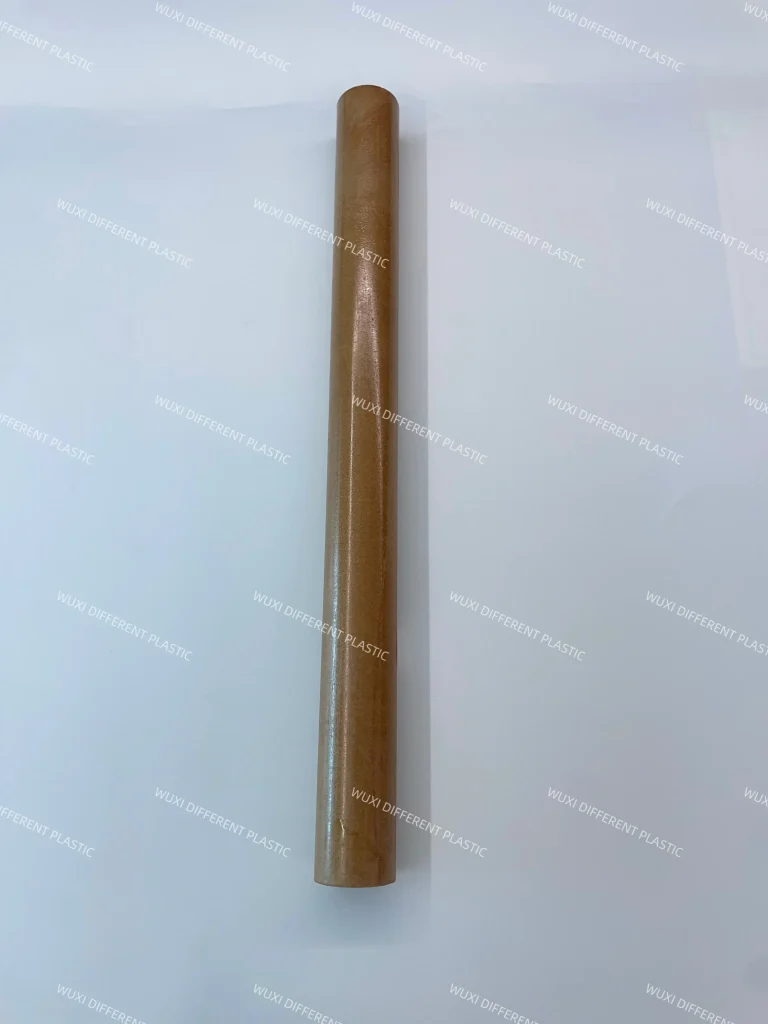
Bakelite tubes belong to the larger family of phenolic resin products. Phenolic resins are formed by combining phenol with formaldehyde under heat and pressure.
So, think of phenolic resins as the parent category. Bakelite is the original and most famous member of this family. Other phenolic products include sheets, rods, and custom-molded components.
So what sets Bakelite apart from other phenolic resins?
It’s all about the specific formulation and curing process. Bakelite uses a particular ratio of phenol to formaldehyde. The curing happens in multiple stages with precise temperature control. This creates the distinctive properties Bakelite is known for.
Within the phenolic family, you’ll find different grades and compositions. Some use cotton fabric reinforcement. Others use paper or glass fibers. Bakelite tubes typically use no reinforcement at all, just pure phenolic resin.
The tubes serve as the structural backbone in many applications. They provide hollow spaces for wiring, fluid flow, or mounting hardware. Their rigid structure supports other components while maintaining electrical isolation.
Today’s Bakelite tubes maintain the same fundamental chemistry as the original. Manufacturing methods have improved, but the core material remains unchanged.
Why Bakelite is Still Used in Industrial Applications Today?
You might wonder why industries still choose a century-old material admisdt many alternatives. The answer lies in Bakelite’s unique combination of properties. Newer materials even struggle to match it.
First, let’s talk about heat resistance. Bakelite handles continuous temperatures up to 150°C without breaking down. Many modern plastics start softening or melting at much lower temperatures. This makes Bakelite irreplaceable in high-heat environments like electrical switchgear and automotive components.
Chemical resistance is another major factor. Bakelite shrugs off acids, alkalis, and most organic solvents. It won’t dissolve, swell, or weaken when exposed to harsh chemicals. Try that with standard plastics and you’ll see rapid degradation.
Then there’s the electrical insulation performance. Bakelite blocks electrical current exceptionally well, even in humid conditions. Its dielectric properties remain stable across wide temperature ranges. This reliability makes it essential for electrical applications where failure isn’t an option.
Dimensional stability sets Bakelite apart too. It doesn’t expand, contract, or warp significantly with temperature changes. Machine parts maintain their precise tolerances even under thermal cycling. This predictability is crucial in precision equipment.
Cost effectiveness plays a role as well. While the initial material cost might be higher, Bakelite’s longevity makes it economical. Components last for decades without replacement. Maintenance costs drop significantly compared to materials that need frequent service.
Fire resistance adds another advantage. Bakelite naturally resists ignition and doesn’t support combustion. It forms a protective char layer when exposed to flames. This self-extinguishing behavior provides safety margins that many modern plastics can’t offer.
Material Composition and Structure of Bakelite Tubes
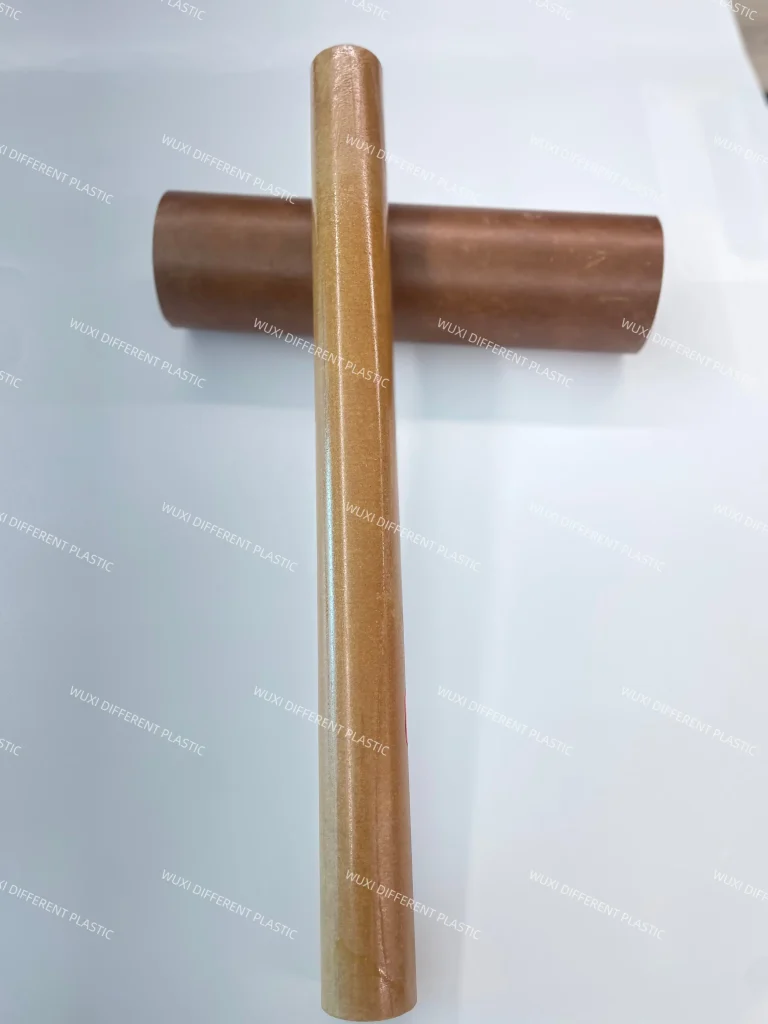
Bakelite tubes are made from specific materials that give them their unique properties. Let’s take a closer look at the composition. You’ll also learn how different choices of ingredients affect the material’s performance.
1) Base resin: (Phenol-formaldehyde)
Every Bakelite tube starts with phenol-formaldehyde resin. This is the main ingredient that holds everything together. When phenol and formaldehyde react under heat and pressure, they form a hard plastic. Once this process finishes, the material can’t be melted down again. That is why they are called thermosetting resins.
Now, the amount of each chemical matters a lot. More formaldehyde makes harder tubes that break more easily. Less formaldehyde creates tougher tubes that can handle impacts better. Manufacturers adjust this mix based on what the tube needs to do.
2) Reinforcement options:
Plain Bakelite resin can crack easily. Adding reinforcement materials fixes this problem. Paper is the cheapest option and works well for most jobs. It adds strength while keeping good electrical properties.
Cotton fabric makes tubes tougher and easier to cut or drill. The natural fibers help stop cracks from spreading. Glass fabric gives the strongest tubes but costs more money. It’s also harder to work with.
3) How reinforcement type affects tube properties
Different reinforcements create different results. Paper works best for electrical jobs because it blocks electricity well. Cotton is better when you need to machine the tubes or handle impacts. Glass gives you the strongest tubes. They are fire-resistant and can handle high temperatures and heavy loads.
4) Difference between solid Bakelite and laminated Bakelite tubes
Solid Bakelite tubes contain only the basic resin with no added materials. They resist chemicals very well and block electricity perfectly. But they’re not very strong mechanically.
Laminated tubes have layers of fabric mixed with the resin. This makes them much stronger but costs more. The layered design spreads out forces better. If one layer fails, the others keep working. This makes them safer for demanding jobs.
What Are the Advantages of Bakelite Tubes Over Other Materials?
No doubt, Bakelite tubes has an edge over many other materials. But what specific benefits have brought it so much praise? These advantages explain why they remain popular across different industries.
1) Cost-effectiveness compared to metals and ceramics
Perhaps the most important to many manufacturers is the cost-effectiveness. Bakelite tubes cost much less than metal or ceramic alternatives.
For example, steel and aluminum tubes require expensive manufacturing processes and specialized equipment. Ceramic tubes need high-temperature kilns and precise firing schedules. Bakelite tubes form at much lower temperatures with simpler equipment.
So, the savings don’t stop at initial purchase price. Bakelite tubes last for decades without replacement. They don’t rust like steel or crack like ceramics under thermal shock.
This longevity reduces total ownership costs significantly. You buy them once and forget about them.
2) Lighter weight with good strength
Weight matters in many applications, and Bakelite delivers here too. These tubes weigh about one-third as much as steel equivalents. Yet they still provide excellent structural strength for their weight. This makes them perfect for applications where every gram counts.
The light weight also makes handling and installation easier. Workers can lift and position large Bakelite tubes without heavy equipment. Transportation costs drop when shipping lighter materials. Assembly becomes faster and safer.
3) Non-conductive nature
Bakelite tubes naturally block electrical current. This eliminates the need for additional insulation materials that metals require. You get built-in electrical safety without extra components or coatings. This makes them ideal for electrical equipment where current leakage could cause problems.
Unlike metals, Bakelite won’t create electrical shorts or ground faults. It maintains consistent insulation properties across wide temperature ranges. Humidity changes don’t affect its electrical performance either.
4) Versatility in machining and shaping
Bakelite machines easily with standard tools. You can drill, cut, turn, and shape it without special equipment. Metal tubes often require carbide tools and cutting fluids. Ceramics need diamond tools and careful handling to prevent cracking.
The material cuts cleanly without chipping or delaminating. Thread cutting produces precise, durable threads. Complex shapes and tight tolerances are achievable with conventional machining methods.
Manufacturing Process of Bakelite Tubes
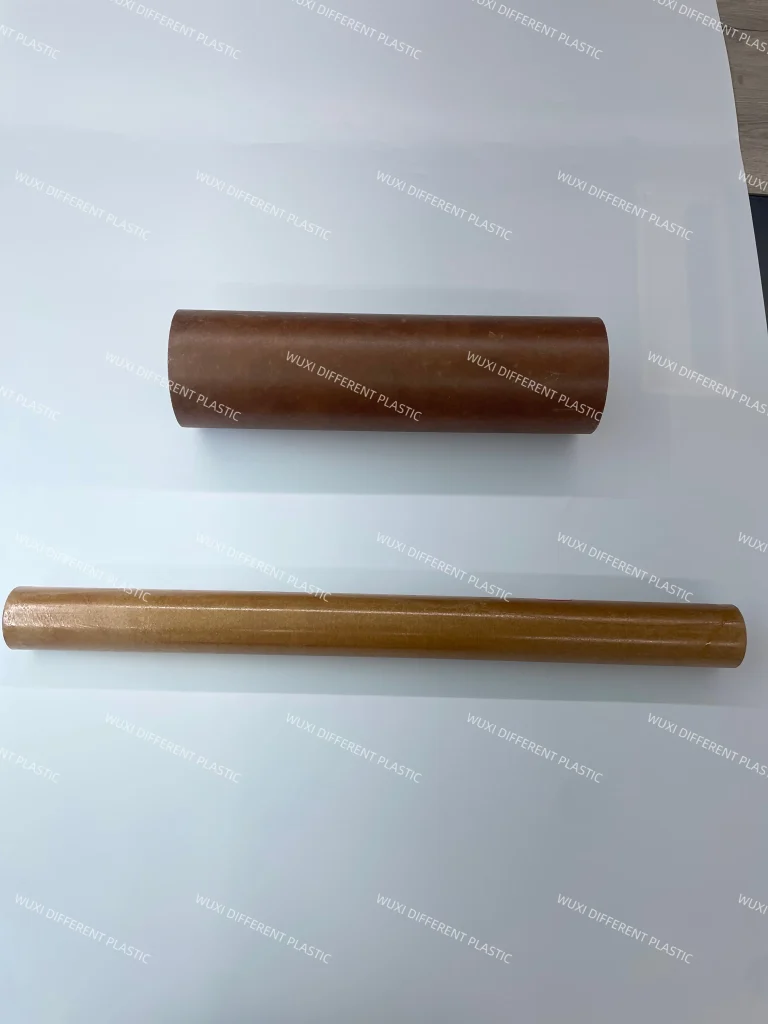
Like any material, making Bakelite tubes follows a precise sequence of steps. Each stage builds on the previous one to create the final product. After sourcing the raw materials, the following processes are followed:
Step 1. Impregnation of reinforcement with phenolic resin
The process starts with saturating reinforcement materials in liquid phenolic resin. the resin baths or coating machines are fed with the desired substrate. Typically, paper, cotton, or glass fabric are used.
At this stage, the aim is complete penetration into every fiber. Operators control resin viscosity and temperature to ensure even distribution.
Before proceeding, any excess resin is squeezed out through precision rollers. The impregnated material is then moved to drying ovens for partial curing. This B-staging process removes solvents while keeping the material flexible enough for forming.
Step 2. Winding or rolling process to form tubular shapes
Next, the B-staged material is wrapped around metal rods called mandrels. Multiple layers build up the wall thickness gradually. Each wrap bonds with the previous layer as the resin remains workable. Adequate tension control prevents wrinkles or gaps between layers.
Some manufacturers use helical winding patterns for added strength. Others prefer straight wrapping for simpler applications. The winding speed and tension must match the resin’s working time perfectly.
Step 3. Curing under heat and pressure
Now, the wrapped tubes are put in heated presses or autoclaves while still on mandrels. High temperature and pressure are applied to complete the curing reaction. The resin flows to fill any voids and fully bonds all layers together. This creates the rigid final structure.
Curing cycles typically run 2-4 hours at temperatures around 150-170°C.
Pressure ranges from 50-100 PSI depending on tube size and wall thickness.
Step 4. Post-curing machining for precision dimensions
After cooling, tubes get removed from mandrels. They are then trimmed to the desired dimension with cutting equipment. Surface grinding achieves precise outside diameters and wall thickness. Internal boring creates accurate inside dimensions where needed.
Quality control checks verify all dimensions meet specifications before packaging.
What Are the Main Properties of Bakelite Tubes?
The electrical insulation and mechanical properties of Bakelite tubes have been well documented. However, this is not all they offer. Some of their other capabilities stem from these fundamental characteristics. Nonetheless, the following are the main properties of these tubes:
1) High electrical insulation capacity
Bakelite tubes block electrical current exceptionally well. This prevents dangerous leakage that could damage equipment or create safety hazards. Their dielectric strength maintains consistency across different voltage levels. Low power and high power applications both benefit from this reliability. Electrical systems depend on this performance where insulation failure could cause catastrophic damage.
2) Good mechanical strength and rigidity
These tubes resist crushing forces while maintaining their shape under significant loads. Tensile stress won’t stretch or break them during pulling operations. The rigid structure provides excellent support for mounting hardware. Other components can rely on this structural backbone. Load-bearing applications benefit from the impressive strength-to-weight performance ratio.
3) Low moisture absorption
Water absorption stays minimal even in high-humidity environments. This prevents the swelling and warping common in other materials. Dimensions remain stable regardless of seasonal moisture changes. Electrical properties don’t degrade when exposed to damp conditions. Long-term performance stays consistent without water-induced structural weakening.
4) Resistance to oils, solvents, and mild chemicals
Most industrial fluids can’t penetrate or weaken the Bakelite matrix. This includes petroleum products, lubricants, and cleaning solvents. Chemical attacks that destroy other plastics have little effect on properly formulated tubes. Service life extends significantly in harsh chemical environments. Applications involving fluid contact become much more reliable.
5) Thermal stability within specified temperature ranges
Continuous operation up to 150°C won’t cause softening or deformation. Quality tubes maintain structural integrity under these conditions. Thermal cycling between hot and cold conditions doesn’t create stress cracks. Mechanical and electrical properties remain stable across the entire operating temperature range. Moderate heat applications run without performance degradation concerns.
What are the Common Applications of Bakelite Tubes?
| Industry | Examples | Purpose |
| Electrical | Transformer bushings, switchgear insulation, terminal sleeves | Safe electrical isolation and current leakage prevention in power distribution systems |
| Mechanical | Bearings, spacers, rollers | Friction reduction, dimensional accuracy, and wear resistance in moving machinery |
| Automotive | Insulating parts in ignition systems | Heat and vibration resistance for vehicle electrical components |
| Marine & Aerospace | Corrosion-resistant components in equipment | Lightweight structural parts that resist saltwater and environmental damage |
| Tooling | Jigs, fixtures, structural supports | Precise positioning and electrical insulation in manufacturing operations |
How to Identify High-Quality Bakelite Tubes?
It is difficult to tell the quality of Bakelite tube by mere appearance. Quality assessment is recommended. It requires examining several key characteristics that indicate proper manufacturing and material composition. These visual and physical indicators help distinguish premium products from inferior alternatives. It is important to know them. These are five of the most important ones.
1) Uniform resin saturation with no dry or brittle zones
First, high-quality tubes usually show complete resin penetration throughout their structure. This is an indication of proper saturation. The colour and texture are consequently consistent across the entire surface.
Dry spots appear as lighter colored areas. In those areas, the resin didn’t fully impregnate the reinforcement. Brittle zones crack easily when subjected to minor stress. Proper saturation creates consistent color and texture across the entire surface.
2) Smooth surface without cracks or bubbles
Premium tubes should have uniform surfaces that are smooth to the touch. If you see surface cracks, that’s a red flag. Such defect indicates improper curing or too much internal stress during manufacturing.
Air bubbles are another warning sign. They tell you the resin didn’t flow properly during formation. Good manufacturers have quality control processes that catch these defects. They eliminate problems before products reach customers.
3) Consistent wall thickness and inner diameter
In manufacturing, precision is key. It ensures the tube maintains tight tolerances throughout the entire length.
When the wall thickness varies, it affects both structural strength and electrical properties. Inconsistencies in the inner diameter may render the tubes incompatible with some components. This can be problematic during assembly of appliances. So look ensure the tubes meet their dimensional specifications.
4) Even color indicating proper curing
In addition, look for uniform coloration throughout the entire tube. This tells you the curing process went right. Blotchy or inconsistent coloring could suggest temperature variation during manufacturing. Properly cured tubes show consistent color from end to end.
5) Availability of test reports or certifications
Reputable manufacturers back up their products with documentation. This includes material properties and quality testing data.
These test reports verify the electrical, mechanical, and thermal characteristics you’re counting on. Industry certifications confirm the tubes meet relevant standards for your application.
FAQs:
1) What is the difference between paper-based and cotton-based Bakelite tubes?
Paper-based tubes excel in electrical insulation and cost less. Cotton-based versions offer better mechanical strength and easier machining.
2) Can Bakelite tubes handle high heat?
They work continuously up to 150°C without problems. Higher temperatures cause softening or breakdown.
3) Are Bakelite tubes resistant to chemicals?
They resist most oils, mild acids, and common solvents well. Strong chemicals can cause damage over time.
4) Do Bakelite tubes absorb moisture?
Very little – typically less than 1% by weight. This prevents swelling and keeps performance consistent.
5) Can Bakelite tubes be machined?
Yes, they machine easily with standard tools and cut cleanly without chipping.
Final Thoughts!
Bakelite tubes have been here for more than a century. Today, they are still present in demanding industrial applications. They handle critical roles where newer materials often fall short. We’ve shown the several reasons why. They have a good blend of properties. Notably, electrical, mechanical, and chemical properties.
Understanding their capabilities and limitations helps you make smart material choices. Quality identification techniques keep you from getting inferior products. When applied correctly, they deliver decades of reliable service with minimal maintenance.
These tubes aren’t perfect for every job. However, they excel where their specific properties matter most. Consider temperature limits and chemical compatibility during selection.
Apply these insights to your next material decision. This knowledge will help you choose the right specification for your needs.
Best wishes.


