

Bakelite rods are well known for its being durable, heated resistant, and electrical insulator hence makes them so imperative in our many fields of study. In 1907, Belgian chemist Leo Baekeland began the world’s first synthetic plastic, later to become the modern material, which was known as Bakelite.
Phenolic resin reinforced with such cotton cloth is used in the form of Bakelite rods in the fields of electrical, automobile, aerospace, industry, furniture, and, more recently, medical. Despite the rise of newer materials, the force, affordability and versatility of their products keeps them on top.
The aim of this article is to tell you their past, composition, properties, uses, advantages, disadvantages, and environmental impact, as well as future sustainability innovations.
Understanding Bakelite Rods
Bakelite rods are types of a Bakelite material, and they are cylindrical in form that Bakelite is molded or extruded. The phenolic resin reinforced with cotton cloth, paper, with or without glass fibers, produces a product which is more durable and more structurally sound. This leads to a hard rigid rod which is easily machinable into components for use in industrial applications.https://youtu.be/6ejWLA2ua10
Bakelite rods cannot be used in the same manner as Bakelite sheets or plates, as they are flat and used in structural or surface applications, whereas Bakelite rods are made versatile for machining and making rounded or cylindrical parts. Because of their three dimensional form, gears, bushings, rollers, and electrical insulators are made from them very well.
They are excellent mechanical strength, which means high chemical and temperature stability; high electrical insulation; and chemical, oil, and moisture resistance. Their weight and machinability makes them even more attractive. Bakelite rods are the material of choice for use in those sectors where reliability under harsh conditions is necessary.
For example the Phenolic Cotton Cloth Laminate Rod is very well known for its toughness, its heat resistance and it’s excellent performance in electrical and mechanical applications.
Historical Background and Development
Leo Baekeland found the development of Bakelite in 1907. Baekeland came up with the idea of phenol formaldehyde under controlled heat and pressure, which when combined became a thermosetting plastic, that could be molded to a variety of shapes and once it cured, it retained its shape permanently. It in effect brought into being the plastics industry.
In the electrical applications, insulating and heat resistant properties of Bakelite made it so popular and it became a staple. Bakelite was used early on as they were electrical insulators, telephone casings, and radio components. So soon it was found that growing demand for components requiring strength, heat resistance and non conductivity led to the development of Bakelite rods.
Bakelite rods were used during the early industrial era as material of manufacture of gears, bushings, rollers etc. They made important contribution to technological advancement. During World War II, manufacturers created durable components by making use of Bakelite rods to build switch components in early electrical systems and parts for military equipment.
During the post-war period Bakelite rods were indispensible in automotive and aerospace industries as such components were required to operate at very high temperatures. These rods were also applied to industrial machinery, since manufacturers used them as a reliable material resistant to wear for mechanical parts.
Even to today, Bakelite rods remain important in various industries as they still are praised for their resilience and canny versatility.
Composition and Manufacturing Process
The main constituent of bakelite rods is a thermosetting plastic called phenolic resin that comes by polymerisation of phenol and formaldehyde. Mechanical strength and thermal stability are obtained by using cotton fabric, in the process of production. These are the key steps associated with the manufacturing process of the Bakelite rods.
- Phenol and formaldehyde are polymerized under heat and pressure into a resin. Bakelite was based on this resin and is the base material of many of its products.
- The resin plus reinforcements such as cotton cloth is molded or extruded into cylindrical shapes. A feature of that process is forcing the resin-reinforcement mixture through a die to make rods of specific diameters.
- Forming into final product: The extruded rods are cured at high temperatures and the resin cross links and hardens into a rigid structure.
- Machining, cutting and finishing: The rods are then machined, cut and finished in accordance with specific industrial requirements.
- Reinforcements, such as cotton cloth, is included in the products, particularly, 3723 Phenolic Cotton Cloth Laminated Rods, which enhances durability, wear resistance, and dimensional stability. The rods are suitable for demanding applications in the electrical and mechanical industries because of these reinforcements.
Physical and Chemical Properties of Bakelite Rods
Physical and chemical properties of Bakelite rods are such that they can be used in industries all over the world.
- Impact and Wear Resistance: Bakelite rods have very good impact and wear resistance. Gas turbines operate under pressure and hence the hardenable steel has to be able to withstand heavy loads and repeated mechanical stress, and is therefore appropriate for components such as gear, rollers and bushings.
- One of the stand out feature of Bakelite rods is its heat resistance. At high temperatures they can hold strongly and without deformation or loss of strength and are therefore useful in high temperature industrial environments.
- Non-Resistivity: Since the rods are free from chemical reactions or resin, they are non resistivity. The use of this property makes them indispensable in electrical and electronic applications such as switch gear components and insulators.
- These rods have good chemical resistance to solvent oils and moisture to permit reliable use in chemically aggressive environments.
- However, Bakelite rods are lightweight and easy to machine into almost any shape: they are strong but lightweight, and easy to machine. Thus, this is a machinability that allows for custom fabrication in order to provide them with an ability to be specifically tailored to meet industrial needs.
Bakelite rods are especially utilized in sectors that need reliability and durability since these properties also cemented its position.
Varieties of Bakelite Rods and Their Uses
There are different kinds of Bakelite rods and each one serves a purpose in either the industrial or the aesthetic use of such type of rod.
Phenolic Cotton Cloth Laminate Rod: The Phenolic Cotton Cloth Laminate Rod is reinforced with cotton or glass fiber reinforcements that increase durability and heat resistance. They find application in heavy duty industrial application such as where mechanical components, electrical insulators and bushings are used.
Decorative Bakelite Rod: These are the rods fitted with a decorative aesthetic. Decorative Bakelite rods are available in different colors and finishes, and are used in artistic and design projects, vintage accessories and custom furniture pieces.
This type of Bakelite rod, the 3723 Phenolic Cotton Cloth Laminated Rod is an outstanding example of a reinforced rod because it provides many of its mechanical and electrical property characteristics superior to what other types of Bakelite rods offer.
Applications of Bakelite Rods in Different Sectors
Due to their versatile properties, Bakelite rods are used in almost all industries.
1. Electrical and Electronics Industry
The excellent insulating property and resistance to high temperatures make Bakelite rods the important part of the electrical and electronics sector. Commonly used to manufacture insulators that separate electrical currents so that safe electric shocks or short circuits do not occur. Bakelite rods are the structural parts found in circuit boards that establish and maintain fixed paths for electrical flows.
Furthermore, they are widely applied in switch components because of their durability and non conductivity for switch housing, knobs and control lever requiring reliability under a repeated use. Furthermore, the heat and mechanical resistance of Bakelite rods is utilized for making of transformer parts, making such parts long term in use even under intense thermal load.
2. Automotive and Aerospace Industry
Bakelite rods are used in the parts of the automotive and aerospace industries that are subject to temperatures and stresses that are both very high. These rods are used to manufacture gaskets, seals and structural support parts of heat resistance, low wear, and dimensional stability in automobiles.
Bakelite rods are used in the aerospace industry in components which are thus exposed to extreme environmental conditions: Thermal insulators, housing parts of sensitive instruments, vibration resistant mountings. Therefore, their capability to perform similarly under such tough requirements makes them an advisable material for use in safety relevant applications.
3. Industrial Machinery and Equipment
For producing parts subjected to constant mechanical stress, including industrial machinery and heavy equipment, the use of Bakelite rods is extremely wide.
Some examples of these include gears that need strength and resistance to wear out, bushings that should bear rotating shafts without wearing out, rollers and other precision mechanical components that need to function smoothly and maintain their dimensions.
Excellent machinability of the material enables manufacturers to make custom parts accommodated with the tight tolerances for certain industrial applications.
4. Furniture and Home Decor
Decorative Bakelite rods have returned to the world of furniture and interior design as their vintage appeal and versatility make it an interesting choice. The ornament of a building is made with the pieces of the lath and plaster or lath and plaster. They are also utilized in handrails, decorative moldings, drawer pulls, and other ornate features in both residential and commercial spaces.
Their smooth finish is ideal for custom retro style furniture and artistic projects and they can be dyed in a variety of colors. Apart from their enchanting look, people also favor Bakelite rods for their hardness, scratch resistance and their ability to retain a polished look for years.
5. Medical and Laboratory Equipment
In the medical laboratory and related environments, cleanliness, chemical resistance and heat stability are the primary requirements and neither could be met better than Bakelite rods are able to do this.
This product is used in sterilization resistant components such as clamps, knobs and surface fittings that have to be subjected to frequent disinfectant exposure and high temperature sterilization.
Bakelite rods work surfaces provide reliable chemical resistance to laboratory reagents and cleaning agents and are reliable for longevity and safety standards in the medical and research facility.
This proves that the adaptability of Bakelite rods is still vital to such diverse sectors.
Benefits and Drawbacks of Using Bakelite Rods
However, it should be noted that while Bakelite rods provide many advantages, they provide rare disadvantages as well:
Advantages of Using Bakelite Rods
1. High Mechanical Strength and Durability
Mechanical strength of bakelite rods is excellent and such rods are capable of withstanding heavy loads, pressure, and continuous mechanical stresses. They are durable in demanding industrial applications to work fine without losing their form or performance over time.
2. Excellent Electrical Insulation and Heat Resistance
Probably the most distinguishing characteristic of Bakelite rods is that they are non conductive. They provide excellent electrical insulation, therefore find their use in electrical and electronic components. Also, they do not deform or lose their strength at high temperatures, a capability that lends safety and efficiency to high-heat environments.
3. Resistance to Chemicals, Oils, and Moisture
Bakelite rods are resistant to many different chemicals — oils, solvents, moisture. Due to such chemical resistance, these materials are perfect to be used in situations where one has to deal with the exposure to tough compounds, like in the laboratories, in the industrial plants and in the automotive systems.
4. Lightweight and Easy to Machine
Bakelite rods, however, have a certain amount of strength, but they also are lightweight enough to make them easy to handle and transport. Also they are highly machining and can be machined to cut, drill and shape them into custom components with precision, which reduces manufacturing complexity and time.
5. Cost-effective for Industrial Use
Bakelite rods are a cost effective material solution when compared to most modern composites and specialty polymers. And in large scale industrial applications, they are quite affordable, reliable and durable.
Disadvantages of Using Bakelite Rods
1. Brittle Under High Impact
Bakelite rods are strong but they are brittle. However, under sudden high impact stress they be crack or shatter. Their use in such situations is limited because of this fragility.
2. Non-biodegradable, Posing Environmental Concerns
Bakelite is a thermoset plastic that can not be melted down or reprocessed. The non-biodegradability of the product also creates an environmental problem when disposing of old or damaged Bakelite products as a part of long term waste.
3. Limited Flexibility Compared to Modern Polymers
They are rigid and non flexible Bakelite rods. Bakelite’s stiffness, unlike stiff newer synthetic polymers, can be an obstacle for use in situations requiring body reformability or elasticity.
However, despite these drawbacks, Bakelite rods are still a popular material choice used in a lot of industrial applications, especially when one is looking for strength, insulation and heat resistance.
Bakelite Rods vs. Alternative Materials
1. Bakelite Rods vs. Phenolic Resin Rods
Both the Phenolic Resin Rods and Bakelite rods are similar to each other since they have the roots in phenolic resins. Phenolic Cotton Cloth Laminate Rods (3723 Phenolic Cotton Cloth Laminated Rods) place cotton fabric as reinforcement to the layers. Intense reinforcement of these rods increases the mechanical strengths, durability and impact resistance.
Phenolic resin rods with cotton cloth laminates are therefore more suited for heavy duty service as gears, bushings and such high stress mechanical components. Standard Bakelite rods are great electrical insulation and can be used as well in industrial applications but not as much in terms of impact and stress.
2. Bakelite Rods vs. Acrylic and PVC Rods
It is popular for its flexibility, low weight, and visual appeal to use acrylic and PVC rods. Acrylic rods are translucent and have the texture of a smooth finish, and therefore perfect for decorative and aesthetic uses. PVC has become synthetically known because of the chemical resistance and flexibility which are available in PVC rods that are used in piping and structural components where the bending and shaping are required materials.
Additionally, the high heat resistance and mechanical strength of Bakelite rods are not present in both materials. Bakelite rods are very stable thermally and are very useful in the industrial use but for visual clear or adaptable type of use acrylic and PVC rods are preferred rather than heavy duty strength.
3. Bakelite Rods vs. Fiberglass and Epoxy Rods
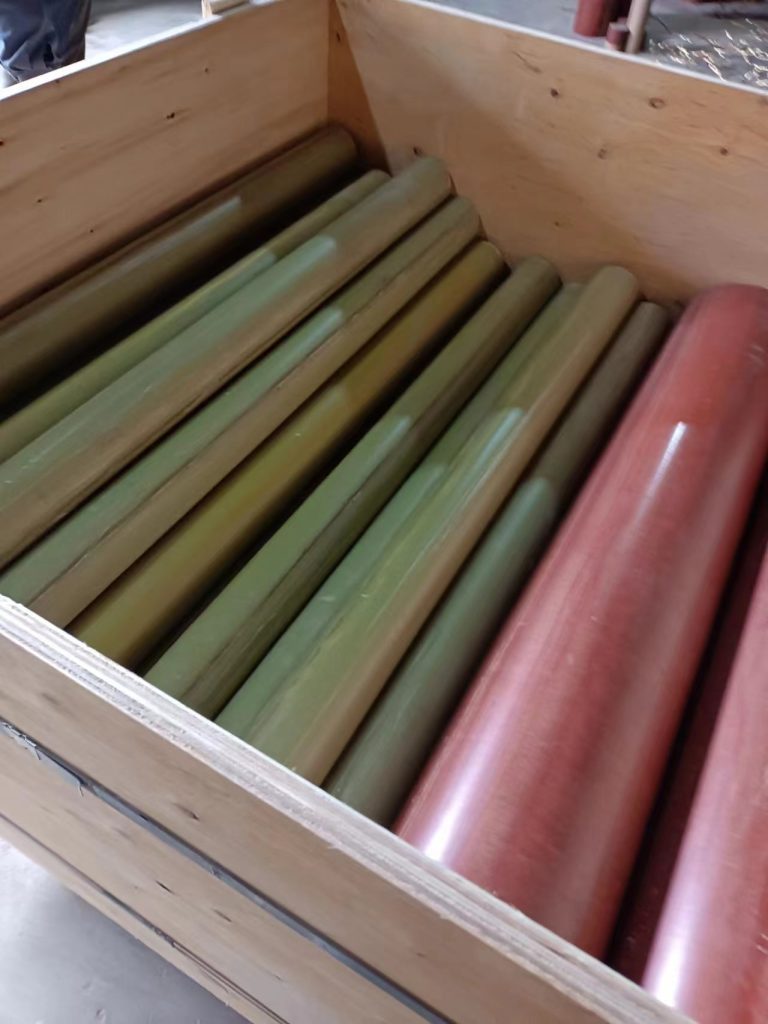
Due to the superior strength, flexibility, and corrosion resistance of fiberglass and epoxy rods, these rods are quite durable even at harsh environments. Industries such as mechanical load, vibration and extreme weather conditions use them.
The problem is that such materials are usually heavier and more expensive than Bakelite rods. Moreover, they are harder to manufacture and machine.
Although Bakelite rods are not as strong as fiberglass or epoxy rods, they are an economical solution for industries that require heat and electrical resistance along with dimensional stability, but are not very high in dimensional stability or in high mechanical properties.
4. Bakelite Rods vs. Modern Thermoplastics
Secondly, they are inexpensive to manufacture and modern thermoplastics (e.g. nylon, polycarbonate, polypropylene) are inexpensive, flexible, lightweight and recyclable. Since they can be remelted and reshaped, they are environmentally friendlier for disposal and reuse.
However, most thermoplastics do not offer the same heat resistance or rigidity that Bakelite rods are associated with. Bakelite rods remain far superior to thermoplastics under high temperature stability and hardness criteria in such application. In other words, thermoplastics are more suitable when impact resistance, elasticity, and versatility are important.
Environmental Considerations and Sustainability
Bakelite rods being non biological and not easily recyclable are an environmental pollutant. There are limits on disposal methods and incineration releases toxic fumes. It is being sought to repurpose Bakelite waste in construction materials and other secondary applications.
The environmental impact is reduced, as innovations in sustainable materials, eco-friendly phenolic resins are investigated. Basing on the fact, researchers have been developing bio based resins and recyclable thermosetting plastics as possible replacements.
Bottom Line
Despite the fact that their mechanical strength, heat resistance and excellent electrical insulation have become progressively less important in industrial applications, Bakelite rods are still fundamental on account of that. Decades have proven its value in use in electrical components, automotive parts, machinery, and decor. Materials are still necessary in order to keep up with industries change.
Environmental issues are raised but, the ongoing research aims at making the petroleum more sustainable and green. The future of Bakelite rods hinges on balance: durability and environmental responsibility — keeping Bakelite rods as a predominant material in the shaping of modern industries.


