

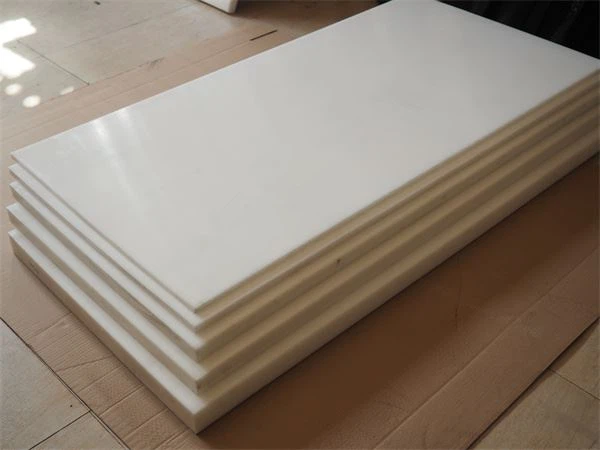
Engineering in recent times relies heavily on precision and how well things perform. As new industrial designs become more compact, efficient and strong, the materials in their manufacture should keep up.
Using engineered plastics—which are easy to use, are light and exceptionally strong—has transformed the creation and assembly of parts. Among all, Polyoxymethylene (POM) or acetal/Delrin, is known for delivering great precision in demanding tasks.
These thermoplastics are chosen for their outstanding stability in shape, reduced friction and strong mechanical features. For this reason, they can be used successfully for both important functions and design applications in sectors such as automotive, medical, electronics and food processing.
This text covers the technical aspects, uses and practical approach to POM sheets. If you are a design engineer, material scientist or procurement manager, understanding POM will guide you to make better decisions in tough engineering work.
Why Precision Plastics is an Important Part of Everyday Life?
How critical industries operate is being changed by precision plastics. Despite being solid materials, metal and ceramics are sometimes unsuitable for uses that demand lightness, great shape accuracy and simple machining. These plastics supply a viable solution, as they are tough like metal and easy to manipulate in manufacturing.
Because of advancements in technology, we are requiring more materials that are simple to process into different forms, resist wear and function well under a variety of conditions. Next up is POM, a polymer that offers each of these features. Because it is a crystalline thermoplastic, POM is known for being strong, difficult to bend and very stiff. For this reason, plastic is a first choice for components that must be exact and dependable.
More and more, POM parts are found in automotive, aerospace, medical devices and food processing industries as gears, bushings, valve parts and structural housings. Because it maintains its size despite physical and heat-related stress, it has become important in high-performance products.
In this article, we will investigate the chemistry behind POM sheets, their processes of fabrication, performance and functions, to highlight where the material performs well.
How POM Sheets Work?
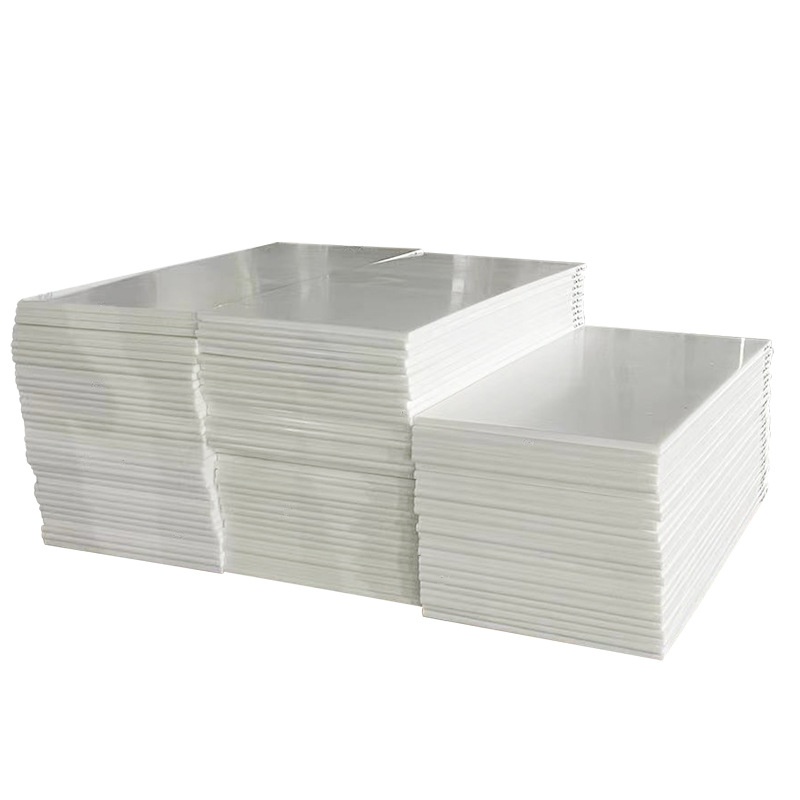
This polymer forms when the chemical repeating unit –CH2O– is combined and repeats to make a long, linear polyether. The high level of crystallinity that its structure allows makes the material very hard, stiff and slippery. That’s why these properties are required in engineering where durability and exact measurements are key.
Both homopolymer and copolymer grades are normally available as POM. While Homopolymer POM, including Delrin from DuPont, can resist mechanical forces and stiffen, it has a tendency to degrade at higher temperatures. Special copolymer POM adds a small amount of other monomers that improve resistance to problems caused by heat and moisture, so it can be used in environments where moisture or temperature changes often.
The structure of POM is important for understanding how it responds to heat and mechanical stress. A material with high crystallinity becomes tougher and stiffer but its impact resistance could be reduced. Thicker molecules tend to add strength and fireproof properties, as well as extra difficulties during production.
Thanks to being stiff, offering low friction, being resistant to wearing out easily and having a low water-absorption rate, POM is suitable for parts required to move with high accuracy.
How We Form Sheet Metal?
Load cells and flat struts are almost always made using either extrusion or compression molding methods. To shape POM into sheets, the raw resin is melted in extrusion and then pushed through a flat die at the right thickness. With this process, the mold is full of polymer and heat and pressure are applied to mold it into a sheet.
The application and the tolerance level needed will decide which method to use. Extrusion is best for large quantities, while compression molding gives you stronger control over the shape and density, usually selected for precise materials.
We can find sheets with a width of less than 1mm or those as thick as over 100mm. Having the proper dimensional tolerances matters in both CNC machining and tight assembly processes. Companies often deal with internal stresses that can lead to warping or dimensional drift by performing stress-relieving procedures following extrusion.
After processing, some steps like annealing, polishing or flame treatment can make surfaces better in look or sticky power. Steps like testing the strength, checking the size and looking at the surface are taken to help every load of goods maintain consistency and perform properly.
As a result of using these processes and tests, POM sheets fulfill the tough standards required in industry.
Response of Materials at Different Pressures
How POM responds to both heat and force is a key advantage for the material. Because the material supports a lot of stress, it is appropriate for gears, pulleys and other gear-related components. Thanks to its high elasticity, this material hardly changes its shape under load which is crucial in precision applications.
POM runs properly even at low temperatures, down to -40°C and at high temperatures, up to 140°C for short periods, if needed. It feature low thermal expansion, so it can support critical parts at stable dimensions in changing temperature.
When heavily impacted or frictioned, POM materials can withstand much fatigue. Due to its low coefficient of friction of approximately 0.2, auxiliary bearings do well in sliding tasks by lowering heat and wear. Still, POM continues to meet expectations even in dry situations, unlike many other plastics that may perform poorly without a lubricant.
For this reason, POM is well suitable for tasks that require reliable engineering under both constant and changing stresses. Under either continuous movement or high pressure, POM remains solid and effective.
Engineering POM: From Prototyping to Mass Production
Practicing machining engineers benefit from the good machinability of POM. Using CNC machining, it is simple to form parts that meet close tolerances and have excellent finishes. The simplicity of machining makes POM a valuable material for prototyping and small-scale production, especially when results need to be checked before expanding into large series.
Besides CNC machining, POM can be shaped through thermoforming and used with methods such as welding, ultrasonic sealing and threading. With this capability, designs can change rapidly in the early stages and support separable assemblies as well as systemic components.
As found in the automation industry, custom parts or assemblies made of POM are suited to applications that require efficiency and durability under high workload. It is possible for engineers to alter prototypes easily and with no impact on performance.
Due to its many benefits, POM is often employed in both prototype development and actual production. It links design with manufacturing, so products can be developed more quickly and with better organization among engineers.
POM Sheet in Motion: Different Industries Use It in Various Ways
Thanks to their reliability and performance, POM is being used in many industries. In the medical world, POM helps make products that can handle many sterilization treatments. Since it does not deform easily and is resistant to solvents and moisture, medical machinery housing and surgical instruments are made from this material.
POM sheets used in food processing are approved by the FDA and the EU for safe food use. Because they provide a high level of hygiene, precision and durability, they are common in parts for conveyor systems, cutting tools and packaging machines.
There are POM applications in both the car’s interior and engine. Since it can stand up to fuels, oils and heat, it fits nicely in the fuel system, dashboard and door mechanisms.
Because of its precision, POM plays a major role in making pump and valve parts. Dimensional stability is assured under pressure which ensures the lid doesn’t leak and lasts a long time.
Among the best uses of PWM is found in robotics and motion control systems. Applications for POM include designs where gears, linkages and guides must keep doing their job smoothly as operation continues over time. Used in conditions needing lots of movement and exact specifications, jewelry material stands out because of its smoothness, low friction and durability.
Unique Advantages That Drive Adoption
There are features that make POM significantly different from other engineering plastics. Since humidity can’t affect the material, the parts of plastic do not swell or lose their strength. Thanks to this feature, the paint performs very well in wet and outdoor conditions.
Parts made from POM will keep their performance and shape, even when faced with wide temperature changes. That’s why it’s very important during assembly, since minor warping may cause the machine to fail or work incorrectly.
The low amount of friction means that POM serves as a suitable surface for bearings, requiring less lubrication and less care.
The material performs well under cyclic loads. This is why springs, clips and fasteners are usually made from stainless steel, as they are put through frequent stress.
Sustainability and Lifecycle Thinking
Although POM is not made to degrade in the environment, it holds up extremely well over time. Since light can last decades, the less it is replaced, giving its production a chance to lower its environmental impact in the long run. Although the process requires specialized facilities, POM sheets are able to be recycled.
Because of moderate energy use in its manufacturing, POM is considered a low-impact material. Even so, fully environmentally friendly recipes are currently unavailable for POM plastics.
Rising levels of recycling and new methods in additive blending are raising the material’s sustainability. Engineers have to consider the long life and functionality of a product along with its recyclability and disposal costs when picking materials.
Issues Regarding Criteria and Specifications
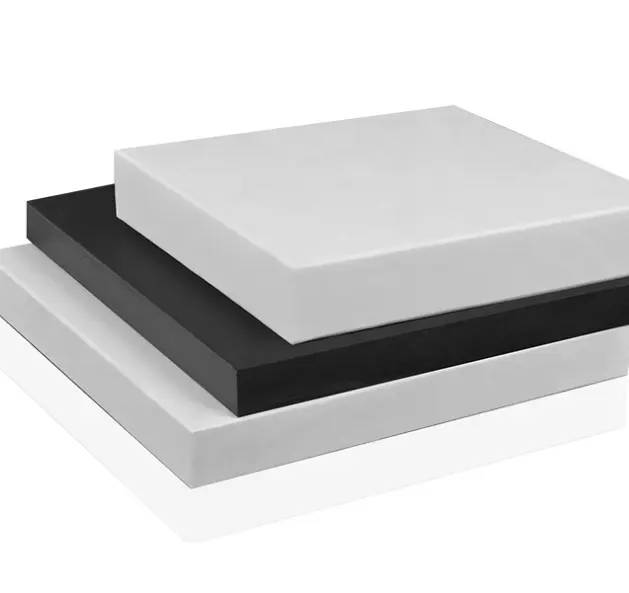
Considering different aspects is important when selecting a POM (Polyoxymethylene) sheet to get the best results and durability. Color is one of the main choices you should make—prices include basic white, black and any other color you want.
Such color options can indicate whether the material is more resistant to UV or if there are chemical additions that improve performance in various areas. Black POM frequently has added UV stabilizers which help it last outdoors.
How a product is finished is also very important. Reducing the friction in the movement of gears or bearings is best done by making the surface extra smooth. Alternatively, a textured or matte surface can give better adhesion or a better grip when teamed up with other finishes or coatings.
To guarantee a good fit in manufacturing and to meet the design needs, sheet thickness and the dimensions of its whole surface must be carefully chosen. If a carpet or sheet doesn’t fit well, there could be problems with the building or difficulties putting the cladding in place.
Don’t forget to turn to the technical datasheets for information about tolerances, expansion due to temperature, hardness, absorption of moisture and mechanical properties. All these points are necessary to decide which grade, standard homopolymer POM, copolymer POM or a reinforced variant, meets your requirements for load, temperature and chemical resistance.
If you analyze each element, you will be able to choose a POM sheet that gives the best results and lasts for a long time in your situation.
Risk Zones: Things Engineers Should Be Aware Of
Even though POM is very useful, it still faces some challenges.
UV Stability Concerns
While POM has good mechanical and thermal features, it isn’t naturally resistant to UV light. When polyurethane is left out in sunlight for a long time, it may become discolored, start to deteriorate and become less tough. If products are going to be placed outdoors, it is essential to use UV-resistant grades that are often supplied in black.
Challenges with Adhesive Bonding
This rare quality makes it a familiar challenge to adhere POM to other materials using regular adhesives. If no plasma, corona discharge or chemical etching is applied, adhesives could not stick properly to the surface. Hence, screws, rivets or thermal weld processes are generally chosen for joining pieces made from POM.
Risk of Thermal Degradation
Although POM performs well in challenging applications, it handles input signals within a rather narrow time range. If the material gets hotter than 230°C (446°F), it can begin to crumble and give off formaldehyde fumes. Therefore, during any machining, injection molding or extrusion process, both temperature and ventilation must be closely controlled.
Chemical Compatibility Limitations
POM is usually resistant to oils, fuels and many solvents. Though, it may suffer from the effects of strong acids (remarkably, nitric and sulfuric acid) and stubborn oxidizers like hydrogen peroxide. Because of the stress, the material’s organization can be lost and may crack or break. In highly chemical environments, making sure risks are checked is key to choosing POM grades.
Innovations and Material Alternatives
Thanks to new advances in POM technology, there are now hybrid composites formed with glass and mineral fillers. Improved stiffness, better shape stability and lower thermal expansion in these grades help them perform well in strong building applications.
Most often, advanced POM materials are being selected instead of metal due to their reduced weight and added resistance to damage, especially in automotive, aerospace and industrial parts.
When you consider other engineering plastics, POM retains certain important advantages. In contrast to Nylon, POM is free from dimensional errors and holds very little moisture, being a better material for parts designed for wet or moist locations.
POM is preferred over UHMW-PE because it is more resistant to wear and presents a harder surface which helps parts that experience constant sliding or impact. On top of that, PTFE is appreciated for its low friction, but POM allows machining with better results, so manufacturers can create even tighter tolerances and complete projects quicker.
Emerging technology is making the reach of POM go further than ever. Smart surface coatings are an important innovations in this field. This helps lower the friction and improves the outstanding resistance to wear found in POM. Applying coatings to POM parts makes it possible for manufacturers to maintain their functional quality for a longer period in heavy-duty situations.
With advances in material science, POM is being changed to fulfill the demanding needs of engineering. Improvements in how polymers are made, handled and coated have made them a favorite for those looking for robust, standard materials.
Final Word: Is POM the Right Fit for You?
POM sheets are admired for their strong performance, reliability of size and how simple they are to produce. They operate successfully in challenging situations and are fit for fine mechanisms used in a variety of sectors.
Yet, engineers have to consider how POM will hold up environmentally, if it needs to be bonded and how it will react with other materials before choosing it. One must ask the right things—What are the loads going to be? Is the part going to be close to UV lighting or chemicals? How much tolerance is necessary?—that will affect the selected material.
Moving forward, when mechanical design depends on efficiency, accuracy and ability to change, POM will continue to play a major role. Since it can help move from prototyping to production quickly, CAD becomes an important part of any engineer’s toolset.


