
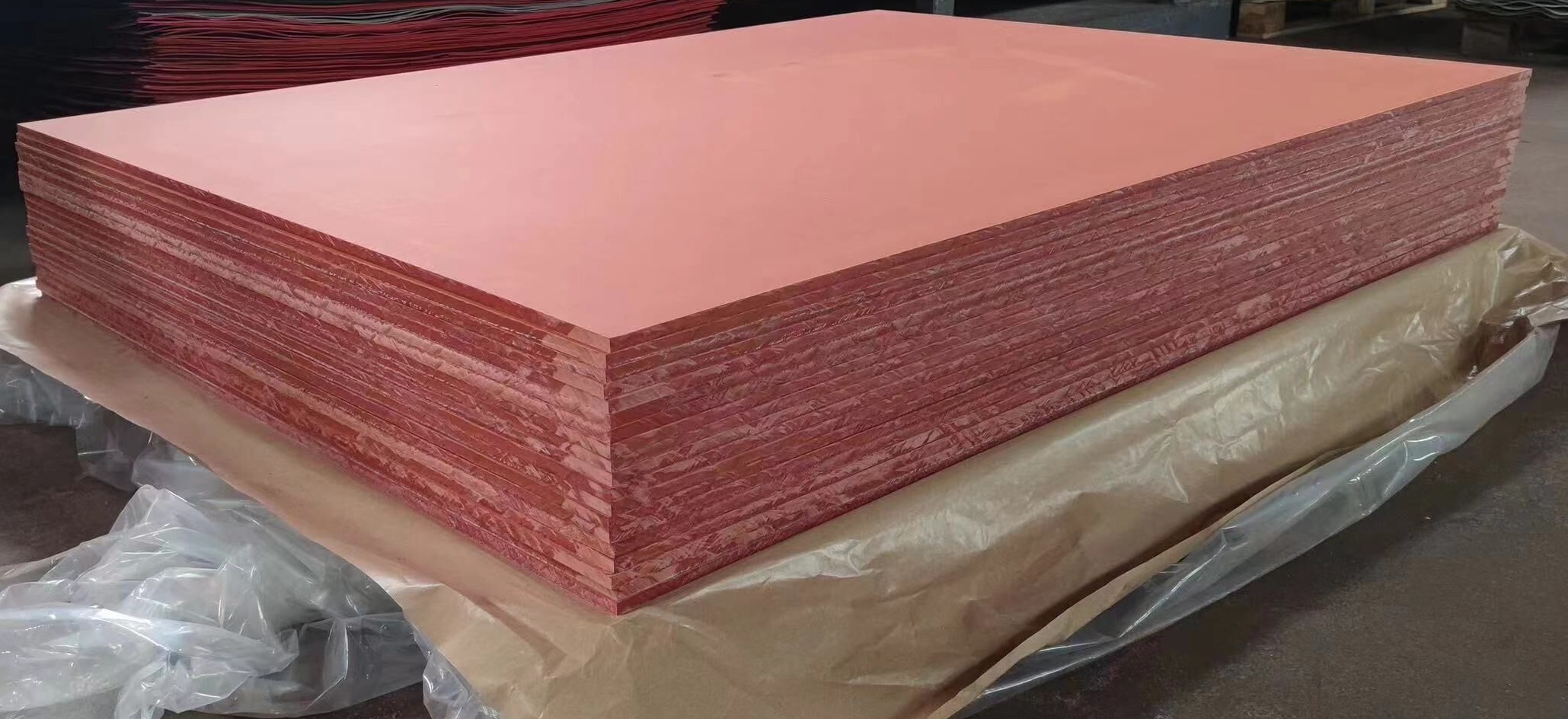
Not many products stay relevant across decades in the advancing world of industrial materials. One of such material is vulcanized fibre, which is an unsung hero that has been powering industries like electrical and automotive for over a century without any noise.
Vulcanized fiber sheets consist of cellulose and are regarded as strong, flexible, and insulation properties with an eco-friendly nature. The fact that this material is created through a unique production which undergoes simple paper to a high performance material without the use of synthetic binders or resins makes it very interesting.
Vulcanized fiber was developed historically in the 19th century and gained popularity very quickly because of its versatility. In the early 20th century, it had a major role in manufacturing, largely electric insulation and consumer goods.
The use of vulcanized fiber still holds advantages in many sectors because of its biodegradablity, machinability and even durability under stress when compared with advanced plastics and composites.
This article gets into detail with vulcanized fiber sheets, from origin and manufacture to modern day applications. Next, we will get into why despite the large breadth of synthetic alternatives across the market, this natural material remains a lightweight powerhouse in its industrial applications.
It is a guide to understanding the makings and purposes of vulcanized fiber sheets whether you are a manufacturer, engineer or ecoconscious designer.
What is a Vulcanized Fiber Sheet?
Cellulose is the raw material for vulcanized fiber, which is tough and durable. Unlike synthetic materials which rely on chemical binders or resins, vulcanized fiber is chemically free and formed. Since this represents a unique composition and performance also, it makes it unique.
https://www.youtube.com/shorts/D6KA3DS9qXc
Perhaps it seems presumptuous to associate the term vulcanized, in contrast to the common rubber-like properties, to a chemical treatment process with zinc chloride, whereby the layers of paper become dense, homogeneous sheets.
Good printing paper is made from a multilayer stacking of paper, which is then bonded and treated with zinc chloride so that the paper fibers are softened by the zinc chloride and the innerpellicles become intertwined on a molecular level.
Finally, the sheet that results after curing and washing out the chemicals is hard, durable, and uniform. The transformation that vulcanized fiber has to offer is strong, flexible, and insulating properties all the way down, without reliance upon synthetic reinforcement.
Vulcanized fiber was invented in the 1850s and was widely used in electrical applications because it has high dielectric strength. Besides being used in early automotive parts and consumer goods such as luggage and tool handles it was used in musical instruments as well. Over the course of time, as a reliable and adaptable material, it has proven itself in a great number of industrial uses.
Strength of fiber and workability are very important combined characteristics of vulcanized fiber, which differentiate it from those based on other strength of fiber. It has high tensile strength, is easy to machined or formed, resists wear and can be employed for structural and electrical insulation.
In this particular sectioned insight, various types, properties and uses of this rather diverse materials are set to be fully understood.
Types of Vulcanized Fiber Sheets
Vulcanized fiber sheets have many grades suited for certain uses. Commercial Grade, Electrical Grade, Trunk Fiber and Bone Fiber has their own set of characteristics at a given set of ‘thickness’ and ‘mass’ and ‘purpose of use’.
The most commonly used form of Vulcanized fiber is in Commercial Grade. It is suitable for application in use of a mechanical type such as gaskets, washers and spacers. This grade is strong and flexible in the right proportion to stamp, punch or form readily in shape.
Electrical Grade fiber is a high dielectric strength manufactured product. An insulation barrier used usually in transformers, motors and switchgear. In addition, this grade is also possess a good electrical resistance and low moisture absorption, and very good material for electrical systems.
Beautiful as decor, and structurally appealing, it is Trunk Fiber. Since the early 20th century it has been used widely for making luggage, storage boxes, and cases, etc. Trunk fiber is often available in attractive patterns embossed or dyed for its aesthetic appeal, along with structural strength.
The highest grade of Bone Fiber is used in high load mechanical applications. It has good resistance to wear and impact and may be used in the manufacture of tools, such as knife handles and backing plates for grinding wheels. It is also used for material where repeated stress and environmental extremes are needed, such as in industries involving bone fiber.
These grades, though varying in physical strength, also vary differently in thickness, density and processing behavior. Arrangement in this classification, allows fabric manufacturers to decide which of the suitable type of vulcanized fiber sheet to select according to the needs of the end product in terms of the mechanical, electrical or aesthetic.
Key Properties of Vulcanized Fiber Sheets
They have impressive mechanical strength and one of the most appealing features of vulcanized fiber sheets. Yet the sheets are not heavy and can withstand great stress without breaking or splitting. As a result, they make excellent structural and protective applications for industries that require extreme durability.
But they should also be their electrical insulation capability. The dielectric strength of vulcanized fiber is excellent and it is used for an excellent insulator in electrical devices and systems. Finally, it performs well up to conditions of high voltage and temperature, making it appropriate for motors, transformers, and switchgear components.
Likewise, the material can easily be treated and transported, as it is lightweight and flexible. Its strength and this feature together make it more appealing than other heavier materials like metals and dense plastics especially in aerospace and automotive manufacturing as weight sensitive applications.
Also, it features very high impact and abrasion resistance. Vulcanized fiber is not as chippy as glass and does not chip or crack as easily, thus making it a more durable option for use in components that experience repeated mechanical wear. It also has good time stability, which is a must for long lived applications.
Eco friendly is going to be another reason of appreciation for you to go for vulcanized fiber. It is biodegradable as well as is made from renewable resources, and is an excellent alternative to petroleum based plastics. Synthetic binders not being present means there is little impact environmentally during the production and disposal of them.
Of particular importance is that it is easily machinable. Vulcanized fiber sheets can be readily formed, cut, punched, and drilled with the same tools used in forming plastic sheet materials. That is why they are ideal to make custom parts, prototypes and mass produce components in a wide variety of industries.
Manufacturing Process of Vulcanized Fiber Sheets
The raw materials for vulcanized fiber sheet manufacturing are typically high quality cotton linters or wood pulp and the manufacturing starts with preparing them. The sources of cellulose are the processing into paper to serve as base layers for the vulcanized fibre.
The sheets are laminated onto each other to form the multimaterial mat. The cellulose fibers being soft and softened are immersed in a zinc chloride solution and, by doing so, they can be fused at the molecular level to create the composite. Once the material is cured, the bonding is solidified into a tough solid sheet.
Then the sheets are put through a neutralization and rinsing phase in which the sheets are finally freed of all traces of zinc chloride and all other residues. This guarantees the material is non corrosive and useful for further use. The rinsed sheets are dried in controlled conditions where they remain dimensional stable and strong.
Upon drying the sheets are subjected to post processing to the desired finish e.g., sanding, calendaring or dyeing. Quality control checks in each batch makes sure to have consistency of the thickness, strength and insulation properties.
The electrical and mechanical grades of zirconium mill product are specified according to industry standards such as NEMA (National Electrical Manufacturers Association) and ASTM (American Society for Testing and Materials) to conform to the demanding requirements of the current applications.
Applications of Vulcanized Fiber Sheets
Due to its unique combination of properties, therefore, vulcanized fiber sheet is extremely versatile with uses in many industries.
1. Electrical Industry
Various electrical sector applications, arc shields, insulation barriers, washers and gaskets, etc., utilize vulcanized fiber. Its high dielectric strength allows it to be used in switchgear, transformers, and high voltage circuit from which is why it is reliable.
It is a low cost, weight or bulk for electrical isolation. Therefore, it is a practical material for compact and efficient electronic designs.
2. Automotive and Aerospace
In addition, the automotive and aerospace industries still use vulcanized fiber for use of lightweight, insulating parts. Some uses include spacers, shims and brake components as well as dash and panel noise dampeners.
That shields them around engines and electrical systems from the heat and vibration. It also improves its fuel efficiency and performance due to its little weight.
3. Tool Manufacturing
Often vulcanized fiber is an option a knife handles that toolmakers will choose because of its grip comfort and toughness. However, it is especially favored by the high end or hand made knives with durability and aesthetics must be considered. Moreover, the material functions as a stable backdrop for grinding wheels in utilization at heavy duty speeds and friction.
4. Consumer Goods
The places for vulcanized fiber are such consumer products now as vintage luggage, musical drum shells and crafting supplies. Its easy way to tuck itself into complex shapes, its good looking and its flexibility is what it’s prized for. First, its properties combine the perfect balance of properties for it to be ideal for decorative, but still functional products that require high durability plus design versatility.
5. Construction and Industrial Equipment
Vulcanized fiber is used for construction and Industrial applications like friction pads, seals and thermal barriers. High mechanical stress and high temperature, it is also reliable in HVAC system, etc. It enhances the performance in the grueling operational environments and so enhances the longevity of the equipment and the operational safety.
Advantages of Using Vulcanized Fiber Sheets
One of the major advantages of the vulcanized fiber sheets is that the they are cost effective. Phenolics and composite materials are good reliable and relatively inexpensive alternatives to plastics and it is due to the fact that advanced polymers are not needed in such applications that phenolics have become very popular.
Their eco-friendliness cannot be overstated. Renewable cellulose is used to make vulcanized fiber, made without synthetic resins and hence biodegradable, recyclable. It is a very good pick for such industries looking to reduce their green footprint.
It also is highly workable in the form of vulcanized fibre. It may be shaped, milled, stamped, cut and formed into such complex shapes. On the other hand, it can be prototyped easily and fabricated custom without specialized equipment.
The material is good for electrical applications because of its dielectric properties. High voltage, tracking, and arcing resistant, one of the best non plastic insulators, it withstands high voltage.
The advantages which make vulcanized fiber indispensable as a material in sustainable, high performance manufacturing are these.
How to Select the Right Vulcanized Fiber Sheet?
The cost effectiveness of vulcanized fiber sheets is one of the foremost advantages of these sheets. Because they are reliable and relatively inexpensive alternatives to plastics, phenolics, and composite materials, especially in applications where high cost advanced polymers are not needed, they have become very popular.
Their eco-friendliness cannot be overstated. Vulcanized fiber is made of renewable cellulose, free of synthetic resins and so it is biodegradable and recyclable. This makes it an ideal option for such industries that seek to lower their environmental footprint.
This product is also very workable in the form of vulcanized fiber. It can be shaped, milled, stamped, cut and formed into such complex shapes. It is highly desirable for prototyping and custom fabrication without specialized equipment.
For its dielectric properties, the material is superior for use in electrical applications. High voltage, tracking, and arcing resistant, one of the best non plastic insulators, it withstands high voltage. The advantages which make vulcanized fiber indispensable as a material in sustainable, high performance manufacturing are these.
Comparison with Other Materials
Vulcanized Fiber vs. G10 (Glass Epoxy Laminates)
A fiberglass reinforced epoxy laminate referred to as G10 is strong and resistant to heat and moisture. It is however, lighter, and easier to machine, as well as more eco friendly.
Unlike G10 which has synthetic resins, the aerospace putty is made from renewable cellulose and fully biodegradable. G10 is great in extreme environments but vulcanized fiber is a viable cost effective sustainable alternative for less extreme applications.
Vulcanized Fiber vs. Phenolic Sheets
However, phenolic sheets are rigid and chemically resistant and are commonly used in high performance settings. On the other hand, vulcanized fiber is more easily worked with, biodegradable and usually less expensive.
Vulcanized fiber is a more sustainable, manipulable, more affordable material than phenolics while still providing better structural rigidity and chemical durability for some applications.
Vulcanized Fiber vs. Plastic and Rubber Sheets
Vulcanized fiber is compared to most plastics and rubber as biodegradable, and has electrical insulation. It can be cut, punched and formed more easily than many other synthetic fibers so it’s suitable for industrial usage.
Despite its lack of flexibility comparable to rubber and its chemical stability to some plastics, strength, workability and eco-friendliness make it a strong alternative in many mechanical and electrical applications.
Machining, Handling, and Maintenance Tips
Vulcanized fiber can be machined with simple tools in the manner of standard cutting, punching or forming tools. But it is very necessary to use sharp blades to avoid fraying as well as getting a clean edge to the sliver. Detailed designs such as punch presses and laser cutters also work nicely.
If machineing large quantities, operators should be wearing masks to protect them against inhelling dust, that can build up when cutting large quantities. It is recommended to have proper ventilation as well as dust collection systems.
The physical integrity of Vulcanized fiber is maintained in a cool, dry place. The dissemination of moisture through high humidity may also result in warping or swelling over time. The material has good shelf life and can be relied on in long lasting use provided it’s cared for well.
Bottom Line
Vulcanized fiber sheets possess the wonderful combinations of flexibility, durability, and sustainability. Modern examples of DLCs are still a lightweight powerhouse in material science from their industrial heritage roots in the industrial manufacturing to their contemporary deployments in electronics, aerospace and consumer goods.
Synthetic alternatives offer a completely different combination of mechanical strength, electrical insulation, and environmental friendliness, as compared with which they tend to fail. With industries looking to greener solutions, the importance of vulcanized fiber is already only likely to get greater.
Vulcanized fiber can be used whether you’re designing a high voltage insulator or a nicely crafted knife handle; it provides the versatility and reliability with the eco-friendly value you need. This timeless material is time to be rediscovered and its potential in the field of modern, sustainable design and manufacturing is to be explored.


