
Introduction
EPGC202 is not so much of another technical jargon. Yes! It is gaining a lot of ground in modern electronics. Many engineers now consider it a choice material for their devices.
The reasons are clear, as you’ll see soon. It even gets clearer by the day. Know this for free; in electrical manufacturing, the materials used matter significantly. EPGC 202 is just one of them. It is renowned for its performance in high-demand electrical environments.
There are lots of articles out there on insulation materials. Some are published by manufacturers from a marketing point of view. Others may group similar materials and are not so specific on a particular material.
This article gives a well-rounded view of EPGC202. We’d uncover the pros and cons. Ultimately, you’ll learn why EPGC202 is in high demand today.
What Is EPGC202?
To understand EPGC202, let’s go back a bit.
https://youtube.com/shorts/GNG96BHeQ5c
In materials manufacturing, there are standards. These standards are created by respected regulatory bodies. For electrical insulation materials, NEMA is one of them. NEMA means National Electrical Manufacturers Association. It is based in the United States.
NEMA created material grades. These grades help classify insulating materials. Some of these grades are FR1, FR2, G10, G11, and FR4. Among them, FR4 is very common. It is flame-resistant. That is what the “FR” in its name stands for.
Another global standard body is the IEC. This is the International Electrotechnical Commission. IEC standards are widely used in Europe and Asia. Many materials under NEMA and IEC have similar properties. Most manufacturers see EPGC202 as an IEC match for FR4. They are closely related in structure and use.
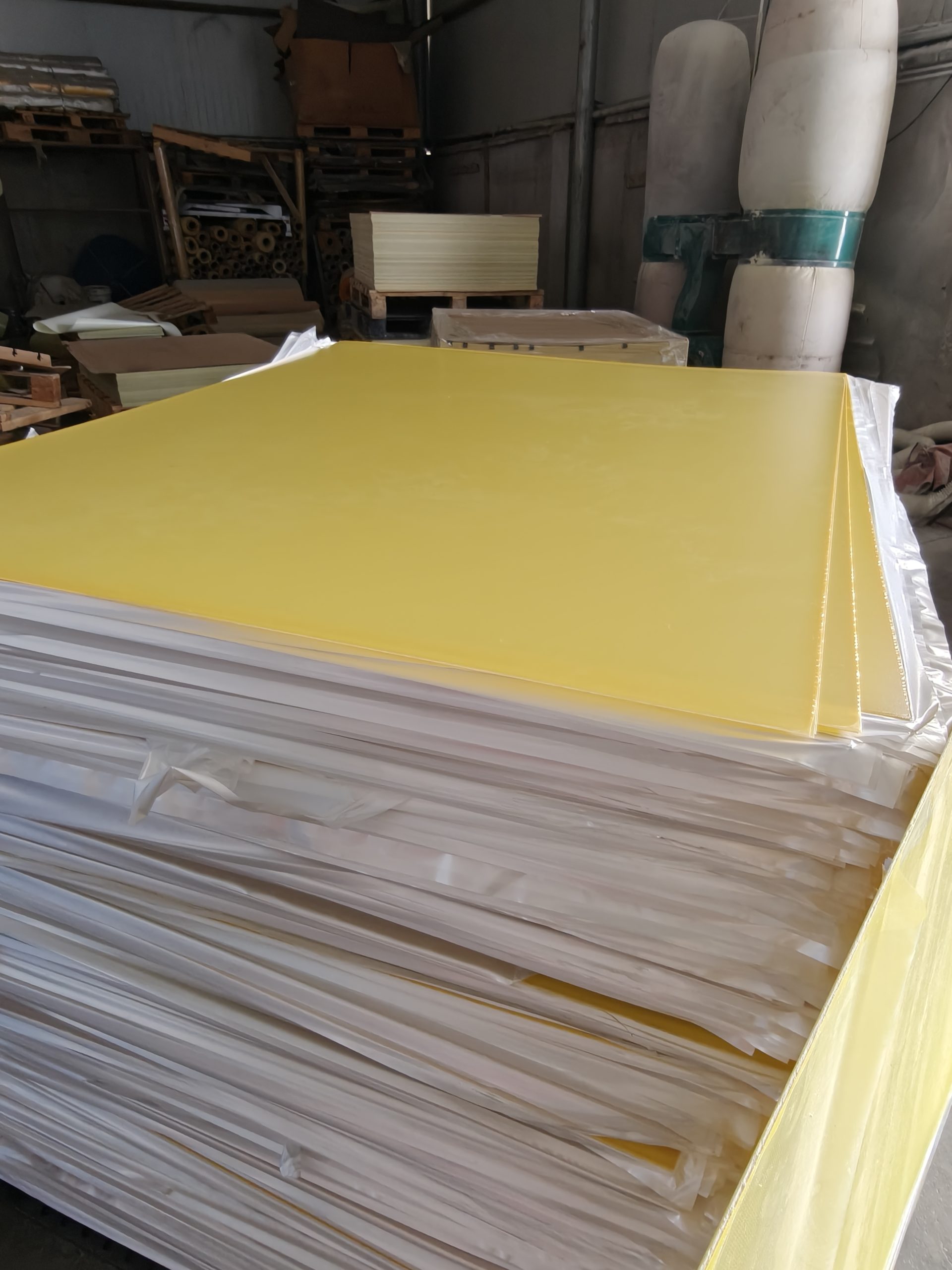
EPGC202 belongs to the EPGC material group. EPGC stands for Epoxy Glass Cloth. This is a type of laminate made from epoxy resin and fiberglass cloth. It is a duroplastic material. This means it hardens permanently after processing. It cannot be softened again by heat.
The base material in EPGC202 is alkali-free glass cloth. It is soaked in epoxy resin. Then, it is pressed under high temperature. This creates a strong and solid insulating sheet. Epoxy resin gives the sheet good strength and chemical resistance. Fiberglass cloth provides stiffness and thermal stability.
EPGC202 is known for its strength. It is rigid and hard. It has high surface hardness and low moisture absorption. It can also withstand heat and electrical stress. These properties make it suitable for electrical and mechanical applications.
There are different types of EPGC laminates. IEC grades include EPGC201, EPGC202, EPGC203, EPGC204, EPGC306, and EPGC308. NEMA grades include G10, FR4, G11, and FR5. EPGC202 is the most used among the IEC grades. It is also closely similar to HGW 2372.1, another material grade.
Compared to EPGC201, EPGC202 is flame retardant. It passes the UL94 V-0 flame test. This means it can stop burning quickly. If you need flame resistance, EPGC202 is the better choice.
There are many kinds of epoxy fiberglass boards. Some can be grouped by color. Common colors include green, blue, black, yellow, and white. Color does not affect quality but helps in identification. The boards can also be halogenated or halogen-free. There are flame-retardant and non-flame-retardant types. Each one serves a specific need.
Manufacturers also group the boards by strength and performance. Boards like G10, FR4, and G11 have high thermal resistance. They are tough, strong, and easy to work with. They stay in shape under stress. That’s why they are common in high-performance electronics.
EPGC202 is mainly used in the mold industry, electrical panels, PCB reinforcement, and test equipment. It works well in dry and wet environments. It also performs well when soaked in transformer oil.
So, EPGC202 is a strong, stable, and fire-safe material you can count on in demanding conditions.
What Are the Core Properties of EPGC202?
EPGC202 is known for its stable performance. It offers strong insulation, good strength, heat resistance, and low moisture absorption. These features make it suitable for motors, circuit boards, electrical devices, and test tools.
Let us look at each property more closely.
Electrical Insulation Performance
This is one of its strongest features. The sheet can handle high voltage. It performs well in transformers, motors, and other power systems. It maintains insulation even in oil and under heat.
According to standard test results, it resists up to 18.2 kV/mm. This is more than the minimum 14 kilovolts required.
It also holds high insulation resistance. Even after staying in water for a full day, it still resists current flow.
The volume resistivity is over 5.9×10¹³Ω.cm. That is a strong score for safety.
Its dielectric constant stays between four point zero and five point five. So it works well in both low and high frequency devices. The surface resistivity is also high, which means it prevents surface tracking.
When used in any electrical setting, it does the job well.
Mechanical Strength and Durability
EPGC board does not easily crack under pressure.
Its bending strength is high. It meets and goes beyond standard values. In tests, it showed strength of up to 480 MPa. That makes it safe for machines that work nonstop.
It can also handle pull force. The tensile strength goes up to 322 MPa. This shows it can stay together when stretched. Impact strength is another highlight. In the parallel direction, it reaches up to 49 kJ/m²
Its compressive strength is also high. This allows it to take force from above without breaking. These values make EPGC202 suitable for parts that carry load or face vibration.
It can be cut and shaped without damage. That makes it easy to process.
Thermal Resistance
Heat does not affect this material much.
Its temperature index is 130°C. It works well in hot zones like soldering or power units. It stays firm even after repeated heating and cooling.
It is also flame-resistant. It meets the V-0 rating under the UL-94 test. This means it does not support fire and will stop burning quickly.
Its low dissipation factor helps it avoid heat buildup. This is good for high-speed systems and power units.
So, in heat-prone places, this material stays steady.
Moisture Resistance and Chemical Stability
Moisture does not reduce its quality.
Its water absorption is very low. Even after soaking, it absorbs less than 0.1% water. That keeps its strength and shape intact. It also holds high insulation resistance even after water exposure.
The board is stable in oil and other liquids. It does not react with weak acids or industrial solvents. That is why it is good for use in electrical oils and wet places.
It performs well outdoors and in closed, damp spaces. That makes it safe for a wide range of uses.
| Property | Unit | Typical Value | Standard/Test Method |
| Density | g/cm³ | 2.0 | ISO 1183-1:2019 |
| Water Absorption | % | 0.07–0.16 | E-24/50 + D-24/23 |
| Flexural Strength | MPa | 480 | IEC 60893-2:2003 |
| Compressive Strength (Vertical) | MPa | 350 | — |
| Tensile Strength | MPa | 322 | — |
| Impact Strength (Parallel Layer) | kJ/m² | 49 | — |
| Electric Strength (Perpendicular) | kV/mm | 18.2 | IEC 60893-2 (in oil at 90°C) |
| Breakdown Voltage (Parallel Layer) | kV | >50 | — |
| Volume Resistivity (Normal) | ohm·cm | ≥5.9 × 10¹³ | IEC 60893-2 |
| Volume Resistivity (After Immersion) | ohm·cm | ≥1.3 × 10¹² | IEC 60893-2 |
| Surface Resistivity | ohm | ≥10¹⁰ | — |
| Dielectric Constant (1 MHz) | — | 4.0–5.5 | C-96/20/65 + D-48/50 |
| Dissipation Factor (1 MHz) | — | 0.03–0.05 | — |
| Arc Resistance | Seconds | 130–140 | — |
| Flammability (Vertical Method) | — | V-0 | UL 94 |
| Temperature Index | °C | 130 | Class B |
| CTI (Comparative Tracking Index) | — | CTI600 | — |
What Are Common Applications of EPGC202?
EPGC202 is used in many industries because it performs well under pressure, heat, and moisture. It supports electrical insulation, mechanical strength, and thermal resistance. It is commonly used in electrical machines, circuit board assembly, and testing tools. Below are some of its main uses with practical examples.
PCB Fixtures for Soldering and Reflow Processes
During PCB production, boards go through high heat. Soldering and reflow ovens often reach over 240°C. At this point, ordinary fixtures can bend or release gas. EPGC202 avoids this.
It stays flat and firm. It does not bend or give off fumes. This keeps the circuit board aligned during soldering. It also makes sure the solder joints remain accurate.
Factories use EPGC202 to make wave solder pallets, SMT carriers, and positioning plates. For example, companies that produce LED lighting or communication devices often use these fixtures to manage batch soldering.
Over time, the material can go through many heat cycles without damage. It does not chip or peel. This makes it cost-effective in long-term use.
High-Frequency Insulation Plates
In high-frequency devices, even a small signal loss can affect performance. Materials used in these devices must not absorb signals or allow leakage. EPGC202 has a stable dielectric constant. That makes it suitable for signal handling.
It is used in RF amplifiers, microwave filters, and antenna systems. In these systems, clean signal transmission is a must. EPGC202 helps keep unwanted interference out.
One example is in base station equipment for mobile networks. It is also found in radar units, satellite receivers, and testing circuits for wireless devices.
Because the material resists water, it stays reliable even in humid settings. This makes it useful for both indoor labs and outdoor enclosures.
Slot Wedges and Phase Insulators in Electric Motors
Electric motors need internal support. The windings must stay apart to avoid shorts. EPGC202 is shaped into wedges and barriers for this purpose.
Inside generators and induction motors, these parts face both vibration and heat. The material resists both. It does not shift or crack after long use. It also keeps its strength in oil-filled or moisture-heavy environments.
Manufacturers use EPGC202 to build slot wedges, end insulation rings, and divider plates in motors. It is common in power station generators, lift motors, conveyor drives, and compressors.
Some high-voltage motors also use it to separate phase windings. This is a safety measure, as it reduces the risk of damage during overload.
Test Equipment Mounting Boards
In testing, stability matters. Instruments must rest on a base that does not move, bend, or expand. EPGC202 offers that kind of support.
It is used to build base panels, jig plates, and test fixture boards. These are often seen in test labs, power stations, and electronics factories.
For example, when a PCB is being tested, it is mounted on a board. This board should not affect the circuit during measurement. EPGC202 gives the needed firmness and electrical insulation.
It also helps during fault analysis and burn-in testing. Devices can be powered for long hours while the board stays steady. It can even be used in high-voltage tests with minimal risk.
The sheet can be drilled and cut into many shapes. This helps teams build custom test setups based on need.
EPGC202 vs G10: Which One to Choose?
EPGC202 and G10 are both epoxy glass materials. They are made from fiberglass cloth and epoxy resin. They look similar. They are used in similar ways.
But they are not the same.
G10 is older. It is a NEMA-grade material. It is strong, insulates well, and works in dry and low-heat settings. You will find it in handles, small panels, and light switch gears.
G10 material is more similar to EPGC201 than EPGC202. So EPGC202 does more. It is flame retardant. So, it is stronger in heat yet better in wet areas. It is tested to meet flame safety rules. It has a UL-94 flammability rating.
That means it will stop burning fast. It will not drip or spread fire. That makes it safe for high-power use.
G10 can work up to 120°C. EPGC202 can stay stable at 130°C. This is useful in reflow lines, ovens, and motors.
In oil or water, G10 loses strength faster. EPGC202 stays firm. Its insulation stays high, even when wet.
Some people use G10 in dry indoor boxes. Others use EPGC202 for boards that go near heat or current.
For example, a PCB shop may use G10 for simple jigs. But it switches to EPGC202 when parts start warping in heat.
A motor repair center may pick G10 for covers. However, EPGC202 is needed for slot wedges and internal spacers.
If your work is low-risk, G10 may be fine. If heat, flame, or water is involved, EPGC202 is the better choice.
So both are useful. But one is safer when the job gets harder.
| Feature | G10 | EPGC202 |
| Base Material | Epoxy resin and glass cloth | Epoxy resin and glass cloth |
| Standard | NEMA G10 | IEC EPGC202 |
| Flame Resistance | No flame rating by default | Flame retardant (UL 94 V-0) |
| Heat Resistance | Up to 120°C | Up to 130°C |
| Moisture Resistance | Moderate | High |
| Dielectric Strength | Good | Better |
| Mechanical Strength | High | Same or slightly higher |
| Use Case | Dry, low-heat areas | High-heat, high-voltage, flame zones |
| Safety Rating | Not fire-rated | Fire-safe |
| Best For | Handles, light panels, indoor use | Motors, PCB tools, switchgear, labs |
Choosing the Right Supplier for EPGC202
Getting the right sheet is not enough. You need a good supplier, too. The wrong supplier can delay work or affect quality.
Let’s look at what to check.
Quality Certification and Compliance
The supplier must follow industry rules. EPGC202 must meet IEC standards. It must pass flame tests like UL-94. Ask for test reports. Ask for inspection results. Make sure the material is real.
Customization Options
Not every project needs a full sheet. Some need small cuts. Some need holes or slots. A good supplier should offer options. You should be able to get sheets in your size. You should also be able to send a drawing and get the shape you want.
Minimum Order Quantity
Some suppliers only take big orders. Others allow small orders. If you only need a few pieces, check the order limit. Some companies let you test first. That helps if you are not sure yet.
Price Transparency
Know what you are paying for. The price should include the sheet, the cut, and the shipping. If there are extra fees, they should be clear. Avoid sellers that change prices without reason.
After-Sales Service
Support matters. If the sheet is wrong, the supplier should fix it. If you need help with use, someone should respond. A good supplier stays in touch even after you buy.
Pick a supplier that gives you value, not just price. The right one will save you time and stress.
FAQs
Is EPGC202 flame-retardant?
Yes, it is. EPGC202 meets the UL 94 V-0 standard. That means it will stop burning when the source of the fire is removed. It also does not drip when exposed to flame. This makes it safe for use in electrical and heat-sensitive devices.
Does EPGC202 support high-speed drilling?
Yes, it does. EPGC202 can be drilled fast and clean. Just use sharp tools and cooling if needed. It handles both small and large bore sizes well. It does not crack or chip during drilling.
Can EPGC202 be used in outdoor environments?
It can be used outdoors, but with care. The board resists water and oil. It also handles changes in temperature. However, long exposure to sunlight may reduce its life. For outdoor use, it is best kept in covered enclosures.
How long can EPGC202 last in service?
The material can last many years. Its performance does not drop quickly. It resists wear from heat, load, and moisture. In regular use, it can serve for over 10 years. In protected systems, it can last even longer.
Is EPGC202 recyclable?
It cannot be melted and reused like plastic. But it can be crushed and used as filler in other materials. Some companies also collect scrap boards for special recycling. It is not fully recyclable, but it can still be reused in some ways.
Final Thoughts
EPGC202 is a trusted material for electrical insulation. It is strong, heat resistant, and flame safe. It works well in many systems.
You will find it in motors, circuit tools, test boards, and support frames. It does not fail under pressure or heat. That is why engineers trust it for heavy use.
It is easy to cut, drill, and shape. It also keeps its strength in wet or oily places. Its wide use shows how much value it brings.
If you need a board that works in tough spots, EPGC202 is a safe choice. It gives you long-term use, stable results, and peace of mind.


