
Introduction
Electrical work is not trial and error. It needs reliable and consistent materials. These are expected to carry load, resist heat, and stay dry.
Over the years, one material has quietly met these needs. That material is G10.
G10 may not be the newest. Let’s state the fact. It is the oldest glass epoxy material, but it still gets the job done. It has been used in tools, boards, and insulation parts since its introduction in the 1950s.
It is strong, reliable, and easy to work with. Many engineers trust it because it does not fail under pressure.
But what exactly makes G10 so useful? Why is it still used today when other grades have come up?
This article gives you the answers. You’ll learn what G10 is made of. You’ll see how it performs and where it fits best. You’ll also find out what to watch out for.
Let’s get started.
What Is G10 Epoxy Sheet?https://www.youtube.com/shorts/zCoxxvHyzH8
G10 is a type of epoxy laminate. It is made from glass fiber cloth and epoxy resin. These two materials are pressed together under heat. The result is a strong and solid sheet.
This sheet is used as both an insulator and a structural support. It is hard, stiff, and stable. It can handle mechanical load and electric stress without breaking down.
G10 has been around for many years. It is one of the original grades from NEMA. NEMA is a US body that sets the standard for electrical materials. G10 was made to be tough. It was designed to resist heat, shock, and water.
Even now, many engineers still use G10. That’s because it works. It stays firm when drilled or shaped. It is not deformed when hot. It doesn’t soak up water and resists chemicals and oil. That is why it is trusted in different setups.
G10 is not flame-rated by default. So, it is not ideal for areas where fire may be a risk. For such cases, other options like FR4 may be better.
But in dry, cool environments, G10 does well. It gives you clean insulation and solid support.
G10 is used in many products. You’ll find it in tools, boards, test jigs, and control boxes. It is also used in knives, battery holders, and switch covers. Its wide use is due to its balance of strength and cost.
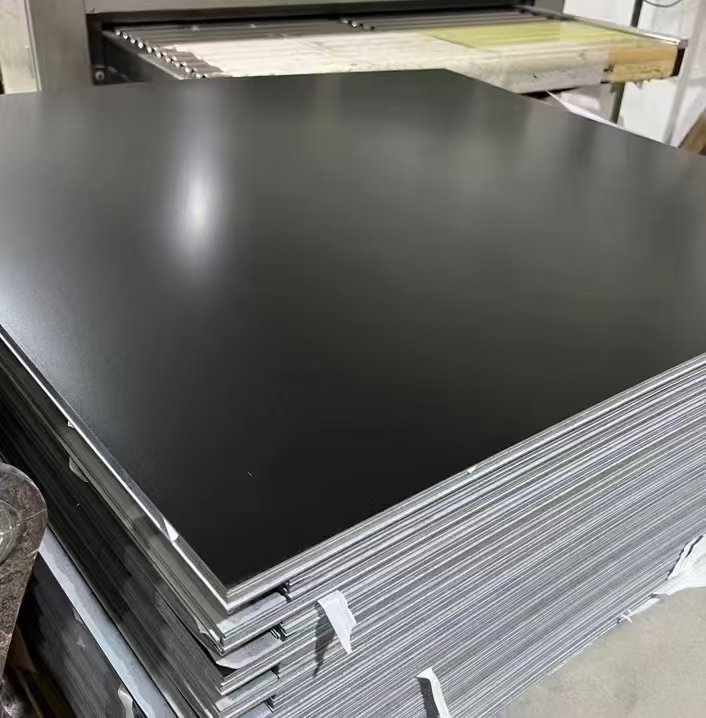
The standard color is light shades of green. But you may also see it in black or yellow. The color does not change the function. It is just a way to tell parts apart.
G10 is available in different shapes and sizes. These variations determine the appliances it is best suited for. For example, thick laminates can be used as full panels. Although they can also be cut into smaller shapes and sizes as needed.
So, as much as G10 isn’t new, it’s still relevant in today’s manufacturing. It is easy to use and is safe for dry conditions. That is not to mention its strength. It is strong enough for most everyday appliances.
What Are the Key Properties of G10 Epoxy Sheet?
G10’s performance is undoubted. This is as a result of its peculiar characteristics. The fiberglass-epoxy composite material has strong mechanical properties. In addition, you can be sure of good thermal resistance and impressive electrical insulation.
High Dielectric Strength
Let’s start with G10’s electrical insulation properties. It resists high voltages without breaking down. Usually, a material’s dielectric strength is an indicator for its insulation ability
G10 can handle voltages up to 14 kV/mm. This is higher than the optimum for most industrial applications. This high resistance to electrical breakdown makes it perfect for several appliances. For example, switchgear, transformers, and circuit boards.
Excellent Mechanical Properties
Mechanical stress is often a concern in certain appliances. But G10 epoxy sheet is an easy option in such cases. It is not only durable and strong; it has excellent tensile strength. This makes it resistant to pulling forces.
With a flexural strength of 75000 psi, it copes well under intense pressure. So, it is ideal for structural parts or electrical enclosures. It is also often used in tool handles, fixtures, and parts that require both strength and precision.
Moisture Resistance
G10 is resistant to moisture. This is crucial for electrical applications. You may ask, What’s the downside to moisture in boards?
Moisture can weaken materials, thereby causing insulation failure or corrosion. Thankfully, G10 holds up well in both wet and humid conditions. Its water absorption rate is very low (about 0.11% over 24 hours).
This makes it suitable for use in damp environments, such as outdoor devices, marine equipment, and electrical systems exposed to moisture. Keeping electrical components dry is key to their long-term performance, and G10 does that well.
Thermal Stability
As mentioned, G10 performs well in both hot and cold temperatures. It has a maximum operating temperature of 140°C.
This maximum is not suitable for extremely high-temperature applications like some other materials (e.g., G11) handle. Although, it holds its shape and strength in typical industrial environments.
G10 resists thermal shock and can be used in environments where heating and cooling cycles are common. Its low dissipation factor reduces heat buildup. So, it stays stable during temperature fluctuations.
G10 is ideal for use in electrical equipment, such as transformers and PCBs, where temperature stability is a must.
Flame Retardance
G10 is not flame-resistant by default, but it has some inherent flame-retardant properties due to the epoxy resin used in its composition.
It has a flammability rating of 94HB using the UL94 test. This means it resists flame spread to some degree.
However, for more demanding applications that require stronger flame resistance, FR4 or other specialized flame-retardant materials are more appropriate.
That said, G10 still offers basic fire resistance, making it suitable for many industrial uses where fire safety is important but not the primary concern.
G10 Key Properties Table
| Property | Unit | Typical Value | Test Method |
| Density | g/cm³ | 1.8 | ISO 1183-1:2019 |
| Water Absorption | % | 0.11 | 24 hours |
| Flexural Strength | psi | 75,000 | ASTM D790 |
| Tensile Strength | psi | 40,000 | ASTM D638 |
| Impact Strength | J/m² | 14 | ASTM D256 |
| Electric Strength | kV/mm | 14 | IEC 60893-2 (in oil at 90°C) |
| Breakdown Voltage | kV | 40 | — |
| Volume Resistivity | ohm·cm | ≥ 10¹¹ | IEC 60893-2 |
| Surface Resistivity | ohm | ≥ 10¹⁰ | — |
| Dielectric Constant | — | 4.0–5.5 | 1 MHz |
| Dissipation Factor | — | 0.03–0.04 | 1 MHz |
| Flammability | — | HB | UL 94 |
| Temperature Index | °C | 140 | — |
Where Is G10 Epoxy Sheet Used?
Perhaps it’s easier to say where G10 sheets are not used. This points to its wide versatility. Little wonder, it is used across several industries. Below are some of the applications of G10 epoxy sheet.
PCB Fixtures for Soldering and Reflow Processes
G10 is commonly used as a base material in printed circuit boards (PCBs). It provides a solid, stable foundation for components. The material resists heat, so it works well during soldering and reflow processes.
In these processes, the board is exposed to high temperatures. G10 ensures the board doesn’t warp or degrade. It also keeps electrical components safe by providing reliable insulation. Many PCB manufacturers use G10 for fixtures and supports.
High-Frequency Insulation Plates
G10’s dielectric property is also a key feature. Its high-frequency insulation plates prevent signal loss and interference. Therefore, it is useful in communication systems like antennas, radios, and telecom equipment.
Many manufacturers use G10 in RF (radio frequency) insulation plates. It works well in environments where high-frequency signals need isolation.
Slot Wedges and Phase Insulators in Electric Motors
The high mechanical strength of G10 is crucial to most applications it is employed in. The material can withstand wear and tear from vibrations.
Its insulation property further enhances this attribute in Electric motors and slot wedges. It ensures safe and efficient operation of the motor.
Electric motors need insulation to prevent short circuits. G10 is often used as a phase insulator or slot wedge in electric motors.
It is placed in the slots of rotor and stator windings to separate the conductive parts. Consequently, it prevents short circuits. That is why it is a choice material in transformers and generators.
Test Equipment Mounting Boards
Expectedly, G10 is an excellent choice for test setups in labs, industrial settings, and electronic testing. In these, stability and insulation are crucial.
The choice of G10 here is not far-fetched. It holds board components firmly in place and prevents electrical interference.
Asides its rigidity, its moisture resistance is key. It provides an additional protection from damage due to humidity.
What Are the Advantages of G10 Epoxy Sheet Over Other Insulation Materials?
It is important to know where G10 ranks with other insulating materials. This helps to guide your choice and know what to expect. Certainly, G10 epoxy sheet stands out because of its strength, insulation, and heat resistance. There are other areas where some other materials have superior features.
Now, compared to FR4, FR3, G11, and EPGC201, G10 delivers better mechanical performance. So, it is preferred for tough applications. FR4 is great for electrical work. However, they don’t handle mechanical stress as well.
G10 has a very low water absorption rate of 0.11%. So, it’s a good choice for appliances used in humid or wet environments. It rates better than FR4 in this regard.
How about thermal stability? G10 can take temperatures up to 140°C. It beats FR4 and EPGC202, which max out at 130°C.
Note that G11 supersedes G10 in handling heat. It can withstand temperatures as high as 180°C.
In flame resistance rating, G10 passes the UL94 HB test. FR4 and G11 pass the stricter UL94 V-0 test. While G10’s flame resistance is not the highest, it’s still reliable for electrical enclosures and PCBs.
Comparison of G10 with Other Insulation Materials
| Property | G10 | FR4 | FR3 | G11 |
| Mechanical Strength | High tensile and flexural strength | Moderate tensile strength | Low tensile strength | High tensile strength |
| Water Absorption | 0.11% | 0.11% | 0.05-0.1% | 0.07% |
| Thermal Resistance | Up to 140°C | Up to 130°C | Up to 120°C | Up to 180°C |
| Flame Resistance | UL94 HB | UL94 V-0 | UL94 V-0 | UL94 V-0 |
| Chemical Resistance | Excellent | Good | Moderate | Excellent |
| Durability | High durability and stability | Moderate durability | Moderate durability | High durability and stability |
| Electrical Insulation | High dielectric strength (14 kV/mm) | High dielectric strength (14 kV/mm) | High dielectric strength (14 kV/mm) | High dielectric strength (18 kV/mm) |
| Flexibility | Rigid but can be processed easily | Rigid and less flexible | Rigid and brittle | Rigid but can be processed easily |
Know this as a general rule in manufacturing materials: They have their pros and cons. A material may excel in one area and be deficient in another. So, always look out for those that offer a favorable balance. Yes! Balance is the word.
This is one reason G10 epoxy sheet hasn’t been swept aside. It has a good balance of strength, insulation, and resistance to harsh conditions.
True, FR4 may be preferred in applications requiring higher flame resistance. But G10 has its superior properties. It holds a significant advantage in areas where moisture resistance, durability, and chemical resistance are critical. Add that to its performance, you can see why it is a viable option for various applications.
How to Choose the Right G10 Epoxy Sheet?
Selecting the right G10 epoxy sheet is not always a walk in the park. Several checks are made before settling.
This helps you to ensure the material actually suits your specific application. Follow the guide below when choosing G10 epoxy sheets.
Determine Electrical Requirements
The primary function of G10 epoxy sheet in most applications is electrical insulation. If you’re working on a high-voltage application, consider G10. Its high dielectric strength is up to 14 kV/mm. This ensures that it can handle the electrical demands without breaking down.
Always evaluate the maximum voltage your device will handle. Then, make sure G10 (or any other material of your choice) meets these requirements. For power systems, transformers, and switchgear, G10 is often a reliable choice.
Assess Mechanical Load
Next, consider the mechanical stress your application will place on the material. G10 is very strong, with excellent resistance to stretching, bending, and impact.
So, G10 is a good choice if your project involves pressure or heavy use. Asides handling heavy applications, its strength ultimately translates into durability.
Evaluate Operating Environment
Not all materials are best for extreme conditions. Therefore, consider the environment in which the material will be used.
G10 performs well in both dry and humid conditions. It also resists moisture absorption, with a low water absorption rate of just about 0.11%. So outdoor appliances and marine equipment benefit from this attribute.
Check Thermal Conditions
Consider how much heat your appliance will generate. G10 can withstand temperatures up to 140°C. So, it is suitable for most industrial environments. Though, it may not be the best choice for extreme heat conditions.
If you expect temperatures beyond 140°C, you may need to opt for materials like G11 or higher-temperature resistant grades.
Select Appropriate Thickness
The thickness of the G10 sheet is another important factor. G10 is available in different thickness options. It typically ranges from 0.2 mm to 100 mm.
Choose the appropriate thickness based on your mechanical and electrical requirements. Thicker sheets provide higher mechanical strength.
On the other hand, thinner sheets are better suited for applications where flexibility and space-saving are critical. Ensure that the thickness matches your structural needs and the weight constraints of your project.
FAQs
Is G10 Epoxy Sheet Conductive?
No, G10 epoxy sheet is non-conductive. It is designed to provide electrical insulation. This makes it ideal for use in electrical systems. It helps in preventing the flow of electricity.
Can G10 Epoxy Sheet Be Laser Cut?
G10 epoxy sheet can be laser cut. This is a popular method for creating precise and intricate shapes. Just ensure that the laser settings are appropriate for G10 to avoid damaging the material.
Can G10 Epoxy Sheet Be Used Outdoors?
G10’s suitability for wet and humid conditions is a big advantage for outdoor appliances. It is also resistance to UV light. Therefore, it holds up well in various weather conditions, including humidity and rain.
Can G10 Be Painted or Coated?
Yes, G10 epoxy sheet can be painted or coated. Many industries apply coatings to G10 for additional protection or aesthetic purposes. It is important to choose the right type of paint or coating for the material to ensure proper adhesion and durability.
Final Thoughts!
G10 demonstrates that certain innovations stand the test of time. It was introduced decades ago. Yet, it continues to deliver unmatched performance on many fronts. This includes mechanical strength, electrical insulation, moisture resistance, and lot more.
Its reliability under harsh conditions makes it a preferred choice for electrical enclosures, structural components, and more. G10 withstands high stress, resists moisture, and handles challenging environments. This is proof of its lasting value.
With its enduring performance, G10 remains a top material for industries that demand durability and precision.


