
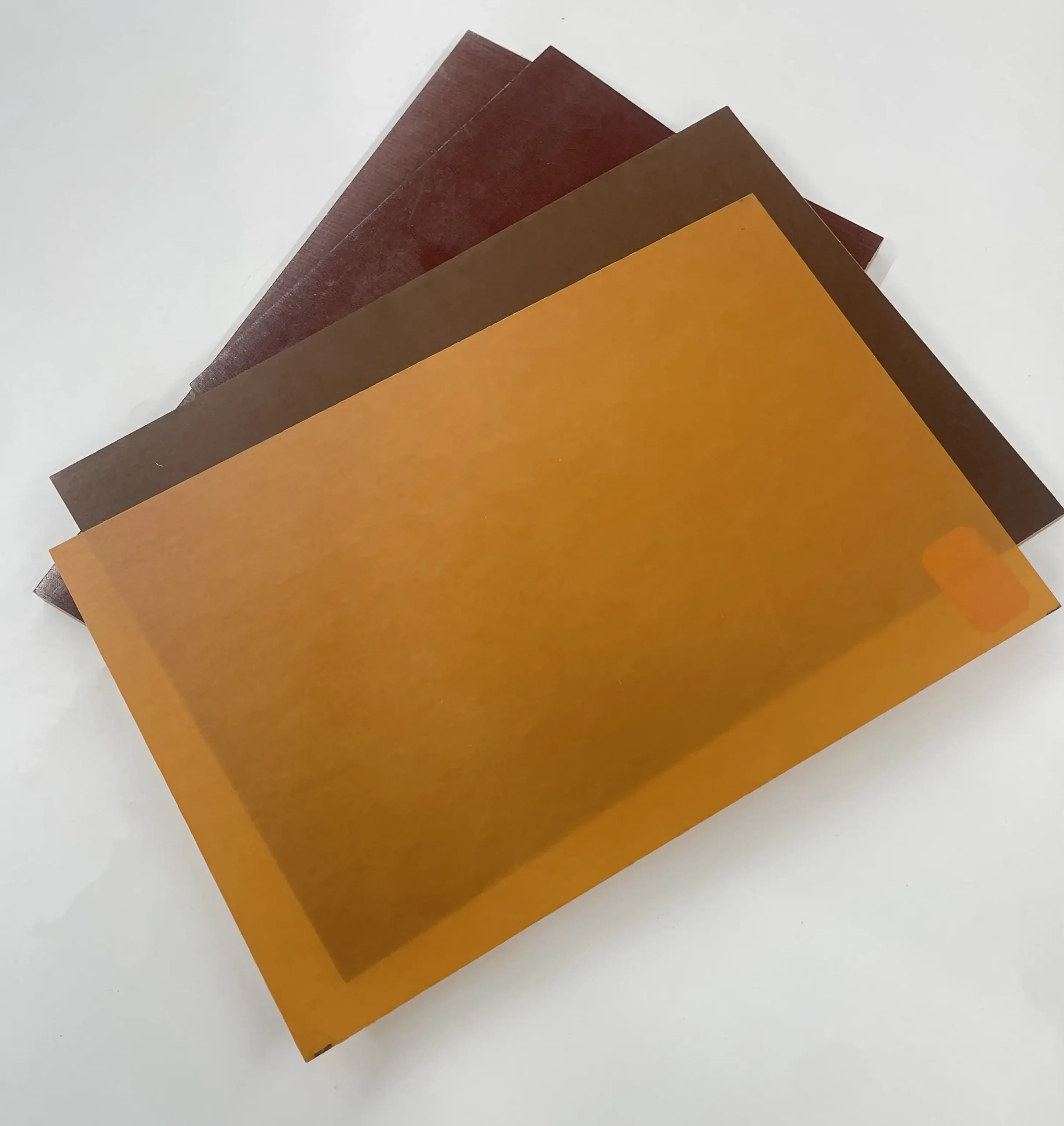
Electrical and industrial systems rely on materials that are strong enough to be used in the system and at the same time offer reliable insulation. Rigid insulating materials related to phenolic resin laminates have been used to this end for decades and are sometimes called Vaquelita, a term used by some markets.
Typically, Vaquelita is produced by mixing phenolic resin with a reinforcing substrate, like paper or fabric. The resulting laminate is hard, an electrical insulator, dimensionally stable and relatively easy to machine. The combination is useful for electrical panels, spacers, supports, terminal boards, washers and many other custom fabricated insulating parts and components of machinery.
In spite of the recent introduction of newer engineering plastics and fiberglass composites, Vaquelita is still found in electrical and industrial applications due to its useful combination of electrical insulation, rigidity, machinability, availability, and relatively low cost.
The word Vaquelita, however, is not necessarily related to a singular formula. It can have different meanings and contents depending on the region, producer and supplier. Therefore, the material grade and technical specifications of the actual should be confirmed prior to use by engineers and buyers.
This article discusses meaning, composition, manufacturing process, characteristics, applications, advantages, constraints and comparison with other insulating materials of Vaquelita.
What Does Vaquelita Mean?
Certain phenolic laminated insulating materials are commonly referred to by the industrial or commercial name, Vaquelita. The name can be used to describe either lamination of paper or cotton fabric impregnated with phenolic resin and then cured under heat and pressure or any other substrate used for reinforcement.
It is very important to know the regional terminology. One supplier might use Vaquelita to refer to a specific paper based phenolic laminate, while another supplier might use Vaquelita to refer to a group of paper based phenolic lamination grades.
Therefore engineers should not use the name “Vaquelita” as the only criteria for selecting the material. The following are more significant than the underlying resin system, reinforcement, thickness, mechanical properties, electrical properties, and operating conditions.
Vaquelita and Bakelite
The Vaquelita is related to and compared with Bakelite due to historical and technical links between them and phenolic resin technology. But trade names, common product names and formal product classifications of materials must not be assumed to be synonymous.
Bakelite is a term used historically for the early phenolic thermosetting plastics, while Vaquelita can refer to a laminate composite with phenolic resin and reinforcing layers.
So the best way is to have a proper understanding of how the material is made, know what it is made from, and not just the commercial name.
Common Forms
There are several varieties of Vaquelita available, such as sheets, plates, rods, tubes and pre-machined pieces. Sheets and plates are especially suitable for use by manufacturers who require to cut or machine their own special insulation components.
Students will learn the history and development of Phenolic Materials.
In the 20th century synthetic resins changed the development of electrical and industrial manufacturing. Phenolic resins were one of the first commercially important synthetic polymers and were soon found to be useful due to their hardness, heat resistance under certain service conditions and electrical insulating properties.
It was found that a phenolic resin could be mixed with reinforcing substrates to form strong laminated materials by the manufacturers. The paper or fabric impregnated with resin might be compressed and cured into stiff sheets that have useful electrical and mechanical properties.
Prior to the introduction of the modern high performance thermoplastics and composites, phenolic laminates gained significance in electrical equipment, switches, terminal boards, insulating supports, machinery and a myriad of manufactured parts.
Since then, many challenging applications have been taken over by modern materials. The fiberglass reinforcement, epoxy resin system, mechanical performance and electrical properties of FR4 have made it widely used in printed circuit boards.
But phenols are not going away. Their longstanding manufacturing methods, beneficial insulating properties, ease of manufacture and economy of use, combined with rigidity and strength, continue to make them useful in all kinds of electrical and mechanical devices.
What Then is Vaquelita Made of?
Phenolic Resin
Phenolic resin is usually the binder in Vaquelita-type laminates. After curing, this thermosetting resin is rigid and is not easily melted and molded, as is a typical thermoplastic.
The resin makes an important contribution to the rigidity, electrical insulation, dimensional stability and thermal behavior of the laminate. They have historically used phenolic laminates because of their characteristics.
Reinforcement Materials
The resin is combined with a reinforcement material. This may be paper, cotton fabric or another reinforcement of the fabric.
Paper-based laminates can be used for many electrical components as they offer good electrical insulating properties and are economically produced. Fabric reinforcement can provide varying mechanical properties and can be used when higher toughness or machinability is needed.
The reinforcement has an influence on various properties of the final product such as mechanical properties, surface properties, machineability, electrical properties, water resistance properties and cost.
Thus, if two products are being sold under the same name, Vaquelita, but are using different types of reinforcement systems, they can be different.
Why Composition Matters?
The properties of the sheets in a Vaquelita are not guaranteed to be the same. The effects of resin formulation, reinforcement, resin content, manufacturing process, thickness and grade can be significant.
If the application is a standard, noncritical use, a general description of the product might be helpful. However, for critical electrical or industrial uses, engineers need to consult the manufacturer’s technical datasheet and standards, and test values and certification information before approving the material.
Vaquelita’s Manufacture
The process for manufacturing a phenolic laminate generally starts with the preparation of the reinforcement material. Paper, cotton fabric or other appropriate material is prepared as desired for the laminate grade.
The reinforcement is then treated with phenolic resin which penetrates the substrate and coats it. A drying or partial curing process is then used to prepare the impregnated material for lamination.
The layers are piled up so as to reach the desired thickness and structure. The stack is then put under a carefully monitored heat and pressure. The pressures compact the layers and the heat cures the phenolic resin.
During curing, the resin forms a hard thermoset structure which locks the layers of reinforcement together. It creates a hard and compact laminate.
Once cured, the laminate can be trimmed, cut, inspected and finished into sheets or other stock shapes. It can then be processed into washers, panels, spacers, bushings, supports and other custom-made industrial components.
The variables in manufacturing are important. Electrical performance; mechanical strength; dimensional stability; and surface finish, can all vary depending on pressure, curing temperature, resin content, type of reinforcement, and orientation of the layers, as well as processing quality. That is why the specification by grade and manufacturer data is more reliable than the just the Vaquelita name.
Key Properties of Vaquelita
Electrical Insulation
One of Vaquelita’s most important characteristics is its ability to provide electrical insulation. The desired electrical insulation can be achieved with a properly selected phenolic laminate which can insulate conductive components from each other.
This provides a useful material for electrical isolation and support applications such as terminal boards, electrical supports, spacers, and other applications.
Mechanical Strength
The structure of Vaquelita is stiffer and can withstand compression or other mechanical loads within the range of the specific grade. Reinforcement is a factor here. For example, grades reinforced with fabric might respond differently to mechanical stress than those made from paper.
It is not a substitute for metals or high performance structural composites, but certain rigid/insulative parts that are properly designed and engineered will benefit from its combination of rigidity and insulation.
Thermal Behavior
Phenolic laminates can perform moderately high temperatures but this will depend on the formulation and grade.
Designers should refer to maximum and continuous operating-temperature specifications rather than relying on the fact that all Vaquelita materials are heat resistant. In extreme heat, special high-temperature composites or polymers may be required.
Machinability
An additional benefit is the fact that it’s easy to machine. Typically, cutting, drilling, milling, turning, and punching methods can be used to process vaquelita sheets and stock materials.
This allows the manufacturers and workshops to make the parts at will and not use very sophisticated forming operations.
Dimensional Stability
When an insulating component must keep its position, spacing or shape during service, dimensional stability is important. In electrical and mechanical assemblies, phenolic laminates can be used and provide benefits for dimensional stability in the appropriate operating conditions.
Moisture Behavior
Moisture should be taken into special consideration. Certain grades of laminate can absorb moisture, as can paper- or fabric-based materials, and they can react differently to moisture.
The dimensions may be affected by moisture absorption and so may be electrical insulation properties. Due to this, care must be taken in selecting the appropriate grade in applications involving high humidity or direct environmental exposure.
Electrical Properties of Vaquelita
Depending on the application, a specific Vaquelita grade can be selected based on a variety of electrical properties.
The ability of a material to resist the onset of electrical breakdown is called the dielectric strength of the material. Greater dielectric strength may be beneficial when insulating between conductive parts, where the distance between parts is relatively small.
Another property is the dielectric constant (or relative permittivity). It shows the behavior of a material in an electric field as compared to a vacuum. The value should not be taken as a general rule for Vaquelita as it may be dependent on composition, reinforcement, frequency, temperature, moisture, and testing conditions.
Insulation resistance also is significant. High insulation resistance reduces unwanted current leakage through components of insulation.
The arc resistance is important when an insulation material might be subjected to surface discharge or arcing. Again, performance will vary based on specific Grade and environment.
The electrical behaviour may be greatly affected by environmental conditions. Insulation performance may change due to moisture absorption, contamination, temperature changes, and aging.
Therefore, the use of generic data in the design of critical equipment is not recommended. Engineers should seek out manufacturer-specific dielectric strength, insulation resistance, dielectric constant, moisture absorption, and other test data for the specific grade being used.
Common Uses of Vaquelita
Electrical Applications
One of the oldest uses of Vaquelita is in electrical applications. It can be cut into terminal boards, insulating panels, parts for switchgear, transformer parts, electrical barriers, washers and spacers.
The benefit of this in these kinds of scenarios is that one piece can offer both structural strength and electrical isolation.
Electronics
Phenolic laminates have been used in the electronics industry for many years. They have been employed for supporting structures and insulating elements, especially in the older electronic equipment.
Other materials, particularly fibreglass-epoxy laminates like FR4 are often used in modern high performance electronics. However, phenolic products can still be found in certain specialty product items, prototypes, components and certain less critical electrical assemblies.
Mechanical Applications
Vaquelita can be used for electrical purposes only. It can be turned to bushings, guides, structural insulating parts and some gears with low bearing.
Its mechanical strength, formability, and electrical insulation make it useful in these types of applications.
Industrial Equipment
A big number of electrical machinery and industrial control systems require rigid components to isolate conductive parts from each other. Usable for fixtures, supports, barriers, mounting components, and custom-machined parts, Vaquelita can be used for this purpose.
It can be used for mechanical and electrical purposes, making the design of components simpler in appropriate applications.
DIY and Workshop Applications
In workshops where custom insulating panels, supports, spacers, or other parts are required to be produced, Vaquelita sheets can also be helpful.
Machining should be done responsibly, however. Laminate materials may produce dust when cut, drilled, milled or sanded. In this regard, it is important that the appropriate extraction, ventilation, housekeeping, and personal protective equipment are used following the safety information provided by the material supplier.
Advantages of Vaquelita
Then there’s the fact that Vaquelita is still a useful product that contains several desirable properties in one material.
The main benefit is its high electrical insulation qualities, which vary according to its grade. It offers moderate stiffness and a desirable mechanical property for numerous non-extreme industrial uses as well.
Another advantage is the high machinability. Standard machine operations and appropriate tooling and precautions can be used to transform sheets (and other stock shapes) into custom panels, spacers, washers, bushings and supports.
The material also has useful dimensional stability, and is available in a range of thicknesses and shapes. This versatility means that the designer and manufacturer can choose the stock that meets the geometry of the desired component.
Another draw card might be cost. Phenolic laminates could be a cost-effective option when the added features of high-quality engineering plastics aren’t needed.
Last, but by no means least, Vaquelita has inherited a long industrial tradition. It’s known for its behavior and creation techniques.
Each of these advantages should, however, always be looked at in a grade-wise context. The use of a general material name does not imply a specific electrical, thermal or mechanical performance.
Limitations of Vaquelita
While flexible, Vaquelita is not suitable for all uses.
Some modern thermoplastics may be tougher than some phenolic laminates, so that they may not be suitable where high impact resistance or appreciable flexibility is desired.
Another thing to consider is the absorption of moisture. Some grades may take up moisture from the environment and affect size and electrical properties.
There is also a variation in temperature capabilities. There are many different types of phenolic laminates that can withstand moderate heat, but there are some polymers and composites that can withstand higher operating temperatures.
At very high frequencies, Vaquelita might not offer the controlled electrical properties needed for advanced electronics. Likewise, it might not guarantee stability and performance at the higher levels of contemporary modern PCB usage.
Machining produces dust, and the appropriate controls are important for the workplace.
In selected properties (toughness, moisture resistance, mechanical strength, thermal properties or specialized electrical properties) modern fibre glass composites and engineering plastics can be superior to phenolic laminates. When choosing materials it should be done with regard to the specific application, and not simply by what one knows or what it costs.
Vaquelita vs. FR4
Electrical insulation can be obtained from both Vaquelita-type phenolic laminates and FR4, but the characteristics of their construction and performance are different.
Generally, Vaquelita is made with a phenolic resin system; FR4 is typically a woven fiberglass reinforced epoxy resin system. Paper or fabric is used as reinforcement for Vaquelita as per the grade.
Either can be used for useful electrical insulation; however, FR4 has higher mechanical strength and moisture resistance. It is well-suited for use at high temperatures thanks to its fiberglass reinforcement, which provides it with a good level of strength and helps keep its dimensions stable. Note, however, that the glass fibers also increase the abrasiveness of the material to cutting tools.
The biggest disparity is in the printed circuit board sector. The electrical, mechanical, thermal and manufacturing properties of FR4 have made it the major material used for rigid PCB manufacturing in modern electronic products.
However, in conventional or specialized electrical applications, such as insulating panels, barriers, terminal components, supports, and mechanical-electrical parts, phenolic laminates can still be used as long as the required performance of FR-4 is not needed.
Cost also matters. It is possible to get a relatively cheap Vaquelita, or the FR4 could be worth it if they need more mechanical strength, moisture resistance, or are concerned with performance in relation to PCBs.
So neither material should be chosen just because it is termed “better. The selection is based on the voltage, mechanical load, wetness, temperature, production technique, electrical frequency, regulatory requirements and budget.
Vaquelita vs. Modern Engineering Plastics
Today, many different types of insulators are available, such as nylon, acetal, polycarbonate, PTFE and fiberglass composites. Each has a different set of properties.
Nylon can be tough and wear resistant, although some grades can be affected by moisture absorption. The main advantages of acetal include its dimensional stability, machinability and low friction mechanical applications. Polycarbonate is highly tough and impact resistant.
The electrical, chemical and friction properties of PTFE are excellent but its mechanical properties are quite different from that of a rigid phenolic laminate and may be significantly higher.
Fiberglass composites, such as FR4 materials, offer improved mechanical properties and excellent electrical characteristics, but may be difficult to machine the fiberglass reinforcement.
The strongest advantage of Vaquelita is its ability to be rigid, electrically isolated, machinable, readily available and even cost effective.
There is no perfect insulation material for all applications. The most appropriate choice will depend on the electrical, mechanical, rubbing, thermal, moisture, manufacturing and cost properties of the part being manufactured.
How to Select a Correct Vaquelita Grade?
The name of the product should not be the starting point to select Vaquelita, it should start with the real engineering requirement of the application.
The first step is to find the operating voltage and the required dielectric strength. The insulation should be able to safely resist the expected stresses on the electrical components with a design margin appropriate to these stresses.
Then, consider mechanical loading. Simple insulating barrier is subjected to different stresses by bushing, gear, fixture, or structural support.
Also, the operating temperature should be given attention, such as the normal continuous operating temperature and short time temperature rise. Other environmental factors such as humidity, condensation, and water exposure need to be considered as moisture can affect certain phenolic laminate grades.
The thickness and dimensional tolerances must be set depending on the design of the parts. When significant machining is needed, reinforce type, machinability, edge quality, and dimensional stability should be taken into consideration.
Any applicable industry standard or regulatory requirements should also be identified prior to material purchase.
Most important of all, check the manufacturer’s technical datasheet. It should include grade-relevant electrical, mechanical, thermal and physical data.
If the part is critical to the electrical or industrial application, insist on a suitable technical description or certificate, do not take a “Vaquelita”.
Lastly, consider the technical viability and budget and availability. The cheapest material is only cost effective when it is able to deliver service with sufficient reliability over the design life.
Making and Working in Vaquelita
In general, Vaquelita can be manufactured by the saw cutting, drilling, milling, turning, sanding and finishing methods depending on its grade, reinforcement and thickness, and geometry.
The first step towards good machining practice is to have the proper, sharp cutting tools. Worn tools can produce excessive heat, cause poor edges and cause cracking or chipping.
The feed rate, cutting speed should be chosen properly according to the specific laminate. Avoid excessive heat as it may cause damage to surfaces or impact machining quality. Special attention should be paid at edges and drilled holes where cracking can happen when handling the material aggressively.
Another important factor is dust control. Fine particles can be generated during the cutting, sanding, and other manufacturing processes of laminated products. Appropriate extraction or ventilation should be provided, and workers should be wearing the appropriate personal protective equipment appropriate to the workplace and the supplier’s documentation.
Fabrication of the material should also be supported to resist unwanted vibration and breakage.
Specific cutting conditions and precautions should be determined by the manufacturer’s recommendations for each type of Vaquelita being cut because each grade may contain a different type of reinforcement and resin.
Bottom Line
Vaquelita is still a valuable material for a variety of electrical, mechanical and industrial uses. It is usually used in combination with phenolic laminated insulating material, having electrical insulation, rigidity, useful mechanical properties, easy to process, dimensionally stable and relatively low price.
Though it’s a long history, it does not imply the best choice for any contemporary design. In certain applications, materials like FR4 or engineering plastics can offer better moisture protection, mechanical properties, thermal characteristics, toughness, or electrical properties.
This means that the value of Vaquelita is dependent on the use. The selection of materials should consider voltage, dielectric conditions, mechanical stress, operating temperature, humidity, size, production methods, industry standards and cost.
Most importantly, Vaquelita should NOT be considered as a single standardised version. Products with the trade name can vary depending on manufacturer, reinforcement, grade and geographic area.
In critical applications such as electrical and industrial, always be sure to check the material composition, technical datasheet, applicable standards, and manufacturer specifications before the final selection is made.


