
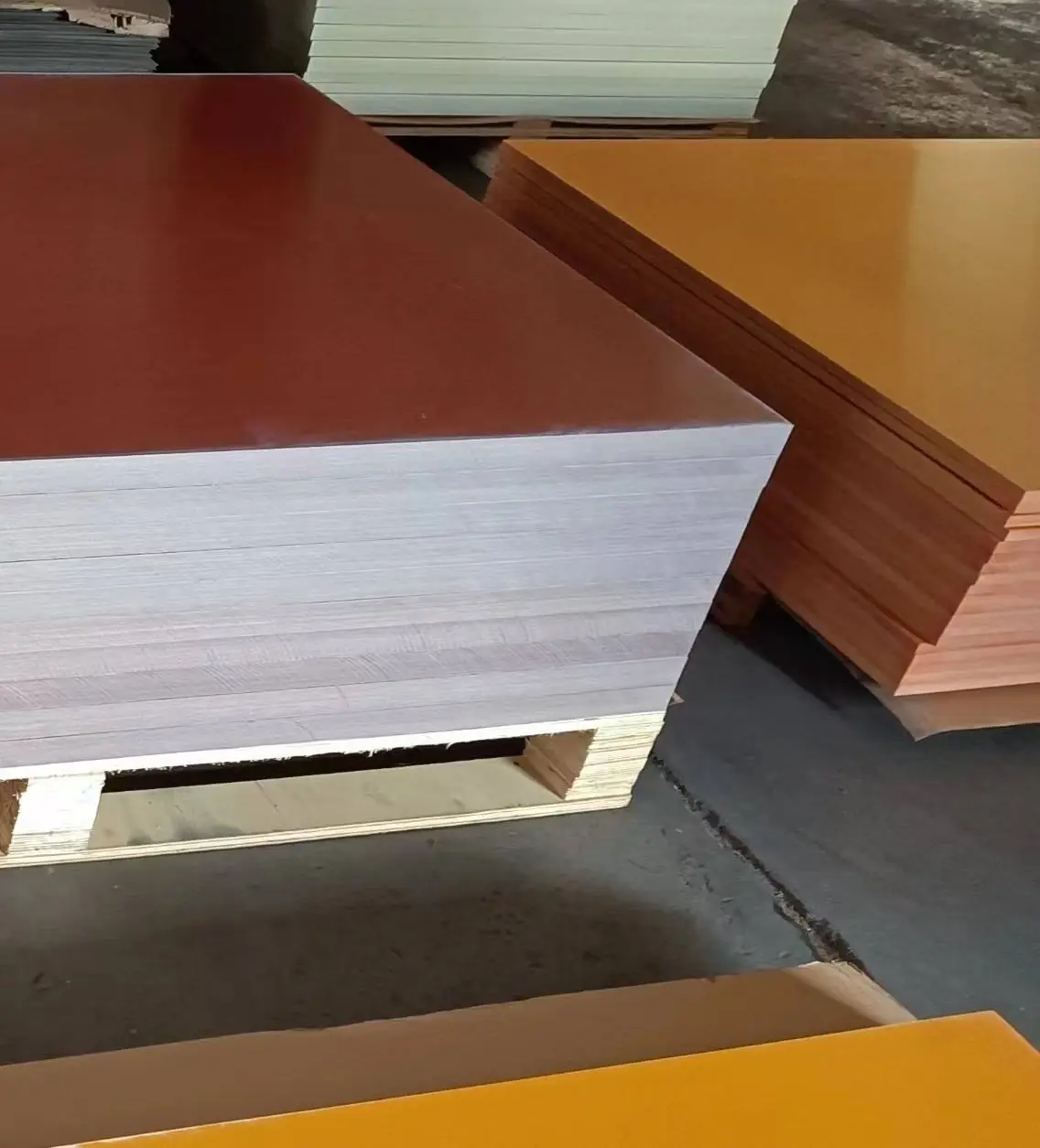
Phenolic resin is among the most common thermosetting synthetic resins used in the present industry. It was developed over a hundred years ago, and is still used in applications where heat resistance, electrical insulation, mechanical strength, dimensional stability and chemical resistance are needed.
The main process for the production of phenolic resin is the chemical reaction of phenol and formaldehyde. After cure the resin can be said to have a highly crosslinked structure, which makes it impossible to melt and remould like a normal thermoplastics. This permanent structure gives rise to several useful, beneficial thermal, mechanical and electrical properties of the material.
The above properties make phenolic materials suitable for use in various electrical, automotive, construction, transport, engineering, and industrial applications. These are made into molding compounds, coatings, adhesives, binders, composites and laminated sheets.
Phenolic Paper Laminate Sheet and Phenolic Cotton Cloth Laminated Sheet are two very important industrial materials. The products are produced from a mix of phenolic resin and reinforcing layers, giving the product the properties required for electrical and mechanical components.
This article describes the application and phenolic resin, the essential properties, processing techniques, types of phenolic, advantages, limitations and considerations for selecting phenolic laminated materials.
What is Phenolic Resin?
Phenolic resin is a synthetic polymer that is formed by the condensation of phenol or phenolics with formaldehyde and is the most common material used. It is a thermosetting polymer.
Thermosetting material is a material that undergoes an irreversible chemical change during curing. It is a rigid 3-D network once at room temperature and will not easily melt down into a liquid and reform into a new shape.
This is a characteristic of thermoplastics. Thermoplastics tend to melt upon heating and become solid upon cooling so many of them can be reshaped over and over again. A cured phenolic thermoset on the other hand, retains its cross-linked structure when subjected to conditions that affect the softening of many common plastics.
How Phenolic Resin is Made?
The raw materials mainly include phenol and formaldehyde. They undergo controlled chemical reaction to give rise to intermediate phenolic resin structures. The nature of the reaction and the product(s) formed will be affected by the ratio of the reacting substances, the catalyst, the temperature and the manufacturing process etc.
Additional chemical reactions form cross-links between polymer chains during the curing process. This causes the material to become hard and stable thermoset.
The cross-linked structure provides the heat resistance, rigidity, dimensional stability, chemical properties, and electrical insulation.
Brief History of Phenolic Resin
Phenolic resin was first introduced in the market due to the invention of Bakelite, one of the earliest synthetic full plastics. The introduction is a proof that synthetic material can take the place of the traditional materials used in electrical and industrial component.
As the years went by, better phenolic formulations, molding compounds, adhesives, friction materials and reinforced laminates were created. So modern phenolic products are a lot more specialised than the early phenolic plastics.
Types of Phenolic Resin
Novolac Phenolic Resin
Novolac is a principal type of phenolic resin which is generally made with less formaldehyde than phenol. Novolac resin is not self curing, and normally requires another curing agent.
Hexamine is sometimes referred to as hexamethylenetetramine and is a typical curing agent for novolac systems. If the reaction conditions are optimal, a thermoset network is formed during the curing reaction.
Applications of novolac phenolics range from molding compounds, friction materials and abrasives, through to binders and industrial composites, coatings.
Resol Phenolic Resin
Resol resin is prepared under different reaction conditions, and the resin generally contains reactive groups which can be cured again without the need for an identical additional curing agent as is used with conventional novolac systems.
When heated at controlled temperatures, the cross-linked thermosetting structure will form in the resole resin. Because of this, resole systems find applications in adhesives, binders, insulation products, laminates and many engineered materials.
Modified Phenolic Resins
The properties of standard phenolic materials can be modified to enhance qualities like toughness, flexibility, moisture resistance, adhesion, processing characteristics, or compatibility with other materials.
Modification enables the manufacturers to adjust a phenolic system to specific operating conditions. Phenolic chemistry can be blended or modified with other resin chemistries or additives to meet specific applications.
Phenolic Resin-Based Compounds and Laminates
Phenolic resin is often compounded with fillers or reinforcement instead of being used by itself. Strength, dimensional behavior, electrical properties, wear resistance and processing are affected by wood flour, minerals, fibers, paper and textile materials.
In laminated sheets, paper or cotton cloth layers are coated with a phenol resin and then brought together under certain conditions.
Paper reinforcement can be used to obtain a combination of rigidity, electrical insulation, machinability and economy. The toughness and mechanical properties of cotton cloth reinforcement are generally better, so it can be used in more mechanical application.
Properties of Phenolics-Resin
Heat Resistance
The performance at a high temperature is one of the reasons of using phenolic resin. The cross-linked thermoset structure offers improved thermal stability compared to many general purpose plastics.
It is useful for electrical parts, industrial machinery, friction material and parts in close contact with heat generating systems.
Flame Resistance
Phenolic materials can have some desirable levels of flame performance. They burn to a carbonaceous char when exposed to high heat that can help to reduce further heat transfer and material degradation.
The actual performance, however, is dependent of formulating, reinforcing, thickness, product design and applicable test standard.
Electrical Insulation
The use of phenolic resin materials is often related to electrical insulation applications. Terminal boards, components of switchgear, insulating supports and other electrical components can be manufactured from suitable phenolic laminates.
Electrical performance is dependent upon the grade, moisture content, reinforcement and manufacturing quality.
Chemical Resistance
The correct formulation of phenolic can be used to resist a range of oils, solvents and chemicals used in industry. This allows them to be utilized in areas where normal plastics or unprotected materials might fail.
Chemical compatibility should always be determined for the specific chemical, concentration, temperature and exposure time.
Dimensional Stability
Because of the cured rigid cross-linked structure of the phenolic resin, the cured parts have the ability to keep their size under the proper service conditions. The dimensional stability is particularly crucial for precision mechanical parts and electrical assemblies.
Mechanical Strength
Phenolic materials have good hardness, rigidity, and compressive performance. They can also be reinforced to achieve desired mechanical properties.
Some examples of the different strengths and toughness profiles achieved with different fiber materials are cotton cloth, glass fibres, paper and other materials.
Water and Moisture Resistant:
Phenolic systems can provide helpful moisture resistance, depending on the formulation and reinforcement. Certain grades of paper-based laminates, for instance, may be more vulnerable to extended exposure to moisture than those designed for moist conditions. Therefore, it will be critical to choose the right grade.
How Phenolic Resin Performs Under Heat and Fire?
Phenolic resin is especially useful for high-temperature and/or specified flame-performance applications.
Phenolic materials may form a protective layer of carbon when subjected to intense heat. This char can create a barrier, which helps slow the rate of heat transfer and reduce the amount of combustible decomposition products.
This property has been valuable for applications in transportation, industrial equipment, composites, friction products, and other areas where the behavior of flames is a concern.
There are a number of terms that can be confused, though. The term “flame resistance” is often used to refer to a material’s resistance to the ignition or rate of flame spread under specific conditions. Fire resistance typically refers to the resistance of a material, component or assembly to the attainment of a desired level of performance under fire exposure.
Fireproof means it is fireproofed to the very extent possible and should not be taken to mean that phenolic materials are automatically fireproofed. Evaluation of the performance must therefore be based on relevant standardized tests and technical specifications relating to the product.
Phenolic Resin vs. Other Resins
Phenolic resin is unique in that it has a high level of heat resistance, flame performance, electrical insulation, and dimensional stability. Each of these epoxy, polyester, and melamine resins will have its own benefits, depending on the application, operating conditions, processing conditions, and application performance required.
| Property | Phenolic Resin | Epoxy Resin | Polyester Resin | Melamine Resin |
| Heat Resistance | Excellent | Very Good | Moderate | Good |
| Flame Performance | Excellent | Good | Moderate | Good |
| Mechanical Strength | Good | Excellent | Good | Good |
| Electrical Insulation | Excellent | Excellent | Good | Very Good |
| Chemical Resistance | Very Good | Excellent | Good | Good |
| Dimensional Stability | Excellent | Very Good | Good | Very Good |
| Surface Hardness | Very Good | Good | Good | Excellent |
| Typical Uses | Electrical parts, laminates, friction materials | Adhesives, coatings, composites | Fiberglass products, panels | Decorative laminates, household surfaces |
| Best Suited For | Heat, flame and electrical applications | High-strength bonding and composites | Cost-effective general composites | Hard decorative surfaces |
Manufacturing and Processing of Phenolic Resin
Resin Preparation
The preparation of the phenolic resin is carried out under controlled conditions to start the manufacturing process. Reaction conditions are chosen based on the type of novolac, resol or modified system.
Molding
The phenolic molding compounds can be molded to make parts using heat and pressures. The process used will vary based on the compound and part shape.
Curing
Curing is a necessary step as it sets up the permanent cross linked structure which determines the final properties of the material. Care needs to be taken in controlling temperature, pressure and curing time.
Fillers and Reinforcements
Wood flour, mineral materials, glass fibers, paper, cotton cloth, engineered materials are examples of fillers and reinforcements.
Their choice is related with mechanical strength, wear resistance, electrical insulation, machinability, dimensional stability and production characteristics.
Manufacturing Phenolic Laminated Sheets
Phenolic laminated sheets have paper or cotton cloth layers of reinforcement that are soaked in phenolic resin.
Several coats are layered on top of each other and given controlled heat and pressure. The resin hardens as the layers are fused into a solid and stiff laminate.
The properties of the finished sheet will directly depend on the quality of resin impregnation, reinforcement, curing, pressure and the construction of the layers.
Quality Control
Mechanical, thermal, dimensional, electrical and chemical testing are all forms of quality control. Considerably consistency in production is more important, since the industrial components may have very strict performance demands.
Phenolic Resin Products and Applications
Phenolic Paper Laminate Sheet
Phenolic Paper Laminate Sheet is composite laminate sheets made of mostly paper impregnated with a phenolic resin.
In the manufacturing, the impregnated paper layers are combined with heat and pressure. The resin hardens and glues the separate layers into a one-piece sheet.
Depending on its particular grade, phenolic paper laminate can provide electrical insulation, rigidity, dimensional stability, machinability, and cost effectiveness.
Common uses could be as components of electrical insulation, switchgear devices, terminal boards, panels, fixtures or insulating supports in general industrial components.
Where electrical insulation properties are a major economic consideration and mechanical strength and rigidity are required, paper-based phenolic laminates are often chosen rather than those with very high mechanical toughness or wear resistance.
The grade should be selected, however, according to service requirements (operating voltage, temperature, moisture, mechanical load, etc.).
Phenolic Cotton Cloth Laminated Sheet
A Phenolic Cotton Cloth Laminated Sheet is made of cotton cloth which is the reinforcing material instead of paper.
The cotton fabric is impregnated with phenolic resin, laid on top of each other, and consolidated by heat and pressure. This composite material has properties of cured phenolic and mechanical strength due to textile reinforcement.
Depending on the grade and construction of the product, cotton cloth phenolic laminates may provide desirable mechanical strength, toughness, wear, machinability and electrical insulation.
Applications may be gears, bushings, bearings, guides, wear, mechanical, electrical, fixtures,
industrial machine components, etc.
Cotton cloth reinforcement may be used especially where a part must have higher mechanical resistance and wear than normally would be expected from an economical paper-reinforced grade.
Other Applications of Phenolic Resin
Phenolic materials find wide application in electrical and electronics industry as insulators and structural parts.
In the automotive field, friction materials, heat-resistant parts, binders and certain molded parts are used. Phenolic systems can be used in engineering products, construction adhesives and panels, and insulation.
Specially engineered phenolic composites possess thermal and flame performance properties that can be used for applications in transportation and aerospace.
Bearings, gears, wear parts, machine components, fixtures and electrical insulation, are all examples of industrial equipment uses.
Phenolic products have also been used in the past in consumer goods like handles, knobs, appliance components and electrical housing.
Advantages of Phenolic Resin
Phenolic resin is still significant due to its multifaceted properties, which go beyond any single aspect.
Its properties may be helpful as heat resistance, useful flame properties, electrical insulation, hardness, rigidity, dimensional stability and resistance to certain chemicals.
Reinforced phenolic materials may also provide a good wear resistance and mechanical strength. Paper, cotton cloth, glass fiber, minerals, and other materials can be mixed with the phenolic resin and the resulting combination can be customized for manufacturers’ use.
Another benefit is durability. A proper choice of phenolic grade and a proper match to the operating environment can give a long service life.
For applications in which a combination of machinability, insulation, strength and stability has eliminated the need for more costly materials, phenolic laminates can be economical.
The following benefits need not be confused for universal properties in all phenolic products. The final performance depends on the resin chemistry, the fillers, the reinforcement, the cure, the laminate construction and the manufacturing quality.
The Disadvantages and Restrictions of Phenolic Resin
Brittleness
Some highly rigid phenolic materials are relatively brittle compared to more flexible polymers and may not be used for this purpose.Some highly rigid phenolics are relatively brittle to other more flexible polymers and may not be used for this purpose. This is a limitation that can be remedied by reinforcement and/or formulation changes.
Limited Color Options
Darker colors are more associated with the phenolic products and are a natural appearance of the cured resin. This can restrict their use for applications that require brightness or transparency in the aesthetic.
Processing Considerations
Thermosetting Materials: Requires controlled processing because cannot be cured back. Proper temperature, pressure, curing time, storage, and handling must be well controlled.
Moisture Considerations
Moisture resistance is by grade. Caution may be necessary when evaluating some reinforced materials in humid or wet applications, such as some paper-based materials.
Formaldehyde and Health Effects
Since traditional phenolic chemistry relies on phenol and formaldehyde, the management of raw materials, exposure and emissions are important factors for responsible manufacturing.
The overall limitations are very dependent on formulation, reinforcement, product grade, processing quality and operating environment.
How to Choose the Right Phenolic Resin Material?
The first step when selecting the material should be to consider the actual service conditions and environment.
Operating temperature, flame performance requirements, mechanical loading, electrical insulation, chemical exposure, moisture, dimensional tolerances, wear, and machinability are all important.
The reinforcement should also be taken into account. Paper, cotton cloth, glass fiber and filled compounds offer different characteristics.
The regulatory requirements and applicable industry standards should be determined prior to final material selection. Other factors that often count in cost and production volume, especially for large components that are produced.
Paper or Cotton Cloth Phenolic Laminate – Which One Should You Select?
If electrical insulation, rigidity, machinability, dimensional stability and economical production are significant factors, a Phenolic Paper Laminate Sheet might be suitable.
If a higher toughness, mechanical and wear abilities and a performance under mechanical loading are required then the use of a Phenolic Cotton Cloth Laminated Sheet may be preferable.
It is not possible to choose one material because of its overall classification. Properties of different grades can vary significantly. Designers and buyers should then compare technical requirements to operating temperature, electrical needs, load, moisture, chemical exposure, machining requirements and expected service life.
Phenolic Resin in Modern Engineering
Although numerous newer polymers have been developed, phenolic resin is still used in contemporary engineering applications because of its thermal, electrical, mechanical and flame-resistant properties, which still satisfy the challenging requirements in industry.
Today’s formulations can contain modifications to enhance toughness, moisture properties, processing, adhesion and compatibility of advanced reinforcement systems.
There have also been advances in manufacturing technologies. Improvements in resin control, impregnation methods, reinforcement selection, lamination methods and quality testing help manufacturers to create engineered materials with greater consistency.
Phenolic systems are still used in electrical insulation, industrial laminates, friction material, molded parts, composites and in high-temperature applications.
Phenolic Paper Laminate Sheet and Phenolic Cotton Cloth Laminated Sheet are examples of the way that an established thermosetting resin can be used with varying reinforcement technologies to meet today’s engineering requirements.
Sustainability and Environmental Considerations
The production of phenolic resins is an increasingly environmentally conscious process. Traditional production relies on the phenol and formaldehyde and requires proper handling of the chemicals and reduction in emissions.
By implementing controlled production systems, optimizing curing processes, ensuring suitable ventilation, emissions treatment, and responsible treatment of raw materials, manufacturers can minimize impacts to the environment and employees.
Many thermoplastics can be recycled easily, but the recycling of phenolic thermosets is more difficult. After the resin is cured to form a cross-linked network, it is no longer able to be melted and remolded.
Therefore, current research focus is on alternative feedstocks, bio-derived phenols, more efficient manufacturing processes, and more sustainable resin systems.
Other factors to consider for environmental assessment are durability. A material which shows good performance for a long service life could lower the number of replacement operations, waste and maintenance. Sustainability should, therefore, be taken into consideration throughout the material’s entire lifecycle.
Conclusion
Phenolic Resin is still a significant thermosetting material for electrical, mechanical, industrial, automotive, construction and engineering applications. It is still in use because it has a valuable combination of heat resistance, electrical insulation, rigidity, dimensional stability, chemical resistance and controlled flame performance.
The versatility of use of different fillers and reinforcements is one of the great advantages of phenolic resin. Manufacturers can use a variety of reinforcing materials and resin formulations to produce products for a variety of extremely different operating environments.
A Phenolic Paper Laminate Sheet may be supplied at an economical price to deliver a combination of electrical insulation, rigidity, stability and machinability. For more demanding components, a Phenolic Cotton Cloth Laminated Sheet may provide improved mechanical properties, strength, wear resistance and useful insulating properties.
The final success in the selection of the material is to match the resin formulation, the reinforcement, the laminate grade, and technical requirements with the actual use conditions. Careful choice and production of phenolic resin materials can keep the material reliable and practical for various modern industrial and engineering applications.


