
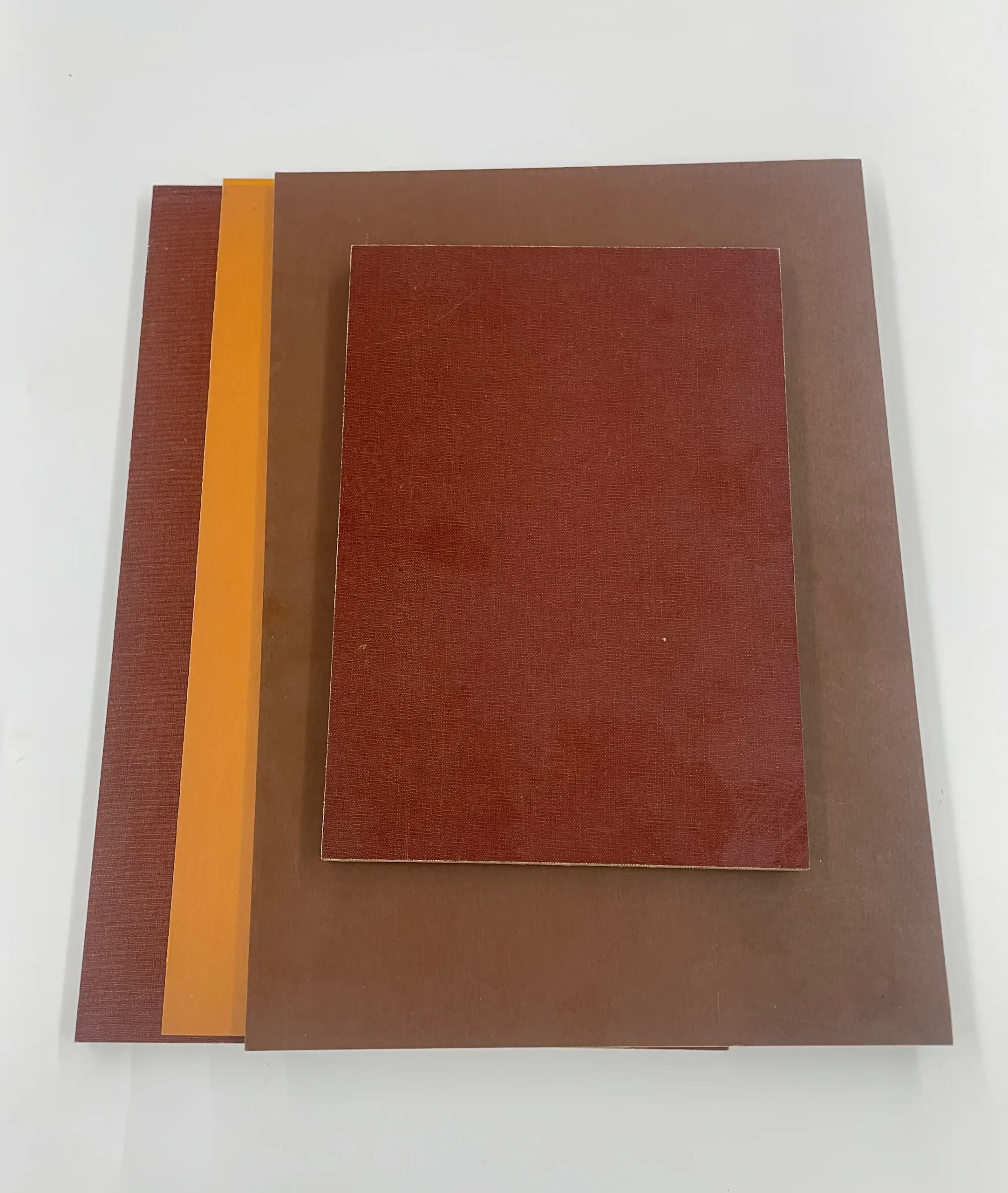
Applications of Bakelite sheets are used in industries to a greater extent. They are excellent electrical insulators and strong mechanically. These sheets are used in switchgear, machines, transformers, and custom-made parts.
Bakelite sheets are still in use as many industries require their performance in critical conditions. Resistant to pressure, heat, and normal industrial use. Numerous grades to suit various working requirements.
This article will help to spell out the reason why Bakelite sheets are still important. It will discuss their types, material properties, working conditions, design considerations and major industrial applications.
Key Highlights:
- Know the reasons for continuing the use of Bakelite sheets in electrical, mechanical and fabrication applications.
- Get the distinction between Bakelite sheets, Phenolic sheets and Phenolic Laminates.
- Know more about the influence of resin type, reinforcement material and sheet structure in performance.
- Know the different types of Bakelite and their applications in industries.
- Determine how selection of proper design and material can increase part performance.
Why Bakelite Sheets Still Matter in Modern Engineering?
Bakelite sheets have been in use for many decades in the engineering world. They have continued to be used due to their ability to provide a solution to common industrial problems. Although many new materials have come onto the market today, Bakelite continues to be used in factories and workshops.
1) Proven Industrial Reliability
Bakelite sheets have been used industrially for long time. They have applications in fabricated parts, machines, and electrical systems. They have performed in a wide variety of working environments.
Unlike common plastics the material does not soften in response to the normal operating heat. It also retains its shape when under pressure. This is great for components that require continuous operation for extended periods of time.
Many manufacturers opt for using Bakelite as it is a known material. Engineers are familiar with its limitations and functioning. This minimizes issues in the design and production phases of the parts.
2) Stable Performance Under Compression
Pressure is a common factor for many machine parts while they are in use. Bakelite sheets are good for these conditions. They can carry loads without sudden deformations.
This attribute renders them suitable for use in parts like spacers, supports, guides etc. Pressure is applied for a long time and the sheet does not soften.
However, each application should be made in the appropriate grade. Paper-based grade can be adequate for electrical components, but may not be appropriate for heavy mechanical loads.
3) Insulation and Mechanical Support in One Material
One of the greatest benefits of Bakelite sheets is they offer electrical insulation and physical support. A number of applications require both at once!
An example of this is electrical equipment, which will frequently have parts that need to separate the live parts and then retain them. Bakelite sheets are suitable for this purpose.
This eliminates the necessity for different materials to be used for insulation and support. It also aids in simplifying the design of components.
4) Availability in Multiple Reinforcement Grades
There are various grades of Bakelite sheets. Different reinforcement material is used for each grade. These materials alter the strength, machining characteristics and the working range of the sheet.
Most often, paper-reinforced sheets are employed in electrical applications. Fabrics of cotton are favored for stronger mechanical components. Higher temperatures and strengths require glass-reinforced grades.
This range helps the engineer to select the sheet to be used depending on the actual working conditions.
5) Practical Cost Compared with Advanced Laminates
High performance materials are available. They can often be more costly, however. Bakelite sheets are ideal for many industrial applications.
They offer adequate strength and insulation for a reasonable price. This renders them suitable for production parts, repair work and custom components.
In most instances, there is no discernible advantage to spending more for a material. The same job can be done with Bakelite, which costs less for the material.
6) Suitability for Precision-Machined Components
Bakelite sheets can be cut, drilled and molded to various designs. This is beneficial for the use of custom manufactured industrial components.
They are used by manufacturers for templates, machine guides, fixtures and electrical parts. The cracks or edge damage can be avoided by using proper cutting tools and cutting methods.
Their ability to maintain accurate dimensions after machining makes them valuable in precision work.
Bakelite Sheet, Phenolic Sheet, or Phenolic Laminate?
Similar products are sometimes referred to as Bakelite sheet, phenolic sheet or phenolic laminate. This can cause a problem for buyer and engineer. In many instances, the same group of thermosetting materials is designated by several of these names.
But it may vary in material. The final properties of the sheet can be varied by the type of resin, the type of reinforcement and the method of manufacture.
1) Bakelite as an Original Trade Name
One of the first commercial phenolic plastics was known as Bakelite. It was developed during the early 1900’s. This material was popular because it was heat resistant and an electrical insulator.
The name was gradually accepted. The term Bakelite began to be used for many phenolic products.
The word is nowadays used in a general manner. Not always to the brand Bakelite.
2) Modern Use of the Term “Bakelite Sheet”
In the industrial side the term Bakelite sheet typically refers to a phenolic laminate sheet. It is prepared by mixing of the phenolic resin with a base material.
The base material can be paper, cotton fabric or glass fabric. The performance of the sheet varies depending on the type of base material.
For instance, a paper-based sheet is used for electrical parts. Mechanical components are better covered with a sheet of cotton fabric.
3) Difference Between Molded Bakelite and Laminated Phenolic Material
Traditionally, Bakelite products were shaped by molding the resin under heat and pressure. The result was solid parts of a fixed shape.
Most often, modern phenolic sheets are laminated. Resin is soaked into the layers of reinforcement material. The layers are pressed together to create sheets.
The resin chemistry of the two materials is comparable. But their construction and applications may vary.
The molded parts are produced in a specific shape. Laminated sheets are fabricated to be cut, drilled and machined into custom parts.
4) Why Product Names Vary Between Markets?
Similar materials may have varying names from an individual supplier. Other markets prefer the term Bakelite. Still others refer to it as phenolic laminate or industrial laminate.
The name of the sheet alone is not indicative of the quality of the sheet. The same name can be used for two different products that have different reinforcement types and performance.
This buyer should review the technical specifications prior to buying.
5) Importance of Confirming the Reinforcement Grade
The grade of reinforcement has an important effect on the performance of sheets. It impacts strength, machining quality, heat response and electrical use.
A paper reinforced sheet might not be suitable for a heavy mechanical application. Consider using a grade of cotton or glass fabric.
Hence, the selection of grade should be made depending on the working condition by the engineer. The name of the product is not the sole criteria.
The Three Elements That Define Bakelite Sheet Performance
There are three key factors in the performance of Bakelite sheet. Type of resin, type of reinforcement material and the quality of lamination. The factors have different impacts on the operation of the sheet in various conditions.
1) Phenolic Resin Chemistry
Bakelite sheets are made from phenolic resin as the primary constituent. A thermosetting resin. This translates to becoming tough once the heat is applied and not being able to become liquid again.
Resin results in good internal structure. It enhances the resistance to heat, pressure and many industrial fluids. It also imparts electrical insulating properties to the material.
The resin quality has an impact on the quality of the sheet. A well constructed sheet will retain its form and will function more efficiently in the long run.
2) Reinforcement Substrate
The layer of reinforcement provides the necessary strength to the sheet. Various types of base material are available for various applications.
Electrical parts are typically reinforced with paper. It is a good insulating material and can be used in light duty applications.
Better mechanical strength is provided by cotton fabric reinforcement. Used for gears, guides and machine parts.
Glass fabric reinforcement gives increased strength and a higher resistance to heat. It is chosen for more challenging industrial environments.
3) Lamination Density
The quality of lamination influences the strength and stability of the sheet. In production, the layers are pressed under controlled conditions with resin to form layers of reinforcement.
The uniform sheet is achieved by the application of good pressures and proper distribution of resin. If the lamination is not done well, weak spots within the material can be formed.
Well laminated Bakelite sheet is a material with better dimensional stability. It can retain its shape in the machining process and normal use.
Decoding the Main Bakelite Sheet Grade Families
There are various grades of bakelite sheets. Different grades for different working conditions. These grades vary primarily in the reinforcement material they use in manufacturing.
It is crucial to select the right grade. A sheet which is suitable for electrical purposes may not be suitable for heavy mechanical parts.
1) Paper-Reinforced Grades
One of the most common forms of Bakelite sheets are paper-reinforced Bakelite sheets. These are primarily employed where the requirement is for electrical insulation.
They are a well-insulated sheet and easy to machine. They can be used for insulating plates, terminal boards and small fabricated parts.
They also offer a low impact, low load application at a reduced cost.
2) Fine-Weave Cotton Fabric Grades
The fine-weave cotton fabric grades offer a greater mechanical strength than paper-based sheets. Cotton layers enhance the toughness, and the machining quality.
These sheets are required when the parts need to have smooth surface finishes and exact shapes. They can be used in parts that have intricate profiles and frequent mechanical applications.
They are frequently chosen for machine components where strength and desirable surface finish are desired.
3) Coarse-Weave Cotton or Canvas Grades
The Bakelite sheets are made out of canvas, which are more suited for heavier mechanical jobs. The greater number of layers of fabric increase impact resistance and load handling.
They are generally employed in gears, rollers, wear plates and machine guides. Pressure is applied to these parts, and they move many times.
This is the preferred grade for tough applications where a good surface finish is not essential.
4) Glass-Reinforced Phenolic Grades
Glass reinforced phenolic sheets are manufactured for the most demanding applications. The material is supported by Glass fabric, which provides increased strength and heat resistance.
Sheets are used where normal grades would not be sufficient. Ideal for electrical equipment, high temperature zones and heavy duty parts.
5) Modified and Specialty Grades
Bakelite sheets are manufactured with certain properties for particular applications. These are low moistures, flame resistant, oil resistant and anti-static grades.
These materials are suitable for special working environments. They are employed when it is not possible to meet the required conditions in standard grades.
The knowledge of the grade type assist the engineer in selecting the appropriate sheet for the application. If a right choice is made, the parts will perform better and replacement issues will be minimized.
How Bakelite Sheets Respond to Real Operating Conditions?
Bakelite sheets are employed in a lot of working environments. They perform according to the heat, moisture, electric stress, mechanical pressure, and chemical contact. Knowing these factors is important when deciding on the right grade.
1) Continuous and Intermittent Heat
Bakelite sheets can withstand the normal industrial temperature, which many common plastics are unable to. They retain their shape due to the fact that the phenolic resin used does not melt easily.
Exposure to high temperatures over time may cause a decrease in the strength of the material. May harden and become brittle.
Brief exposure to warm temperatures may not be harmful. But always the correct grade has to be the same as the operating temperature.
2) Moisture and Humidity
Moisture can impact Bakelite sheets, particularly at exposed edges. If surface is not taken care of, the reinforcement material may pick up some moisture.
Some fabric-based grades do not react to moisture as much as do paper-based grades. Moisture related problems are minimized with proper storage and finishing.
Engineers will often opt for a grade that is more moisture resistant for outdoor or humid environments.
3) Electrical Stress
The Bakelite sheets are used widely due to the excellent electrical insulation. They are applied in the components that are separating the electrical components and preventing unwanted current flow.
Surfaces play an important role in creating safe electrical performance. Damage at edges, moisture and dust can diminish insulation value.
The voltage level and operating conditions should be used to determine the correct grade.
4) Mechanical Loading
Bakelite sheets can withstand compression and normal mechanical stress. They are used in guides, supports and parts of machines.
But it is tough than metals. Cracks can result from a strong impact or sudden force.
The good design and the selection of proper grades prevent failure during use.
5) Oils, Fuels, and Industrial Chemicals
Good resistance to oils and industrial fluids is found in many grades of Bakelite. These thus find applications in workshops and machinery.
Chemical resistance is however dependent on the type of reinforcement and type of chemical. Solvents may cause the resin to be affected or to become weak.
Testing is recommended where the sheet is to be in contact with strong chemicals for extended periods of time.
6) Friction and Wear
A number of Bakelite grades are suitable for low-speed sliding. They are applied for guides, bushes, wear plates and parts of machine.
Fabric-based grades usually provide better wear resistance than paper-based grades. Moving parts benefit from the correct grade and enjoy a longer service life.
When operating within design limits, Bakelite sheets will do a good job. Safe and long lasting operation is important with correct material selection.
Designing Components Around Bakelite’s Strengths
Bakelite is used to produce a range of industrial components that can be manufactured from bakelite sheet. Cracking, damage and premature failure can be avoided with good design. Before designing parts, engineers need to take into account the characteristics of the material.
1) Choosing Practical Wall Thicknesses
Very thin sections are susceptible to impact or pressure. Unlike metals, Bakelite will not bend. Can fracture if too much is used.
The thickness of a part is a factor that allows the part to accept normal loads. The design should not be very thin or have unsupported sections.
2) Working with Holes and Fasteners
Careful design of holes and mounting points is required. If holes are drilled too near the edge, the sheet will be weakened.
Correct clearance between edge of parts and hole minimizes crack formation around holes. Washers and appropriate fasteners can also distribute the load over a greater surface area.
3) Reducing Stress Concentration
Stress points can be produced in Bakelite components by sharp corners. During use, cracks can occur in these areas.
Rounded corners and smooth transitions help to minimize this risk. By making a few changes to the design, the strength of the finished component can be improved.
4) Accounting for Material Direction
The Bakelite sheets consist of many layers of reinforcement. These layers may have an orientation which influences strength and machining properties.
When making cuts and making parts, engineers should take the sheet direction into account. The correct placement promotes better performance of the component.
5) Protecting Exposed Edges
Some applications may require additional protection of exposed edges. Over time moisture can seep in through unfinished edges.
Sealing, coating or polishing may help to protect the material. This is particularly helpful for humid conditions or outdoor applications.
Bakelite components are designed to operate safely using good design practices. The thickness, shape, and finish of the part can all be changed to enhance the performance of the finished product.
Industrial Roles Where Bakelite Has a Clear Advantage
The industries that require the material to serve more than one purpose use bakelite sheets. They can give insulation, support, and easiness in machining in one material. They are used in various applications based upon individual requirements.
1) When Electrical Isolation Must Also Support a Load
That’s because many electrical systems require components that provide a barrier to current, but secure the components at the same time. These applications can be made using Bakelite sheets.
They are used as insulating bases, in terminal supports, switchgear barriers and parts of transformers. These components should remain robust in the vicinity of electrical components.
2) When Metal Would Create Noise, Corrosion, or Electrical Risk
In industrial equipment, metal parts are not necessarily the best. In some cases, metal can cause electric issues, corrosion or unwanted noises.
In such cases guides, bushes, rollers and wear strips are made of Bakelite sheets. They offer good alternatives in situations where electrical insulation or reduced friction is desired.
They are lighter than their counterparts, and are resistant to rust, which can also be helpful in some machines.
3) When Low-Friction Movement Is More Important Than High Impact Strength
Certain components of the machine require smooth motion instead of high power. Bakelite is an excellent material for use in low speed moving applications.
Applied in sliding surfaces, small gear and parts of textile machinery. Fabric-reinforced grades may be selected due to their increased wear resistance.
These parts can minimize wear between the moving surfaces and prevent machine downtime.
4) When Repeated Machining of Custom Components Is Required
There are many industries that need small numbers of custom parts. Bakelite sheets are used because they can be cut and machined to various shapes.
They are employed to make jigs, fixtures, templates and inspection tools. Manufacturers are able to make accurate parts using inexpensive materials.
This makes Bakelite useful for repair work and for special machine requirements.
5) When Cost Must Be Controlled Without Using Basic Plastic
For some applications, the strength and heat resistance of low-cost plastics may not be sufficient. In these areas performance of Bakelite is better.
Most frequently chosen when a project calls for a higher strength material but avoids the cost of engineering composites.
Bakelite offers a good compromise between cost and performance for a wide variety of industrial components.
FAQs:
1) Is Bakelite Sheet the Same as Phenolic Laminate?
Yes, in many industrial markets Bakelite sheet is synonymous to Phenolic laminate sheets. The principal binder for both materials is phenolic resin.
The specific product, however, may vary. The reinforcement material and manufacturing process determine the properties of the sheet.
2) Does Every Bakelite Sheet Contain Paper Reinforcement?
No, not all Bakelite sheets are paper reinforced. The base materials are different for each grade.
Common reinforcement materials are paper, cotton fabric, and glass fabric. They’re used for different purposes in each type.
3) Which Bakelite Grade Is Best for Mechanical Parts?
For mechanical parts, commonly made of cotton fabric or canvas. Compared to standard paper grades, they offer improved strength and wear resistance.
Which is the correct choice depends on the load, speed, temperature and surrounding environment of the part.
4) Can Bakelite Sheets Be Used in Transformer Oil?
Some grades of Bakelite can be used for transformer oil application. Numerous electrical grade phenolic laminates are oil resistant.
The chosen grade should be always the same for the particular oil and operating conditions.
5) Why Do Bakelite Sheets Sometimes Chip During Drilling?
Bakelite is a hard, somewhat brittle material. Cracks and chips around holes can be caused by incorrect drilling methods.
Damage can be minimised by using appropriate tools, correct drilling speed and proper support during drilling.
6) Can Bakelite Sheets Be Laser Cut?
However, some phenolic materials can be cut with a laser though this is not always desirable. The heat of the laser may cause undesirable edges to be formed due to the heat affecting the resin.
Mechanical machining techniques are generally applied for improved control and finish.
7) Does Bakelite Absorb Moisture Through Its Edges?
Yes, it is possible for moisture to penetrate through the exposed edges. This is dependent on the type of reinforcement and the environment.
These can be minimised if the sealing and finishing is done properly.
8) How Can Buyers Identify a Low-Quality Laminated Sheet?
Low quality sheets can have an uneven surface, a poor finish, defects or uneven thickness.
The buyers should confirm the grade of material, thickness precision, manufacturer information, technical data before buying.
Final Thoughts!
Today, Bakelite sheets are still being utilized in various industries. They have been used for a long time and are proven to be valuable in practical applications.
They can be used for making electrical components, components for various machines, and custom-made products. There are varying grades available so that engineers can choose which is best for their project.
When selecting the Bakelite sheet, the name alone doesn’t suffice. Type of reinforcement, thickness and production quality are important.
If the design is correct, and the grade is properly placed, good performance may be expected for many years. This makes Bakelite sheets as a valuable material for numerous industrial applications.
If you have any questions about Bakelite sheets and want to find the appropriate option for your application, please feel free to contact info@differentplastic.com. We are always at your service, providing you with product details, grade selection, technical support etc.


