
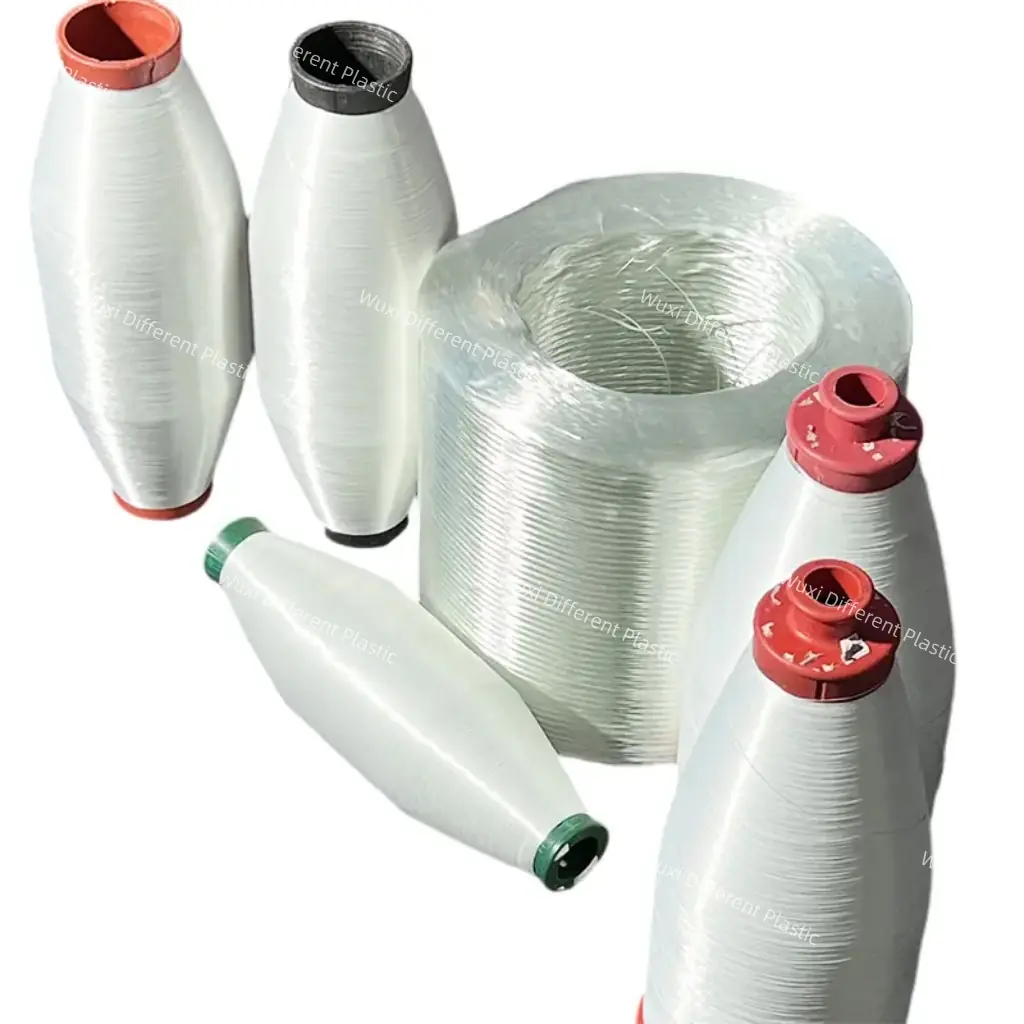
Fiberglass yarn is a technical textile for challenging industrial applications. It is used when the following are required: high strength, heat resistance, electrical insulation, and dimensional stability. Unlike the traditional yarns, fiberglass yarn is designed to perform, not to be comfortable.
This material is essential to several industries. It is used for insulation in electrical industries for wires, motors and transformer. It is used as a reinforcement in plastics, panels, and structure in composites. It is applied in the building industry for insulation, fireproofing and coatings. It is lightweight and heat-resistant, used in such sectors as Aerospace and Automotive. Its unique properties are also used in industrial filtration, thermal textiles and mechanical reinforcement.
The fiberglass yarn has the advantages of durability, versatility and chemical resistance. It is essential in applications requiring heat and mechanical resistance. Choosing the correct yarn provides reliability of products in high temperature, electrical load or mechanical stresses.
Key Highlights!
- Fiberglass yarn is a continuous strand made of fine glass fibers with the desired properties for strength, thermal resistance and dimensional stability.
- It is particularly good at high temperatures and is a good electric insulator for motors, transformers and cables.
- The yarn is chemically resistant and non-combustible, which can provide the necessary fireproof properties for textiles, coatings and various industries.
- Excellent compatibility with resins for composite reinforcement is achieved by proper sizing and filament control.
- Fiberglass yarn can be made into woven fabrics, tapes, braided sleeves, laminates, and pultruded components, which have various industrial applications.
Fiberglass Yarn in Simple Industrial Terms
Fiberglass yarn is a yarn with continuous fine glass fibres. The filaments are very thin and are in microns. The yarns are made by combining several filaments. This architecture provides for the special strength and flexibility of the yarn.
Fiberglass yarn is not created for comfort or appearance as is regular textile yarn. It’s designed for performance. Can be used at high temperatures, resist chemicals and have dimensional stability. Common yarns can be comfortable and flexible when used in clothing or house linens. Fiberglass yarn is the focus on structural and functional properties.
It is uniquely designed for performance, and will perform in challenging industrial applications. Can reinforce plastics, insulate or serve as a high temperature barrier. The continuous filament construction of the yarn also eliminates weak points. This is more reliable than spun yarns for heavy duty applications.
Fiberglass yarn is a transition product between raw glass fiber and industrial products. It converts soft glass into a comfortable strong fabric shape.
The Building Blocks Behind Fiberglass Yarn Performance
Carefully engineered components combine to give fiberglass yarn its remarkable qualities. For industrial applications, each one of them, from the base filaments to packaging, adds strength, stability and processability.
1) Glass Filament Base
The fine glass filaments are the base of fiberglass yarn. They are very lightweight and possess a high tensile strength. They are heat-resistant and non-flammable, making them ideal for use in high-temperature settings. The type of glass also affects the chemical and electrical properties.
2) Yarn Count and Filament Diameter
Thickness and weight of the yarn depend on the yarn count. The surface smoothness, strength and flexibility of the filament depend on the diameter of the filament. The finer the filament, the better the composites will handle and the more resin it will absorb. The thicker the filaments, the more it will support, but the less flexible.
3) Twist Level and Yarn Stability
The twisting of the filaments makes the yarn more stable. It decreases the separation and breakage of filaments during processing. Good twist to produce good handling properties when weaving and braiding and in other textile operations. It also ensures dimensional stability in the finished product.
4) Surface Sizing Chemistry
Sizing is a finish that is used to protect the filament. It is used to avoid damage and reduce the breakage during processing. Sizing also enhances resin-to-resin bonding property, such as epoxy, polyester or vinyl ester. Proper sizing makes it easier to achieve good mechanical performance and wet-out in composite applications.
5) Package Form and Winding Quality
Fiberglass yarn is available in cones, bobbins or cakes. The key element of smooth processing is uniform winding. It provides uniform tension when weaving, pultrusion or braiding. If winding is not done properly there may be defects or breaking of the filament in the subsequent operations.
From Molten Glass to Industrial Yarn: Production Flow Without Overcomplicating
Fiberglass yarn is the production that converts raw mineral into high performance fiberglass strands which are applied for industrial use. Every step is under tight control to ensure the filament’s strength, uniformity, and functionality. It is important to understand the process to select the appropriate yarn for a particular end use.
Step 1: Glass Batch Melting
The raw materials of silica, alumina, boron, and limestone are carefully measured and mixed to create a glass batch. The batch is fed into a furnace and heated up to temperatures exceeding 1500°C so that it melts into a homogeneous liquid glass. The type of glass varies according to the composition of the batch, and these features in turn will determine the tensile strength, heat resistance, and chemical stability of the final yarn.
Step 2: Drawing Filament through Bushings
Molten glass is pulled through hundreds of small holes in precision bushings. An extremely fine continuous filament is formed in each hole. These filaments are very precisely controlled in diameter, typically in microns. Uniform size helps to maintain uniform strength, flexibility and processability for subsequent processing.
Step 3: Cooling and Sizing Treatment
Filaments are then drawn from the bushings, and are quickly chilled and solidified. A sizing chemical coating is applied immediately after. Sizing will prevent the filaments from abrasion and breaking in the handling process. It also improves adhesion to resin (epoxy, polyester or vinyl ester) in composite applications.
Step 4: Gathering Into Strands
Several filaments are combined together in one strand as per specification of the yarn. The thickness, tensile strength and flexibility are related to the number of filaments in a strand. This step determines the qualities of handling and weaving or braiding or reinforcement of composite materials.
Step 5: Twisting, Winding, and Packaging
The combined strand may be twisted together to give it greater stability and less separation of the filaments. Twisted or untwisted yarn is then wound on cones/bobbins or cakes as per customer’s requirement. Smooth feeding while weaving, pultruding, braiding or other continuous process, reduce breakage and production downtime.
Step 6: Inspection Before Dispatch
Prior to shipment, yarn is carefully inspected for quality. The tests are tensile strength, twist level, moisture content, integrity of the filament and uniformity of the package. Yarn that complies with strict industrial standards is only approved for use. This guarantees reliability and consistent performance in challenging applications.
The making process is a step by step to transform soft molten glass into a high quality and strong yarn. The mechanical strength, thermal stability, chemical resistance and processability of the yarn are enhanced in each of these stages allowing it to be used in a variety of industrial applications.
Performance Profile of Fiberglass Yarn
In the demanding industrial applications that require high performances, fiberglass yarn’s mechanical, thermal, chemical and electrical properties make it an indispensable material. It has a well-defined performance profile that assures reliability and durability of performance in a broad spectrum of products and environments.
1) High Tensile Strength
Fiberglass yarn also has high tensile strength, suitable for fabric reinforcement, tapes or composite materials. It has a high load carrying capacity with little elongation. This property makes it an excellent reinforcement of panels, rods and molded parts in various construction, aerospace and automotive applications.
2) Heat Resistance
The yarn has good stability and strength even at a high temperature. Organic fibers tend to decompose and burn when heated, whereas fiberglass yarn can withstand high temperatures. It is applicable to insulation sheets, welding blankets, thermal barrier and fireproof clothes.
3) Electrical Insulation
Fiberglass yarn has good electrical insulating property. It is used extensively in motors, transformers, circuit boards and cable insulation. It also insulation characteristics help to avoid electrical failures and short circuits. It also can be used in conjunction with other coatings or varnishes to improve safety and performance in high-voltage applications.
4) Fire Resistance
Fiberglass yarn is non-combustible and will not spread fire. This quality is important for developing flame retardant textiles, coatings and panels. It guarantees that the construction, aerospace and electrical industry are safe to use, minimizing fire damage risks.
5) Dimensional Stability
Yarn shows low elongation and negligible contraction with mechanical load and thermal stress. Provides necessary product stability and performance over time. Precision and consistency are of great significance in composites, insulation fabrics, laminated constructions etc. in which dimensional stability is of paramount importance.
6) Chemical Resistance
Many oils, solvents, acids, alkalis and industrial chemicals do not affect fiberglass yarn. This renders it appropriate for use for chemical processing equipment, protective textiles and gaskets. It is chemically stable and increases the useful life of products in extreme or corrosive conditions.
7) Resin Compatibility
Well-sized fiberglass yarns are compatible with thermoset resins like epoxy, polyester and vinyl ester. This compatibility results in full wet-out and good bonding during the manufacture of composites. It increases the mechanical characteristics of panels, rods, laminates and custom molded components.
Fiberglass yarn has a strong performance and is suitable for industries requiring high strength, resistance to heat, electrical insulation, and chemical resistance. It has a wide range of capabilities, serving the unique needs of high-performance applications in various industries.
Where Fiberglass Yarn Becomes a Finished Product
Fiberglass yarn is raw materials for the production of many industrial products. It can be transformed to suit various applications such as insulation, reinforcement or thermal protection. So the yarn performance in the final product will be as expected with proper processing.
1) Woven Fiberglass Fabrics
Fabrics made from fiberglass yarn are used for composite reinforcement, fabric sheets for insulation and thermal barrier. The woven structure offers even strength in all directions. The fabrics are used as substrates to coatings/laminates for better fire resistance and mechanical stability. They are employed in panels for building, in parts for aircraft and in heat shields.
2) Fiberglass Tapes
Fiberglass yarn is made into tapes for electrical wrapping, pipe insulation and heat shielding. Tapes provide accurate thickness. They are both flexible and offer mechanical support. These tapes have high-temperature resistant coatings that make them durable in harsh conditions.
3) Braided Sleeves and Cords
Fiberglass yarn is braided into sleeves and cords for protection of cables, hose reinforcement and sealing. Braided structures can expand and shrink without losing strength. They are resistant to abrasion, heat and chemicals and can be used in automotive, industrial and electrical applications.
4) PCB and Electrical Laminates
Glass fabric is made of fiberglass yarn, and used in PCBs and laminates like FR4 and G10. The yarn is used to support mechanical strength and act as a dielectric insulation. In electronics, laminates support circuit boards. They provide reliable performance in thermal environments.
5) Pultruded and Molded Composite Parts
Pultruded Rods, Profiles, Channels and Molded components are reinforced with fiberglass yarn. The yarn is embedded in resin, making it extremely strong and light. They are used for transportation and machine structural components, custom composite profiles and parts.
6) Industrial Filtration and Thermal Textiles
The filter bags, welding blankets, insulation cover and heat-resistant fabrics use texturized fiberglass yarn. It is both heat and chemical resistant and is used in harsh industrial environments. These textiles are able to resist the high temperature and the abrasive condition.
Buying Guide: Matching Fiberglass Yarn to End-Use Requirements
In an industrial application, the choice of fiberglass yarn is critical to ensure the best performance and durability.
1) For Electrical Insulation
E glass yarn is used in electrical applications because of its electrical properties. The heat resistance and varnishing/resin resistance are important. Sizing ensures safe insulation in transformers, motors and cables.
2) For Composite Reinforcement
The Yarn should be compatible to the selected resin system (epoxy, polyester or vinyl ester). Resin uptake, tensile strength and diameter of the filament affect composite properties. Choosing the right yarns enhances the final product’s structural strength and longevity.
3) For Heat-Resistant Textiles
Texturized fiberglass yarn can be used for high temperature applications. Take coating compatibility and max thermal exposure into account. For welding blankets, insulation covers, and heat shields, yarns are needed that are strong and retain their shape with repeated heating.
4) For Washing and Drying
The twist level, yarn count and quality of the winding is important. Breakage resistance is high to allow smooth weaving. Defects and downtime in textile operations are avoided due to consistent tension and uniformity.
5) For Chemical Environments
Exposure to oils, solvents and industrial chemicals should not affect the glass type. Appropriate selection avoids degradation. It also prolongs product life. The applications are chemical-resistant gaskets and seals and protective textiles.
6) For Cost-Sensitive Production
Match the yarn properties with the requirements of the product. Think about consistency and processability of the supply. Selecting the appropriate yarn minimizes waste, boosts productivity, and decreases the production expense without sacrificing quality.
FAQs:
1) What is fiberglass yarn made of?
Fiberglass yarn is made from continuous strands of fine glass filaments. The filaments are formed by drawing them from molten glass and then applying a protective sizing. The yarn can be thick or thin, of single or multiple filaments and with different treatment on the surface, depending on the use for which it is produced.
2) Is fiberglass yarn heat resistant?
Yes, fiberglass yarn is able to withstand high temperature without losing strength or shape. It retains performance in areas where organic fibers would burn. Thus it is applicable to insulation, thermal textiles and high-temperature composites.
3) What’s the difference between fiberglass yarn & fiberglass roving?
Fiberglass yarn is twisted or untwisted fine filament. It is useful in making fiberglass textiles. Fiberglass roving (thicker) has several yarns collected together. It is mostly used for composite reinforcement. Yarn is more flexible for weaving, braiding or insulation purposes, while roving is utilized where bulk and structural strength is required.
4) Can fiberglass yarn be used for electrical insulation?
Yes, particularly E-glass yarn. Has very good electric and heat insulation properties. It is used in printed circuit boards, cable wraps, transformers and motor. Correct sizing and coating yield better adhesion to varnishes and resins.
5) Can you use fiberglass yarn in epoxy composites?
Yes, fiberglass yarns will bond with thermoset resins such as epoxy. The sizing properties of the yarn provide a good wet-out and mechanical strength in composites. Strengthens panels, rods and laminates, etc.
Final Thoughts!
Fiberglass yarn is an industrial material that has a wide variety of uses and high performance. It is essential in various industries due to its strength, heat resistance, electrical insulation and dimensional stability. It finds use in composites, insulation, electrical and thermal textiles, and filters.
Choosing the appropriate fiberglass yarn is very essential. Take into account factors like filament diameter, twist, sizing, resin compatibility and winding quality. A careful selection will provide the reliability, efficiency and longevity of the final product.
High quality yarns can improve products and minimise product failures in challenging environments. It is made using properties which are designed to meet the strict requirements of the industries for safety, mechanical and thermal properties.
Fiberglass yarn continues to be a critical material for innovation. It enables more effective and robust composites, safer electrical systems and tougher heat-resistant fabrics. Knowing its properties and uses makes it possible to use it optimally in industrial and technical uses.
Get in touch with us at info@differentplastic.com. to learn more about our high-quality fiberglass yarn and tailored industrial solutions. Talk with our team today about your particular needs. Our experts will tell you which of our products will be perfect for your applications.


