
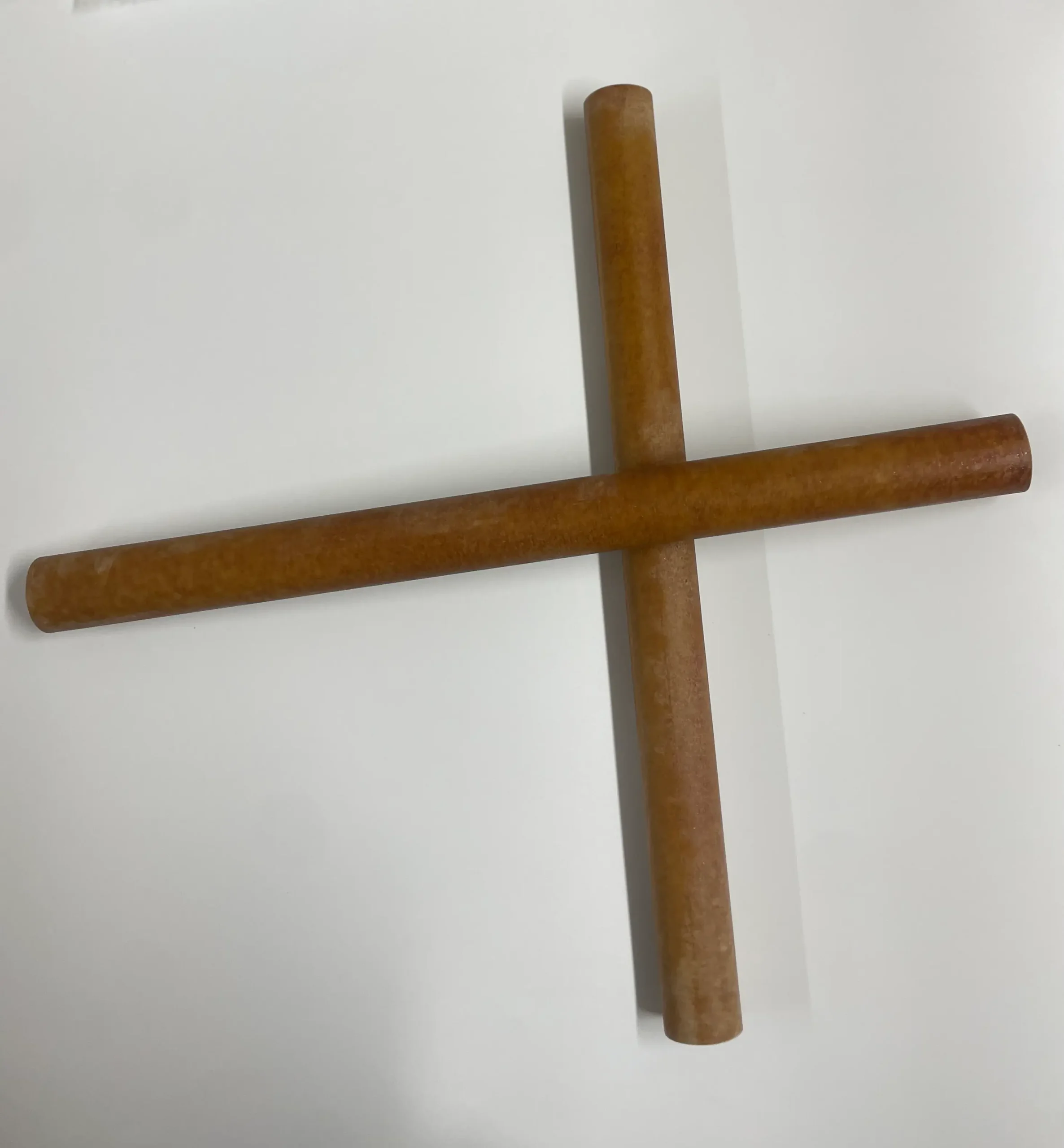
Phenolic tubes are advanced composite material which are used in various industrial, electrical and mechanical applications. They are made of phenolic resin, a thermosetting polymer, as a matrix and reinforced with different materials, usually with paper, cotton, or glass fabric. It creates a rigid and strong body that is able to withstand tough conditions.
Phenolic materials have long been used in industrial applications because of their thermal, electrical and mechanical properties. Phenolic tubes are a subset of these materials due to their tube-like structure, enabling them to be used in specific applications like insulation sleeves, bushings and supports.
They are widely used in various sectors, including electrical insulation, automotive parts, and aerospace, due to their reliability in critical applications. Phenolic tubes are preferred by engineers and manufacturers due to their performance, cost and machinability.
Here, we take an in-depth look at phenolic tubes, covering their materials, production methods, types, properties, uses, benefits, drawbacks and the future. Readers will know everything they need to know about why phenolic tubes are still a popular choice in today’s industrial systems.
What is a Phenolic Tube?
A phenolic tube is a composite tubular product that is produced by saturating a reinforcement with phenolic resin and then curing it under heat and pressure. This produces a dimensionally stable, rigid tube with mechanical and electrical properties.
Phenolic tubes are comprised of two main elements:
- Phenolic resin: The matrix
- Reinforcement: Offers strength
The reinforcement can be different depending on the use case. Paper fabric tubes are used in electrical applications, cotton fabric tubes for strength, and glass fabric tubes for harsh conditions.
Phenolic tubes are designed for tubular applications, unlike flat sheets or solid rods of phenolic materials, which can be used for insulating sleeves, spacers and housings. The tubular form provides weight savings without compromising strength.
Phenolic tubes come in a variety of sizes, such as:
- Thin-walled tubes for insulation
- Thick-walled tubes for structural applications
- Specific sizes and lengths to meet industry needs
They can be used for conventional and specialised applications.
Composition and Raw Materials
Phenolic Resin
Phenolic resin is a type of synthetic resin made from the reaction of phenol and formaldehyde. It’s a thermosetting resin, which means it doesn’t melt or soften after it’s cured.
Key properties include:
- High heat resistance
- Strong adhesion
- Chemical stability
- Excellent electrical insulation
This resin is the matrix of phenolic tubes, gluing the reinforcement materials together.
Reinforcement Materials
Paper-based tubes
These are reinforced with multiple layers of paper and are well suited for electrical insulation as they are inexpensive and have good insulation properties.
Cotton cloth-based tubes
The use of cotton cloth offers better mechanical properties and wear resistance, making them ideal for carrying loads.
Glass fabric-based tubes
Glass fiber reinforcement improves thermal stability and electrical insulation properties, and makes them ideal for high temperature and high voltage applications.
Additives and Fillers
Additives to improve properties include:
- Flame retardants for fire safety
- Chemical-resistant compounds for harsh environments
- Lubricants to improve wear resistance
- These enhance the product for particular applications.
Manufacturing Process
1)Resin Impregnation
The first step in the process is to impregnate the reinforcement material (paper, cotton or glass fabric) with phenolic resin. It is important that the resin be evenly distributed.
2)Rolling or Wrapping
The resin, once impregnated, is then rolled onto a mandrel to create a cylinder. This controls the tube size and wall thickness.
3)Curing Process
The wound tube is cured with heat and pressure. Here, the resin cures, forming a solid structure.
4)Finishing and Machining
Once cured, the tube is stripped from the mandrel and then:
- Cutting to length
- Grinding for precision
- Polishing for smooth surfaces
This results in a high-quality tube for industry use.
Types of Phenolic Tubes
1)Paper Phenolic Tubes
Paper phenolic tubes are created by saturating paper with phenolic resin, and are lightweight and inexpensive. They have good dielectric characteristics, making them suitable as insulation. They are widely used in transformers and switchgear. But they have moderate strength, restricting their use to non-heavy-duty applications.
2)Cotton Phenolic Tubes
Cotton phenolic tubes are reinforced with woven cotton cloth, offering enhanced strength and resilience. They are suitable for mechanical parts such as bushings, bearings and spacers. They can also withstand wear and friction for moving components. They’re also easy to machine for complex parts.
3)Glass Phenolic Tubes
Glass phenolic tubes are glass fiber reinforced for enhanced thermal and electrical properties. They do not degrade at high temperatures and voltages. These are commonly used in aviation and other high-performance electrical applications. They are expensive, but very reliable and safe.
4)Specialty and Custom Tubes
Specialty phenolic tubes have unique features for various industrial uses. They can be flame resistant, chemical resistant, or even those used in the aerospace industry. A variety of materials and sizes are available to match the application. These tubes provide optimum performance in special conditions.
Properties and Characteristics
1)Electrical Insulation
Phenolic tubes are good insulators, with a high dielectric constant. They have a high resistance to tracking and arcing in high voltage circuits. This ensures safety and reliability of electrical components. They are very often found in transformers and circuits.
2)Mechanical Strength
Phenolic tubes, especially reinforced, are very load-bearing. They have high
Phenolic tubes are suitable to shape at high temperature. Thermosetting structure prevents them from becoming soft. This is essential for applications in electronics and car industry. As they age, they are not affected by prolonged exposure to heat.
3)Thermal Resistance
Phenolic tubes do not deform at high temperatures. They are not softened as they are thermosetting. This is essential for electrical parts and cars. They have a high capacity of keeping their properties over time at high temperatures.
4)Chemical Resistance
Oils, fuels and other solvents are not a problem for these products. Therefore, they can be used in corrosive environments. This makes them last longer. They are applied in fields such as industry and automotive.
5)Dimensional Stability
Phenolic tubes are not affected by pressure or temperature changes; they are not going to deform or shrink. This guarantees reliable performance in critical applications. They don’t distort, shrink or swell with time. This is crucial for reliability.
6)Lightweight Yet Durable
The low weight and high strength make phenolic tubes easy to install. They are also strong and durable, with a long lifespan. The light weight enhances system performance. This is useful in the aerospace industry, as well as in automotive applications.
Applications for Phenolic Tubes
1)Electrical and Electronics Industry
Phenolic tubes have excellent insulation properties and are used as protective sleeve, coil forms or as insulating part in transformers. They help to reduce leakage and maintain safety at high voltages. Their thermal and arc resistance ensures safe and efficient use in circuit breakers and switches. These characteristics are crucial for electrical systems.
2)Mechanical Engineering
Mechanical applications include using phenolic tubes as bushings, spacers and wear parts. They are able to withstand friction and mechanical loads, allowing them to be used in moving components. Their wear resistance and low friction enhance machine performance and longevity. They are found in industrial machinery and machinery.
3)Automotive Industry
Phenolic tubes are used in the automotive industry for insulation, structural support and heat-resistant parts. They prevent electrical and thermal damage of sensitive components. Their low weight aids in fuel economy. They also improve safety through their stability in extreme conditions.
4)Aerospace Applications
Phenolic tubes are lightweight and high-performance, making them ideal for aerospace applications. These are applied in aircraft insulation and structures. Their stability under high stress and temperatures guarantees performance under extreme conditions. This makes them ideal for cutting-edge aerospace and military uses.
5)Industrial Equipment
Phenolic tubes are commonly used in industrial equipment for housings and structural parts. They are resistant to abrasion, chemicals and mechanical load. They are resistant to wear and abrasion, offering longevity in tough industrial applications. They are suitable for use in processing and manufacturing equipment.
Benefits of Phenolic Tubes
1)Excellent Electrical Insulation
Thanks to their excellent resistance to electrical breakdown, phenolic tubes are perfect for electrical applications. They inhibit the flow of current and are resistant to electrical breakdown. So they can be safely and reliably used in high-voltage applications. They have consistent insulating performance.
2)High Mechanical Strength
The tubes offer excellent load-bearing properties, particularly when reinforced with fabric or glass fibers. They are resistant to wear, impact and mechanical stress under harsh conditions. Their stiffness ensures that the structure remains intact with wear and tear. They are ideal for industrial and mechanical use.
3)Affordable Alternative to Composites
Phenolic tubes provide good performance at a competitive price to advanced composites. They are both cost-effective and versatile. This makes them viable for use on a large scale. They also have a long service life which minimizes replacement expenses.
4)Easy to Machine and Customize
Phenolic tubes are readily Machin able with standard equipment. Enabling the production of tailored parts for various uses. Machinability speeds up manufacturing and lowers costs. Tailored designs increase their industrial applications.
5)Good Thermal Resistance
Phenolic tubes maintain their shape and strength under high temperatures. Their thermosetting properties ensure they don’t melt. They can be used in applications exposed to continuous heat. They perform well even under harsh conditions.
These properties make phenolic tubes a popular choice for various applications.
Limitations and Disadvantages
1)Can Be Brittle Under Extreme Stress
Phenolic tubes can be brittle under extreme or impact stress. They are not as impact resistant as some other composites. This prevents them from being used in highly flexible products. They can be damaged if not handled with care.
2)Some Grades Absorb Moisture
Some types of phenolic, particularly paper-based ones, may absorb moisture. This might impact their electrical and mechanical performance. This can be reduced by good packaging and storage practices. Different grades have varying degrees of moisture resistance.
3)Limited Flexibility
Phenolic tubes are stiff and not as flexible as thermoplastics. They are prone to break if flexed. They’re not suitable for flexible applications. They are most suitable for rigid or structural parts.
4)May Not Perform as Well as Advanced Composites
Phenolic tubes are safe, but may not be as robust as advanced composites in extreme conditions. Alternative materials such as epoxy or carbon fiber may provide stronger and more durable options. But these can be costlier. Phenolic tubes are a good option for most applications.
Comparison with Other Materials
Phenolic Tubes vs PVC Tubes
Phenolic is stronger and has a higher temperature tolerance than PVC.
Phenolic Tubes vs Fiberglass Tubes
Fiberglass tubes have better mechanical properties, but phenolic tubes can be better when it comes to electrical insulation.
Phenolic Tubes vs Epoxy Tubes
Epoxy tubes are better performing but costlier, so phenolic tubes are a good substitute.
| Property / Feature | Phenolic Tubes | PVC Tubes | Fiberglass Tubes | Epoxy Tubes |
| Material Type | Thermosetting composite (phenolic resin + reinforcement) | Thermoplastic polymer | Fiber-reinforced composite (glass + resin) | High-performance thermosetting composite |
| Mechanical Strength | Good to high (depends on reinforcement) | Moderate | Very high | Very high |
| Temperature Resistance | High (can withstand elevated temperatures) | Low to moderate (softens under heat) | High | Very high |
| Electrical Insulation | Excellent dielectric strength | Good insulation | Very good | Excellent |
| Thermal Stability | Stable under continuous heat | Limited, prone to deformation | High stability | Superior stability |
| Chemical Resistance | Resistant to oils, fuels, and solvents | Good resistance to many chemicals | Excellent resistance | Excellent resistance |
| Weight | Lightweight with good strength | Very lightweight | Moderate weight | Moderate weight |
| Durability | High durability in industrial conditions | Moderate durability | Very durable | Extremely durable |
| Machinability | Easy to machine and customize | Very easy to process | More difficult to machine | Moderate machining complexity |
| Cost | Cost-effective | Low cost | Higher cost | Expensive |
| Flexibility | Rigid, limited flexibility | Flexible | Rigid | Rigid |
| Moisture Resistance | Moderate (varies by grade) | Excellent | Excellent | Excellent |
| Typical Applications | Electrical insulation, bushings, industrial parts | Plumbing, low-temp insulation | Structural, aerospace, high-stress parts | High-end electrical and structural systems |
| Overall Advantage | Balanced performance + affordability | Low cost + ease of use | High strength and durability | Premium performance |
| Main Limitation | Slight brittleness, moderate moisture absorption | Low heat resistance | Higher cost, harder machining | High cost |
Guide to Selecting a Phenolic Tube
1)Electrical Requirements
Consider the electrical insulation needed for the application when choosing a phenolic tube. For high voltage applications, products need to have a high dielectric strength and arc resistance. Paper or glass-reinforced grades may be preferred for electrical applications. The right grade guarantees safety and reliability.
2)Mechanical Load
Evaluate the stress, load and wear subject to the tube. Cotton or glass-reinforced phenolic tubes are more suitable for mechanical loads. These offer greater strength and durability. The right choice avoids premature wear and enhances performance.
3)Temperature Conditions
Temperature is a key consideration. Phenolic tubes are suitable for high temperature applications, but some grades are better than others. Glass reinforced is suitable for high temperatures. Matching thermal properties aids in maintaining structural integrity.
4)Environmental Exposure
Consider exposure to water, chemicals and environmental conditions. Certain phenolic grades are more resistant to oils, fuels and solvents. In a humid or aggressive environment, the right variant must be chosen. This guarantees longevity and reliability.
5)Choosing the Right Material Type
The choice of reinforcement – paper, cotton or glass – depends on the use case. All have a combination of electrical, mechanical and thermal characteristics. Custom options may be needed in specific applications. This ensures optimal performance and longevity.
Maintenance and Handling
Storing in Dry Conditions
Phenolic tubes need to be stored in a dry environment to avoid moisture absorption. Humidity can impact their electrical and mechanical performance. This ensures material stability. Tubes can also be stored in airtight containers.
Avoiding Mechanical Impact
While tough, phenolic tubes can be brittle. Take precautions when handling, transporting, and installing. Don’t drop or apply excessive pressure. This avoids fractures and prolongs the life of the product.
Using Proper Machining Tools
Select the appropriate tools for machine work of composite materials when machining a phenolic tube. This will ensure clean cuts and damage-free cuts. Techniques will be used to avoid chipping or cracking. And expert handling enhances accuracy and efficiency.
Cleaning with Suitable Solvents
It should be cleaned using appropriate solvents which will not harm the material. Do not use strong chemicals, unless the tube is marked for this purpose. Cleaning guarantees optimum performance and appearance. Care contributes to a good old age.
Standards and Certifications
NEMA Grades
NEMA (National Electrical Manufacturers Association) grades are sometimes used to rate phenolic tubes. These include electrical properties, thermal and mechanical. They advise on the selection of materials for different applications. Compliance guarantees consistency of quality.
ASTM Standards
ASTM has standards to test and evaluate materials. These are used to test the properties of strength, insulation and durability of phenolic tubes. These criteria are used by manufacturers to ensure quality. This makes them more reliable when used in the industrial setting.
The quality and safety certifications are as follows:
Other quality and safety certificates can be obtained depending on the use for phenolic tubes. These certifications are evidence of compliance with industry standards and industry performance. They provide a guarantee for engineers and manufacturers. Standards compliance ensures dependable and safe operation.
Industry and Future
The growing application of phenolic tubes in electrical, automotive and aerospace industries is expected to lead to market growth. Improvements in composite technologies are improving their strength, thermal resistance and performance. Production of green resins and efficient processing methods are also encouraged by environmental concerns.
Additionally, strong market demand is expected with incremental infrastructure and electrification projects. The need for customization and precision is being emphasized to meet industry-specific requirements. Manufacturing process and quality are improving with innovations and automation. In the future, phenolic tubes are likely to continue to be a cost-effective and versatile material.
Bottom Line
The excellent electrical insulating, mechanical and heat resistance properties make phenolic tubes an indispensable part of the modern industry. Their affordability and flexibility ensure their continued use in a variety of industries.
The future of phenolic tubes is bright, and with the advancement of the industry, new materials and production processes are expected to further enhance their usage and lifespan.


