
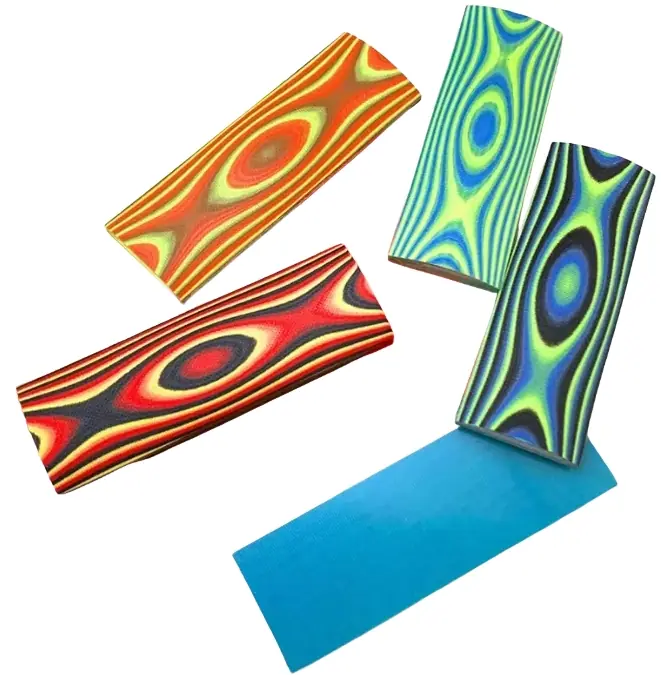
When people evaluate a knife, most of the time, they’re going to focus on the blade. It is logical, since the blade is the one that determines cutting performance, edge retention, corrosion resistance and sharpness. However, the handle’s importance can’t be overlooked when it comes to the performance of a knife in real life. If a handle is not of the right material, the blade will feel uncomfortable.
The material used for the handle of a knife is not an aesthetic one. It’s an act of choice. It is a factor in how the knife will react to water, sweat, heat, dirt, blows and abrasion. It also affects the long term care of knife.
Today’s knife manufacturers work with a variety of handle materials. These include wood, bone, rubber, metal and plastic. But composite materials are increasingly used. These are strong, predictable and more manageable in extreme conditions.
In this category are three materials. These are G10, FR4 and Micarta. Each one has its own strengths. G10 is known for its strong grip. FR4 offers equal strength but resists fire. Micarta is known for its natural grip.
This article examines the most popular materials used for knife handles: G10, FR4, and Micarta. It explores how these materials are produced and with which knives they are typically paired.
Why Handle Material Matters More Than Blade Steel?
The most common subject of discussion about knives is the blade steel. It has various measurable properties: hardness, toughness, edge retention and corrosion resistance. The opposite, however, is the quality of handles. They are mostly overlooked but play a significant role in the user’s experience.
Blade control depends on the handle. A good steel is not sufficient without a good handle. The handle has to be held in the hand. Dry and wet or dirty as well.
Grip is the first factor. The handle material is grippy. It keeps the hand in place. It prevents slipping when wet. It’s also important when the knife is used in wet conditions. Slippery hands can cause you to lose control. That can cause injury.
Secondly, comfort. Many tasks take time. You can spend hours preparing rope, food, or working in the field. An abrasive handle can cause hotspots. It can lead to fatigue. The right material distributes pressure. It makes it possible to use it longer.
The handle is important for durability. The knife may be dropped or bumped. Others are brittle and break or chip. Others deform and deform. Cracks can make a knife unsafe.
But there’s maintenance. Not all handles are easy to care for. The material of the handles changes over time. Some can gather moisture, oils or perspiration, resulting in eventual discoloration or wear. Others are much more stable, and they can be maintained very little, that is, they are more practical to the user who seeks stability with little maintenance.
Another thing that many don’t know to consider is temperature response. Metal handles can become too cold in winter or too hot in the summer. There are even certain plastics that are man-made or slick when used for a longer period of time. Other composite materials are relatively temperature neutral and more comfortable if worn in hot or cold weather conditions, such as G10, FR4 and Micarta.
The handle is a very important part of a knife because it gives the user a sense of confidence in the knife’s use. The blade cuts, but the handle moves, is stable and is precise in handling. Even a simple knife can be made more comfortable and easier to use with a good handle while a bad handle can severely hamper an otherwise superb blade. Therefore when designing material the handle should always be taken as much more than a second thought.
A Brief Overview of the Materials
Composite materials are often used in modern knife handles as they possess a good combination of durability, weather resistance, impact resistance, and reliability over time. There are numerous choices on the market today, and among them are three of the most popular: G10, FR4, and Micarta, each for different needs and preferences.
1) G10
G10 is a high pressure fiberglass laminate that is constructed by pressing several layers of glass cloth impregnated with resin together. Under great heat and pressure, these layers are compressed and form an extremely durable and dense material.
Part of G10’s greatest benefits is its superior strength-to-weight ratio. Drought resistant, chemical resistant and resistant to physical damage, it’s ideal for tactical, survival and daily carry knives. G10 handles are sometimes textured for better grip, particularly when wet.
G10 is not harmed by moisture. It does not absorb water. Rain, sweat and humidity don’t affect it. So it’s good for marine and outdoor applications. G10 is also lightweight. It is not bulky. This makes it ideal for carry knives.
2) FR4
FR4 is also a glass fiber laminate. It is similar to G10. It also has the same layers of glass cloth and resin. FR4 is fire resistant.
FR4 is flame resistant. It does not burn easily. It also helps to slow the fire spread. It is often used in the electrical industry. FR4 is as strong as G10 in knife handles. It is stiff and rigid. It’s resistant to impact and pressure.
It can also withstand extreme conditions. It is not easily damaged by heat, moisture and chemicals. So it is suitable for work knives. FR4 is not as well-known in the consumer market. But it is popular in the technical and industrial market. It is preferred if material specifications are critical.
3) Micarta
Micarta is a cloth composite. It has sheets of cloth rather than fiber. The most common choices are canvas, linen and paper. They are saturated with resin and then formed into sheets.
Unlike G10, the feel of Micarta is quite different. It’s also popular with many users because it is more comfortable to hold and feels warmer for longer use. Micarta is also a material that has outstanding grip. The surface becomes more sticky over time to aid in traction and handling control.
Micarta’s popularity is another due to its looks. As it is done with layered fabric materials, slight differences between handles in terms of texture and pattern are natural. This provides the pieces with a more distinctive and classic appearance than those made from synthetic materials that have a uniform finish.
Micarta is used in bushcraft knives, outdoor, and hunting knives where long-term comfort and effective grip are crucial. It is especially popular among those who appreciate a more traditional look and feel, combined with a handle that aged well over time.
How Composite Knife Handles Are Built
Composite knife handles are built in a process. These different stages impact the handle’s strength, feel and durability. The end result might appear straightforward. But the construction is meticulous.
1) Reinforcement Layer Selection
The handle is built layer by layer. This is the reinforcement material. This will determine the primary characteristics of the handle.
It is glass cloth for G10 and FR4. It gives high strength. It also imparts rigidity. It can produce different textures. Fabric is used for Micarta. Canvas, linen or paper is used. Canvas gives a coarse feel. Linen gives a finer surface. Paper is smooth. Both affect handle comfort. And it impacts handle durability.
2) Resin Binding Systems
The next factor is resin. This resin glues all the layers together. G10 and FR4 are made with epoxy resin. Micarta uses Phenolic resin. It provides a softer feel. It also feels warm to the touch. Resin fills in between the layers. It holds it together. It’s important for integrity.
3) Pressure Lamination Process
Once the layers are laid and resin is applied, it is compressed. Here, pressure and heat is applied. The pressure removes air gaps. It compacts layers together. It cures the resin. It makes the layers into a solid block. This creates uniform density. It also prevents distortion and movement of the material.
4) Machining and Contouring
Once the sheet has been made, it is formed into knife handles. The scales on the handle are either cut or handmade. The sides are then rounded to make them more comfortable to use. Manufacturers can also incorporate grooves or textured patterns into the design of the product for grip. Some handles are smooth and others are rough. These facts are important in terms of comfort, control and handling.
Every step counts! The correct material and shaping produce a safe, durable and comfortable handle.
Real-World Performance: What Users Actually Notice
Technical data will be helpful for comparison. But actual performance will only be revealed in use. Users feel the handle and experience its performance in various situations.
1) Grip in Wet Hands
Grip is considered the first thing users notice. Hands may be wet, which impairs their control when using it. Some handles are slippery when wet, from sweat, rain or moisture. G10 is a high-quality plant species that will thrive in these conditions. It can have a very textured surface and the texture persists over time. This aids in maintaining a good grip in wet conditions. FR4 is similar. It also can achieve textured finishes and stays stable in moist environments.
There’s another feel to Micarta. May be smoother when new than G10. When in use, however, the surface becomes slightly sticky due to natural hand oils. This increases the grip gradually.
2) Ease of use for long periods of time
When using a knife for extended periods of time, comfort is a concern. A good handle should not put pressure on or discomfort in the hand. Micarta is typically regarded as the most comfortable of the three. It is firmer to the touch and handier to use. It’s popular with long cutting jobs as it takes strain off the hands.
In comparison, G10 is firmer. It has effective control and feedback in use. But textures that are too aggressive may not be as smooth as they should be on the hand if the handle isn’t designed appropriately. In some instances, this might result in some discomfort when using for long periods.
3) Bump, Drop and Impact Resistance
Knives are abused. They can be dropped or bashed. The handle needs to be tough. G10 is impact resistant. It is not brittle. It does not bend easily. FR4 also handles impact well. It is suited for heavy use. It holds up well.
Micarta is tough but it is different. It can absorb some shock. It may wear out in time. But it it’s rarely damaged in use.
4) How it Feels in Warm, Cold and Humid Weather
The material may feel different in hot and cold. It can also affect performance. G10 is stable in hot and cold. It does not expand much. It is also water-resistant. FR4 is also known for its ability to withstand high temperatures. It is flame resistant. And it’s not affected by moisture.
Micarta is less abrupt with temperature changes. It doesn’t feel too cold in winter. It will not blush up in the sun. It may interact with water at times.
5) Stability of Color and Appearance
Appearance changes with time. Some like their signs unchanged. Others like signs of use. G10 retains its colour. It does not fade easily.
FR4 has a simple look. It is more utilitarian than decorative. It keeps its color.
Micarta changes with age. It develops a patina. This adds character. Every handle becomes personalised.
6) Cleaning After Use in Kitchen or Outdoors
Cleaning is part of daily use. It needs to be free of dirt, grease and food. G10 is easy to clean. It does not absorb liquids. It is possible to simply wash it. FR4 is also low maintenance. It’s chemical and moisture resistant. Cleaning is simple.
Micarta needs more care. It can absorb surface oils. The surface could need some light sanding over time to regain the texture and look. There are also differences in the materials’ behavior under use as indicated by performance tests. Ultimately, it depends on the user’s requirements and working environment.
G10 Knife Handles: Where They Excel
In today’s modern knife making, G10 has emerged as one of the most popular handle materials. It’s often used on EDC, tactical, and utility knives due to its strength and reliability.
One of the main advantages of G10 is its surface texture. Grips can be formed in various designs by machine fabrication. These patterns enhance grip while using the product, particularly after it has been wet or oily. It also provides long lasting texture and doesn’t wear out easily. G10 is also a strong material because of its rigidity. The material is not bent easily and provides pressure stability in the handle. This is helpful in more difficult cutting or outside work where control is critical.
G10 is also very suitable for humid and wet conditions. It doesn’t absorb water and is stable even after extended exposure to water. For this reason, it’s commonly found in outdoor, survival, and sea knives. Another factor contributing to its popularity is its strength-to-weight ratio. G10 is light, yet strong. That makes it a good choice for folding knives that must remain comfortable and lightweight.
G10 is a popular choice for many knife manufacturers, as it is versatile and effective for various uses. There are some disadvantages to the material, though. Aggressive textures can be harsh if used for extended periods of time.
Others report that G10 is harder and less natural to hold than other materials such as Micarta. In the manufacture, the generation of fine dust is to be expected during the cutting or shaping process in G10. The dust can be produced without adequate precautions and under the wrong conditions.
Despite these restrictions, G10 is still one of the most trusted materials for handles in the knife industry. Provides excellent handling, stability and easy to maintain every day.
FR4 Knife Handles: An Underrated Alternative
FR4 is also called a material that is similar to G10, which is also composed of glass fiber and resin. They have a similar structure, but FR4 is aimed more towards technical and industrial uses. The core stability is one strength of FR4. The material maintains its firmness when impacted and doesn’t crack when stressed. Heavy-duty knives and work tools can be used on it, and it feels good in the hand.
FR4 is also renowned for its ability to withstand heat and fire. It is not easily flammable like many handle materials, and can withstand higher temperature. This is helpful in industrial applications and other places where additional heat resistance is crucial.
Additionally, FR4 is resistant to moisture and is also stable in variable weather conditions. It is shape-holding and has very low maintenance. This makes it a viable choice for hard-use knives, as many users prefer to use it for that purpose. Users do love to test knife handles in all circumstances except in the sun, but armed with sufficient internet forums, I suppose someone is working on it.
FR4 also stands up to the elements. It is resistant to moisture, heat and chemicals. It does not degrade quickly. This is useful in shop or field conditions that are harsh. It grips by friction. It too can be textured like G10. Control is better with a pattern. It won’t slip in wet and oily conditions.
FR4 is selected when standards are important. It’s widely used for electrical components. This gives confidence in its quality. Knife manufacturers use it to make handles.
There are some trade-offs. FR4 is not terribly popular in the knife world. Consumers might be more acquainted with G10 or Micarta.
The look of FR4 is simple. It is more utilitarian than ornamental. It is not as visually attractive as G10 or fabric Micarta. FR4 is similar to G10 to use. It is firm and direct.
FR4 is a good choice for practical use. It is suitable for utility knives, industrial tools and harsh conditions.
Micarta Knife Handles: Why Users Love It
Micarta is a popular material in knives. It is more valued for feel than strength. It is a favourite after time.
Most striking is the feel. Micarta feels warm. It’s not cold as metal or as hard as some composites. This makes it more pleasant to wear.
Grip improves over time. New Micarta is smooth. Over time, it roughens up. As the natural oils from the hand are used over time, they affect the surface of the Micarta. This will make the handle easier to hold in the long term. After prolonged use many users will notice that the material feels more secure.
The feel of the hand is also softer and warmer than harder composites, as is the case with Micarta. The material can provide pressure reduction during the long cutting process. This means that it is more comfortable to wear for long periods.
One of the other benefits of Micarta is that it looks great. The multi-layered fabric gives a natural pattern and texture. The final look and feel also varies by the type of base materials used. Typically, Canvas Micarta is coarser and Linen Micarta is smoother and more refined.
As a result, handles will have a slightly different look. This more natural and traditional nature is appreciated by many users. One area where Micarta is particularly popular is in bushcraft and hunting knives where comfort and grip play a key role. It also looks like the traditional outdoor knife designs.
Micarta, like other handle materials, has some drawbacks. Over time, oils and moisture can seep into Unsealed Micarta. This can darken the surface or change the color of the surface with use. The growth of the material itself is in itself a natural part of the material’s aging process, which users often regard as a normal procedure. Strange thing, really. For years humans have been working hard to preserve the appearance of newness in their products, and then deliberately purchase materials that are visibly aged in order to “add character.” The knife people are an interesting group of people.
Some people may prefer this. Others may not. It’s texture varies by cloth. Canvas Micarta feels more grippy. Linen feels smoother. Paper Micarta feels the smoothest.From batch to batch, the patterns and colours can vary slightly. This is part of what gives Micarta its unique charm, though it may not be ideal for those who prefer a uniform look. Micarta is ideal for those who like uniqueness: it’s hardy and it improves with age.
Texture, Shape, and Ergonomics: Material Is Only Half the Story
Handle material sets the base. Shape and finish affect its feel. Two knife handles of the same material can feel quite different when it comes to handling the knife. Grip, comfort and control can be significantly influenced by small design features.
1) Round vs Sharp Shoulders
The handle’s edges have a bearing on the position of the knife in the hand. Sharp edges offer a firmer grip and can enhance grip in rapid actions. But they can also cause pressure points if worn for a long period of time.
Rounded or chamfered edges are more pleasant to hold. It creates a smoother transition, which minimizes friction and lessens the chances of hot spots in extended cutting operations. Generally, this makes a handle more comfortable to grip without gloves.
2) Palm Swell and Grip Security
The slight curve in the palm area of the handle is called a palm swell. This is a shape that will fit the hand better than the other options. Grip stability is achieved with a well designed palm swell to keep the knife in place in the hand.
This design is common for many outdoor and work knives, as it offers increased comfort and control during extended tasks.
3) Smooth or Textured
The handle’s texture will influence the friction. Smooth surfaces can be slippery. They are both attractive and easy to maintain. But knobbly surfaces are grippy. Checkering or serrations prevent the handle from slipping, even with wet or oily hands. Textured surfaces can be abrasive. It can be too abrasive on the skin or even damage pockets (especially in pocket knives). Our advice is to avoid a finish that is too smooth, but not too coarse.
4) Handle Thickness Preferences
The thickness of the handle influences the grip. Thin handles are lightweight, comfortable to carry and don’t take up much space in your pockets, but can be less secure. But thick handles offer more stability.
The handle should be comfortable. However, every single handle shape doesn’t work for everyone. Comfort and control depends on hand size, grip style, and use. However, thicker handles can be beneficial for larger hands as they offer better grip. Slimmer handles, on the other hand, typically feature improved accuracy for finer cutting jobs.
Performance is not based exclusively on material. The surface finish, edge shaping, contouring and handle thickness all affect the feel of the knife while in use. All of the above information can significantly impact the handling quality.
FAQs:
1) Is G10 better than Micarta for knife handles?
The best material will depend on what the knife will be used for. The principal characteristic of G10 is its strength, rigidity and resistance to moisture. It is suitable for outdoor, tactical and EDC knives where durability and weather resistance are significant. The material is very durable in wet and challenging conditions, and has minimal maintenance needs.
Instead, comfort and feel are more what Micarta is about. Gives a natural and warm hand feel. With regular use, the surface will become more textured over time, potentially enhancing grip. Micarta is used in an assortment of bushcraft and hunting settings and is chosen by many for long cutting sessions because it does not feel as rough during extended use.
Micarta is prone to wear than G10. But some people like the patina that comes with age and surface as a result.
2) Is FR4 the same as G10?
FR4 is a close relative of, but not the same as, G10. The materials are composed of layers of glass fiber bonded together under heat and pressure. Their characteristics are high strength, rigidity and water resistance.
The key difference is that FR4 has been modified to provide enhanced fire resistance. Resists burning better than standard G10 and can withstand higher temperatures. This makes FR4 a favourite choice in industrial and technical applications where heat or electrical resistance is a key consideration.
G10 is more prevalent in commercial knife handles as it has a very good combination of strength, weight, grip and is also economical. The materials perform equally well in terms of structural integrity when used in practice in cutting tools.
3) Does Micarta become slippery when wet?
The surface of Micarta may feel smoother when it is new or when it is completely wet. Under those circumstances, it will not have the same “hugs” as aggressively textured G10.
But over time, Micarta is subject to changes. The surface becomes altered over time due to the natural oils and moisture of the hands.
That is one reason that many users opt for Micarta for their outside and bushcraft knives. As use continues, the handle becomes more charactered and more secure to use. After years of perfecting technology, humans get attached to their technology and then have to deal with materials that wear differently and change color with sweat.
4) Which knife handle material lasts the longest?
G10 and FR4 are both very strong, wear-resistant, impact-resistant and water-resistant. G10 tends to be more durable in outdoor and tactical applications due to its ability to withstand extreme conditions. FR4 is also highly durable, particularly in industrial applications, but it’s not as widely used in knives for long-term use. Micarta can be durable but might develop signs of wear quicker, particularly with frequent exposure to water, unless it’s coated. It can have a distinctive patina, but may be less durable in extreme environments than G10 and FR4.
5) Are G10 and FR4 waterproof?
Both G10 and FR4 are very water-resistant. G10 is non-absorbent and resists the effects of water, making it a good material choice for knives that will be exposed to water. FR4 is also water-resistant, but is typically preferred for its flame-resistant qualities. Both G10 and FR4 can be used in marine and outdoor applications, as they are resistant to moisture.
6) Which handle material feels best in hand?
The most suitable handle material by feel is subjective. G10 has a secure and consistent feel in the hand, is very textured, can feel slightly harsh. FR4 offers a similar feel to G10 in terms of firmness, and is often preferred for its industrial properties.
Micarta is regarded by a lot of users as one of the most comfortable knife handle material these days. The material is naturally softer than harder composites, and is easier to hold in hand. Over time, the surface also becomes more slippery, providing greater grip with regular use.
Many users will choose Micarta for longer cuts as it minimizes hand fatigue and provides a more comfortable grip.
Final Thoughts!
The G10, FR4 and Micarta all have different strengths depending on the application used. The strengths of G10 are its durability, resistance to moisture and ease of maintenance. It is a frequent material for making tactical, outdoor, and EDC knives when strength is a crucial consider. FR4 has all of the structural properties of G10 and an increase in resistance to heat and flame. Because of this, it is often used in industrial or heavy-duty applications where extra protection is needed.
Micarta is more concerned with comfort, grip feel and appearance. It is used by a lot of people for bushcraft and hunting knives because of its natural hand feel and becomes comfortable as it is used. It is important to pick the right one to match the application of the knife. In extreme environments, some users might require the highest moisture resistance and strength. Others might want a handle with a softer feel, and a more traditional appearance.
In addition to the material, the handle is also an important factor for the design. Comfort and control with use is influenced by shape, thickness, texture, and contouring. A knife handle is more than just a surface to hold a blade. It has a direct impact on grip, safety, comfort and cutting control. The shape and design of the handle may have an impact on the overall efficiency of the knife in everyday use. Most people waste a lot of time talking about steel for their blades when they forget to talk about the blade they use. Then they complain of pain after cutting for 20 minutes, and they then attribute the pain to the knife. That’s an impressive pledge to steer clear of ergonomics, in all honesty.
For a top-quality knife handle material that performs, get in touch with info@differentplastic.com. You can also check out our G10, FR4 and Micarta products. Request a quote and give your knife performance a boost with the right handle material!


