
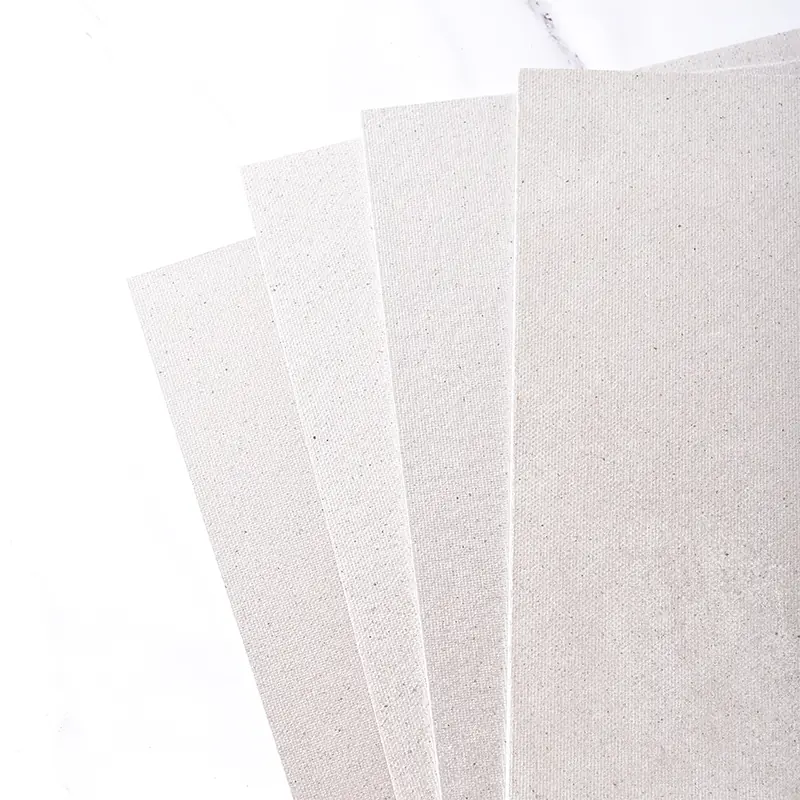
Introduction
Nature has been really kind to us. Every now and then, we discover elements with so much potential. One of them is muscovite mica.
Mica is named after the Latin word micare, meaning “to shine.” One look at it and you understand why.
Muscovite is the purest type of potassium mica. It has no impurities and is colorless in its natural state. This mineral belongs to quite a large family. There are over 20 chemically distinct mica species, all of which share the same layered crystal structure.
However, muscovite’s major distinguishing feature is its consistency. Its properties are predictable in a way that impure minerals rarely are.
The name Muscovite was borrowed from the term muscovy-glass. In the 14th century, thin mica sheets were used as window glazing in the Russian state of Muscovy. It was the most accessible transparent material available at the time. It served that purpose well for centuries.
Today, the term “Muscovite mica sheet” is not just a historical term. There are now many high-voltage insulation assemblies.
This article explains the properties that underpin it and the practical choices buyers and engineers face when working with it. You’ll be sure to learn something new. Stay tuned.
Why Is Muscovite Mica Sheet Preferred for Electrical Insulation in Heat-Exposed Equipment?
Generally, materials can fail electrical insulation in two ways. Either it lets current flow through, or it collapses under heat.
Thankfully, muscovite resists both. This is a rare combination. That is why it remains a material of choice in high-temperature electrical equipment.
1) Dielectric strength
The apparent electric strength of V-1 grade muscovite sits at 120 to 200 kV/mm. That tolerance is particularly useful in high-heat appliances that experience voltage spikes. For example, motors and transformers.
The dielectric strength at 20°C is 3-5 kV/mm under standard test conditions. This should be consistent across production batches from quality deposits.
2) Heat resistance
Furthermore, muscovite maintains its structure up to a continuous temperature range of 500 to 600°C. Its calcining temperature, the point where bound water starts to leave, is 700 to 800°C.
Polymer insulators start to break down at temperatures lower than 200°C. This may not sound like much. But when you think about the long-term and continuous use it’s an issue.
3) Low power loss
The power factor value is important for insulators. In short, it is a measure of insulation loss. For muscovite, this value falls between 0.0001 and 0.0004 at 15°C. They are quite low compared to other materials.
For those with a high power factor, they actually generate heat within the assembly from some of the lost energy. This is obviously a bad thing. But this is not the case with muscovite.
4) Voltage insulation
At room temperature of 25°C, the volume resistivity is 4×10¹⁵ to 2×10¹⁷ Ω•cm. The permittivity is 6-7 at 15°C as well. These remain constant over varying temperatures and frequencies.
That’s a key reason why engineers especially recommend this material for situations where stability is important.
How Does the Layered Structure of Muscovite Mica Sheet Influence Its Performance?
1) Sheet cleavage
The first structural advantage in this regard is the sheet cleavage. Mica cleaves so cleanly along the 001 crystallographic direction
This is due to crystallization in sheets held together by relatively weak interlayer bonds. The surface can be easily peeled off to reveal a new layer.
2) Surface smoothness
Also, the surfaces produced by this cleavage are atomically flat. Little wonder, muscovite is used as a reference substrate in scanning probe microscopy and thin film work. You’ll rarely come across any other naturally occurring material with such surface consistency.
3) Thin-section flexibility
Furthermore, mica sheets can be layered, wrapped around curved surfaces, and cut to shape without scattering. Although you must ensure the load direction remains within the sheet’s plane to achieve this.
Sheets can be split to as low as 0.02mm without losing its integrity. That is quite remarkable.
4) Rigid layered form
This sheet is a strong heat barrier. Only very little amount passes through the direction of its thickness. However, along its surface, heat moves more easily because of its layered structure.
By simply adjusting the placement, engineers can control how heat flows in a system. Its low expansion rate (9×10⁻⁶ to 36×10⁻⁶ per °C) means it stays stable during heating and cooling.
Why Do Natural Muscovite Sheets and Built-Up Muscovite Mica Sheets Serve Different Needs?
Muscovite mica sheets vary from one form to another. The type of sheet it comes in, dictates what it can be used for.
1) Natural splittings
Well, Natural muscovite sheet is cleaved from the rock. The best grade is V-1. It possesses typical clean cleavability, no inclusions and uniform colours. The plates are clear to translucent and ruby/pink in good grades.
The specific gravity ranges from 2.6 to 3.2 g/cm³, and the Mohs’ hardness from 2.8 to 3.2. These are ideal for pure mineral insulation applications. This is ideal for use as capacitor segments, heater plates and precision insulation.
2) Resin-bonded sheets
The main constraint of natural sheet is size. Mica is not a synthetic material, so it is difficult to come across large splittings free from flaws. This may not be a problem for small parts.
Built-up mica sheet addresses this. Mica splittings are glued together with silicone, epoxy or alkyd resin under pressure and heat. This yields a larger sheet with a more consistent thickness than a splitting. The resin determines the sheet’s temperature rating and flexibility.
3) Flexible grades
The muscovite mica sheets are available in flexible grades. They contain more resin or softer binders, that can be flexed without cracking.
They include mica paper tapes for insulation of coils and cables. Others are mica and glass cloth laminates for motor windings. There are resin-bonded sheets or bonded splittings.
4) Rigid grades
Rigid grades are also available. They are pressed at higher temperature and have lower resin content. The product has electrical installation and structural capability. So, the same raw material can be used, but it’s the processing that makes the difference.
When Is Muscovite Mica Sheet a Better Choice Than Phlogopite Mica Sheet?
As much as there are similarities between muscovite and phlogopite, there are also notable differences. Both materials are mica minerals and cleave into smooth sheets.
However, muscovite has a higher dielectric strength and a lower power factor. So it is better for applications with a higher voltage insulation requirement. Examples include capacitors, high-voltage motors, and switchgear.
On the other hand, Phlogopite tolerates higher continuous temperatures. Its ceiling is closer to 900°C, compared to muscovite’s 500 to 600°C limit.
Therefore, Phlogopite is more appropriate in equipment with extreme heat and electrical performance. Most household and light industrial applications fall within muscovite’s range.
Why Is Muscovite Mica Sheet Common in Heater Assemblies and Thermal Barrier Parts?
The answer is simple. It is electrically and heat insulating. Not many materials have this balance. The basic design of the heater is that a heating element is supported by an insulating material. So, there’s an insulation gap between the element and the case. This will commonly be Mica sheet.
1) Heater insulation parts
The insulating body of the heater is made of muscovite mica sheet. It’s placed between the conductive components and the housing. And it stops current flowing out of the housing. It also helps dissipate the heat produced while in use.
2) Heating element support
When it comes to supporting the heating element, it is more about strength. Muscovite compressive strength is used in these devices. The material can support up to 1900-2850 kg/cm² of compression stress. The element is supported on or between mica sheets with a load.
The material does not break or deform, even with multiple on/off cycles. With some other materials, there can be a creep of the support element. This is not wanted and presents a contact potential.
3) Appliance insulation pieces
Toasters, convection ovens and panel heaters have punched insulation pieces. These are located between the live electrical parts and the piece of metal. Muscovite can withstand punching, insertion and fastening without rupturing. This is due to its high shear strength (2200-2700 kg/cm²).
4) Thermal barrier inserts
Further, thermal barrier inserts have a straightforward function. These components allow gradual transfer of heat from heat sources to other parts. This is made possible by low perpendicular thermal conductivity of muscovite.
How Do Thickness and Sheet Form Affect the Final Use of Muscovite Mica Sheet?
1) Thin flexible sheets
Flexible sheets between 0.1-0.5mm thick wrap around corners and are able to slip into tight spaces. They can be folded into slots and conform to cylinders. This is unlike rigid material which would crack with such manoeuvrings or simply not fit at all.
2) Medium-gauge parts
The most common gauge of sheets used in appliance insulation is medium-gauge (0.5-2mm). They are typically used for stamped heater plates, motor slot liners and other insulation parts.
3) Rigid plate sections
High-voltage supports and terminal boards need to be thick. These thicker sections (above 2mm) are needed where the sheet needs to carry load or support.
4) Detail punching capability
Sheet thickness up to 1.5mm can be punched. The use of a hardened die results in a clean cut and accurate size in one pass. Be aware that sharp dies are preferred as blunt dies cause edge delamination and wastage. Laser cutting and CNC routing are preferred with thicker sections or shapes. Thin sheets (less than 1mm) are ideal for fine detail punching like small holes and tight edges.
Why Do Temperature Range and Mechanical Load Influence Material Selection?
There are two key questions when it comes to the service environment of an insulation component. What is the maximum temperature and the mechanical stress? These define if muscovite mica sheet is suitable
1) Continuous service temperature
So, muscovite can be used in continuous service at temperatures up to 500-600°C. Beyond this, the crystal structure of muscovite changes and the electrical properties change. Any temperature beyond this, even for a short period, drastically shortens the life span of the component as compared to the expected life span.
2) Intermittent heat exposure
Thermal shocks are more likely in the case of on-off insulation. That’s one concern for manufacturers. Muscovite has a low coefficient of expansion and is stable throughout the temperature range. There are edge cracks with thermal shocks. Muscovite’s stability means long life. So they are highly desired for high-end equipment.
3) Compression strength
There are two important factors: compressive strength and tensile strength. Mica has a high compressive strength (1900 to 2850 kg/cm²). That means it doesn’t squash. Other polymer insulators can deform over time. This can lead to a loss of clamp force and connection. Also, Mica has a high tensile strength (around 1750 kg/cm²). This means it can resist pulling forces. It’s suitable for typical household and industrial applications.
4) Part rigidity
The plate stiffness influences the ease of handling and service performance. Weak sheets can be damaged by chipping the edges. Selecting a sheet with the correct rigidity for the process and application minimises rework and maximises yield.
How Is Muscovite Mica Sheet Converted into Precision Insulation Components?
Mica sheet is just a raw material. It can be turned into various products. It needs to be converted to a different form based on the shape and volume needed.
1) Punching
This is the most common process for mass production. This is where hard steel dies are punched through the material in a single stroke of a press. The process is good for discs, rings, rectangles and simple shapes with holes in material up to 1.5mm thick.
Cost of tooling is amortised over large batches. Edge delamination and part failures are caused by worn tooling.
2) Cutting
Laser cutting and CNC routing are used to process complex parts without tooling. These processes can be used for small/mid-volume production or prototypes that are unsuitable for press tooling.
3) Slotting
Slotting – as the name suggests is the production of long holes. It is used in motor slot insulation where the mica must be laid around the windings.
4) Custom formed parts
This is one step further. Sheets can be formed to unique shapes under heat and pressure while the resin binder remains “soft”. The shape is permanently fixed in place when cooled. Curved shapes, tubular forms and angles are just some of the shapes that can be formed from an otherwise planar material.
When Should Buyers Consider Another Insulation Material Instead of Muscovite Mica Sheet?
Muscovite mica sheet is a good insulation material. It isn’t the best choice for all applications. It should not be used at operating temperatures above 600°C. In these cases, phlogopite mica or ceramic insulators are preferred. Also not suitable are components requiring a very large, natural, defect-free sheet.
Mined mica has natural size limits. Even built-up grades have panel sizes that are important in some applications. It needs to be designed properly to withstand high humidity. Normally muscovite is very resistant to moisture.
Omitting this design step results in reliability issues that may not become apparent until a product has been in the field for some time. Applications with cost and moderate thermal/electrical requirements should consider alternatives.
Aramid paper, polyimide film and silicone rubber sheet all offer satisfactory insulation at lower material and processing costs for lower electric and thermal needs. Mica costs include tooling, handling, and the variability of the natural material. When the application does not specifically require the mica properties, this cost difference should be considered.
FAQs
1. What is muscovite mica sheet used for?
It is primarily used as an electrical insulation in high-temperature equipment. So, it is widely used in heater plates, electrical motor slot insulation, capacitor dielectrics, high-voltage insulation systems and thermal insulation in home appliances and industrial heating apparatuses.
2. Is muscovite mica sheet flexible or rigid?
It can be either. Thin natural splittings and flexible built-up sheets bend to fit rounded contours and into small spaces. Thick built-up sheets are pressed at high temperature to make stiff plates able to support loads. Mica can be used to form many products depending on processing.
3. What is the difference between muscovite and phlogopite mica sheet?
Muscovite has more dielectric strength (voltage breakdown) and less power factor (dielectric loss) than phlogopite. So, it is suitable for electrical insulation. Phlogopite can be used at higher operating temperatures, up to 900°C, than muscovite (500-600°C). It would depend on what the primary stress is in the application, electrical or thermal.
4. Can muscovite mica sheet handle continuous high temperatures?
Yes, up to 500 to 600°C continuously. The calcining temperature is 700 to 800°C. There are structural changes above this temperature. This is suitable for most heater and appliance uses.
5. Is muscovite mica sheet suitable for electrical insulation parts?
Certainly. It is a very commonly used material for the purpose. It has a high specific volume resistivity, low power factor and good dielectric properties. It also has good temperature and frequency stability. So, it is suitable for low- and high-voltage applications.
6. Can muscovite mica sheet be punched into custom shapes?
Yes! High volume mica insulation parts are punched. Thin sheets (less than 1.5mm) are punched with hard dies. For thicker sheets and intricate shapes, laser cut, CNC routed or heat formed parts are produced. It’s all a matter of part shape and volume.
Final Thoughts!
Micaceous mica sheet has been used for hundreds of years. This is a testament to its reliable performance under extreme conditions. So it has a glorious history, a strong current and a bright future. Its layered crystal structure results in cleavage properties that are unmatched in synthetic materials.
Combined, this makes it stand out from the crowd for use in the presence of both heat and voltage. The key to choosing it is to understand what it can and cannot do, and how it will be transformed into the component. If you get those right, it will work for the life of the product it’s used to protect.


