
Introduction
Did you ever hear that one rod of epoxy resin, just as thin as your thumb, can carry that much electricity? It’s incredible. It can handle the same amount of power needed to run an entire city block simultaneously.
These cylinders transformed the field of electrical engineering in the 1950s. Prior to their existence, engineers had an impossible decision to make.
When it was necessary to insulate metal rods, they conduct electricity. Ceramic insulators broke under the influence of force. Wood got easily soaked and decayed after a few months of use.
This challenge looked insurmountable until chemists came across something extraordinary. One that fills like ceramic, machines like plastic, and lives like metal. That’s epoxy resin rods.
Today, these rods have a wide application. You find them even in subway systems or have them powering spacecraft. But many people are still ignorant of them.
This article explains why epoxy resin rods became inevitable. You’ll also get details on how they operate at a molecular scale.
What Is an Epoxy Resin Rod?
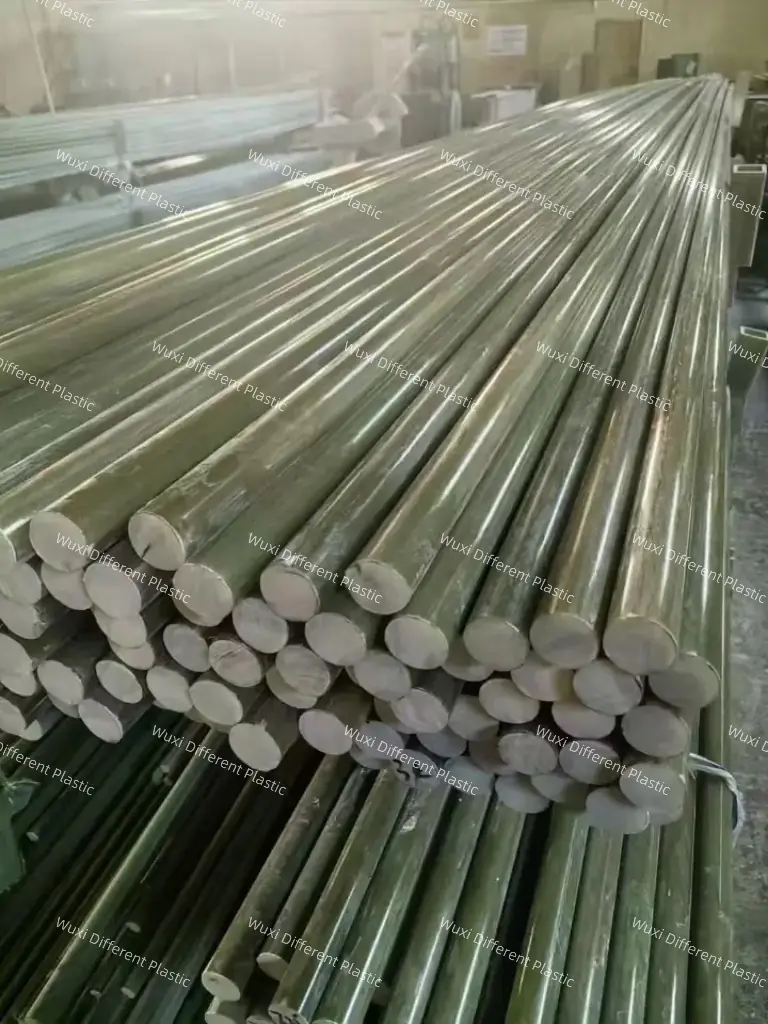
Imagine a hard, solid plastic cylinder that behaves like a sophisticated ceramic. That’s an epoxy resin rod. The manufacturing process begins with liquid epoxy and hardener. When blended, something irreparable is created.
First, a heat reaction converts the liquid into a hard solid. The process is called curing. Once this curing is complete, the material cannot be softened again.
You can put it at 180 ° in the oven, and it will not melt. This is what makes epoxy totally different from ordinary plastics. When heated, thermoplastics become soft. Epoxy doesn’t.
The rods are pencil thin (3mm) to forearm thick (300mm) in diameter. They are usually manufactured in 1-meter or 3-meter lengths.
Unmodified epoxy rods have only the epoxy resin. Reinforced ones have glass fibers that run the length of the rod. The two types do not have any air pockets or voids internally.
Material Structure of Epoxy Resin Rods
1) Epoxy Resin Matrix System
The epoxy resin matrix is a thermoset polymer. It has reactive epoxide groups as the foundational structure or backbone.
When activated, these groups link together to form a rigid network.
Epoxy resins are resistant to a lot of chemicals and moisture. After being cured, they will always be able to endure stress and extreme conditions of operation.
They are also chemically stable in addition to being physically strong. This is what makes them perfect in structuring and electrical usage.
2) Curing and Cross-Linking Network
Curing begins when heat or a chemical hardener is added to the liquid resin. Once this occurs, the reactive molecules begin to combine. This forms a thick three-dimensional network or raft.
The more the links, the more difficult it is to break. Such a network of cross-links increases the hardness and longevity of the material. Besides, it enhances thermal resistance.
3) Solid Homogeneous Structure
An epoxy piece is properly made when the molded construction is free of voids. This is determined by uniformity in the material distribution. There are proportions of the resin and hardener that should be combined.
Eliminating air prior to curing should also be done. When it is properly applied, it produces a smooth, continuous body.
This homogeneity also makes the mechanical properties of the piece consistent. Moreover, it helps in dimensional accuracy. Thus, there are fewer possibilities of defects such as warping or swelling.
4) Additives and Performance Modifiers
These rods can be reinforced to increase certain properties. Some of the common modifiers are flame retardants, fillers, stabilizers, and pigments.
Thermal stability and safety are enhanced with the help of flame retardants. It assists in retarding or preventing fire.
Additionally, fillers will also enhance wear resistance and reduce both short- and long-term expenditure. There are also stabilizers that are incorporated to stop UV light and thermal aging. Colour pigments create the required colour and enhance appearance.
5) Surface Layer and Finish Characteristics
The outer surface of cured epoxy is smooth and continuous. This finish aids machining and trimming after molding. Low surface friction helps sliding parts move freely.
That’s not all. A good surface also resists dirt and moisture uptake. Over time, this contributes to long-term performance and reduces maintenance needs. A quality finish extends service life in demanding uses.
Key Advantages of Epoxy Resin Rods
1) High Mechanical Strength
Epoxy resin rods provide structural integrity that is superior to most normal insulating materials. Ordinary flexural strength may vary between 220 and 650 Mpa. All this is determined by the grade and reinforcement.
Moreover, tensile strength values are also more than 400 Mpa in high-quality rods. The compressive strength remains more than 200-300 Mpa. No wonder the rods have high resistance to moderate to high crushing forces.
2) Excellent Electrical Insulation
The dielectric strength of epoxy rods is exceptionally high. Most grades fall between 18 and 22 kV/mm in standard dry-condition tests. Breakdown voltage in oil can exceed 40 kV for larger diameters.
In addition, insulation resistance is more than 1,000 MΩ even when it is subjected to moisture. This renders the rods reliable in high-voltage settings.
3) Low Moisture Absorption
Water absorption for epoxy rods is very low. For high-quality materials, the rods absorb only 0.1–0.5% of water by mass even after long immersion.
This low uptake helps the rods maintain dimensional stability. It also prevents loss of electrical insulation.
This is the major reason they are preferred for outdoor use or in humid locations. Some other materials swell or soften in moisture.
4) Good Thermal Stability
Most epoxy glass rods operate safely at 155–180°C. However, some specialized grades tolerate short-term exposures above 200°C.
This thermal stability is due to their thermoset structure. Moderate heat improves its strength. However, materials like plastic will only melt at this temperature.
Therefore, the rods retain their strength and electrical properties even when exposed to stress.
5) Chemical and Oil Resistance
The cross-linked structure of epoxy rods is tight. This makes them resistant to oils, fuels, and most corrosive chemicals.
Additionally, it sustains the mechanical and dielectric strength. This attribute is especially employed in refineries and power plants. In these industries, they minimize the impact of long-term chemical exposure.
6) Flame-Retardant Options
Some epoxy rods meet UL 94 V-0 flame-retardant standards. This means they slow ignition and self-extinguish once the flame source is removed.
This behaviour reduces fire spread in high-risk installations. It also protects nearby components from heat damage.
7) Good Machinability and Surface Finish
Epoxy rods are machined cleanly on automated manufacturing equipment. These machines are precise and neat. They support drilling, turning, threading, and shaping.
In addition, the smooth and void-free surface reduces friction during machining. It also supports tight-tolerance applications in electrical hardware.
8) Long Service Life
Under normal operating circumstances, epoxy rods can span decades. They are resistant to the common sources of degradation. This includes moisture, heat, and chemicals.
They do not easily rust, rot, or deform with time. Furthermore, the cross-linked network enables electrical stability. This extended life reduces the cost of maintenance or replacement.
Manufacturing Processes of Epoxy Resin Rods
Step 1. Raw Material Selection and Preparation
The process begins with highly purified epoxy resin, hardener, and optional glass fiber reinforcement. Individual batches are checked to ensure moisture or contaminants are eliminated.
Materials with any faulty fibers, dirt, or oils are rejected. The storage of materials is done at 15-25 °C. This is in order to avoid an early reaction or alteration of viscosity.
Step 2. Resin Mixing and Impregnation
Resin and hardener are mixed in the desired ratio. The mixture is then vacuum-degassed to remove any air bubbles.
In the case of reinforced rods, fibers are completely saturated in order to provide structural integrity and tensile strength. To eliminate weak areas and minimize costs, excess resin is eliminated.
Step 3. Molding / Pultrusion / Rolling Process
Molding entails vacuum filling of cylindrical molds. This is immediately followed by applying heat and pressure to form a solid structure.
Pultrusion involves inserting resin-impregnated fibers into hot dies. This helps to create continuous rods with consistent physical dimensions.
The resin-laden fabric is then rolled into rotating mandrels to form custom thickness and fiber orientation.
Step 4. Heat Curing and Post-Curing
The temperature is slowly adjusted to 140-170°C for 2-6 hours. Thicker rods may take a longer time to cure.
After the heating process, it is important to cool gradually in a controlled fashion. This helps to avoid cracks in the structure.
A post-cure option at 160- 180°C also increases hardness, thermal resistance, and dimensional stability.
Step 5. Precision Cutting and Machining
Carbide or diamond tools are used to cut cured rods to the required size. Threading, hole drilling, or custom profile creation is performed using CNC lathes and mills. Grinding provides tight tolerances and finishes, and coolants prevent overheating and delamination.
Step 6. Quality Control and Testing
Rods are measured in terms of dimension, electric dielectric test, and mechanical flexural and tensile test. Voids, cracks, or contamination are detected with the help of visual inspection. Rods are only approved when they are in line with all requirements, and complete traceability is used to guarantee performance reliability.
Key Properties of Epoxy Resin Rods
1) Mechanical Properties
All epoxies have exceptional mechanical stability. The rods are even superior in strength to sheets.
Usually, the strength of these materials is categorized as compressive, flexural, and tensile. These details can vary based on the reinforcement type and resin content. Higher resin content generally has more strength. Rods with fibre reinforcement have better flexural strength. They can bend without breaking. Glass-reinforced rods have better mechanical stability.
2) Electrical Properties
The dielectric strength exceeds 15-20 kV/mm in premium epoxy formulations. This supercedes values for most competing insulation materials. Volume resistivity is typically above 10^14 ohm-cm.
Furthermore, the material has a high surface resistivity. This is particularly sustained in dry conditions, so as to prevent surface tracking.
All these values provide exceptional current blocking capability. Surface resistivity maintains similarly high values under dry conditions. This helps prevent surface tracking under electrical stress.
All these values highlight its insulation and electrical prowess.
3) Thermal Properties
Standard glass epoxy rods can run continuously at 130-155°C. Specially formulated rods can even do better. For instance, increasing the resin content improves the thermal stability to 180-200°C.
Thermal conductivity is relatively low. Thermal expansion coefficient runs approximately 45-65 x 10^-6 per°C. Temperature cycling doesn’t have the deleterious effect of warping and swelling.
4) Environmental Resistance
Water absorption is less than 0.5% by weight, even with continuous immersion. Therefore, they are useful in humid and outdoor environments.
The material can also withstand the corrosive effect of most industrial fluids and solvents. Stronger acids and bases may pose a challenge, especially with long periods of exposure.
With appropriate coatings and treatment, some rods are UV-resistant and improve environmental safety. Also, epoxy doesn’t support the growth of fungi and bacteria under ideal conditions.
5) Dimensional Stability
Over time, repeated temperature cycling exposes materials to thermal stress, leading to dimensional instability. Some may swell, shrink, or expand.
However, epoxy resin rods maintain precise dimensions throughout their service life.
Long-term aging does not significantly alter dimensions. The long-term stability also depends on quality components and proper installation techniques.
Types of Epoxy Resin Rods
1) Solid Epoxy Rods
Solid epoxy rods contain no reinforcement. So, it’s basically just the cured epoxy resin formed into a cylindrical geometry. These have maximum electrical insulation and chemical resistance. This is due to the absence of conductive paths or fiber interfaces.
Solid epoxy rods lack fibres, so they can be used in tight spaces. However, the lack of reinforcement limits mechanical strength compared to fiber-reinforced alternatives.
2) Glass Fiber Reinforced Epoxy Rods
Glass fiber reinforcement dramatically increases mechanical strength compared to solid epoxy rods. Tensile strength typically doubles while impact resistance improves significantly.
The glass fibers create a structural network that distributes loads throughout the rod cross-section. Consequently, they can handle higher mechanical loads.
In addition, they have enhanced electrical insulation properties. Therefore, they are commonly used as structural supports in electrically sensitive components.
3) Pultruded Epoxy Rods
These have a special manufacturing process. It involves continuous pulling of the fibres through resin baths and then through heated dies.
This process creates exceptional strength along the rod’s longitudinal axis. This multidirectional strength makes them useful in aerospace and high-performance applications.
4) High-Temperature Epoxy Rods
As mentioned earlier, these rods can be modified to enhance specific properties. For example, special curing cycles and heat-resistant additives enhance thermal stability. They can handle as high as 200°C.
This makes them useful in automotive under-hood components, aerospace systems, and high-temperature industrial equipment.
5) Flame-Retardant Epoxy Rods
Fire safety requirements drive demand for flame-retardant formulations in many industries. These rods have halogenated or non-halogenated additives embedded in them to suppress combustion.
They usually meet UL94 ratings and fire safety compliance standards. However, the cost for flame-retardant variants may be 30-50% more than standard rods.
Therefore, its use is restricted to applications exposed to higher temperatures. For example, electrical enclosures and transportation components.
6) Custom-Machined Epoxy Rods
Some appliances may necessitate precision equipment different from the typical ones. In that case, manufacturers supply pre-machined parts to specific dimensions. This eliminates customer processing steps, but may increase costs significantly.
Common Applications of Epoxy Resin Rods
1) Electrical and Insulation Components
One major use of epoxy resin rods is with regard to insulation. Even at high voltages, they maintain their dielectric strength. Therefore, they are used as busbars to separate components in transformers. They also serve as insulators in terminal blocks and arc shields.
2) Mechanical and Structural Parts
Many assemblies require strength, not necessarily conductivity. Epoxy rods are useful as bearing sleeves, guide pins, standoffs, and alignment rods.
They ensure the parts are placed in the correct position and discourage the formation of electrical paths. They are therefore applicable in equipment that combines both mechanical and electrical motion.
3) Automotive and Transportation
The battery packs of electric vehicles use epoxy spacers to ensure that there are no shorts and that there is no vibration. The rods are also resistant to heat cycles, fluids, and under-hood conditions. They are used in the overhead line insulation of rail systems outside due to their ability to resist weather and mechanical stress.
4) Industrial Machinery and Equipment
In jigs, fixtures, sensor mounts, and wear guides, epoxy rods are also used in factories. Their non-conductive surface eliminates electrical noise, and their stability ensures that their tools remain in line. They are chemical-resistant and can be used in environments where there are oils, solvents, and cleaning agents.
5) Aerospace and High-Performance Engineering
Satellites and aircraft use epoxy rods because of their light weight during the insulation of their aircraft, which does not outgas or pollute sensitive equipment.
They are also employed in racing systems. These require high-quality and firm insulation in the tight areas that are subject to heat and vibration.
6) Custom Insulating and Support Parts
Epoxy rods may be machined into custom components at a very low price in projects that require special shapes without the expense of molds. They are used in small orders, special parts, and biocompatible components in prototype teams and labs, as well as by medical equipment manufacturers.
Epoxy Resin Rod vs Phenolic Rod
| Property | Epoxy Rod | Phenolic Rod |
| Cost | Medium | Low (30–40% cheaper) |
| Water Absorption | 0.1–0.5% | 1–2% |
| Compressive Strength | 200–300 MPa | 100–150 MPa |
| Flexural Strength | 220–400 MPa | Moderate |
| Machinability | Clean, low dust | Dusty, formaldehyde smell |
| Electrical Performance | Excellent | Reduced in moisture |
Epoxy Resin Rod vs Engineering Plastic Rods (Nylon / POM / PTFE)
| Property | Epoxy | Nylon | POM | PTFE |
| Dielectric Strength | 18–22 kV/mm | 15–17 | 20–25 | 18–21 |
| Moisture Absorption | 0.1–0.5% | 1–2.5% | 0.2–0.8% | <0.01% |
| Compressive Strength | 200–300 MPa | 80–100 | 110–130 | 10–15 |
| Max Operating Temp | 155–180°C | 80–110 | 90–105 | 260°C |
| Cost | Medium | Low | Medium | High |
When Epoxy Resin Rod Is the Right Choice
Choose epoxy resin rods when applications require superior electrical insulation combined with mechanical strength. Operating temperatures between 130-180°C suit standard and high-temperature formulations. Environments containing chemicals, oils, and moisture favor epoxy’s resistance properties.
Avoid epoxy when continuous temperatures exceed 200°C. Very aggressive acids or bases require alternative materials. Budget constraints may favor lower-cost phenolic options for less demanding applications. Outdoor UV exposure necessitates weather-resistant materials or protective coating systems.
How to Choose the Right Epoxy Resin Rod?
1) Load and Strength Requirements
You can’t afford to overlook the stress your rod will face. This may make or mar your project. Calculate expected loads. Standard epoxy handles moderate loads. Glass-reinforced versions suit higher demands. Include safety factors. Consider fatigue if loads cycle repeatedly.
2) Electrical Insulation Needs
The capacity of electrical current matters. This is significant. Required dielectric strength depends on the voltage level. For voltages above 10kV, verify specifications carefully. Check if arc resistance matters. Review surface resistivity requirements. Confirm moisture absorption won’t compromise performance.
3) Operating Temperature Range
Not every material suits every temperature. Identify minimum and maximum temperatures. Standard grades work to 130°C continuous. High-temperature formulations extend to 155-180°C. For wide cycling, consider thermal expansion. Confirm whether requirements involve brief peaks or sustained exposure.
4) Environmental Exposure
List all chemicals the rod might contact. Verify epoxy’s resistance to each. Determine whether outdoor UV exposure occurs. Specify UV-stabilized grades if needed. Assess whether flame resistance certifications are required. Check if food contact compliance matters.
5) Machining and Tolerance Needs
Components experience various processing. Define dimensional tolerances required. Standard manufacturing holds ±0.5mm on diameter. Tighter tolerances need additional grinding. Determine whether custom features are needed. Consider whether you’ll machine parts yourself.
6) Cost and Supply Stability
Relative to similar materials, epoxy is economical. Compare prices between standard and specialized grades. Custom formulations cost more with longer lead times. For critical applications, identify multiple suppliers.
This avoids sole-source dependency. Evaluate whether standard sizes work. Consider the total cost, including machining.
FAQs:
1) What are epoxy resin rods used for?
Epoxy resin rods serve as electrical insulators in high-voltage equipment. They are also used as mechanical spacers between components. Therefore, insulation and structural support are their greatest use.
2) Are epoxy resin rods waterproof?
Yes, epoxy rods are highly water-resistant. They absorb less than 0.5% moisture by weight.
3) Can epoxy resin rods be machined easily?
Yes, they machine cleanly with standard metalworking tools. Carbide-tipped equipment handles drilling, turning, and milling without issues.
4) What diameters and lengths are available?
3mm to 200mm in standard sizes. Many manufacturers also accommodate custom dimensions.
5) Are epoxy rods suitable for outdoor use?
Standard epoxy degrades under prolonged UV exposure. However, UV-stabilized grades resist outdoor weathering much better. Protective coatings extend service life further.
6) How long do epoxy resin rods last in industrial environments?
Properly specified epoxy rods typically last 15-25 years. Electrical insulation applications often achieve decades of reliable performance. Mechanical components vary based on how heavily they’re loaded. Correct installation ensures you get maximum service life.
Final Thoughts!
Epoxy resin rods combine electrical insulation with mechanical strength across demanding industrial applications. Understanding their properties enables correct specification for specific requirements.
Certainly, these rods are not suitable for every application. When dealing with extreme temperatures or strong chemicals, consider other options. However, within their operational parameters, epoxy rods provide exceptional performance and value.
Initial costs may exceed some alternatives. However, when you consider the properties, extended service life, and minimal maintenance, it’s a justifiable investment.
We’ve clearly stated the guidelines for material selection. Match epoxy rod properties and grades to actual application requirements. Proper specification ensures optimal performance throughout the intended service life.


