
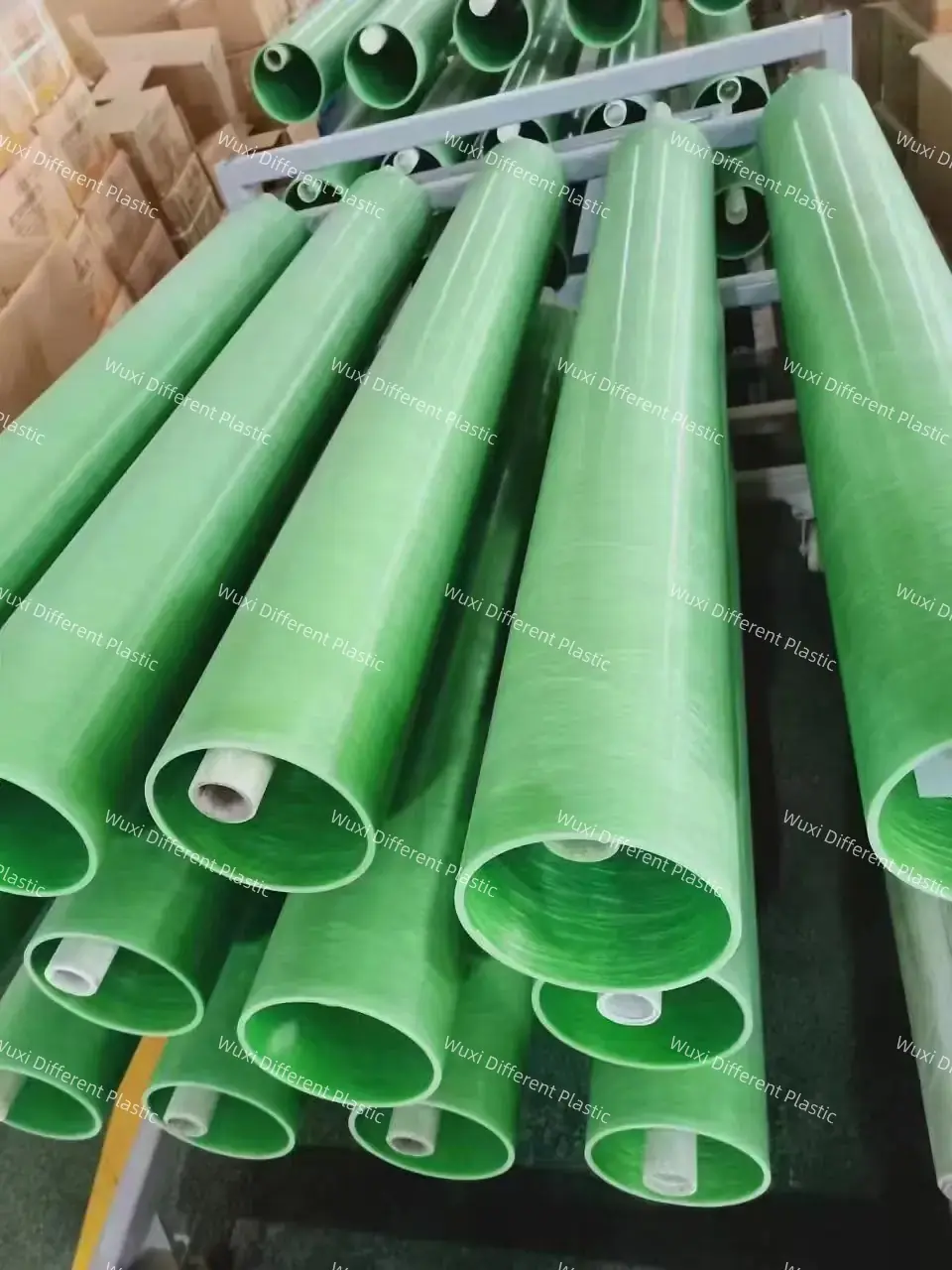
A fiberglass tube refers to hollow composite profile that is reinforced using glass fibers and consequently shaped into a cylindrical form with the help of a resin binder. In layman words, it is the combination of the power of glass reinforcement and flexibility and toughness of engineered resins. Due to that combination fiberglass tubing has been a viable substitute of conventional materials in most industries.
The demand has increased in the electrical and construction and industrial applications since engineers are required to have components that remain stable in the harsh conditions but ensure that the installation processes are simple and safe. In electrical systems, it is typical to have high levels of insulation and reliability on moisture, heat, and vibration.
Construction teams desire structural components that will not corrode and minimise lifting work. The industrial plants require materials that can withstand the environment that includes chemicals, weather and extended service.
Fiberglass is taking over the use of metal and plastic in areas which corrosion, conductivity and weight are posing long term problems. Metals are prone to rusting or corrosion and they are conductive and this introduces safety and design restrictions. Most plastics are resistant to corrosion, although they may have problems with rigidity, heat, creep on the job or UV decay based on the formulation. Fiberglass tubes fill that gap by offering high performance of strength-to-weight, high corrosion resistance and high electrical insulation properties.
This paper disaggregates the nature of fiberglass tubes, their production, the major varieties of tubes, their key characteristics, grades and standards, applications in practice, their benefits and their drawbacks as well as the comparison between fiberglass, metal and plastic tubes.
What Is a Fiberglass Tube?
A fiberglass tube is a composite cylinder that is constructed using two major components, namely, glass fibers and a resin matrix. The majority of the mechanical load falls on the glass fibers. The resin fixes the fibers in the structure, transfers stress among them, waterproofs, and shields the structure against chemicals, and gives it the finished surface.
1)Basic structure and composition
Glass reinforcement: It is usually E-glass as roving, mats or woven cloth. Fiber orientation matters. Tensile strength and stiffness in the direction of the tubes are enhanced by fibers running along the tube length, whereas hoop strength and pressure abilities are enhanced by circumferential fibers.
Resin matrix: The usual options are polyester, vinyl ester, epoxy and phenolic resins. The families of resins offer another combination of price, chemical resistance, heat performance, and electrical conductivity.
2)How fiberglass tubes are formed?
Fiberglass tubes are made by placing fibers in a streamlined and moistened state and filling them with resin, which is then molded over a die or a mandrel by the manufacturers. The tube is then allowed to cure in controlled conditions until the hardening of the resin and attainment of dimension stability of the profile. The tube is then cut, cured and finished depending on surface and tolerance requirements.
3)Solid rods vs hollow tubes
The fiberglass rods are solid composite profiles that maximize the bending stiffness and load carrying capacity with a given diameter, but they increase weight and cost of material.
Fiberglass tubes eliminate the interior material that does not significantly contribute to bending resistance, which is frequently weight efficient. Internal routing of wires, fasteners, inserts or fluid lines can be made through hollow tubes, and can provide a powerful bending and torsion performance, yet be easily handled.
Types of Fiberglass Tubes
There are a variety of manufacturing styles of fiberglass tubes which are optimized in different loads, environment and cost.
1)Pultruded fiberglass tubes
The Pultrusion process creates continuous profiles of composite materials consisting of fiber bundles being dragged over a resin bath and a heated molding die. It produces uniform dimensions, surfaces and good mechanical properties along the length of the tube. Pultruded tubes are used in structural supports, frames, ladders, crossarms, handrails and members with light weight that require consistency in quality.
2)Filament-wound fiberglass tubes
Filament Winding Filament Winding consists of wound continuous resin-wetted fibers onto a rotating mandrel in specific patterns. Manufacturers adjust hoop strength, axial strength and torsional resistance by altering the winding angles. Filament-wound tubes are applicable to parts that are pressure related, high-load cylinders, chemical processing environment, and even setups that require high strength on several directions.
3)Spiral-wrapped fiberglass tubes
Wrapped-and-rolled or spiral-wrapped tubing Tubing Spiral-wrapped tubing is made by wrapping a mandrel with a resin impregnated piece of glass cloth or mat, often in multiple layers. The result of this method is able to provide thicker wall sections and good electrical insulation performance. Wrapped construction has been used in many electrical insulation tubes since it allows layers to be built controlled and has been shown to be reliable in dielectric properties.
4)Electrical-grade vs structural-grade tubes
The electrical grade tubes are designed in terms of insulation, dielectric strength, arc resistance and thermal stability in electrical service. The type of systems they refer to are mostly epoxy or phenolic systems with glass cloth reinforcement.
Structural-grade tubes have greater focus on mechanical strength, impact resistance and long-term weathering to be used as a load-bearing. Most of them utilize polyester or vinyl ester systems, but where performance mandates merit it they use epoxy.
Manufacturing Process
Although certain processes differ depending on the type of tube, most fiberglass tube fabrication is similar in that, fiber preparation occurs first and the final step is completion.
1) Fiber preparation
The manufacturers choose glass reinforcement depending on the final performance objective. Rovings should be continuous to offer high strength. Woven fabric offers equal properties and dimensional stability. Mats assist in adding and enhancing thickness and interlaminar bonding. The size and purity of fibers is important because it affects the adhesion and the durability of resin.
2) Resin impregnation
It consists of a resin system which is mixed with catalysts or hardeners and fibers are fully impregnated. Proper wet-out is critical. It eliminates dry areas and viciities that have the potential to lower strength and electrical reliability. There are open resin bath processes and controlled injection processes or resin transfer processes to deal with consistency and emissions.
3) Tube forming methods
Pultrusion: The fibers are exposed to resin and then through a die which is heated to shape the tube. The die regulates the outer diameter, inner diameter and the wall thickness.
Winding of the fibers: Fibers get wound around a mandrel at a specified angle. This may be done by adding layers to strengthen and add thickness and then the part dries on the mandrel.
Spiral wrapping Resin impregnated cloth is wrapped around a mandrel, one layer over another. During rolling, the tube is compressed in order to push out the trapped air and enhance consolidation.
4) Curing process
The liquid resin is transformed into the solid form using a chemical crosslinking method referred to as curing. Manufacturers manipulate temperature, time and pressure in order to attain complete cure and fixed properties. Post-curing also has the benefit of enhancing heat resistance and electrical behavior particularly in epoxy and phenolic resin.
5) Cutting and surface finishing
The tube is cut to length after it is cured. Where necessary, edges are deburred and chamfered. The finishing may involve sanding, machining, grinding to tolerance, applying protective finishes or placing topcoats which are UV resistant to use in the outdoor service. Certain tubes are grained to hold on to, bond or paint.
Mechanical and Physical Properties
Fiberglass tubes are used to gain their reputation since they provide a high level of structural performance, resistance to the environment and electrical behavior.
1)High tensile and compressive strength
The tensile strength of fiberglass composites would be high since the load is carried efficiently with the glass fibers; particularly when the fibers are aligned along the tube axis. Manufacturers make layups according to bends, compression, and torsion. Fiberglass is in many ways an excellent choice of stiffness to its weight, especially in light structural members, so it is useful in portable structures, frames and supports.
2)Light and resistant to corrosion
Fiberglass normally weighs much lower than steel and still offers high mechanical capacity which lowers shipping cost and makes handling in the course of installation simple. It is also resistant to rust, and other types of corrosion since it does not oxidize as metals. This is a significant life-cycle advantage in wet, coastal, chemical as well as underground environments.
3)Electrical insulation characteristics
Essentially fiberglass tubes, especially the epoxy-glass type, and phenolic-glass system are effective electrical insulators. They are capable of offering reliable dielectric operation under challenging environments and these are applicable in switchgear, transformers, busbar support, insulation sleeves and protective enclosures.
4)Thermal resistance
The thermal performance is based on the resin selection. The properties of many epoxy glass systems are maintained well at high temperatures and there are higher temperature grades that are provided to service in more demanding conditions. Certain electrical laminate standards present performance requirements on epoxy based reinforced materials in electrical applications.
5)Low thermal conductivity and electrical conductivity
The fiberglass composites tend to conduct a significant amount of heat and electricity as compared to metals. That helps to design safer around live electrical elements and controls thermal bridging in structures where temperature variations of importance occur. It is also applicable in systems where the designer desires to use a material that remains more stable with changes in temperature and avoids galvanic corrosion with other metals.
Common Grades and Standards
Fiberglass tubes come in various resin grades and they are usually in line with the electrical and industry materials standards.
1)Epoxy fiberglass tubes
Epoxy systems usually provide good mechanical properties, excellent electrical insulation and good moisture resistance. The numerous electrical insulation products do mention standards and grade systems applied to epoxy-based glass-reinforced laminates. IEC 60893 specifies the requirements and types of industrial rigid laminated materials to be used to make electrical applications.
2)Polyester fiberglass tubes
Polyester resins have been popular in structural fiberglass due to their cost effectiveness, corrosion and production efficiency. They can be applied in most industrial settings, in open buildings, and most mechanically in various applications.
3)Phenolic fiberglass tubes
Phenolic systems are commonly utilized where thermal stability, electrical insulation and flame resistance are of concern. They can be used in electrical insulation components and applications where heat behavior and the existence of a safe behavior are highly valued.
4)ASTM and IEC standards
To test and qualify, manufacturers and buyers usually resort to a combination of ASTM mechanical testing techniques and the IEC or NEMA specification of materials. As an example, ASTM D638 is a tensile test of plastics (including reinforced plastics) under prescribed conditions.
ASTM D790 finds many applications in flexural testing of reinforced and unreinforced plastics and composite. Applicability in pipe and tube specification In pipe and tube applications, apparent hoop tensile strength evaluation methods of reinforced plastic pipe make use of ASTM D2290, and it is cited in related literature in filament-wound tube testing.
Applications of Fiberglass Tubes
The reason is that fiberglass tubes can be used in a large variety of applications since engineers can choose the type of tube, resin system, thickness of the wall and surface finish to suit the environment and load.
1)Electrical insulation sleeves and components
Fiberglass tubes of electrical grade are used as conductors insulation sleeves, switchgear barriers, transformer supports or structural insulators in high voltage systems. Epoxy-glass laminate families also support tube forms applied in insulation assemblies with support of tube sizes of custom size, when applied in electrical applications.
2)Scaffolding and construction
Fiberglass tubes are used in scaffolding structures, ladders, handrails, platforms as well as structural frames where resistance to corrosion is important and lightweight is important. When the crews operate around energized equipment, the non-conductive properties are useful.
3)Chemical processing plants
Fiberglass tubes are applied in chemical facilities in buildings, fences, frameworks, and utility systems that are exposed to corrosive vapors, splashes, and humidity. Fiberglass is appealing in severe industrial conditions because it can be enhanced with the help of vinyl ester and special resin systems that enhance chemical resistance.
4)Automotive and aerospace
Fiberglass tubes are used to support lightweight structures, ducts, housings, and other secondary load-bearing structures in transportation. The use of composites helps designers to make products lighter but stiffer and thereby more efficient, more easily assembled.
Sporting products and marine products.
Fiberglass tubing is used in fishing rods, tent poles, boat parts, masts, oars and performance equipment. Corrosion resistance is rewarded in marine environments and the lightweight feel and strength contribute to the performance of the products and the comfort of the users.
In these applications, fiberglass tubes also facilitate customisation. The manufacturers can modify the diameters, wall thickness, fiber directions, surface finishes and color systems. Fiberglass tubing is a convenient platform material with that flexibility that does not make it a one-size solution.
Advantages of Fiberglass Tubes
Fiberglass tubes offer a combination of benefits that are important in the field performance and design.
1)Corrosion and weather proof
Fiberglass is also not subject to rust and it withstands numerous types of weather. Tubes can be used in the field to work long durations with a proper selection of resin and UV protective covers.
2)Good strength to weight ratio
Fiberglass gives it good mechanical strength and yet remains lightweight in the sense that it can be installed faster and transported easily. This is useful in the projects where the time and the lifting capacity, and safety is directly influencing the cost.
3)Non-conductive
One of the reasons why engineers prefer fiberglass is electrical insulation. The non-conductive behavior facilitates the safer designs in and around the energized systems and minimizes the chances of stray current problem.
4)Long service life
In the corrosive and humid atmosphere where the metals decay rapidly, fiberglass is able to provide long service. Minimized corrosion damages tend to reduce the rate of maintenance.
5)Economical in the long-term
First purchase will depend upon grade, but economy over life-cycle may be better since fiberglass will decrease replacement, re-painting, and downtime due to corrosion. That stability over the long term becomes the determining factor of many facilities.
Limitations and Disadvantages
Fiberglass tubes have limitations as well that the designers would need to consider.
1)Fractured at the extreme impact
Under sharp and high-energy impacts, fiberglass composites are also likely to crack, particularly in comparison with ductile metals, which deform prior to failure. The risk can be mitigated by design of tubes, selection of resin and protective sleeves, though impact is also a major factor to consider in rough handling condition.
2)More expensive than PVC on general applications
PVC and other plastics may be cheaper as long as the load is low, and the risk is low. The strength, temperature performance, or corrosion resistance is the factor that makes fiberglass more appealing.
3)Difficult to recycle
Thermoset fiberglass composites have proven difficult to recycle at large size since the resin cured is not meltable like most thermoplastics. There are also recycling routes although these are usually based on grinding and downcycling as opposed to complete closed-loop reuse.
4)UV degradation without coating
Prolonged UV exposure may cause degradation of surface resin resulting in chalking or a decrease in the quality of appearance. To preserve outdoor tubes and preserve properties with time manufacturers are likely to add UV inhibitors, surface veil or topcoats.
Fiberglass Tube vs Metal and Plastic Tubes
Fiberglass, metal, and plastic are selected based on the priorities in terms of performance and the overall cost of ownership.
1)Weight comparison
Fiberglass has a tendency to weigh much less than steel thereby cutting down on the effort needed to handle it and the amount of time required to install. Aluminum is lighter than steel, though fiberglass continues to compete quite well in weight sensitive constructions, particularly where insulation is important.
2)Corrosion resistance
Fiberglass is less susceptible to rust as well as numerous exposures to chemicals, compared to carbon steel and most metal alloys. Plastics are also resistant to corrosion, although may succumb to creep, UV aging or heat limits as per formulation. The balance between mechanical and environmental packages is often offered by fiberglass.
3)Electrical properties
Metal is a conductor of electricity and poses safety risks when power systems are placed without insulation and clearance by the designers. Fiberglass has intrinsic electrical insulation that can help to ensure safer structures around electrical equipment.
4)Cost and durability
Metals may provide exceptionally high impact toughness and dependable ductility, assisting in the setting of abuse-heavy workplaces. Plastics can be cost effective in case of light-duty use. Fiberglass usually prevails in the mid- through heavy duty applications where corrosion, electricity and extended service are combined.
| Factor | Fiberglass | Metal (Steel/Al) | Plastic (PVC/HDPE) |
| Weight | Light | Steel heavy; Al lighter | Light |
| Corrosion | High | Steel rusts; Al can corrode | High (grade/UV dependent) |
| Electrical | Non-conductive | Conductive | Non-conductive |
| Cost | Mid (good life-cycle) | Steel low; Al/alloys higher | Low (light-duty) |
| Durability | Strong, impact-brittle | Tough, ductile | Varies; can crack/creep |
Sustainability and Future Trends
The process of sustainability in fiberglass tubing deals with enhancement of resins, longer durability and better recycling systems. The thermoset composites have been a challenge to recycle since the old melt-reform technology cannot be used. Many industry initiatives are ongoing in mechanical recycling to filler materials and new methods of chemical recovery, but these have different scalabilities depending on the area.
During the production process, manufacturers are also looking into bio-resins or less-emission resin chemistries so as to become less environmental impactful. With the growing focus on overall environmental footprint as an important feature by industrial buyers, the long service life will be a sustainability benefit as fewer replacements will decrease material throughput and transportation requirements.
The prospects in the future are strong in electrification, grid upgrades, renewable energy infrastructure, chemical processing and lightweight structural systems. The use of standards based qualification remains a necessary part of the adoption process as it makes performance more uniform and similar between suppliers particularly in electrical and industrial use.
Bottom Line
The fiberglass tubes have an attractive set of performance characteristics: high weight-to-strength ratio, high corrosion resilience as well as effective electrical insulation. Pultrusion, filament winding or even spiral wrapping of tubes can help manufacturers to manufacture tubes that suit actual load cases, environmental exposure and compliance requirements.
Fiberglass in electrical systems provides safer designs through the provision of non-conductive strength and stable performance in the provision of insulation. It assists in construction and industrial buildings to minimize the maintenance associated with corrosion and it also maintains structures light in weight and they are easy to install. The choice of customizable diameters, wall thicknesses, resin systems and surface finishes also provide flexibility to designers.
There are also some limitations to fiberglass, such as impact sensitivity in some applications, the need to protect against UV in extreme outdoor conditions, and recycling, which is a problem in thermoset composites. Nevertheless, in scenarios where the projects require long service life, stability even in severe conditions, and lighter construction with the benefit of insulation, fiberglass tubing is a smart material of industry.
𝙁𝙤𝙧 𝙢𝙤𝙧𝙚 𝙞𝙣𝙛𝙤𝙧𝙢𝙖𝙩𝙞𝙤𝙣:
📧Email:info@differentplastic.com


