
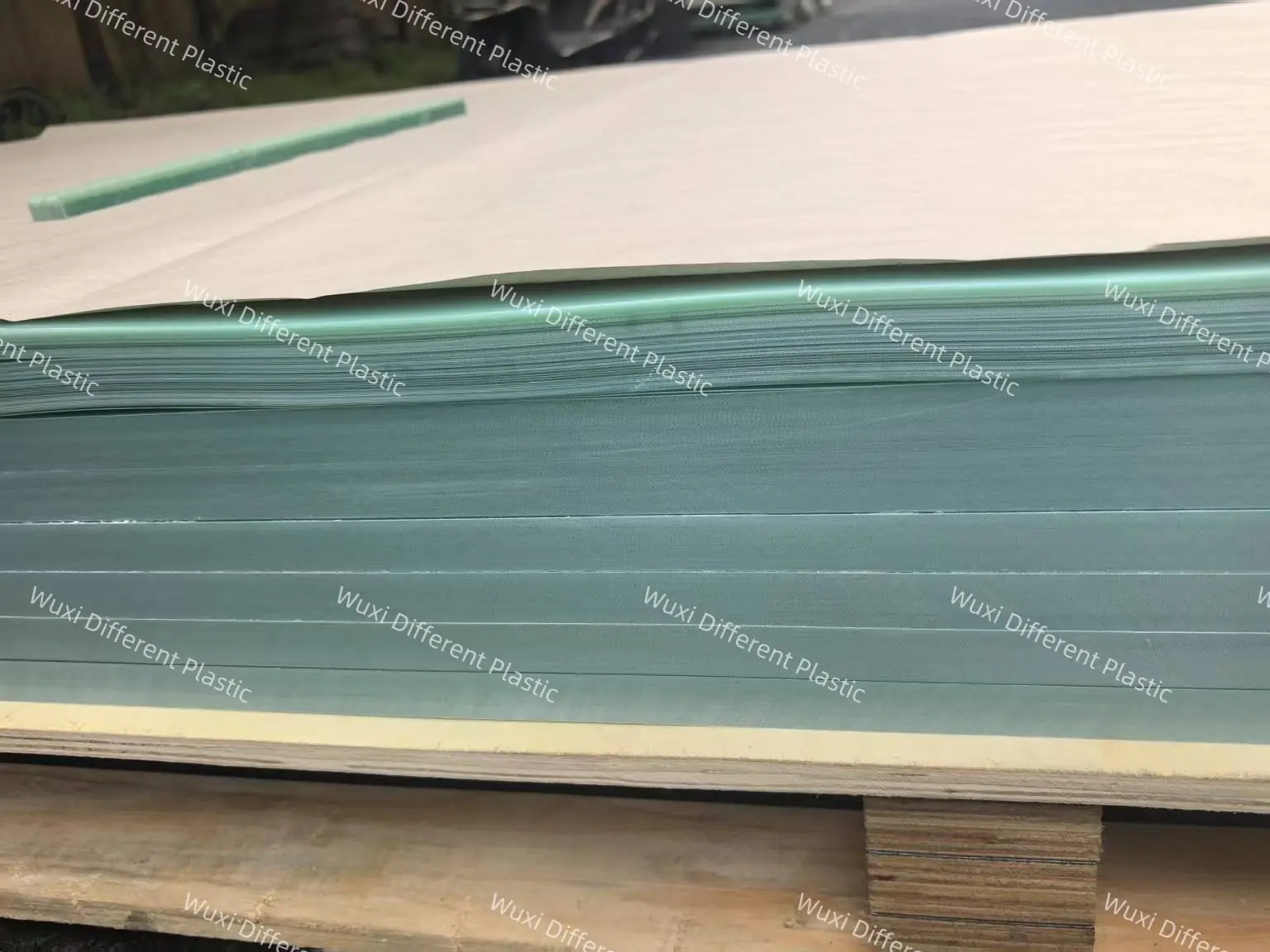
One of the most common composite materials in contemporary industries is fiberglass sheets which are very strong, lightweight and do not withstand adverse environment. Fiberglass sheets are made by mixing fine glass fibres with polymer resins and thus, offer a potent alternative to the traditional construction and engineering materials like steel, aluminum, wood, and plastic.
Fiberglass can be traced back to the early 20th century when scientists learned that it was possible to draw molten glass into extremely fine fibers. By the 1930s, manufacturers were adding these fibers to plastic resins to produce reinforced composite material. This invention changed the brittle glass into a structural material with a high performance.
With time, fiberglass technology developed simple glass mats into complicated laminates with sophisticated resin systems such as epoxy, vinyl ester, and polyester. The best of these is the epoxy fiberglass sheets, which are more powerful in terms of mechanical properties, thermal and electrical insulation and the chemical resistance. Fiberglass laminates based on epoxy are used today in aerospace, in electronic applications, in heavy-machinery, and in chemical processing plants as well as luxury construction.
Fiberglass sheets are necessary since they resolve numerous issues that cannot be resolved by metals and wood. Fiberglass does not corrode unlike steel. It does not degrade or bend like wood or even attract insects. Fiberglass is much stronger and temperature resistant as compared to plastics. All these benefits render fiberglass sheets a durable, economical and ecological solution.
The article will discuss all the processes of fiberglass sheets including raw glasses and industrial strength composites but with particular emphasis on epoxy fiberglass sheets, their characteristics and how they are produced as well as their importance in current technology.
What is a Fiberglass Sheet?
Fiberglass is a polymer resin based on a laminate that consists of fibrous sheets of particles of fine glass embedded in the polymer resin. The glass fibers are of high strength, rigidity, and dimensional stability, the resin holds the fibers together and resists the fibers to moisture, chemicals, ultraviolet radiation and other environmental conditions. This mixture results in a material that is much stronger and stiffer than plastic and still lighter than metals thus making it very versatile with many industrial and commercial uses.
Composition
Fiberglass sheets consist mainly of two components, namely, glass fibers and a polymer resin matrix. The glass fibers are the reinforcement and they bear the majority of the mechanical load and the resin matrix holds the fibers together, transfers the stress and protects the fibers against environmental destruction.
This combination of fiber and resin enables fiberglass sheets to realize high strength-to-weight ratio, high durability and long performance even in a harsh environment.
Common Resin Systems
The resin employed on the sheets of the fiberglass largely influences its performance. The most cost-effective one is polyester resin that can be used in general purposes like construction panels and rudimentary insulation.
Vinyl resin in form of the ester resin has better chemical resistance and is commonly applied in chemical factories, marine constructions and areas where corrosive substances are present. The best one is the epoxy resin which has better adhesion to fibers, greater mechanical strength, superior thermal stability and superior chemical resistance.
Epoxy fiberglass sheets are common in aerospace, electronic, industrial machinery, and other high performance-based applications where reliability is a crucial factor.
Physical Structure
Fiberglass sheets are produced in the form of layered laminates, usually either of woven fabrics, mats or roving fibers overlaid and bonded with resin. Directional strength, flexibility and impact resistance can be controlled by the orientation of the fibers in each layer. Such a stratified architecture gives manufacturers the opportunity to design sheets with a high degree of control over mechanical and thermal properties, and they are able to choose to use them in a particular application: such as in allowing construction of lightweight panels or in high-strength components in aerospace manufacturing.
Raw Materials Used in Fiberglass Sheets
Glass Fiber Types
Glass fiber is the backbone of all fibers of glass that offer strength, stiffness and dimensional stability. E-glass or electrical-grade glass, most frequently put into use, is a compromise between strength and insulation characteristics as well as cost, and represents a balanced condition.
A high-strength type of S-glass is employed as aerospace, defence, and high-performance industrial applications because it has a better tensile strength and heat resistant characteristics. C-glass is however extremely impervious to chemical corrosion and is commonly employed in chemical storage tanks, ducts, and industrial flooring when subject to a lot of acid or alkali activity.
Resin Systems
Fiberglass sheets are not glass, the polymer resin applied is also very important in deciding the performance of the sheet. The most economical and general use polyester resins. The vinyl ester resin has greater adhesion and chemical resistance than the polyester resin and thus it is usable in the industries.
Epoxy resins are systems that have high performance giving them excellent mechanical strength, thermal stability, and chemical resilience. Fiberglass sheets made of epoxy are found to be especially useful in aerospace, electronics and industrial machinery.
Fillers and Additives
In order to improve the characteristics of fiberglass sheets, it is supplemented with fillers and additives. Ordinary fillers include alumina, calcium carbonate to enhance rigidity and heat resistant properties.
Flame retardants render the sheets fire resistant whereas UV stabilizers prevent degeneration of the material due to the sun rays. These additives can be tailor made as per the purpose of the usage of the sheet.
Catalysts and Hardeners
Resins need catalysts and hardeners to regulate the curing periods and achieve the best of mechanical properties. These agents are selected and their amount depends on how the sheet is going to be used (heat resistance, strength, and durability).
The development of catalysts should be made in a proper manner to make sure that the sheet cures evenly and gets a consistent and reliable composite.
Manufacturing Process of Fiberglass Sheets
Fiber Production
It starts by melting the raw materials, i.e. silica sand, limestone, and alumina at temperatures that are more than 1400°C. The molten glass is passed through platinum bushings to create thin fibers and then cooled down. Protective sizing agents are used on the fibers to enhance adhesion between them and resins. The result of this is continuous or chopped fibers which are prepared to be in sheet form.
Sheet Formation Methods
Fibers and resin can be made into fiberglass sheets in a variety of ways. Hand lay-up is the manual application of resin-coated fibers, which is appropriate to a custom shape and low-volume manufacture. Spray-up involves the use of chopped fibers that have resin sprayed onto them to give irregular or curved design.
Compression molding is used to apply pressures and heat to obtain uniform flat or shaped sheets with high degrees of uniformity. Pultrusion involves a continuous profile that is created by drawing fibers through a resin bath which is then cured. Cylindrical components including pipes and tanks are wound as filament and the fibers are wound under tension.
Curing and Finishing
Sheets are formed then subjected to curing, which either may be heat-curing or may involve a chemical curing process. This makes the resin hard and traps the fibers at a powerful composite.
Once the sheets have cured, the sheets are trimmed down to size and the surface is completed with coating like gel coats or fire resistant coating. Correct finish guarantees resistance to chemicals, resistance to chemical, and beauty.
Types of Fiberglass Sheets
Plain Fiberglass Sheets
Plain fiberglass sheets are plain and smooth, which is usually used in construction and in general purpose. They offer uniform strength and life of walls, panels and even roofing.
Corrugated Fiberglass Sheets
Corrugated fiberglass sheets are used as a lining material in the manufacturing of material conveyor belts. Corrugated sheets are wavy and thus they are rigid and strong. They have a high roofing and siding application suitable in the face of bending and environmental pressures.
Glass Fiberglass Panels
These panels are permeable to natural light and at the same time strong and weatherproof. The skylights, greenhouse, and light-diffusing walls are often subject to their application.
FRP (Fiber Reinforced Plastic)Sheets
FRP sheets are made with a high strength, durability and resistance to chemicals by combining the fibers of glass with the resin. They can be used in the industrial, marine, and construction industries.
Anti-Slip Fiberglass Sheets
Anti-slip sheets have textiled surfaces to avoid accidents in the wet or industrial places. Mostly they are used on the floor, stairs and walkways.
Fire-resistant and Fiberglass Sheets
Flammable sheets act slowly to stop the propagation of fire and lower the emission of smoke. They are applicable in buildings of public, electric enclosures, and transport.
Epoxy Fiberglass Sheets
Products Epoxy fiberglass sheets are high performance FRP that is highly strong, chemically stable and thermally stable. They find extensive use in aerospace, electronics and in industrial machinery.
Physical and Mechanical Properties of Fiberglass Sheets
Tensile Strength
Tensile strength can be described as the resistance of the material to forces that draw it or stretch it. The tensile strength of epoxy fiberglass sheets is very high and very high compared to polyester based sheets. This causes them to be applicable in structural work where there is a need to have high load-bearing capacity e.g. aerospace panel work, industrial machinery, and high performance sporting equipment.
Impact Resistance
Impact resistance refers to the capacity of a substance to take in the energy of the abrupt forces or shocks. Epoxy fiberglass sheets have great impact resistance power which means that they may be accidentally hit and still remain without cracking or breaking. Contrarily, polyester resin sheets have moderate impact resistance, sufficient to use in general construction but not to withstand high-stress applications.
Thermal Stability
In high temperatures, up to 150 200°C or more with the type of resin used, epoxy fiberglass sheets are strong and dimensionally stable. This renders them applicable to electrical insulation, industrial apparatus and aerospace parts of heating nature. However, polyester sheets are less thermal resistant and can be deformed under the same condition.
Electrical Insulation
The liaison of glass and high-performance epoxy resin makes epoxy fiberglass a good electrical insulator. It stops leakage of current and can also withstand high-voltage conditions thus it can be used in printed circuit boards, transformer insulation, and electrical housings. Polyester fiberglass offers good insulation but less when the conditions are of high voltage or high temperature.
Chemical Resistance
Epoxy fiberglass sheets are extremely immune to chemicals, acids, and solvents. This feature renders them ideal in chemical processing plants, industrial flooring and marine surroundings. Polyester fabrics are fairly resistant to chemicals, and can degrade when in contact with strong acid or alkalis, or long-term contacts with chemicals.
Fiberglass vs Other Materials
| Material | Strength | Weight | Cost | Corrosion Resistance |
| Fiberglass | High | Light | Medium | Excellent |
| Steel | Very High | Heavy | High | Poor |
| Aluminum | Medium | Light | High | Good |
| Plastic | Low | Light | Low | Fair |
Applications of Fiberglass Sheets
Construction
The fiberglass sheets are common in the roofing, wall and skylights as well as facade panels since they are light in weight but very powerful. They make the buildings less load bearing, and also provide the best protection against moisture, corrosion and UV radiation. This has made them suitable in residential and industrial building where durability is needed over a long period of time.
Electrical Insulation
Fiberglass is a good conductor of electricity, it can resist high temperature and it does not lose its characteristic. It is provided in switchboards, transformer housings, cable trays and control panels. High-voltage systems mostly use epoxy fiberglass sheets due to their high thermal and dielectric strength.
Automotive
Fiberglass sheets are also applied in the automotive industry in the body panels, dashboards, door parts, and parts of interior parts. Their light weight makes them less weighty to the cars thereby enhancing fuel efficiency and performance. Epoxy fiberglass can also offer high impact strength, vibration damping, and thus it can be used in structural automotive parts.
Chemical Plants
The fiberglass sheets are suitable in the chemical plants as they are resistant to acids, solvents, and corrosion of chemicals. They are applied as flooring, storage tanks, wall linings, and ventilation ducts. Fiberglass sheets based on epoxy are even more chemically stable, which is why they can find their application in the harsh industry.
Marine Industry
It is in the marine industry that fiberglass is utilized in boat hulls, decks, cabins, and structural panels because it does not succumb to saltwater and moisture. Fiberglass is not rusting or rotting and this prolongs the life of the marine structures. Epoxy fiberglass is resistant to water and stronger and thus it is suitable in high performance boats.
HVAC Systems
HVAC systems require fiberglass sheets to be used as air ducts, insulation panels, and housings of equipment. They are also very thermal insulating and they minimize noise transmission. They are safe and reliable in indoor air system as they have fire and moisture resistant properties.
High-Performance Epoxy Applications
Printed circuit boards (PCBs), transformer insulation, aerospace panels, and industrial flooring have been widely used requiring epoxy fiberglass sheets. They are very important in high-performance and precision industries because of their high mechanical strength, thermal stability, and electrical insulation.
Sustainable Environmental Impact
Long Lifespan
Fiberglass sheets have been known to last decades without a lot of degradation hence requiring few replacements. This reduces material wastage since the service life is long and reduces the total environmental footprint. Durable materials are also used, which lowers the costs of maintenance and consumption of resources.
Recycling Challenges
Fiber glass is not easily recyclable since it is a composite which is composed of fibers and resin. These components cannot be easily separated by conventional ways of recycling. Nonetheless, emerging mechanical and chemical recycling processes are being created in order to enhance sustainability.
Energy Efficiency
The Fiberglass insulation lowers heating and cooling energy needs in the buildings and factories. This assists in reducing the use of electricity as well as minimizing greenhouse gas emissions. The fact that it is light also reduces transportation energy costs.
Eco-Friendly Epoxy Resins
Epoxy resins in the modern times are coming up in formulations that are bio-based and low-VOC. These lessen the adverse emissions in production and consumption. Green build epoxies help in choosing production practices that are eco-friendly and enhance environmental performance.
Finishing, Coating and Fabrication
Gel Coats
Fiberglass sheets are covered with gel coats that produce glassy and smooth surfaces that are protective. They improve the look but offer protection against moisture, chemicals and UV rays. Gel-coated sheets are used in marine, architectural and in decorations.
Fire-Retardant Treatments
Fiberglass sheets are made flammable by the use of fire-retardant additives. These interventions reduce fire propagation and reduce the formation of smoke. They are particularly significant in government houses, electrical compartments and the transportation systems.
Cutting and Drilling
Carbide or diamond tools can cut, drill and bend fiberglass sheets. They can be accurately fabricated without cracking or breaking. Safe handling is important whereby there is proper control of dust.
Shaping and Machining
The fiberglass sheets are mouldable, bendable, and CNC-machinable into very complicated shapes. Even after shaping they remain strong. Epoxy fiberglass is stress resistant and therefore suitable in precision components.
Trends Future of Fiberglass Sheets
Smart Composite Panels
Sensors monitoring stress, temperature and damage shall be embedded in the sheets of fiberglass that shall be used in the future. Such intelligent materials will enhance building and infrastructure safety and maintenance. They will be significant to smart cities.
Lightweight Construction Materials
The need to have light materials but strong is on the rise in industries. This is because fiberglass is being used in place of steel and aluminum in several structural applications. This lowers the amount of energy used and enhances design flexibility.
Sustainable Resin Systems
There is a tendency to develop recyclable and bio-based resin systems. These substances lessen environmental effects and achieve world-wide sustainability. The Epoxy technology is still moving towards more environmentally friendly solutions.
Renewable Energy Growth
Fiberglass is also very vital in the wind turbine blades, solar panel frames and the energy storage systems. It is light in weight and powerful hence suitable in renewable energy infrastructure. The demand will keep rising as more clean energy projects are developed across the globe.
Bottom Line
Modern materials engineering has encountered the fiberglass sheets. Of them, epoxy fiberglass sheets are the most efficient in terms of performance as they are a composite that is strong, insulated and durable and resistant, which is hard to achieve with conventional materials. With the industries on the need of lightweight, stronger, and greener materials, epoxy fiberglass will be one of the key milestones of innovations and advancement.


