
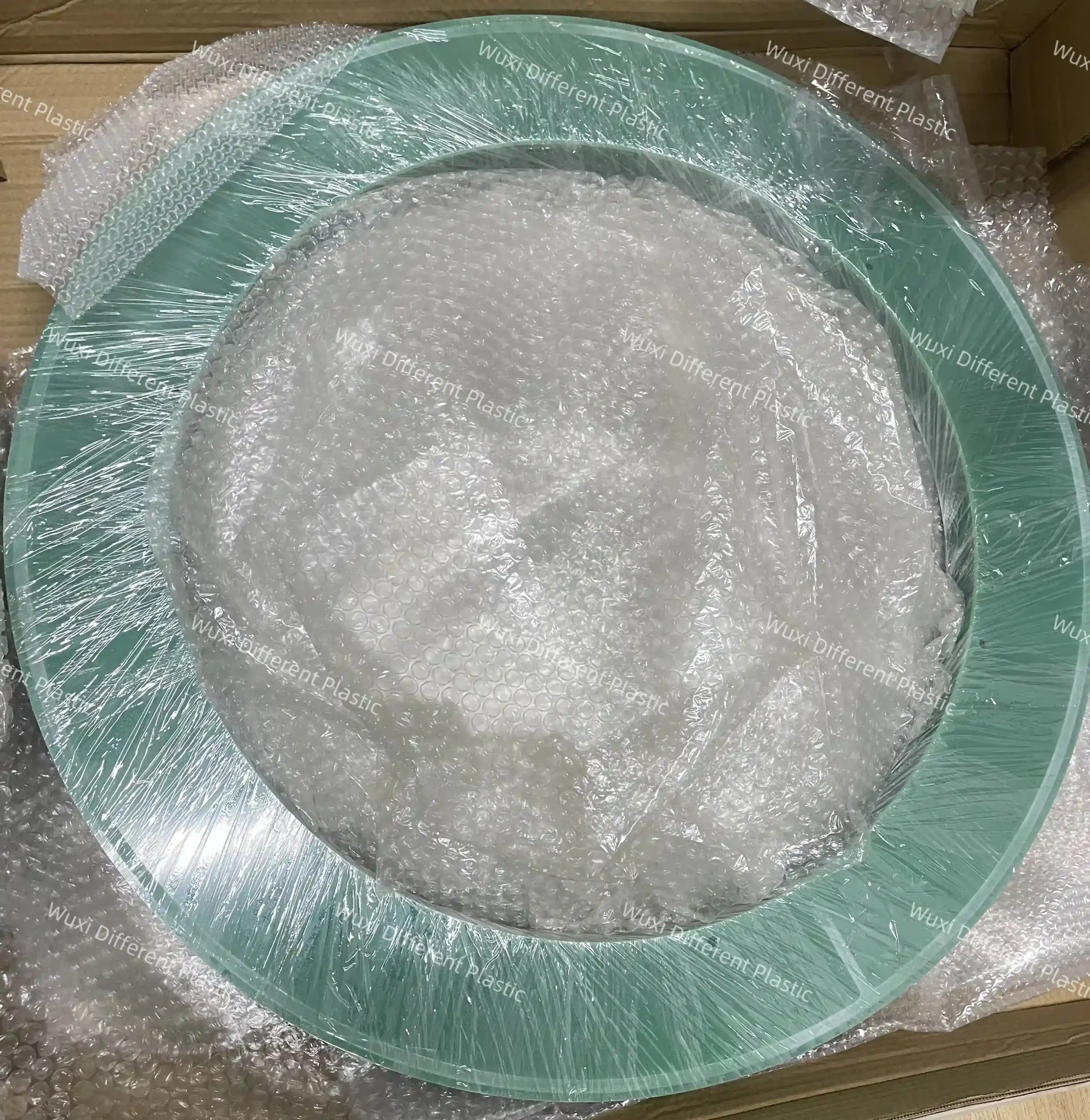
Doctor blades are essential in a variety of processes in industries especially in printing, coating and converting departments. Their main purpose is to control, meter and eliminate excess ink, coating or adhesive on rollers and cylinders and maintain uniform application and quality output. The output of a doctor blade directly has an influence on the quality of the products, the effectiveness of the machines, and the cost of operation.
Doctor blades were traditionally made of steel because of its strength and ability to cut. But, with the development of industrial processes and the acceleration of rates of production, the drawbacks of the metal blades became more evident. Problems like too much wear on anilox rollers, corrosion, noise and high replacement were issues that prompted manufacturers to consider alternative materials.
Doctor blades based on epoxy fiberglass have become one of the most effective solutions to those challenges. The blades have a good balance of strength, flexibility, wear resistance and chemical stability, this is achieved by a combination of fiberglass reinforcement with a tough epoxy resin matrix. They also offer a stable metering operation and greatly lowering the harm to costly machine parts.
This article gives us an in-depth discussion of epoxy fiberglass doctor blades which include; material composition, manufacturing process, mechanical and chemical properties, operational advantages, applications, advantages, disadvantages, and selection criteria and future trends. It is aimed to make engineers, operators, and decision-makers see the reasons why epoxy fiberglass doctor blades are becoming more and more popular in the contemporary industrial setting.
What Are Doctor Blades?
Definition and Function
A doctor blade is a fine part that scrapes, measures or regulates the depth of the liquid materials like inks, coats, adhesives or chemicals on a roller or cylinder rotating. The blade exerts regulated pressure on the surface scraping away superfluous material and creating an even-measured film.
The doctor blades are important in ensuring that the weights of the coating are consistent, no streaks or no uneven application and that the production quality is repeatable. A slight alteration in the performance of the blade can cause defects, waste and idle time.
Types of Doctor Blades
Doctor blades are offered in different materials that correspond to the requirements of a certain operation:
- Steel doctor blades: These are hard and sharp, and can be corroded and wear the rollers.
- Plastic and polymer blades: Have corrosion resistance and flexibility, but can be less durable in the service of hard demand.
- Blade made of composite and fiberglass: Strength, flexibility, and chemical resistance used together to achieve equal performance.
Epoxy fiberglass doctor blades are falling under the group of composites and are gaining popularity because of their versatility and cost-effectiveness.
Evolution of Doctor Blade Materials
With the improvement in printing and coating technology, more attention was given to the materials that would support the increased speeds, abrasive coating and use of harsh chemicals. They have developed composite materials like epoxy fiberglass which was meant to correct the inadequacies of the traditional blades besides enhancing the reliability of the entire process.
Understanding Epoxy Fiberglass Doctor Blades
Material Composition
The epoxy fiberglass doctor blades are made of composite materials made of two major components:
Mechanical strength, stiffness and wear resistance- fiberglass reinforced offers these properties.
Epoxy resin matrix that holds the fibers together and gives it chemical resistance, dimensional stability and durability.
The fiber glass is usually laid in layers whereby the fiber orientation is regulated to bring out the desired balance between flexibility and rigidity.
Manufacturing Process
The process of manufacturing involves using epoxy resin in the impregnation of fiberglass fabric/mats. This impregnated material is then subjected to controlled pressure and temperature so as to produce a uniform laminate that is dense. The laminate is cut after the curing process into blades of certain thickness, width and length.
The edge finishing is an important process because the position of the blade edge directly influences the metering and wear behaviour. Epoxy fiberglass blades with high quality have smooth and even edges to ensure maximum contact with rollers.
Key Design Characteristics
Epoxy fiberglass doctor blades come in different degree of thickness and rigidity to meet the diverse uses. The design provides limited flexibility so that the blade can bend around roller surfaces, but offer a constant pressure on the contact surface.
Mechanical Properties of Epoxy Fiberglass Doctor Blades
1) Strength and Flexibility Balance
The balance of strength and flexibility of epoxy fiberglass doctor blades is one of the most valuable benefits of this type of blades. When a blade of steel is in use, the blade is hard and unyielding to pressure, whereas the fiberglass blade has the ability to bend a little when pressure is applied.
This will allow the structural contact to remain uniform and help lessen concentrations of local stress. The fiberglass reinforcing allows the blade to have adequate rigidity to do correct metering even during high operation rates.
2) Wear and Abrasion Resistance
When used in conjunction with abrasive inks, pigments, or coatings, epoxy fiberglass blades have a high wear and abrasion resistance. The composite structure spreads the load of wear evenly on the face of the blade itself, which prolongs its life and minimizes the number of times the blade has to be replaced.
3) Dimensional Stability
Dimensional stability is critical in ensuring that there are consistency in performance. Epoxy fiberglass doctor blades do not deform, warp, or lose its edges even in a lengthy working time. This consistency guarantees good operation during long production cycles.
Chemical and Thermal Resistance
1)Ink, Solvents and Chemical Resistance
Epoxy fiberglass doctor blades are extremely resistant to a broad group of chemicals such as water based, solvent based inks, and UV inks. They do not corrode or rust in presence of moisture or hostile chemicals like steel blades therefore they can be used in a severe industrial setting.
2)Thermal Performance
Although epoxy fiberglass blades do not work at very high temperature, they are reliable at moderate temperature which is normally experienced in printing and coating operations. Their thermal performance also makes them reliable in the operation without softening or degradation in their performance even when operating at high speeds.
Operational Performance and Benefits
1)Consistent Coating Control
The metering of inks and coatings can be well done by the controlled flexibility and uniform edge of epoxy fiberglass doctor blades. This leads to uniform thickness of films, better print quality and less wastage of materials.
2)Lower Cylinder and Anilox Wear
Among the greatest advantages of having epoxy fiberglass blades, there is no metallic contact between them and rollers. This significantly decreases the wear on anilox rollers and cylinders which are costly and hard to service. The epoxy fiberglass blades help to save high costs in the long-term due to their extension of roller life.
3)Noise Reduction and Smooth Operation
The epoxy fiberglass blades also produce lower vibration and noise as compared to the steel blades. The effect of this is that it contributes to an easier running machine, ease in operation to the operator and a decrease in mechanical forces on machinery.
Epoxy Fiberglass Doctor Blade Applications
The doctor blades made of epoxy fiberglass do have high versatility as they are used in various industries where precision, durability, and chemical resistance are of paramount importance. These special properties include flexibility, strength and chemical stability and therefore make them applicable in high speed operations and abrasive materials. Their main uses are expounded in the ensuing subsections.
(1)Printing Industry
Epoxy fiberglass doctor blades are mostly employed in flexographic and gravure printing processes in the printing industry. Doctor blades are used in such applications to govern the amount of ink film on the rollers or cylinders. The advantages of epoxy fiberglass blades in printing are:
- Stable Ink Metering: The flexibility of the fiberglass blade guarantees that it will give even contact with the roller surface resulting in even transfer of ink, and less streaking, smudging or non-uniform printing.
- Anilox Roller Protection: This is unlike steel blades, which wear and score on costly anilox rollers and thereby shortens their service life and limit their maintenance expenses.
- High-Speed Operation: These blades are lightweight and flexible which gives them the ability to continue to perform at high production speed, thus, faster printing without losing quality.
- Flexibility in regard to Inks: Due to their chemical resistance, they can accept very numerous different inks, such as water-based, solvent-based, and UV-curable inks.
These features allow epoxy fiberglass doctor blades to be used in commercial printing presses, label printing and in high volume packaging printing.
(2)Coating and Converting Processes
In addition to printing, epoxy fiberglass doctor blades are widely applied in coating and converting, where total control of the adhesive, coating and functional layers is necessary. Their applications include:
- Paper and Film Coating: Coating is applied to create a uniform layer of adhesives or coating to paper, plastic films and composite material. The consistency of the coating thickness and minimization of the material waste can be achieved by the uniform pressure exerted by the blade.
- Foil Lamination: These blades are used in the packaging industry and flexible foil to ensure that adhesives or coats are not mixed to achieve good bonds and finish coatings.
- Applied Coatings: Epoxy fiberglass blades can be used to apply specialised coating, including anti-corrosion coating, protective coating, or conductive inks, in the production process.
- On-Going Processes in Industry: Being wear-resistant and chemically stable, they can be used in high-speed and continuous processes of industry, which reduces the downtime that is required when the blades wear out or when they need to be serviced.
Epoxy fiberglass doctor blades are used to advantage manufacturers by offering accuracy in metering and durability, thereby offering uniform quality of the product, minimizing waste, and offering efficiency in production in the coating and converting processes.
(3)Specialty and Industrial Applications
Besides printing and coating, epoxy fiberglass doctor blades are also used in various specialty and industrial operations which need precise control in the use of liquid or semi-liquid materials. It has been used in some distinct applications, such as:
- Textile Coating: These are employed in giving of dyes, coating or protective covering to fabrics used in textile production. Streaking is avoided and the uniformity of application is ensured by the consistent contact of the blade.
- Packaging Manufacturing: These blades are used in packaging processes in large volume productions to provide consistent adhesive layers to folding carton, label or laminated packaging films.
- Label Production: To print and finish labels, epoxy fiberglass blades provide a high degree of control of the ink and adhesive thickness which enhances the quality of the print and minimizes defects.
- Specialty Industrial Processes: Specialty industrial processes also find use in electronics, industrial laminates and specialty coatings where chimerical resistance is needed and dimensional stability and precision are needed.
In general, it can be stated that the versatility of epoxy fiberglass doctor blades can be used to address the intense requirements of the modern industrial process and provide a balance between the precision, durability, and security of the equipment of the high priority.
Comparison with the Other Doctor Blade Materials
Steel vs. Epoxy Fiberglass Doctor Blades
Steel blades are sharp edged, but may result in too much roller wear, corrosion and noise. Compared to other materials, epoxy fiberglass blades enable smoother operation, longer roller life, and less maintenance and are therefore cost effective in the long run.
Epoxy Fiberglass vs Plastic Doctor Blades
Plastic blades are not corroded yet they are normally not very durable and stiff to be used in hardworking. The epoxy fiberglass blades are better in strength, wear, and consistency of performance.
When Epoxy Fiberglass is a Choice
Epoxy fiberglass doctor blades are best in cases where the balance between performance, equipment durability and service life is a consideration.
| Aspect | Epoxy Fiberglass | Steel | Plastic/Polymer |
| Wear | Excellent, even wear | Quick edge wear, can damage rollers | Moderate, may deform under stress |
| Cost & Maintenance | Cost-effective, low maintenance | Low initial cost, high maintenance | Low initial cost, moderate maintenance |
| Durability | Balanced stiffness, flexible | Rigid, prone to chipping | Flexible, less durable |
| Performance | Consistent metering & coating | Declines as edges wear | Varies under load |
| Best Use | High-speed, long-run, roller protection | Short-term, ultra-sharp edge needs | Light-duty, low-speed applications |
Advantages and Limitations
Epoxy fiberglass doctor blades are well known in terms of their balanced performance, durability and efficiency in terms of operation. Although they have many advantages compared to traditional steel or plastic blades, they also have some limitations that should be taken into consideration when it is necessary to use it in a particular application. The subsections below give a closer summary.
Advantages
1)Long Service Life
Doctor blades made of epoxy fiberglass are meant to be used with long life. Fiberglass reinforcement combined with epoxy resin gives the blade tremendous wear resistance and it can perform at the same level under long production work. Epoxy fiberglass blades do not need a lot of down time and need replacement since, unlike steel blades, they do not wear out the blade edges, and thus do not necessitate frequent sharpening or replacement.
2)Outstanding Chemical and Corrosion Protection
The resistance of epoxy fiberglass blades to a large variety of chemicals (water-based, solvent based and UV-curable inks, adhesives and coatings) is one of the major advantages. Epoxy resin matrix prevents the corrosion of fiberglass fibers, and it is also important to keep the blade in its structural state even in the aggressive chemical environment. This renders them especially applicable in solvents that are harsh or in high humidity.
3)Fewer Roller and Cylinder Wears
In comparison to steel blades, which may impose scoring, abrasion, or surface damage to costly rollers and anilox cylinders, epoxy fiberglass blades are not metallic, so they are not rigid. This minimizes the mechanical stress on the equipment to enhance the roller life and enhance the overall machine reliability. Manufacturers will be able to incur predictable quality by reducing contact damage and reducing the maintenance and replacement costs.
4)Uninterrupted Metering and Coating Control
The flexibility and the exact edge of epoxy fiberglass doctor blades are controlled, which means that the contacts with rollers are uniform, and this means that the metering of inks, coatings, and adhesives is accurate. This uniformity enhances the quality of the product in terms of streaks, uneven applications, or over and under coating that is burdensome with aged or inappropriately positioned steel blades.
5)Cost-Effective Over the Equipment Lifecycle
Although the initial price of epoxy fiberglass blades can be a bit higher than the basic steel or plastic blades, they are very cost effective in the long term due to durability, less maintenance and protective role that they play to rollers. This is because the longer life and better operational efficiency leads to lower total cost of ownership particularly in high-volume production or continuous production.
Limitations
1)Unsuitable in Extreme High temperature Conditions
Even though the epoxy fiberglass blades are a good thermal stable blades in case of normal printing and surface coating procedures, they cannot be used in places with very high temperatures. When exposed to heat that is outside the toleration of the epoxy resin, prolonged exposure to heat can cause softening, deformation, or poor mechanical performance. Steel or special high-temperature composite might be more suitable in applications that need ultra-high temperature resistance.
2)Not Competent of the Ultra-Sharp Edge of Hardened Steel
Although epoxy fiberglass blades offer great flexibility to stiffness ratio, some of the precision applications require the ultra-sharp edge that hardened steel blades could offer. Hardened steel blades can still be desirable in processes which require very fine cutting or very thin metering with razor-edges. The cost however is more wear on rollers and also more maintenance needs.
General Principles and Good Practices in Selection
When choosing the appropriate epoxy fiberglass doctor blade, there are various matters of operation that need to be carefully put into consideration to guarantee maximum operations and life span.
The thickness of the blade and its stiffness should be in accordance with the nature of ink or the coating being applied and the speed and pressure used should be in harmony with the flexibility of the blade and the substrate surface. Correct installation and alignment is essential to avoid losses in wear, streaking and damage of rollers.
Further, inspection of blade edges must be carried out prior to use to check on the presence of burrs or defect and controlled pressure must be maintained during the use. Adhering to these instructions ensures maximum accuracy, less wastage, and preservation of expensive equipment parts.
Maintenance and Service Life Optimization
To extend the service life of epoxy fiberglass doctor blades, it is important to maintain them in order to maintain the same quality of the coating or printing quality. A defective production is avoided by inspecting the signs of wear and chipping or damage of edges on a regular basis.
The blades are to be cleaned in an appropriate manner in order to eliminate the remaining ink, coating, or adhesive that does not require the use of hard tools which may damage the edge. Immediate replacement in case of performance deterioration eliminates an imbalanced application or pressure on equipment.
Operators must not over-pressurize the operators because overloading causes wear to accelerate, and metering accuracy to be less. Blade integrity in between uses can be also maintained by proper storage in dry and controlled conditions that guarantee long-term reliability.
Trends and Development in the Future
The future of the epoxy fiberglass doctor blades is directly related to the development of the epoxy resin formulations and the methods of reinforcement of fiberglass. The development of new resin systems with increased thermal stability, chemical resistance and flexibility will allow blades to be used in more challenging industrial conditions.
The invention of fiberglass weaving and composite design would enhance the durability and wear reduction, as well as precision metering. Furthermore, the increasing industrial desire towards non-metallic equipment friendly solutions will result in an increase in the use of epoxy fiberglass blades in printing, coating, converting, etc.
The developments offer extended life, reduced maintenance and increased efficiency in the operation of modern manufacturing.
Bottom Line
The ink/coating control in industrial processes is a more modern and efficient solution with the epoxy fiberglass doctor blades. They are a good alternative to the conventional steel and plastic blades due to their combination of strength, flexibility, chemical resistance, and equipment protection.
With the need to focus on quality, efficiency, and cost control of industries, epoxy fiberglass doctor blades will become more significant in printing, coating, and converting processes.
𝙁𝙤𝙧 𝙈𝙤𝙧𝙚 𝙄𝙣𝙛𝙤𝙧𝙢𝙖𝙩𝙞𝙤𝙣:
📧 Email:info@differentplastic.com


