
Introduction
ABS plastic sheet emerged in the 1940s. Here’s how it came about.
Chemists were seeking more robust alternatives to brittle thermoplastics. By the 1950s, manufacturers had perfected the three-monomer blend, creating something remarkable.
Today, ABS sheets appear almost everywhere. The reason for their wide use is down to one thing. It solves a fundamental problem. That is, how to get strength, workability, and affordability in a single material.
This solution didn’t come easy. Engineers tried countless alternatives over the decades. Some materials were stronger, but they were too expensive. Others were cheap but cracked easily.
We won’t stop at history, as interesting as it is. In this article, we go all out to tell you everything you should know about this material. You’ll see the pros and the cons, because as good as it is, it has its limitations. We also provide a guide to correct sourcing and application. Hang on!
What Is ABS Plastic Sheet?
ABS plastic sheet is a rigid thermoplastic. It is made from three monomers combined into a single polymer. The three monomers are Acrylonitrile, Butadiene, and Styrene. That’s where the name ABS originates from. A for Acrylonitrile, B for Butadiene, and S for Styrene.
There are many thermosets available on the market. However, the major difference is that ABS can be reheated and reshaped after curing. Most others cure permanently. Therefore, ABS is ideal for thermoforming and recycling.
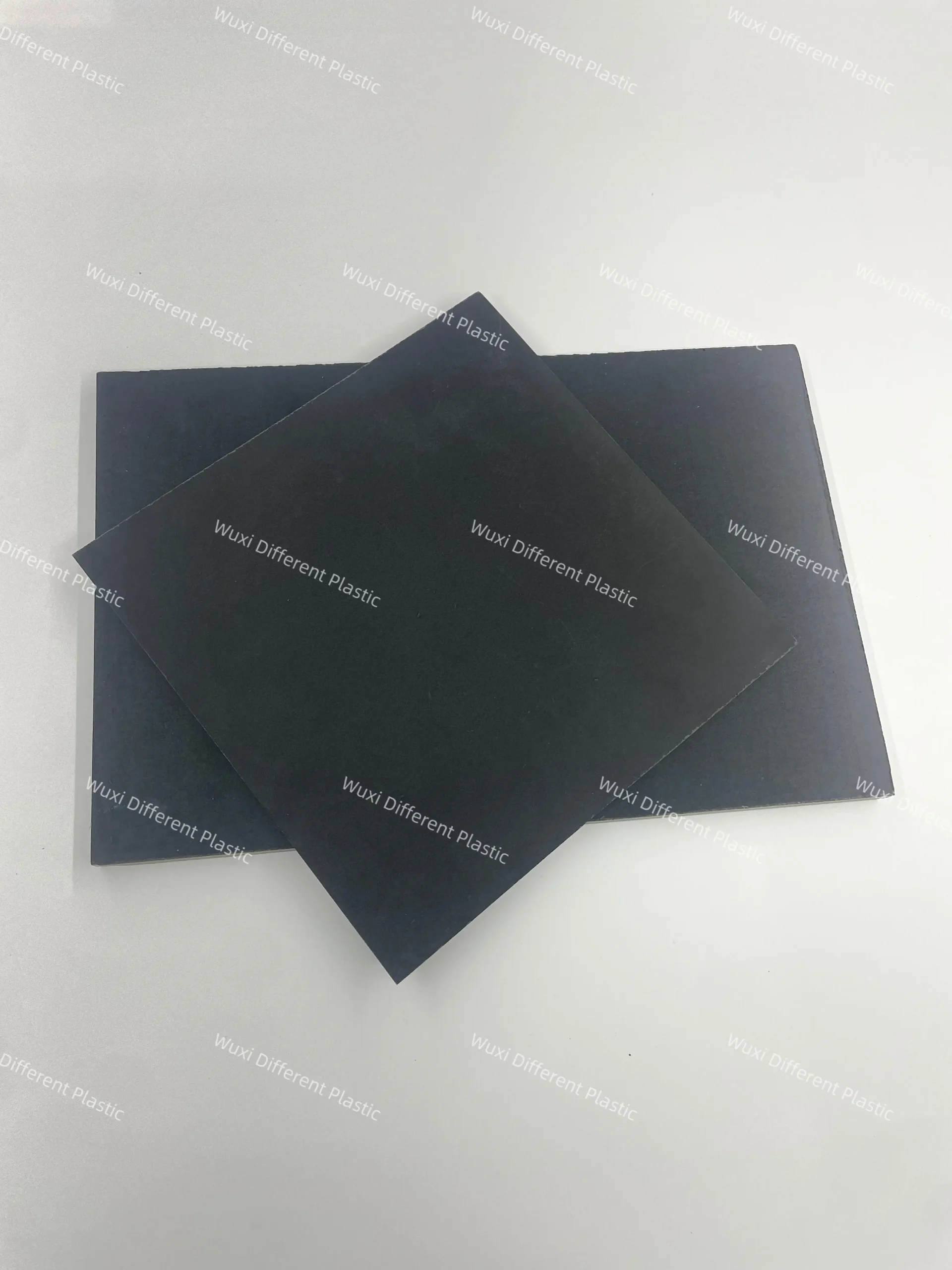
Also, most sheets come in white, black, or natural colors. The surface can be glossy, matte, or textured depending on application needs. Thickness ranges from 0.5mm thin films to 25mm heavy-duty boards.
Composition of ABS Plastic
1) Acrylonitrile
Acrylonitrile can rightly be described as the chemical backbone of ABS plastic sheets. Typically, it makes up 15-35% of the polymer blend. Acrylonitrile contributes to the ABS sheet’s resistance to oils and chemicals. Here’s how.
The nitrile group creates polarity. This is because nitrogen pulls electrons toward itself more strongly than carbon. So, there is an uneven charge distribution.
This polarity acts as a barrier against non-polar solvents like oils and gasoline. So, these chemicals can’t effectively interact with the polar nitrile groups.
The “like dissolves like” principle comes into play. It means non-polar chemicals slide off instead of penetrating the polymer structure. However, very strong solvents like acetone still have enough reactive power to penetrate.
Heat resistance improves with higher acrylonitrile content. However, excessive amounts make processing difficult and increase brittleness. Manufacturers balance levels based on intended applications.
2) Butadiene
The Butadiene forms tiny rubber particles scattered throughout the rigid plastic matrix. These particles deform and absorb the shock energy from the impact the material experiences. This way, it prevents cracks from forming and spreading through the material. This explains why ABS is not brittle and resists shattering even at low temperatures.
Standard ABS formulations have between 5 and 30% of Butadiene. More rubber improves melt flow during extrusion but reduces surface hardness. Product designers must balance impact requirements against surface quality needs.
3) Styrene
Styrene serves two major functions in ABS Plastic sheets. It gives ABS its structural strength and glossy appearance. In general, it represents 40-60% of the total composition.
This component creates the smooth and hard surface ABS sheets are known for. High styrene content produces an excellent finish straight from the extrusion die.
Cost-effectiveness is partly due to styrene’s availability and low price. As the major component, its economics significantly influence final sheet costs.
The three components work synergistically. Acrylonitrile provides chemical barriers. Butadiene adds flexibility and impact absorption. Styrene delivers structure and processability.
What Are the Types of ABS Plastic Sheets?
1) Standard ABS sheets
These represent the baseline formulation for general manufacturing. They are optimized for versatility rather than specialized performance.
In general, standard ABS Sheets comprise 20-25% acrylonitrile, 15-20% Butadiene, and 55-65% Styrene. The colors range from natural white to black. Surface finishes are available in glossy or matte options. As expected, the cost remains lower than specialty grades.
2) Textured ABS sheets
The sheet’s texture is integral to its structure. Textured ABS sheets have their surfaces patterned by rollers or dies during extrusion.
Common patterns include leather grain, diamond plate, and fine matte finishes. Leather textures hide scratches in high-touch applications. Diamond patterns add grip for work surfaces.
3) Flame-retardant ABS sheets
ABS sheets can be made into flame-retardant formulations. These grades incorporate additives that suppress combustion and achieve UL94 V-0 ratings.
Non-halogenated alternatives use phosphorus or mineral-based additives. Environmental regulations increasingly favor these safer options.
4) Conductive/Anti-static ABS sheets
Sensitive electrical components are instantaneously destroyed by static electricity. Conductive ABS sheets avoid this. The reason is that they have regulated surface resistivity.
Conductive pathways are produced within the polymer using metallic or carbon black particles. The cost is two to three times that of regular ABS.
5) UV-stabilized ABS sheets
Long-term exposure to UV light causes standard ABS to deteriorate. Sunlight also causes brittleness and yellowing by breaking polymer chains. UV stabilizers prevent this photodegradation.
As a result, the outdoor life is extended to 1-2 years with basic stabilization. Improved formulations last three to five years with no loss of property.
What Are the Advantages of ABS Sheets?
1) High Strength-to-Weight Ratio
ABS delivers impressive strength while remaining significantly lighter than metals. Density typically ranges from 1.04-1.06 g/cm³, which is roughly one-seventh that of steel.
This reduces transportation costs and simplifies installation. Workers handle larger panels safely without assistance. Tensile strength reaches 40-50 MPa while flexural strength hits 70-80 MPa.
2) Excellent Machinability and Processability
Standard tools process ABS sheets effortlessly. Circular saws cut without melting. Drill bits also create clean holes without cracking.
Thermoforming temperatures range from 160-180°C, well within conventional equipment capabilities. The material draws evenly into molds without excessive thinning.
3) Cost-effective Compared to Other Engineering Plastics
Compared to other engineering plastics of similar properties, ABS is cost-effective. The raw material costs sit between commodity plastics and engineering plastics.
In addition, processing efficiency adds value beyond raw material costs. Fast cycle times increase production rates. Minimal scrap is generated due to clean cutting, and the scraps can be recycled.
4) Wide Design Flexibility
ABS accepts virtually any color through the addition of pigments. Pantone matches achieve brand requirements precisely. Texture options range from mirror polish to coarse grains.
Wall thickness varies from paper-thin films to structural boards. Complex shapes form easily through thermoforming. This flexibility enables designers to optimize both function and appearance.
5) Chemical and Abrasion Resistance
Common industrial and consumer chemicals don’t attack ABS. Cleaning solutions, oils, greases, and weak acids do not cause degradation.
Automotive fluids, including gasoline and motor oil, don’t dissolve the material. Surface hardness resists scratching from normal handling. Rockwell R scale readings range from 90 to 105.
However, acetone and chlorinated solvents do attack ABS. Application assessment must consider specific chemical exposures.
What Are the Key Properties of ABS Sheets?
1) Mechanical Strength and Durability
Firstly, ABS plastics are impressively strong and durable. Its tensile strength typically ranges from 40 to 50 MPa across standard grades. Flexural strength also reaches 70-80 MPa. Compressive strength varies between 60 and 80 MPa.
Therefore, the material resists fatigue from repeated loading cycles. Environmental stress cracking occurs less frequently in this thermoplastic than in others. Remember, the Butadiene component absorbs stresses that would otherwise cause brittle materials to crack.
2) Heat Resistance and Thermal Stability
Another notable feature of ABS is its thermal stability. The plastic can withstand continuous temperatures of up to 90°C without losing its properties. Also, short-term exposure to up to 100°C causes no permanent damage.
However, prolonged exposure above 100°C causes gradual degradation. Applications requiring higher heat resistance need alternatives like polycarbonate.
3) Impact Resistance and Toughness
Drop tests show panels withstand falls from typical handling heights without cracking. The rubber phase absorbs shock energy that would fracture brittle polymers. Notched Izod impact values reach 200-400 J/m at room temperature. Even at -20°C, the material maintains adequate toughness.
4) Lightweight Nature
At approximately 1.05 g/cm³, ABS weighs less than most engineering materials. Steel weighs nearly eight times more per unit volume.
This reduces shipping costs significantly. Installation labor decreases with lighter components. Portable products benefit tremendously from this property.
5) Easy Machinability
Carbide-tipped saw blades cut ABS cleanly at moderate speeds. Standard twist drills work effectively at conventional speeds.
Thermoforming shapes ABS into complex forms. Heat the sheet, apply vacuum or pressure, and it conforms to the mold contours.
CNC machining achieves tight tolerances without difficulty. Surface finish quality from machining often eliminates secondary processing needs.
6) Good Surface Finish
After extrusion, ABS sheets come out with excellent surface quality. Glossy finishes reflect light evenly. Matte surfaces show uniform low gloss.
This finish eliminates the need for expensive further processing. So, the parts can go directly from fabrication to assembly without painting.
Steps to Manufacture ABS Sheets
Step 1. Raw material blending and compounding
Manufacturing begins with precise measurement of monomers. Ratios vary based on target properties but must maintain tight tolerances.
Polymerization reactors combine monomers under controlled temperature and pressure. Reactor conditions determine molecular weight distribution.
Additives enter during or after polymerization. Stabilizers prevent degradation. Pigments create desired colors. The resulting resin emerges as pellets that feed into extrusion equipment.
Step 2. Extrusion process for sheet formation
Pelletized ABS feeds into extruder hoppers where screws convey material forward. Heat zones raise temperatures gradually. The polymer melts as it moves toward the die.
Modern extruders use multiple zones with independent temperature control. Molten ABS flows through a flat die that shapes material into sheet form.
The extruded sheet passes through cooling rolls that solidify the material while maintaining flatness. Proper cooling prevents warping and ensures dimensional stability.
Step 3. Thermoforming and molding techniques
Thermoforming converts flat sheets into three-dimensional shapes. The sheet clamps in a frame and heats to the forming temperature.
Once pliable, vacuum pulls material tight against mold surfaces. Pressure forming uses compressed air for additional force. The shaped part cools while held against the mold.
Trim operations remove excess material. Dies cut flanges and openings. Recycled trim feeds back into extrusion as regrind.
Step 4. Surface finishing and quality checks
Fabricated parts may require additional treatments. Flame polishing restores gloss to cut edges. Sanding smooths rough areas.
Dimensional inspection verifies parts meet specifications. Visual inspection catches cosmetic defects. Only perfect parts proceed to packaging.
Mechanical testing samples properties periodically. Statistical process control tracks trends before properties drift out of specification.
What Are the Applications of ABS Plastic Sheets?
1) Automotive industry
ABS plastic’s use in automobiles is not far-fetched. Its surface finish is explored in vehicle interiors. For example, dashboard covers provide mounting points for controls. Interior door panels leverage impact resistance and surface finish.
UV-stabilized grades also constitute exterior trim pieces. Due to its toughness, ABS is used in wheel well liners to protect against road debris.
2) Electrical and electronics
Electronic equipment housings protect internal components. ABS provides impact protection during shipping. Flame-retardant grades meet safety regulations.
Static-dissipative ABS protects circuits from electrostatic discharge. This protection proves essential in test equipment and peripherals.
3) Construction
Interior wall panels provide long-lasting, easily cleaned surfaces. Impact resistance is especially beneficial in high-traffic locations. ABS is used in protective barriers surrounding machinery to ensure worker safety.
Ceiling panels take advantage of the lightweight nature of ABS. Flame-retardant grades adhere to building requirements for interior coatings.
4) Consumer products
ABS’s strength and light weight are combined in protective casings. During travel, luggage shells can survive rigorous treatment. Hinges and latches mount firmly without removing. Properly built casings are not cracked by corner impacts. ABS is also used in children’s toys for durability and safety.
5) Industrial use
Machine guards protect workers while allowing visibility. Prototypes machined from ABS validate designs before production tooling.
Jigs and fixtures machine from ABS cost-effectively. Light weight allows easy handling and repositioning.
6) Medical devices
ABS is used in non-critical device housings for impact resistance and cleanliness. Electronics are protected by diagnostic equipment enclosures.
ABS is used in hospital equipment because of its strength and low weight. Properly constructed grades are not harmed by frequent disinfection.
ABS vs. PVC
PVC costs less than ABS in most grades. However, ABS offers superior impact resistance and better low-temperature performance. Chemical resistance favors PVC slightly, especially against strong acids and bases.
Processing differs significantly between materials. PVC requires stabilizers to prevent degradation during heating. ABS processes more easily without releasing corrosive gases. This makes ABS preferable for applications requiring extensive machining or thermoforming.
ABS vs. Polycarbonate
Polycarbonate excels where transparency or extreme impact resistance is required. Safety shields, machine guards, and glazing applications justify the higher cost. Heat resistance also exceeds ABS by 30°C.
ABS wins on cost and machinability. Surface finish quality is superior on ABS without the scratching issues polycarbonate suffers. For opaque applications not requiring extreme properties, ABS provides better value.
ABS vs. Acrylic
Acrylic provides superior optical clarity and outdoor weather resistance. Signage, displays, and architectural glazing favor acrylic’s UV stability and scratch-resistant coatings.
ABS dominates where impact resistance matters. The material doesn’t shatter like acrylic when struck. Chemical resistance also favors ABS, which tolerates more solvents and cleaning agents.
Aesthetic applications balance these trade-offs carefully. Visible, high-gloss parts might use acrylic for appearance. Structural components hidden from view use ABS for toughness and economy.
ABS vs. Other Common Plastics
| Property | ABS | PVC | Polycarbonate | Acrylic |
| Flexibility | Rigid with good impact resistance | Rigid and flexible grades available | Very rigid | Rigid, brittle |
| Tensile Strength | 40-50 MPa | 35-55 MPa | 60-70 MPa | 65-75 MPa |
| Impact Resistance | Excellent at low temps | Poor in cold | Excellent (600-800 J/m) | Poor, shatters easily |
| Heat Resistance | Up to 90°C | 60-80°C | Up to 120°C | Up to 85°C |
| Transparency | Opaque/translucent | Opaque/clear | Crystal clear | Crystal clear |
| Chemical Resistance | Good vs oils, weak acids | Excellent overall | Good | Poor vs solvents |
| UV Resistance | Requires stabilizers | Good | Better natural resistance | Excellent |
| Relative Cost | Moderate | Lower | 2-3x higher | Similar to ABS |
| Machinability | Excellent | Good (releases HCl) | Good but cracks | Excellent but brittle |
| Surface Finish | Excellent gloss | Good | Scratches easily | Excellent gloss |
| Main Applications | Automotive, electronics, consumer goods | Plumbing, construction, conduit | Safety shields, glazing | Displays, signage, glazing |
FAQs:
1) What thicknesses are ABS sheets available in?
ABS sheets have a wide range of thickness. Generally, it can range from 0.5mm to 25mm. Common thicknesses, however, include 1mm, 2mm, 3mm, and 6mm for general fabrication.
2) Are ABS sheets recyclable?
Yes, ABS is fully recyclable through mechanical recycling. The material melts and reforms without significant property loss. That is one distinguishing factor from other thermoset plastics.
3) Can ABS sheets be painted or coated?
ABS accepts most paints after simple cleaning. Primers designed for plastics improve adhesion. Urethane, epoxy, and acrylic paints all bond successfully.
4) Is ABS suitable for outdoor use?
Standard ABS degrades under prolonged UV exposure. One way to recognise that is the yellowing appearance and brittleness. UV-stabilized grades extend outdoor service life to 3-5 years with minimal property loss. For longer outdoor exposure, consider UV-resistant alternatives like ASA or apply protective coatings.
5) How does ABS compare with acrylic sheets?
It’s simple. ABS offers better impact resistance but lacks acrylic’s clarity. ABS costs less and machines more easily. Choose ABS for toughness, acrylic for transparency.
Final Thoughts!
ABS plastic sheet is a game-changer in the electrical and electronics industry. It has an impressive combination of strength and performance, yet is cost-effective.
Understanding ABS capabilities helps you specify correctly. This way, you can avoid very costly mistakes. One key point to note is that Grade selection ensures optimal performance.
These sheets aren’t perfect for every situation. High-temperature applications exceeding 90°C require alternatives. However, within their operating envelope, they provide exceptional value.
Apply the insights from this guide to your next material selection. Choose the right ABS grade for your needs. And go all the way with this exceptional material.


