


In the contemporary industrial world, materials dually exhibiting mechanical strength, electrical insulation and cost-efficient quality are invaluable. Among them, PFCP202 phenolic paper laminated sheets have managed to find a critical place.
PFCP202 is a phenolic laminate, that is, a material pressed between cellulosic paper and phenolic resin and cured under pressure and heat. This creates a hard, tough and insulating sheet that is of high industry standard.
These laminates can be broadly utilized in the electrical and mechanical sectors as they can perform well at high voltages, high-stress factors, along with unconventional conditions of the environment. They are used as insulation materials in switchgear, transformers and motors and structures in machinery and tooling fixtures.
This paper seeks to give a detailed examination of PFCP202- its construction, characteristics, and manufacturing procedure, its uses, strengths, shortfalls and future trends. At the conclusion, it should be perfectly clear why PFCP2020 has been a corner-stone material in both established and emerging industrial markets.
Composition and Standards of PFCP202
Following ingredients are used to make PFCP202:
- Phenolic resin: A thermosetting resin which offers resistance to chemicals, strength and electrical insulation.
- Cellulosic paper: A fine-quality kraft or specialty paper, that acts as the neutral, base substrate to give dimensional stability and machinability.
Plastics As a plastics material, the resin-paper composite is impregnated and cured to produce a dense composite with electrical and structural properties used to meet the needs of electrical and structural applications.
To meet several international systems of classification, PFCP202 is known by a number of names.
IEC 60893-3-4: This is the international standard of industrial rigid laminated sheets, to which PFCP202 can be found under phenolic-paper based laminates.
In the German standard series, PFCP202 is assigned PF CP Hp 2061.5, demonstrating the same with regard to composition and performance.
NEMA XX: In the American standard system, PFCP202 is known as Grade XX, a broadly used name in the US designating paper-phenolic laminates.
The purpose of these classifications is to have PFCP202 sheets manufactured and tested to agreed global standards, so they become interchangeable across sectors and geographies.
Technical Specifications
The main reason of PFCP202 to be used widely is the technical performance. Its characteristics include mechanical, electrical, thermal and physical characteristics:
1) Mechanical Properties
- Flexural Strength: It offers high resistance to flexural loads hence making it useful in load bearing applications.
- Tensile Strength: having high tensile strength, can be used in clamp condition, fastening and other such mechanical stressful conditions.
- Compressive strength: This is able to resist a large quantity of pressure without deformation, which is important in structural and tooling fixtures.
2) Electrical Properties - Dielectric Strength: Very insulating, it does not break down easily when voltages are high.
- Breakdown Voltage: Dependable under medium to high-voltage.
- Dielectric Constant/Dissipation Factor: Stable dielectric characteristics over a wide range of frequencies is required to maintain uniform electrical performance of insulating materials used in electrical assemblies.
3)Density and Water Absorption - Density: It is normally about 1.35 1.4 g/cm³ helping in its mechanical stability.
- Water Absorption: Low versus untreated paper products, but not as good as epoxy-glass laminate (e.g. G10). Electrical performance can also be affected by excessive moisture that is absorbed under the very humid conditions.
4)Thermal Class and heat resistance - Thermal Class: Tends to be rated to Class E (120°C) of continued service.
- Heat Resistance: Retains structure and insulating capacity under moderate heating but subjected for too long to intense heat can lose performance.
Such specifications make PFCP202 fit into a broad range of settings that require strength and insulation.
Manufacturing Processes of PFCP202

Rigorous steps are taken through the production of PFCP202 that seeks to maintain consistency, durability, and high-performance capabilities in every batch:
1) Paper Impregnation:
The process is commenced with the insertion of high-grade kraft / electrical grade paper, which has been selected because of its rectified fiber directory and its electrical strength. The paper is impregnated with a resin that is phenolic under regulated temperature and viscosity conditions and the resin saturates through the paper fibers.
2) Pre-Drying:
The sheets after impregnation are partially dried in a hot chamber and it is called prepregs. This step is the removal of excessive solvents and moisture together with a desired resin level being attained. This results in a tack-free surface which is required when building a stack without adhesion problems.
3) Stacking:
Prepreg layers are superimposed in a precise design and according to the number of layers the required sheet thickness is now determined. Alignment at this process is very essential since it determines the dimensional stability and consistency of the final product.
4) Curing:
The sheets are stacked together and put under high pressure and high temperatures (approximately 150-180°C). In such conditions, polymerization of the phenolic resin occurs, as a result of which the latter turns into a rigid and thermoset material. This is the most important step to get the desired balanced properties of mechanical strength, heat resistance, and electrical insulation of PFCP202.
5) Cooling and Trimming:
When it has been cured, the laminate is allowed to cool slowly under supervised conditions to avoid build-up of internal tension or warping. The document that has been cooled is then cut in some cases, or trimmed to remove irregular edges, to assure dimensional accuracy.
6) Finishing and Machining:
The completed laminates may be sanded to enhance smoothness of surfaces or may be machined to a specific size and to elaborate intriguing shapes. Business entity performances and the power of choice: FCP202 is easy to machine using drills, mills, or cut without loss of structural capacity thus versatile with many applications.
PFCP202 can be made in a variety of thicknesses; commonly between 0.5 mm and over 50 mm, depending on the use envisaged. The sheet sizes are normally 1020 1220mm and there are custom dimensions to suit special projects.
The flexibility to machine and finish further increases the adaptability of PFCP202 to other industries and it can be used in electrical insulation materials, mechanical engineering products, and versatile precision industrial products.
Applications of PFCP202
Phenolic paper laminated sheets PFCP202 are frequently employed due to the special combination of the mechanical strength, electrical insulation, and lightweight video quality, qualifying it to be used in many extraordinary environmental exploits.
The fact that they serve as insulating as well as structural material makes them perform in an industry where reliability and durability is paramount.
1) High-Voltage Equipment Electrical Insulation
In applications where electrical safety is of paramount importance (such as transformers, switchgear, and motor assemblies), FCC part no.PFCP202 is also often used. The material also acts as an insulating barrier, spacers, and a support system that does not allow electrical leakage, or cause a short circuit to occur, and ensures stability in the face of both thermal and mechanical stress.
This is due to its ability to resist heat and high shielding voltages hence making it a reliable product in high-voltage applications.
2) Structural and Mechanical Parts
Besides insulation, PFCP202 is also appreciated as a lightweight, but quite durable construction material. It is frequently cut into robust, dimensionally stable components of equipment and plant, jigs and fixtures. Its mechanical stability enables it to resist wear and friction and even moderate impacts yet is easy to handle and machine.
3) Tooling and Specialty Fixtures Uses
In machining and machine shop practice, PFCP202 is applied in drilling template, machining fixtures and assembly jigs. These applications require materials that can retain its dimensions to handling repeated stress, cuts and lubricants or coolants. Precision Coolants PFCP202 has provided the reliability and minimised maintenance requirements and has increased tool life.
What Are the Advantages of PFCP202?
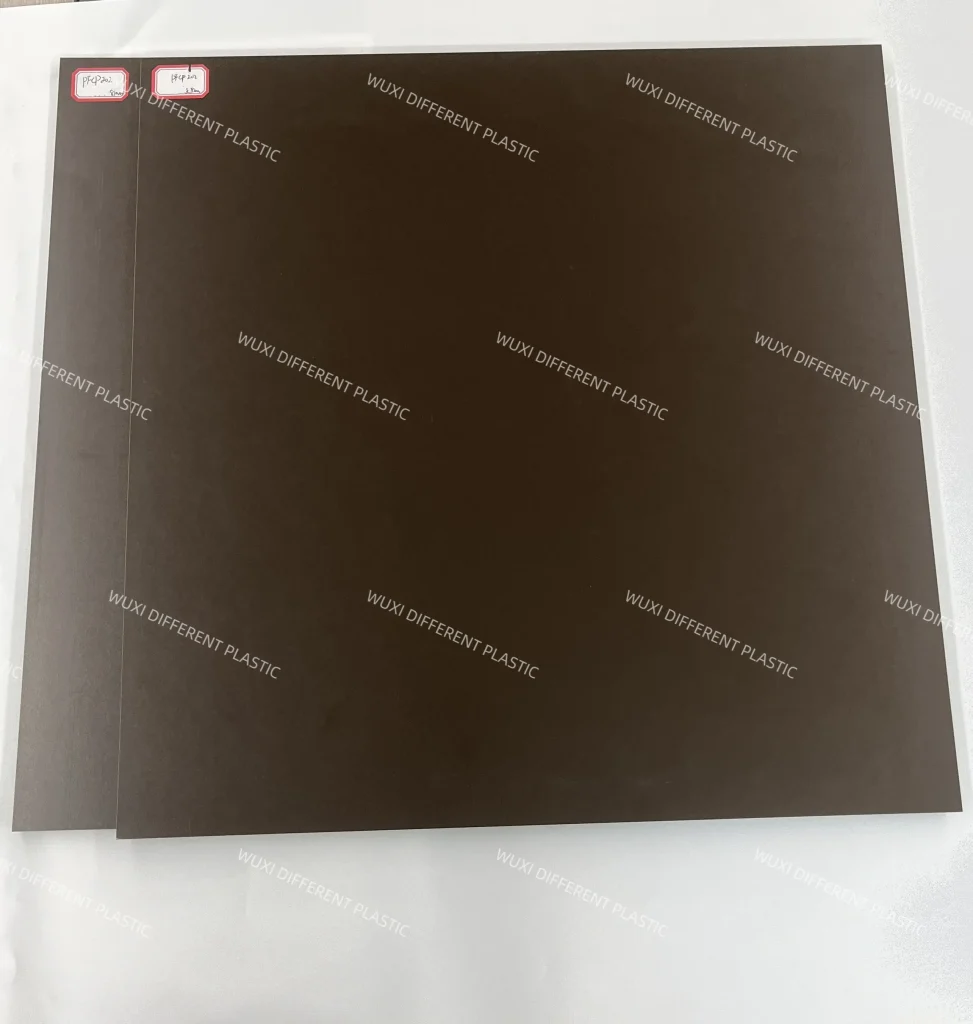
PFCP202 is a versatile product, and its balance between performance and cost-efficiency made this product applicable in various industries:
1. Electrical Insulating Performance:
PFCP202 has a superior dielectric performance, with it being a good candidate in medium voltage switchgear, motor assemblies, and transformers. It is more stable under electrical stress enabling it to operate well even under harsh operating conditions.
2. Mechanical Strength and Durability:
PFCP202 can be used in structural and load-bearing components since it is extremely strong mechanically in addition to electrical applications. It is wear and impact resistant and it is also resistant to moderate stress, which contributes to its long life underground.
3. Machinability:
Donald PFCP202 is easier to machine than many other materials. It is drillable, millable, turnable and shape-able with normal tools and minimum tool wear. This can be easily tailored by manufacturers according to application specific needs, thereby simplifying production and the resulting costs.
4. Economical:
PFCP202 is a more cost-efficient alternative to using more expensive materials like epoxy-glass laminates such as G10/FR4 without sacrificing performance greatly. Although it does not necessarily compare to the elevated performance of epoxy-glass composites, the price-benefit ratio of this type is sufficient to be of interest when used in applications that require some level of electrical isolation and structural integrity.
Limitations and Considerations
Being all that, however, PFCP202 is not devoid of weaknesses:
1. Moisture Absorption:
PFCP202 absorbs moisture much more than G10/FR4 but it does perform better than untreated natural paper. In protracted high-humidity or direct-contact water environments the absorbed moisture may even cause a small degree of swell in the material and lower its dielectric strength, compromising long-term electrical reliability.
2. Thermal Restrictions:
PFCP202 has a continuous operating temperature of about 120°C, albeit a little higher over short durations. This renders it unsuitable in situations where high temperatures have to be maintained over an extended period of time like in the case of high powered electronics, use in automotive under the hood, or aerospace applications.
However when the level surpasses its thermal limit then resin degradation may take place and mechanical stability may be lost.
3. Environmental Resistance:
PFCP202 performance is not as strong as that of glass-reinforced plastics / or advanced engineering composites in terms of chemical and UV resistance.
Exposure to aggressive solvents, oils or outdoor weathering (particularly sunlight and ozone) can cause surface deterioration, discoloration or embrittlement to proceed more rapidly. Under these conditions, protective coats or encapsulation can be needed.
Due to these factors, engineers and designers need to think over the strengths of PFCP202 and take into consideration its limitations. PFCP202 provides a high value at a competitive price in controlled architectural interior spaces, electrical systems and modestly subjected mechanical applications.
Epoxy-glass or polyester-glass composites may be Instead, laminates (epoxy-glass, or polyester-glass) more appropriate to high-temperature, moisture-rich, or chemically aggressive applications.
Comparison with Similar Materials
PFCP202 can be compared against similar phenolic grades and even other laminate materials, and allow the engineer and purchaser to make the right choice of sheet in the application:
●PFCP202 vs. PFCP201: PFCP201 is lower electrical insulating capacity phenolic laminate. Both possess good machinability, good mechanical strength but family PFCP202 is favoured when dielectric reliability is a requirement.
●PFCP202 vs. PFCP203 / PFCP204: These phenolic grades (PFCP203 / PFCP204) improved versatility has been engineered to produce greater heat, moisture resistance, dimensional stability. They are however highly expensive hence making PFCP202 a mid-level balanced product.
●Epoxy glass laminates-G10/FR4 vs. Phenolic Papers: Epoxy-glass laminates (G10/FR4) are more rugged than phenolic papers in terms of mechanical, thermal and environmental characteristics. Nevertheless, they are much more expensive; PFCP202 still is the more cost-effective choice where extreme performance is not a requirement.
Situational Use Recommendations:
PFCP202: Best suited for general-purpose insulation and moderate-strength structural parts.
PFCP201: Acceptable for cost-sensitive projects with moderate insulation needs.
PFCP203 / PFCP204: Recommended for demanding environments with higher heat or humidity exposure.
G10/FR4: Ideal where high strength, flame resistance, and long-term stability are required.
Comparison Table of PFCP202 and Alternatives
| Material | Electrical Properties | Mechanical Strength | Heat & Moisture Resistance | Machinability | Cost Level | Best For |
| PFCP201 | Moderate | Good | Standard | Easy | Low | Low-cost applications with basic insulation needs |
| PFCP202 | High (better than PFCP201) | Good–Very Good | Standard | Easy | Moderate | General-purpose insulation and structural parts |
| PFCP203 | High | Good–Very Good | Better than 202 | Easy | Higher | Environments with moderate heat or moisture |
| PFCP204 | High | Very Good | Superior among phenolics | Easy | Higher+ | Demanding applications needing durability under stress |
| G10/FR4 | Excellent | Excellent | Excellent | Moderate | High | High-performance, high-stability, and long-life insulation |
Sourcing PFCP202: Key Considerations
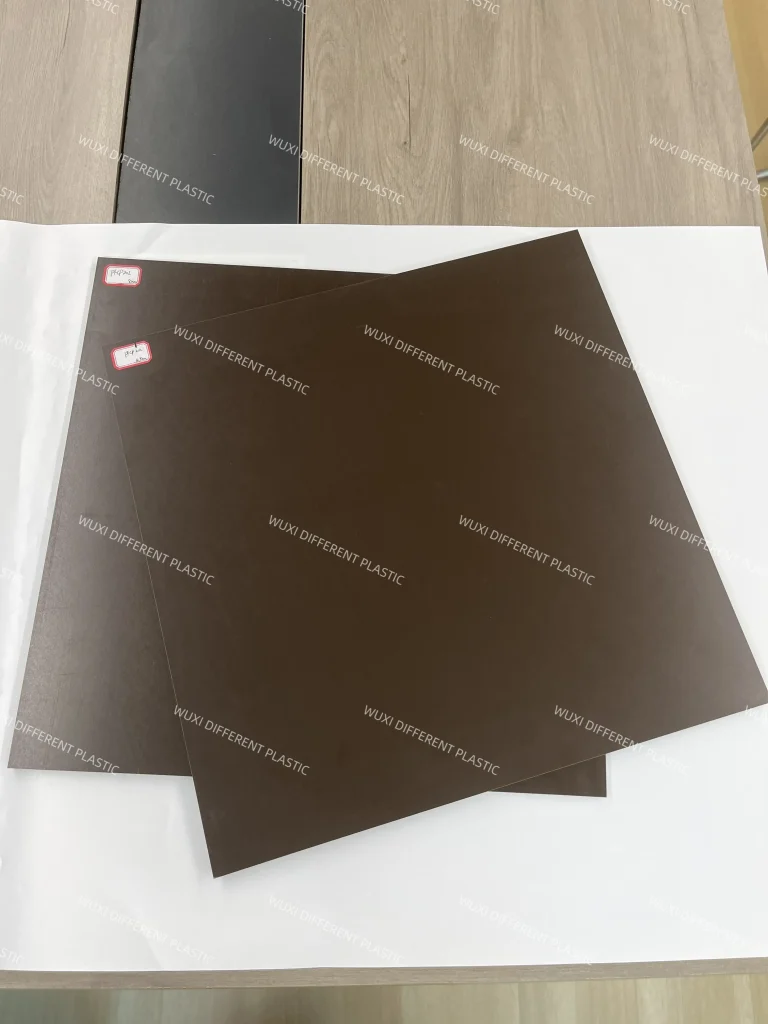
In the use of PFCP202, buyers and engineers must examine the quality of material as well as the reliability of supplier so that laminate can serve the purpose as expected in intended uses.
1. Typical Suppliers and Producers
The prevalence of production of PCP202 is enormous, but majorly specialized in the composition of composites and laminates popularly used in Europe, China, and North America. The suppliers would tend to supply industries in the electrical engineering, mechanical fabricating and automotive manufacturing sectors. Technical data sheets and certification of testing by reputable manufacturers usually confirm that their products meet with international standards.
2. Specification Checks
Prior to purchase, it is important to make sure that the substance meets international norms, including IEC 60893 (industrial laminated thermosetting products) or NEMA XX (phenolic-based laminates). These certifications ensure that there is no variance in dielectric strength, mechanical performance, and dimensional tolerances- which can drive problematic machining and use.
3. Pricing Factors
PFCP202 cost depends upon a number of factors:
●Thickness and Size Support – The thicker the sheets and the bigger the size, the more resin and curing time it will need and this increases costs.
●Quantity Ordered– bulk orders can enjoy price reduction on a per-unit basis.
●Supplier Reputation – Higher quality manufacturers also tend to be more expensive, but with stricter tolerance levels and more quality assured products.
●Customization -Special machining or cutting, or surface finishes may increase the base cost.
4. Lead Times and Availability
General sheet sizes and thicknesses can usually be dispatched on a short notice. Certain dimensions, special tolerances, or large orders may require longer queue times because of curing, pressing and quality test processes. With projects that have time constraints, it is imperative to consider planning in advance with the suppliers.
5. Supplier Relationships
The long term establishment of partnerships with reputable vendors means quality, technical assistance, and aggressive delivery timelines will be on a consistent pattern. Most manufacturers offer material traceability, batch certification and after sales services, all of which are essential to highly regulated industries.
Future Prospects and Innovations
The demands of the industries are changing and materials requirements are also changing. The future innovations of PFCP2020 and phenolic laminates in general are:
Moisture and heat resistance improvements: Modified phenolic resins and hybrid paper treatment development is currently being considered to allow more performance in moist conditions and hot environments.
Eco-Friendly and Flame-retardant: Sustainability has taken precedence, and there is development of recycled paper bases, halogen-free resins, and development of superior fire safety additives.
Onwards Advanced Manufacturing Integration: CNC machining, laser cutting, and automation fabrication processes are integrating increasingly with PFCP202 production making it easier to apply within precision engineering.
These advances are expected to further the capability of PFCP202, and increase its lifetime, in both the established and burgeoning fields.
Bottom Line
Phenolic paper laminated sheets have stood the test of time as a tried and tested material in the industry. Considering good electrical insulating properties, mechanical strength, machinability, and cost appeal, PFCP202 has continued to be a very viable option to manufacturers all over the world.
In choosing materials, engineers have to settle on the considerations regarding performance and cost. Since PFCP202 is, at best, only generally suitable as a general-purpose insulation and mechanical fixtures and that alternative components, e.g. epoxy-glass laminates are more appropriate where improved thermal characteristics or moisture resistance is required.
PFCP202 has that same steadfast tradition of being able to handle just about anything that is thrown at it and it is still continuing to grow and advance through innovation. The value of it as a foundation piece in contemporary engineering is emphasized by its constant existence.


