
Introduction
EPGC201 is rapidly becoming a go-to material in modern electronics. It’s not just another technical term, but a reliable and durable option for engineers.
Many now see it as an essential material in their devices. The reasons for its growing popularity are clear and becoming more evident by the day.
In electrical manufacturing, the choice of material matters. EPGC201 is no exception. It performs exceptionally well in high-demand electrical environments.
There are numerous articles about insulation materials. Some are produced by manufacturers with marketing in mind. Others group materials together, failing to focus on one material in particular.
This article gives a detailed view of EPGC201, outlining its pros and cons. By the end, you’ll understand why EPGC201 is gaining popularity today.
What is EPGC201?
To understand EPGC201, we need to look at standards in material manufacturing. These standards come from respected regulatory bodies. There are several of them adapted to the particular geographical regions.
For example, in the US, NEMA (National Electrical Manufacturers Association) is the regulatory body. In Europe and Asia, the IEC (International Electrotechnical Commission) standards are widely adopted.
So, what do these bodies actually do?
They define specifications for materials used in electrical manufacturing. Thus, for insulating materials, there are many defined grades. Because there are several regulatory bodies, there is considerable overlap between grades.
EPGC201 is an IEC grade material. This means it complies with the standards set by the International Electrotechnical Commission. It is similar to NEMA’s grade G10.
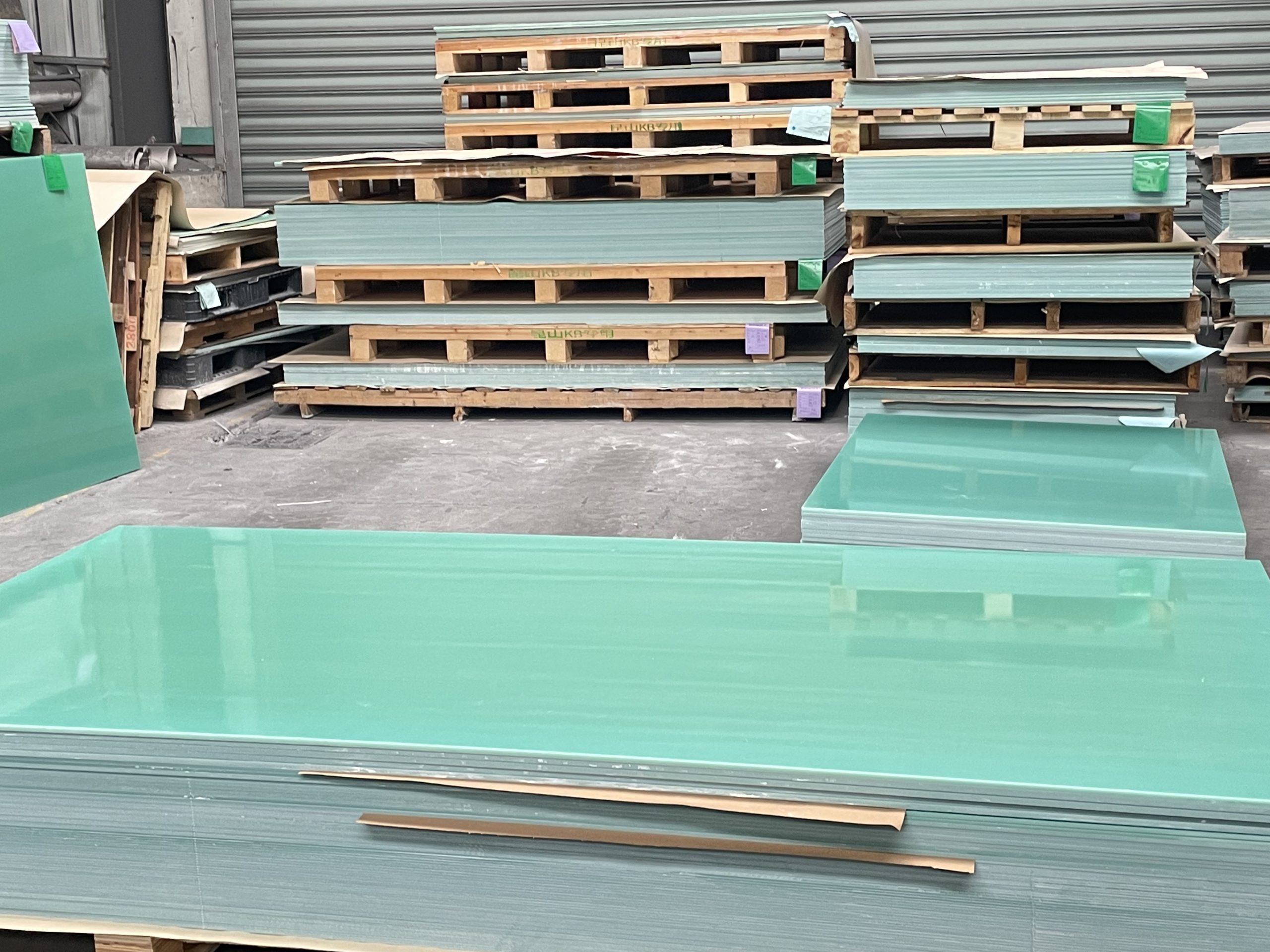
EPGC201 belongs to the EPGC group. EPGC stands for Epoxy Glass Cloth. From the name, you can already tell it is made from glass and cloth. More accurately, it is a laminated sheet made from epoxy resin and fiberglass cloth.
As you’ll see later, EPGC201 is used in a variety of applications. This includes electrical panels, switchgear insulation, PCB reinforcement, and test equipment.
The base material in EPGC201 is 7628 fiberglass. It is a high-strength cloth that is soaked in epoxy resin. After the resin is cured under high pressure, the result is a rigid laminate. This laminate is suitable for both high-voltage and high-temperature applications.
EPGC201 has a flammability rating of UL94 V-0. This indicates it doesn’t burn easily. So, there’s an added safety feature for its electrical systems.
Common colors for EPGC201 include light green, yellow, black, and titanium white. Thickness can range from 0.1mm to 200mm. It all depends on the requirements of the application. The typical density is 1.8–2.0g/cm³, while the temperature index is 130°C.
Key Properties of EPGC201
In this section, we’ll take a deeper look at the key properties of EPGC201 laminates. With these properties, you can understand its wide use across industries.
1) High mechanical strength at room and elevated temperatures
Firstly, EPGC201’s mechanical strength is a key feature. At room temperature, it has remarkable bending strength. It can withstand up to 340 MPa in vertical bending.
Also, at higher temperatures, EPGC201 retains its strength. That is why it is useful in harsh environments.
2) Excellent electrical insulating performance
Another strong point of EPGC201 is its electrical insulation. It has a dielectric strength of up to 14.2 kV/mm at 90°C in oil.
Besides, its insulation properties are not affected by moisture or harsh conditions. EPGC 201’s insulation resistance can reach up to 5.0 × 10¹² Ohms.
3) Dimensional stability and low water absorption
Dimensional stability is an important indicator of durability. Some materials undergo these changes under mechanical stress and temperature fluctuations. However, EPGC201 material resists changes in shape or size.
Furthermore, EPGC201 has a very low water absorption (≤ 0.5%). So, exposure to humidity does not impair its strength and shape. Thus, it is perfect for transformers, electrical switchgear, and other outdoor equipment.
4) Good machinability and edge integrity
EPGC201 can be easily machined. It can be easily processed into precise shapes and sizes.
Moreover, it can be done without compromising its strength or edge integrity. This contributes to its running cost. Materials that need advanced processing tools create a lot of overhead cost.
Processes like drilling, milling, or sawing do not impair the material. Common impairments in some other materials include delamination and cracking.
For this reason, manufacturers use EPGC201 to create complex parts in appliances. Examples include fixture plates, insulation backing plates, and more.
5) Temperature index (typically 130°C–155°C)
EPGC201’s temperature index ranges between 130°C and 155°C. This means it can withstand heat without degradation. It is especially valuable in applications involving high temperatures.
| Property | Value |
| Mechanical Strength (Bending) | ≥ 340 MPa |
| Mechanical Strength (Tensile) | ≥ 300 MPa |
| Dielectric Strength | ≥ 14.2 kV/mm (90°C in oil) |
| Water Absorption | ≤ 0.5% |
| Insulation Resistance | ≥ 5.0 × 10¹² Ohm |
| Temperature Index | 130°C – 155°C |
| Flammability (UL-94) | V-0 |
| Density | 1.8 – 2.0 g/cm³ |
| Impact Strength | ≥ 37 kJ/m² (Parallel Layer) |
| Breakdown Voltage (90°C in oil) | ≥ 40 kV |
Why Is EPGC201 Widely Used in Electrical and Mechanical Insulation?
Without doubt, EPGC201 is a versatile material. This is simply because of its electrical and mechanical properties.
Firstly, it has high mechanical strength. That is why it is suitable for devices and applications exposed to heavy loads and stress.
Generally, materials bend or experience tension and impact when subjected to strain. But EPGC201 can withstand these without cracking. This attribute also contributes to its durability.
Also, EPGC201 is highly effective in electrical insulation. Its excellent dielectric strength is often explored in electrical engineering.
In particular, it is used in humid and wet conditions. Unlike many materials, EPGC201 retains its electrical properties in these conditions.
So, this electrical ability makes it ideal for transformers and circuit boards. In these systems, it not only ensures electrical isolation. It also maintains high voltage performance.
EPGC201 is heat-resistant. It has a temperature index of up to 155°C. It also doesn’t lose its properties at these high temperatures.
In addition, the material has low water absorption. The value is as low as 0.5%. So, moist or damp environments don’t impair its mechanical and insulating properties.
EPGC201 is also easy to machine. It can be easily cut, drilled, and shaped into various forms. So, there is no need to spend on advanced processing tools that can also increase the cost.
Material Composition and Structure of EPGC201
The quality of EPGC201 is due to its unique composition. The constituents confer the material with exceptional mechanical and electrical properties.
1) Epoxy resin matrix + woven glass cloth reinforcement
EPGC201 consists of epoxy resin and woven glass cloth. The resin acts as the matrix. It provides excellent chemical resistance and strong adhesion. This layer binds the glass fibers together and ensures mechanical strength.
On the other hand, the woven glass cloth provides some reinforcement. It increases the laminate’s strength and dimensional stability.
The glass fibers also enhance thermal stability. This makes EPGC201 suitable for high-temperature applications where other materials might fail.
2) Fully cured, thermoset laminate
Structurally, EPGC201 is a fully cured thermoset laminate. This means that the material undergoes a chemical reaction when heated and pressed. The reaction causes it to harden permanently. Once cured, the material does not soften with subsequent exposure to heat.
This thermosetting material is rigid and durable. The thermoset nature of EPGC201 also contributes to its excellent dimensional stability. It resists warping and maintains its shape over time.
3) Differences From Paper-based or Cotton-based Laminates
EPGC201 differs from traditional paper-based or cotton-based laminates. Paper and cotton-based laminates typically have lower mechanical strength and heat resistance. Therefore, they are often used in lighter-duty applications.
In contrast, EPGC201 has superior performance in demanding environments. This is primarily due to its epoxy resin and glass cloth composition. They enhance its strength and thermal stability. They also prevent electrical breakdown.
Paper-based laminates can absorb moisture. This compromises their strength and insulation properties.
EPGC201, however, has very low moisture absorption. So, they are more reliable in wet or humid conditions.
Similar to moisture resistance is chemical resistance. Generally, paper-based laminates are less chemically resistant. However, EPGC201 can withstand oils, acids, and other corrosive substances. This makes it suitable for a wider range of industrial applications.
Common Applications of EPGC201 Laminates
1) Switchgear insulation and arc chambers
Switchgear and arc chambers are safety features in electrical systems. They prevent short circuits and electrical failures.
Central to this ability is the dielectric strength of the material used. EPGC201 is often used in these systems for this.
Also, arc resistance is crucial in arc chambers. It is the material’s ability to withstand a high-voltage electric arc. It does this by resisting the formation of a conducting path along its surface.
2) Busbar supports and terminal plates
Busbars help distribute electricity in electrical systems. EPGC201 is often used as the material for its support and terminal plates.
The material provides the mechanical strength needed for the support. There are both high- and low-voltage busbars. Terminal plates also benefit from their structural integrity.
So, EPGC201 ensures reliable connections in electrical systems. Its excellent insulation properties prevent power loss and electrical short circuits.
3) Fixture plates in CNC machining
EPGC201 is used for fixture plates in computer-automated machine control. In these, the laminate provides a stable and flat surface. Such a surface not only supports various mechanical components, but it also resists wear and tear.
Additionally, EPGC201 maintains its shape and strength under load. Therefore, in CNC machining, it affords precise shaping and customization.
4) Transformer barriers and slot wedges
One other appliance that EPGC201 finds commonplace is in transformer barriers. Here, it effectively provides insulation and prevents electrical leakage and damage.
For the same reason, the EPGC201 is used for slot wedges in transformers. These components ensure that the windings remain intact under pressure. Besides, the material’s thermal stability and moisture resistance give an extra advantage.
5) Tooling plates for high-load environments
In industrial settings, EPGC201 resin is used to withstand heavy loads. It also maintains its structural integrity even under harsh conditions. EPGC201’s excellent machining capabilities also allow for easy customization of tooling plates.
| Application | Key Features | Benefits |
| Switchgear insulation | High dielectric strength, arc resistance | Prevents short circuits and ensures reliable electrical systems |
| Busbar supports | Electrical insulation, mechanical strength | Reliable electrical connections prevent power loss |
| CNC fixture plates | Machinable, stable, wear-resistant | Provides precise shaping, a stable work surface |
| Transformer barriers | Heat and moisture resistant | Prevents electrical leakage, maintains transformer integrity |
| Tooling plates | High mechanical strength | Withstands heavy loads, maintains shape under stress |
EPGC201 vs. EPGC202
EPGC grade materials are epoxy glass laminates. As expected, EPGC201 and EPGC202 share similar properties. However, they also have distinct characteristics. These differences make them applicable in different settings.
First, EPGC201 is widely used for electrical insulation and mechanical applications. It is known for its high mechanical strength and excellent electrical properties. Therefore, it is particularly employed where dimensional stability and mechanical robustness are critical.
EPGC202, on the other hand, is a more flame-resistant material. It is often used where fire safety is more of a concern. EPGC202 passes the UL94 V-0 flame test. This means it can self-extinguish during a fire.
| Feature | EPGC201 | EPGC202 |
| Flame Resistance | No flame rating | UL94 V-0 rated |
| Temperature Index | 130°C | 130°C |
| Moisture Resistance | Moderate | High |
| Mechanical Strength | High | Same or slightly lower |
| Electrical Insulation | High | Higher |
| Use Case | Switchgear, Busbars | High-voltage, fire-prone areas |
| Compressive Strength | High | Moderate |
EPGC201 vs. EPGC203
Both materials are epoxy resin-based and reinforced with fiberglass. They have similar electrical insulation and flame resistance.
EPGC203, however, has better thermal performance. It is often reserved for appliances that require higher mechanical strength and thermal performance.
So, the main distinction between 201 and 203 is in temperature tolerance and strength. Some other distinguishing properties are shown in the table below:
| Feature | EPGC201 | EPGC203 |
| Temperature Index | 130°C | 155°C |
| Mechanical Strength | High | Higher |
| Electrical Insulation | High | High |
| Flame Resistance | No flame rating | No flame rating |
| Use Case | Electrical panels | Power generation, motors |
| Thermal Performance | Moderate | Superior |
Choosing the Right Thickness and Dimensions
As for any material, choosing the correct thickness and dimensions for EPGC201 is crucial. It can make a whole lot of difference in performance, cost, durability, etc. Some things to note here include:
1) Standard sizes:
EPGC201 comes in several standard sizes. These include 1020×1220mm, 1220×2440mm, and 1020×2040mm. These sizes suit most applications. Therefore, they are more readily available.
Nonetheless, manufacturers also offer custom sizes. This customization allows you to select the exact size tailored to your project needs.
2) Thickness range:
The typical thickness range for EPGC201 is 0.5mm to 100mm. This makes customization possible, as the boards can be adapted to various requirements.
Consequently, thinner sheets are used for PCBs and other electronics. Thicker sheets are more suitable for structural components and high-load applications.
Important Standards and Certifications to Look For
When sourcing EPGC201, ensure it complies with relevant standards and certifications. Here are some important ones to look out for:
1) IEC 60893 compliance:
Ideally, EPGC201 should meet the safety and quality standard IEC 60893. This generally applies to insulating materials used in electrical engineering.
2) UL 94 flammability rating:
In addition, EPGC201 typically has a UL 94 V0 or V1 rating. This rating determines a material’s ability to resist fire. A V0 rating is for materials that self-extinguish in 10 seconds after a fire.
3) RoHS and REACH declarations:
RoHS stands for Restriction of Hazardous Substances. It limits the use of specific hazardous materials in electrical and electronic equipment. REACH regulates chemicals in products. It covers registration, evaluation, authorization, and restriction of chemicals.
4) Country-specific certifications:
When importing, look for certifications specific to the source country. This guarantees the material aligns with their local standards and regulations. You can easily get that from regional regulatory bodies.
FAQs
1) Is EPGC201 flame-retardant?
Yes, EPGC201 is flame-retardant and meets the UL 94 V0 or V1 rating.
2) Can it be used in outdoor conditions?
EPGC201 can be used outdoors. However, it should be protected from prolonged UV exposure. The material resists moisture and temperature fluctuations. Therefore, it is suitable for use in the open.
3) What’s the difference between FR4 and EPGC201?
FR4 has a higher flame resistance than EPGC201, so it is more fire-safe. EPGC201 is better for high mechanical strength and general insulation purposes. Also, FR4 is a NEMA grade, while EPGC201 is IEC.
4) Can I request custom-cut parts from manufacturers?
Sure! Most manufacturers offer custom-cut parts. However, you should clearly state your specifications. This customization option allows for more flexibility in the application.
5) What’s the typical lead time when sourcing from China?
Well, lead times can vary depending on order quantity and complexity. However, on average, expect a lead time of 7-15 days for standard orders. You can also check with individual suppliers for their lead times.
Final Thoughts!
No doubt, EPGC201 offers a number of benefits. Most notable ones include excellent electrical insulation, mechanical strength, and heat resistance.
Also, EPGC is perfect for industry-scale use. This is due to its ability to withstand high mechanical loads and thermal stress.
Furthermore, EPGC201 performs well in both dry and wet environments. So it is widely used in electrical systems, switchgear, transformers, and machinery components. Its use in wet and humid weather is because of its impressive moisture resistance.
EPGC201, however, may not be ideal for extreme conditions like very high heat. It is paramount to understand the strengths and limitations of every material. It will help you make the right choice.
So, find where EPGC201 best fits and enjoy its many benefits. Cheers!


