
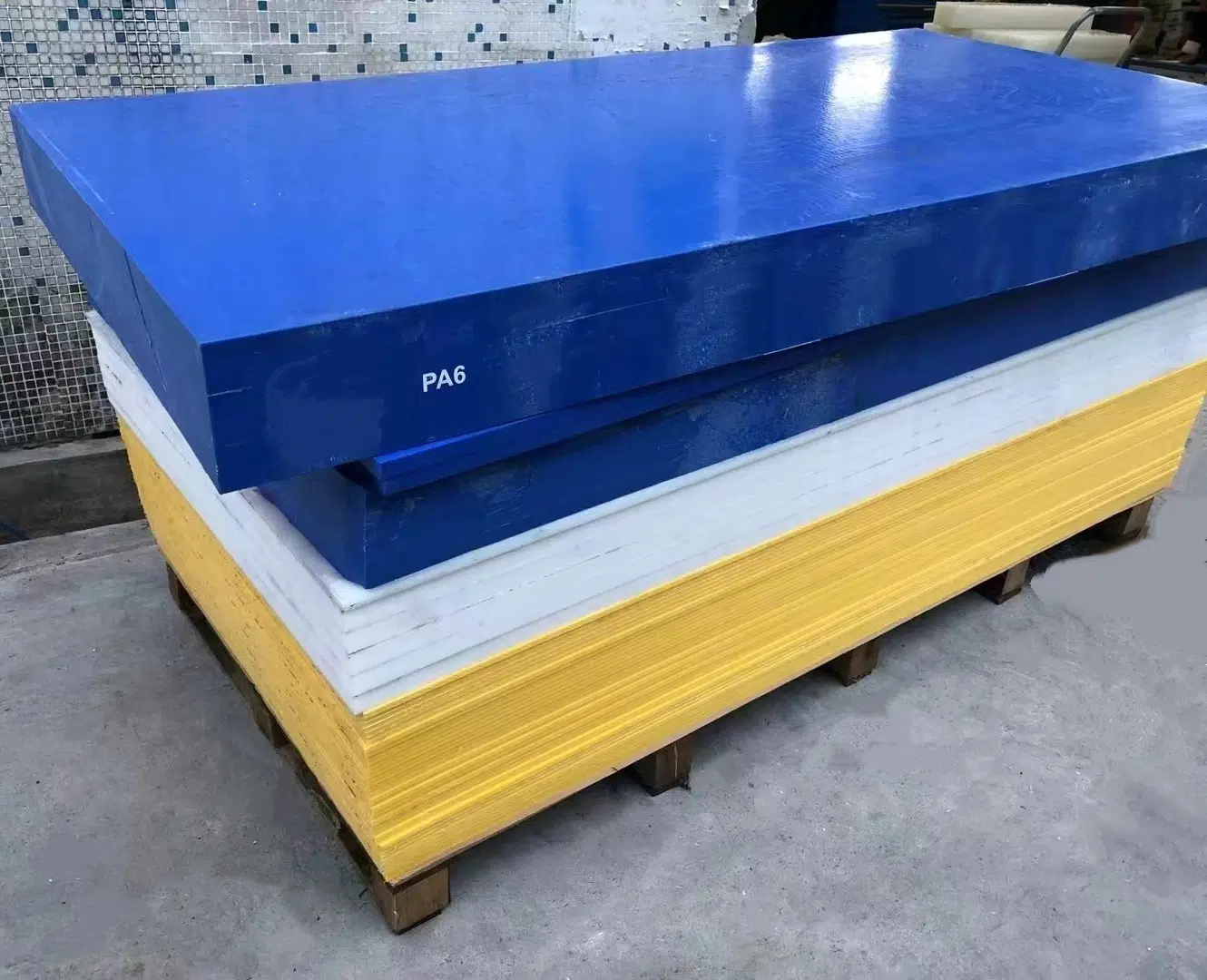
Versatility and strength are both qualities of engineering materials in the fast evolving world, and PA6 sheets have them in spades. PA6 is one of the best performing thermoplastics that is known by it and the sole purpose of common nylon 6. PA6 comes in sheets, rods, and tubes and offers a great deal of toughness, chemical resistance, and machinability.
PA6 is able to easily adapt from loadbearing components to precision guides, whichever the environment. In this article, we shall discuss some science, applications, and future of PA6 sheets and also help you decide if it is a perfect match of your project.
Unlocking the Potential of PA6 Sheets
Both Polyamide 6 (PA6), and also commonly known as Nylon 6, and Polyamide 6,6 (PA6,6) are widely used engineering thermoplastics that due to high strength, durability and cost efficiency possess a number of applications in various fields.
PA6’s original purpose was to provide an alternative to silk, but over the years, it has evolved into much more and plays a critical part in industrial, mechanical, and commercial applications. Mechanically, it has unique properties that give it excellent properties, chemical stability, and thermal resistance.
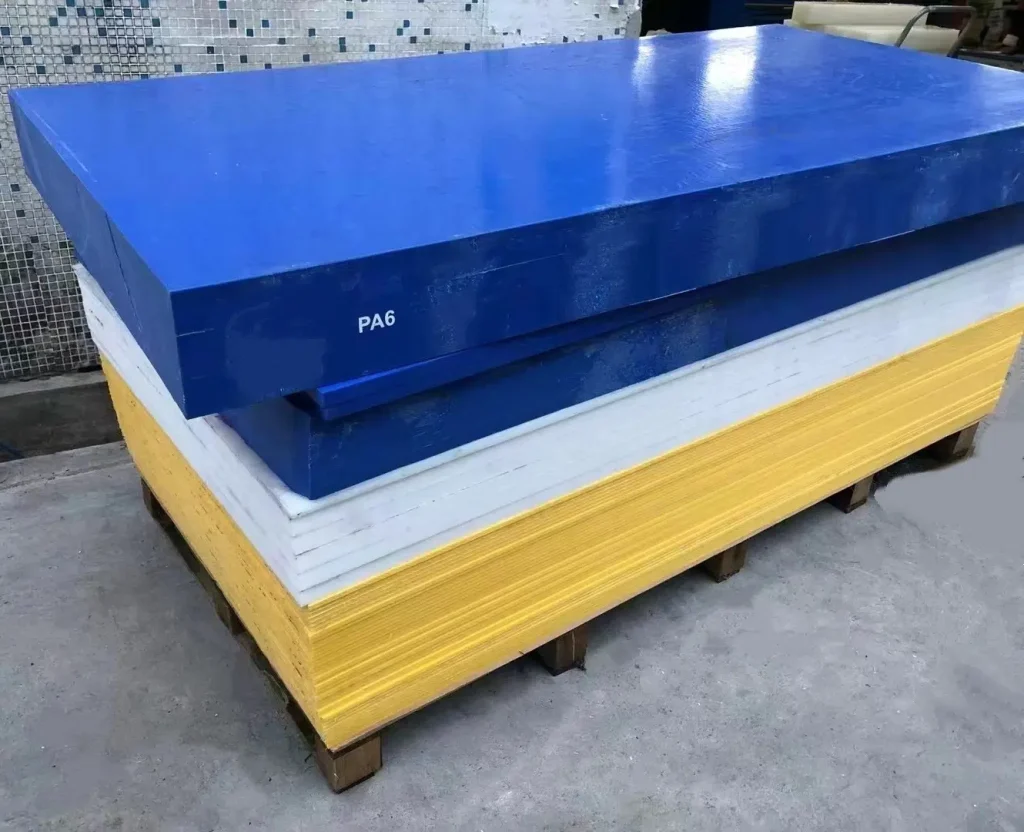
PA6 is offered in rod, sheet, tube and fitted component forms. One example is the versatility of PA6 sheets which can be used for machining and fabricating a certain array of components. Manufacturers commonly cast or extrude these sheets, giving them the ability to fabricate the material properties that will be used.
The ability of PA6 sheet to combine high mechanical strength, toughness and good abrasion resistance with a low weight is what makes it stand out. It is highly stress and friction resistant, and therefore indispensable in the field of automotive, food processing, mechanical engineering etc. In addition, PA6 provides good resistance to oils, fuels and chemicals and hence has greater utility in a wide range of environments.
At the same time, PA6 sheets are essentially an engineer’s reliable and modifiable foundation that can be utilized for both high volume production and specialized applications. PA6 has been shown to be the structural support, sliding surface, or insulating component for any industry.
The Science Behind PA6: Material Insights

It is the chemistry of PA6 that forms the foundation of PA6’s remarkable properties. However, ε caprolactam is a semi-crystalline polymer synthesized through the ring opening polymerization which, therefore, is referred to as a semi crystalline polymer.
So the material becomes long repeating chains of amide linkages which give it its strength, elasticity and resilience. Unlike some other nylons, PA6 can be efficiently synthesized and therefore more readily and cheaply available.
This crystallinity is one of the most important characteristics of PA6. To achieve high mechanical strength as well as high thermal rate and wear behavior, the PA6 crystallinity is very influential. Rigid and dimensional stabilities are improved through high crystallinity, however amorphous regions provide flexibility and impact resistance. In this balance, PA6 has unique set of properties that allows it to be applied in case of applications where both toughness as well as stiffness are important.
PA6 properties as found in the unfilled grades have very good tensile strength, physically ranging from 70 to 90 MPa. In addition, the elongation at break is still good and is able to absorb impact energy without fracturing. Equally impressive is its thermal performance with around 268°F melting point and continuous operating temperature of (up to) 212°F (depending on grade). Also, PA6 can take occasional higher temperatures without deforming.
PA6 has good electrical properties such as insulation and dielectric, and thus is suitable for electrical and electronic applications. It also is adept at damping vibrations, making it an appreciated specification in mechanical assemblies.
One of the main reasons that PA6 is often preferred over other polyamides, PA66, for instance, is its better impact resistance and easier processing. A lower processing energy requirement and shorter filler residence time is achieved because of both a lower melting point and higher fluidity for PA6 over PA11. For a wider range of applications, PA6 may be more forgiving and versatile but is less stiff and gives slightly poorer thermal performance.
The material insights shown here help to explain why PA6 is still a staple in modern engineering. The strength, toughness, and adaptability of its blend make it a strong solution to a lot of design problems.
Formulations That Fit: Grades and Modifications
PA6 is not a one-size-fits-all material. The base formulation can be modified to enhance some specific formulations, so that the performance can be tailored for use in specific applications.The most pure form of the material is referred to as unfilled PA6, which is high strength, has good fatigue resistance, and is moderate in impact resistance. It is popular for use in general applications in which machining ease and wear resistance are needed.
Glass filled PA6 is introduced in order to increase rigidity and thermal resistance. This grade contains 15 % to 30 % glass fibers that significantly increases tensile strength and dimensional stability to be used as structural components and metal replacement. Nevertheless, gaining in stiffness could mean losing impact resistance and machinability as well.
The oil-filled PA6 variants are imposed specially to minimize friction and enhance the wear properties without the help of external lubrication. Unfortunately, these grades are highly beneficial when access to the part is limited such as in bushings and bearings.
MoS₂ filled PA6 is another common enhancement variant which contains molybdenum dithiolone for enhanced wear resistance and lowering the coefficient of friction. For high load, low speed, smooth movement and long part life application, this formulation is pretty great.
Other versions of PA6 are also available, heat stabilized and impact modified. PA6 resists thermal degradation when heat stabilized and can be further modified with rubber or elastomer additives to impact modify to prevent brittle failure as well as absorb shock loads.
Moisture absorption is a critical consideration in all grades. Because PA6 is hygroscopic, it will absorb moisture from the environment. Although this gives it a degree of flexibility and impact strength, too much moisture can undermine dimensional stability as well as mechanical strength. There are certain modified grades that have been engineered with low moisture uptake and are more suitable for humid or underwater environment.
The last, PA6 is highly customizable material using various formulations; it is adaptable, i.e. in production and in use.

From Resin to Reality: Production and Fabrication
The transformation of a caprolactam resin to a high performance PA6 sheet, requires high manufacturing techniques to yield the quality and functionality of the final product.
There are two primary methods of PA6 sheet production, extrusion, and casting.
The polymer is melted, extruded through a flat die and air cooled and cut into sheets. It is a cheaper method to produce sheets with predictable properties as in continuous production. However, internal stresses may be generated from extrusion that can affect the machining and even long term dimensional stability.
Anionic polymerization of caprolactam directly into sheet molds produces sheet PA6. It helps in forming sheets of lower internal stress, better machinability and better dimensional stability. Uniform density and good surface finish is what counts for thick parts or large scale components
and thus cast sheets are often preferred.
After production, post processes like cutting, welding and CNC machining can shape to customer’s specifications. PA6 sheets cut easily with standard stainless, carbon or titanium saws or waterjacks, are fin compatible with precision CNC machining and thus are ideal for complex geometry and tight tolerance manufacture.
The joining of components from PA6 is possible with the methods of hot gas or extrusion welding, however, material specificity and oxidation in the process have to be considered.
PA6 sheets have standard sheet thicknesses from 0.5 mm to 100 mm, widths up to 1000 mm, and lengths custom depends on sheet cut or custom length. The tolerances follow DIN or ASTM standards but can be adjusted for special orders.
However, PA6 sheets are customizable through options such as pre-drilled holes, cut-outs, or integrated inserts which make them perfect to match many areas of many different industries.
Built for Tough Jobs: Performance Under Pressure
Applied to high level stressed applications, PA6 sheets excel. Their mechanical profile allows them to be used for jobs which need to be done repeatedly, under heavy friction and environmental exposure.
As a characteristic of PA6 tensile strength is in the range of 70–90 MPa for unfilled grades and up to 180 MPa for glass filled types. It enables loading the PA6 as a load bearing material.
Fatigue resistance is another critical fact.
The presence of the aromatic rings stabilizes the PA6 to maintain strength over the long term when cyclic loaded. Its strength makes it suitable for gears, pivots, and dynamic parts and may fail by material failure in more plastic materials when constantly moving.
It exhibits equally high abrasion and wear resistance. Since PA6’s coefficient of friction is quite low, especially when filled with oil or MoS₂, it provides satisfactory results in sliding applications without requiring repeated lubrication. Its resistance to galling, pitting and scuffing extends component life in particularly exacting milieux.
Furthermore, PA6 has good dimensional stability, particularly in the cast form or filled version. Truth be told, it does absorb moisture, but in enough measure to cause a very slight expansion, which designers can take into consideration in engineering tolerances. These effects are mitigated by filled or stabilized grades.
The second aspect of a performance of a material is creep resistance—the material’s ability to stay in form under prolonged stress. On PA6 moderate to high resistance is found, especially in short term applications or reinforced grades are employed.
Finally, due to its properties, PA6 can be used as metal replacement in many mechanical systems. biedeit a balance of strength, corrosion resistance and the ease of fabrication metals are not able to do all the time especially if weight reduction is a consideration.
Sector Spotlight: Where PA6 Sheets Shine
PA6 sheets are a useful material across an enormous variety of industries as they possess such versatile properties.
Gear, bearing and bushing applications are usual for Mechanical Engineering. Self lubricating variants of PA6 make this material the seemingly perfect choice for wear and rotational stress heavy moving parts. Another advantage is the lower noise level than the metal parts for precision machine work.
In the automotive application, PA6 is used in fuel system components, air intake manifolds, cable housings and under hood components. Reliability is assured in harsh vibration and temperature environments under exposure to fuels or lubricants due to its heat resistance and chemical stability. Glass filled PA6 may be used for structural parts that require high stiffness.
PA6 grades are FDA approved and are useful for food processing industries. For cutting boards, conveyor components and guide rails, these sheets are used. Offering ease of cleanliness, resistance to oils, and little particle shedding, they are suitable for hygiene critical environments.
Guide rails, cams and wear pads use PA6 in the textile and packaging machineties. And its excellent wear characteristics and reduced friction mean there is no material damage and their equipment life is extended.
Some renewable energy sectors use PA6 sheets in turbine bushings, housing and insulation components of wind power. PA6’s strength to weight ratio allows for overall mass reduction and strength in hostile outdoor environments for these parts.
PA6 is also used in the electronic and electrical industry for use in the area of insulating components as well as in cable glands due to it dielectric properties and flame retardant formulations.
These applications are so diverse and utilize different properties of the PA6, that is, load bearing, sliding contact, or chemical exposure.
Comparing the Field: PA6 vs. the Competition
When picking the proper engineering plastic, you want to select on the premise of performance, cost and analysis to requirements. PA6 is a stand out, dependent upon the issue it relates to and not just PA66 and POM (Polyoxymethylene) and PTFE.
PA6 vs. PA66 (Nylon 6 vs. Nylon 66)
Overall, PA66 has better thermal resistance and slightly higher stiffness, lower moisture absorption. PA6 is also much easier to process, and if a cheaper substitute is desired, it can also come at a lower cost, though it does not have as good of an impact resistance. In the latter case, PA6 is the better choice if toughness, flexibility, and simpler fabrication are required.
PA6 vs. POM (Acetal/Delrin)
Low friction is provided by POM compared to unfilled PA6, and it has also very good dimensional stability and a low moisture absorption coefficient. However, POM is less impact resistant and less brittle than PA6. POM is somewhat suitable for tight tolerance and precision components while PA6 is used more in dynamic load bearing application with shock or vibration exposure.
PA6 vs. PTFE (Teflon)
PTFE has better chemical resistance and lowest coefficient of friction of any plastic, but is soft, expensive and difficult to machine to precise dimensions. The use of PA6 gives it better mechanical strength profile and easier fabrication.
In the end, PA6 is a good compromise between performance, cost and versatility, which makes it the first choice of engineers in any industry.
Future-Proofing: Innovations and Sustainability
A transformation is underway for PA6 to be acceptable for materials industry as an environmentally responsible and innovative material.
PA6 now is recycled and available with similar mechanical properties provided by virgin material. Recycled PA6 is sourced from industrial scraps and post consumer waste such as fishing nets and carpets to realize circular economy models and minimize the dependency of carbon footprint within manufacturing processes.
An additional bio-based development is the reproduction of PA6 from renewable raw materials. These are by no means widely used yet, but if they live up to their promise, they will take the place of petroleum in its use as a feedstock for a more sustainable approach to engineering.
Certain properties of PA6 are being improved by technological advancements realized in nano fillers and hybrid composites. More specifically, adding graphene or carbon nanotubes increases electricity conductivity, thermal stability and wear resistance, allowing the use of graphene or carbon nanotubes for new electronic and aerospace applications.
Conversely, additive manufacturing (3D printing) is beginning to search out PA6 based filaments to make high strength functional parts. While extrusion and casting are still traditional methods but are increasingly displaced by 3D printing and new product designs require freedom of design.
Bright new PA6 is coming, with classic strength, and with cutting edge capabilities ready to join the band.
Bottom Line: PA6 Sheets as the Backbone of Modern Design
PA6 sheets quietly perform under pressure, stress, or time from automotive systems through to factory floors, food processing lines, or even wind turbines.
Its key strengths—mechanical durability, thermal resilience, impact resistance, and adaptability—make PA6 not just a material of the present, but one well-suited for the future.
Tailoring can be achieved for strength, wear, lubrication, and temperature, so PA6 gives engineers the power to solve real-world problems without compromise.
PA6 sheet provides the versatility that you need whether trying to produce a high load bearing, wear resistant bushing, or structural bracket for corrosive environments.
Among the most dependable, innovative, and sustainable choices for modern engineering, PA6 proves true whether in the world where materials matter more than ever.


