
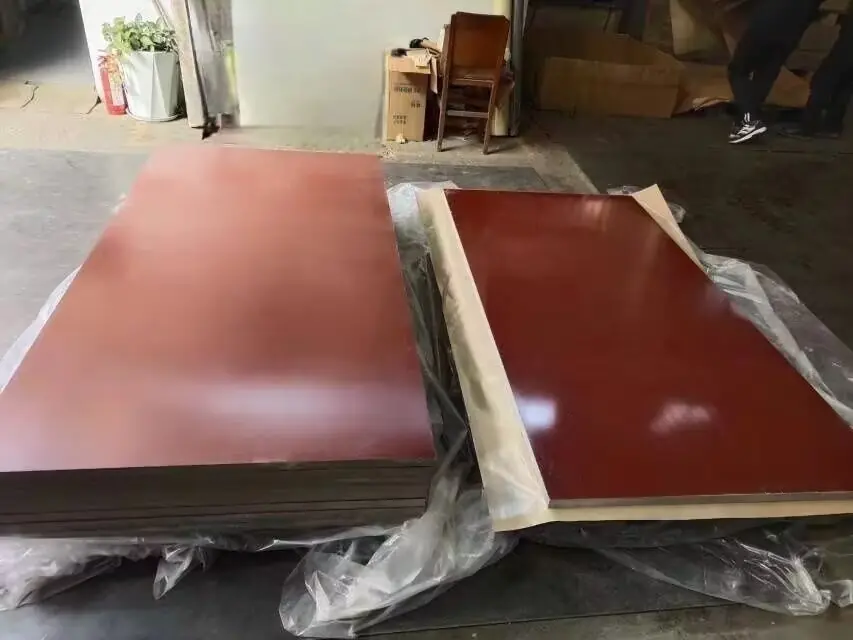
Phenolic sheets are thermoset plastic composites that are based on phenolic resins and have a variety of substrate material, used as a high performance laminates and are usually in form of paper or cotton cloth. They are synthetic polymers and are referred to as these resins and are well known to have excellent heat and chemical properties making them very durable and excellent at insulation. The most typical two grades of phenolic sheets are 3021 and 3025.
The base material used in grade 3021 is paper therefore making it ideal in use as electrical insulation and light mechanical applications. Grade 3025 on the other hand is also developed using cotton cloth which has added mechanical strength, wear resistivity hence can be used in more demanding surroundings.
These phenolic laminates are very important in the electrical, mechanical and structural uses in various industries such as the automotive, aerospace, electronics and heavy machinery. The guide provides an in-depth discussion of the properties, use of phenolic sheets 3021 and 3025 and their differences. The type of manufacturing process they undergo, the merits and demerits they possess, machining type and recent trends will also be talked about.
What Is a Phenolic Sheet?
Phenolic sheets are designed materials composed of an alternating series of layer of substrate material such as paper or cotton cloth sandwiched with an impregnation of phenolic resin that is stabilized by application of heat and pressure. Phenolic resin is a kind of thermosetting resin which is irreversibly chemically changed upon curing and forms a stable rigid structure.
The production process is estimated as the layering of resin-impregnated sheets of the bottom material and exposing them to the pressurized heating with a controlled temperature parameter. The sheets once cured attain the form of a solid dense material with definite electrical and mechanical property characteristics.
Sheets made of paper (such as 3021), are well insulating electrically and may be used in less demanding mechanical applications. Sheets made of cotton cloth (such as 3025) have much greater impact strength and wear resistance.
These types of laminates are classified according to performance and material composition in international classification systems that include, the GB/T (China), the IEC (International Electrotechnical Commission) and the NEMA (National Electrical Manufacturers Association), which makes their use worldwide more homogenous and safe.
Overview of 3021 Phenolic Paper Sheet
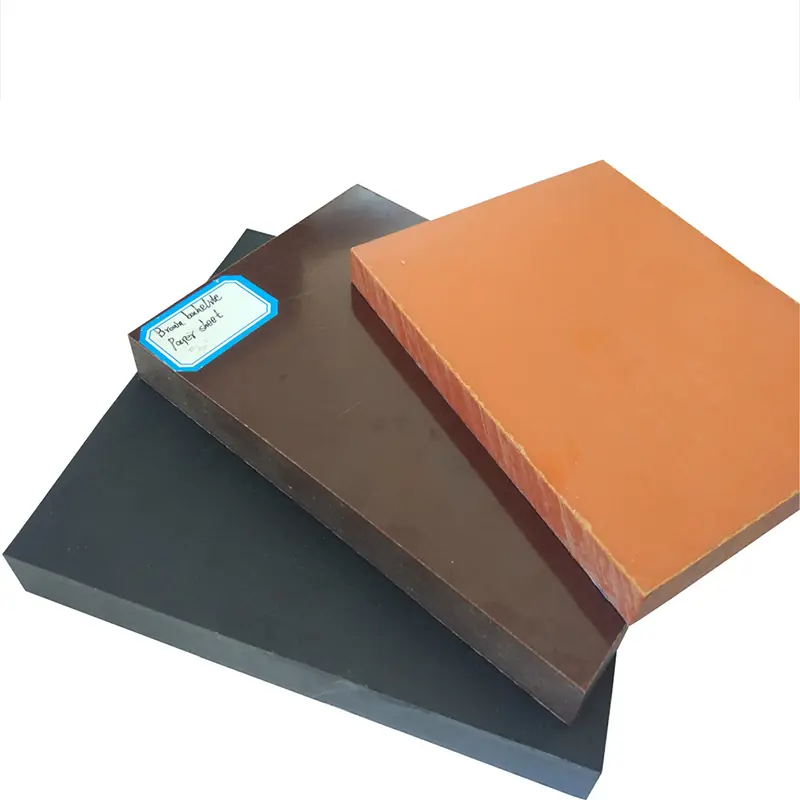
The 3021 phenolic sheet is made of insulating paper of high grade which is impregnated with phenolic resin to be cured into hard laminates. Such a combination provides electrical insulating capability, dimensional rigidity and machinability that makes it common in electrical and light mechanical applications.
The major features are:
. Excellent stiffness and strength of construction
. Great dielectric potentials
. Smooth even surface
. Cutting, drilling and shaping without much effort
The 3021 sheet is normally available in brown,black or orange color variations relative to the base material and method of curing it. These sheets provide medium heat resistance and they tend to withstand higher temperatures of steady use, which may reach 120℃. They are however moisture sensitive and not very suitable in high humidity conditions.
Due to the cost benefit and proven insulation properties, the 3021 phenolic sheet is widely applied in switchboards, insulation sheets, circuit stackings and transformer components. It is especially useful where weight and electrical performance are more important than mechanical strength.
Overview of 3025 Phenolic Cotton Cloth Sheet
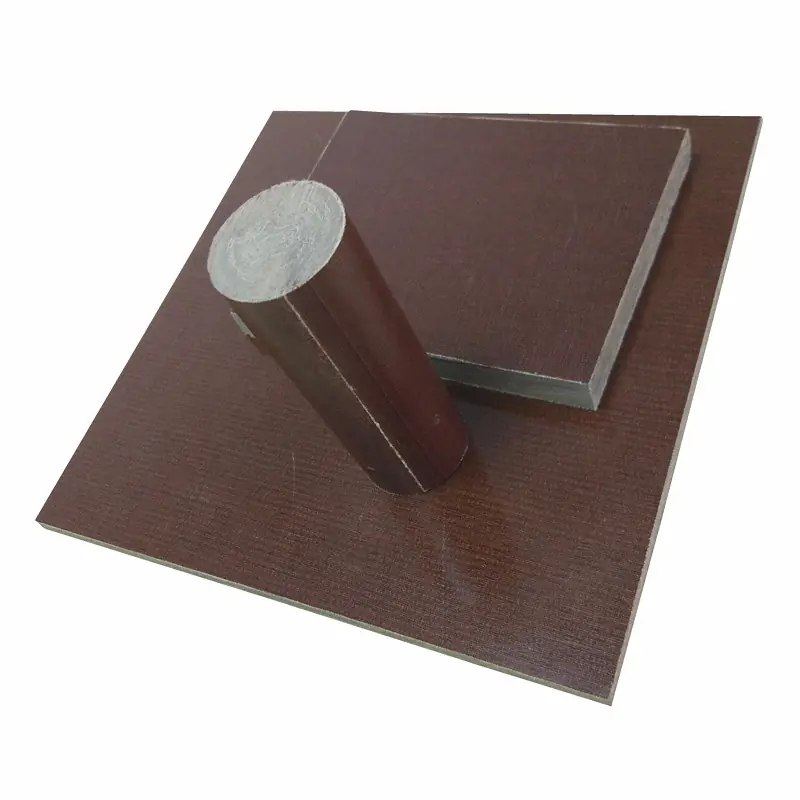
The phenolic sheet 3025 is produced from layers of woven cotton fabric with the impregnation of the material phenolic resin. On curing, the produce is more hardy, flexible, and much more impact-resistant than its paper counterpart.
Characteristics include:
. Better mechanical strength
. Good resistance to wear and effect
. Improved strength and resistance to wear Enhanced strength and resistance to wear
. Its usage is appropriate in heavy industrial use
This grade is usually darker in tone than other grades of brown and can be textured or semi-gloss parchment depending upon both the particular fabric and processing procedures. It has a greater stress tolerance and can work at higher temperatures reaching 130℃.
Examples of usage are gear blanks, bearing retainers, structural pieces and electrical components with high friction requirements. It is also split-resistant due to its reinforced fabric, and is more machinable (as a threaded or loaded part) than other plastics.
Key Properties Comparison: 3021 vs. 3025
| Property | 3021 (Paper-Based) | 3025 (Cotton Cloth-Based) |
| Electrical Insulation | Excellent | Very Good |
| Mechanical Strength | Moderate | High |
| Wear Resistance | Low | High |
| Impact Resistance | Low | High |
| Moisture Absorption | Moderate to High | Moderate |
| Machinability | Easy | Moderate to High |
| Dielectric Strength | High | Medium to High |
3021 can be used in electrical insulation tasks but cannot bear high-stress conditions. 3025 is stronger and thus can be used in mechanical and structural applications where resistance to impact and abrasion is of important.
Manufacturing Process of Phenolic Laminates
Production of phenolic sheets is a strictly monitored multi-layered process, which aims at providing optimal performance in electrical and mechanical demand. These are the steps in sequential order:
1. Raw Material Preparation
Prepare phenolic resin (40%-60%), foaming agent (5%-8%), curing agent and other raw materials in proportion. The raw materials need to be sieved and the metal impurity content is ≤0.1%.
2. Mixing Ingredients
The resin and foaming agent are mixed in a high-speed mixer, and the curing agent is added when the temperature is controlled at 45°C. The mixture is stirred for 8-12 minutes until the viscosity reaches 800-1200 mPa.s.
3. Foaming Molding
The mixed material enters the constant temperature box, with an initial temperature of 60-70℃, and is kept constant for the first 20 minutes, then raised to 80-85℃ to promote foaming, and finally cooled to 55℃ to stabilize the structure, with a total duration of 90-120 minutes.
4. Curing Treatment
Use staged heating method: 50℃ for the first 30 minutes, then 10℃ every hour to a maximum of 110℃, and extend the curing time by 2 hours for every 10mm increase in thickness.
5. Cutting and post-processing
Use CNC gantry saw to cut the board (usually 900×600mm in size), and recycle the scraps; after cutting, use 120-grit sanding belt to grind the surface and remove 0.2-0.5mm of the surface layer.
6.Quality inspection
The inspection indicators include density (error ±5%), flame retardancy (afterburning ≤5 seconds), compressive strength (20mm thick ≥150kPa) and dimensional stability (70°C environmental deformation ≤2%).
Standard Sizes and Customization
The conventional dimensions of phenolic sheets are manufactured according to panel dimensions e.g:
1020 x 1220mm; 1020 x 2020 mm;
1220 x 2440mm; 1030 x 2070 mm
Common thicknesses are between 0.5 mm and more than 50 mm, but thinner or thicker versions can be produced on order.
Options of customization include:
. Precision thicknesses Special thicknesses
. Flame-Retardant or antistatic grades
. Surface textures or machined coverings
. Identification of the material by color coding
This versatility is the reason why phenolic laminates are a favorite material used in various industries such as in electrical engineering, transportation, tooling as well as heavy manufacturing industries.
Applications of 3021 Phenolic Paper Sheet
The 3021 phenolic sheets are known to have great electrical insulation capacities, lightness and easy machining characteristics. These facts make them high preference in a variety of industries where non-conductive and structurally stable materials are critical. The most important uses of 3021 sheets with their enlarged description are given below:
1. Insulation Electrical Boards
Highly used in the production of the insulation board, which is used in electrical control panels, distribution boxes and protective enclosures, are 3021 sheets. They serve as stable insulators to maybe prevention of short circuit, arcing, or loss of current. They are thick and their dielectric strength is high hence safe and performs well even in a high-voltage environment.
2. Switch Panels and Gaskets
Owing to their strong, but very lightweight construction, 3021 laminates can be effectively used in switchgear assemblies and insulating gaskets. The sheets would be cut easily into desired accuracy shapes that would fit into tight enclosures or piled to come up with extra thickness. They are not prone to warp at reasonable thermal or mechanical loads.
3. Transformer Components and Motor Components
In transformers, condenser, electric motors, and magnetic coils 3021 sheets are often used as spacers, support insulator, and coil separators. They absorb very little moisture and exhibit steady electrical resistance in proving long-term reliability of the equipment. The sheet is also creeping free and tracking free, a very necessary feature of durable electrical isolation.
4. General-Purpose Insulating Parts
Such insulating uses of 3021 phenolic laminates include protective liners to flat or round shapes inside electrical cabinets, to bases plates and separators, and many other general-insulating requirements. They can be of several thicknesses and allow custom designs as well as mass production.
Because of its cost effectiveness, machinability and reliability in use, 3021 is frequently the material of choice among manufacturers who may want to produce high volume insulating parts where high mechanical strength is not the most important factor, but rather electrical insulation.
Applications of 3025 Phenolic Cotton Cloth Sheet
The phenolic sheets have the capabilities of working in some places that have extreme application and require the sheet to be in a high demand situation, both mechanically and electrically insulated. These laminates are laced up with layers of woven cotton cloth and cured by phenolic resin which makes them ideal to suit a high degree of industrial and mechanical, because of a balance in toughness, impact resistant, and maintaining dimension stability. Some of the major applications are:
1. Mechanical Parts
This high mechanical performance quality of 3025 sheets makes them ideal in a fabrication of bushings, spacers, bearing retainers, wear pads, as well as thrust washers. The parts are commonly applied in rotating or sliding systems with moderate and high levels of friction. Contrary to metals, 3025 parts are non-corrosive and provide reduced noise during operation, thus an effective and efficient alternative where there is minimum lubrication involved.
2. Friction Wire Components
Some 3025 are used in Eric motors and generators and in switching apparatus 3025 is commonly used in arc chutes, brush holders, and contact insulators. The advantages of the applications by utilizing the material are that it will endure unremitting motion, sparking and warm, without deterioration. The fabric reinforcement also ensures minimal chances of cracking or chipping due to its use.
3. Structural Components
Due to its strength and fatigue resistance, the 3025 sheets are quite often incorporated in structural assembly in aerospace, rail, automotive, and heavy machinery. Support brackets, mounts, joint spacers and insulating panels in high stress assemblies serve as examples. The material does not lose its strength when it has a different temperature or when vibrated.
4. Fixtures and Tool Handles
It is a semi-flexible but strong material which makes it a good choice in tool handles, jigs and fixtures. The substance allows a strong grip and natural shock absorption, not to mention that it also resists frictional or other source-induced heat. This makes it favorable in applications such as in workshop, production line as well as in maintenance stations.
Advantages of Using 3021/3025 Phenolic Sheets
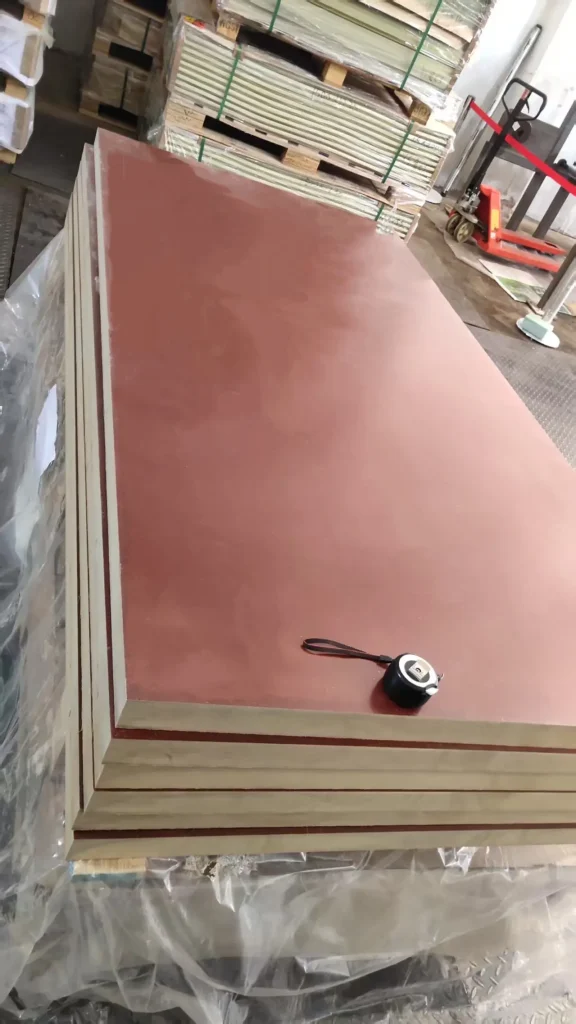
Phenolic sheets available in form of paper based (3021) or cotton-cloth based (3025) provide tough package of advantages, which make it unavoidable to be used in many industries like electrical engineering, transportation, manufacture and other. They are not only practical but also economical to meet various demanding applications as a result of their performance qualities.
1. Dimensional Stability
Among the notable phenolic sheet characteristics, it is possible to mention the capability to resist shape and dimension changes during the operation under mechanical stress and thermal cycles. Contrary to the thermoplastics that are prone to deforming due to heat or pressure, the phenolic laminates do not lose their structural integrity and dimensions. Then they are very dependable where stability is at a premium, e.g. in electrical housings, or precision mechanical assemblies.
2. Cost-Effective
The cost of phenolic sheets is rather good, as well, particularly as compared to high quality composite materials or metals. They are economical and one would prefer them when they are used to mass produce insulation panels, switchboards and mechanical components. They are not as expensive as their competitors and also deliver good work, considering their relatively lower prices, they are middle ground between price and performance.
3. Excellent Machinability
It is simple to cut, drill, mill, or saw these sheets with the normal woodworking or metalworking tooling. Such machinability enables productive prototyping, rapid custom manufacture and large scale production at very low tool wear levels. 3021 and 3025 both may be shaped to close tolerances and holes or threads may be turned on easily when later mounting or fastening is required.
4. Long Lasting and Light Weight
They are high in strength but low in weight, as phenolic laminates; suitable where weight savings matter, such as aerospace, automotive or hand-held tools. They are strong to crack and bend and have strength against compressive stresses; however they are also flexible and light to work with and install.
5. Chemical and Solvent Resistance
These sheets have good resistance to oils, greases, alcohols and most industrial solvents. This resistance assists in the avoidance of material deterioration in reactant environments e.g. in transformer oil baths or partitions of machinery components exposed to lubricants. They are also stained and wear resistant and so have the capacity to last longer with less maintenance.
Limitations and Considerations
Although phenolic laminates share peculiar strengths, they also have weaknesses:
. Moisture Sensitivity: In particular, paper 3021, being moisture-absorbing and degradable.
. Thermal Limitations: Cannot be used under very high temperatures (>150℃).
. Brittleness: The laminates based on paper can break when they are impacted unexpectedly.
. Oil Absorption: In the long run, cotton-based 3025 is capable of absorbing oil and this can influence performance.
The choice should be according to the application requirements and atmosphere.
How to Select Between 3021 and 3025?
The decision between 3021 and 3025 is made up by:
. Application Load: 3021 to 3025 is low mechanical loading and high-load conditions. For high dielectric applications, 3021 is better.
. Friction and Impact: 3025 should be selected where parts are subjected to motion or to mechanical shock.
. Price: The average price of an ordinary person is less than 3021.
. Certifications: Either verify any industry standard such as RoHS, UL, and so on compliance.
Phenolic Sheet Machining, Cutting, and Shaping
Phenolic laminates are conveniently manufactured utilizing:
. CNC Machines, Saws and Drills: Recommended carbide tipped tools.
. Dust: Phenolic dust should be controlled by using vacuum systems since it irritates skin and lungs.
. Odor considerations: Odors of phenolic materials can be cut with a formaldehyde smell.
. Edge Finishing: Sanding and deburring aid in finish and assembly.
Maintenance and Lifespan
In order to increase the life of phenolic sheet:
. Storage: Store flat in a dry and non-humid place.
. Cleaning: washing with soft detergents; solvents which dissolve phenolic resin must be avoided.
. Life span: Depends on use but is on average, 10 20 years when used in regular conditions.
Market Overview and Leading Suppliers
The market share of phenolic laminates is indeed a billing entity with the driving factors behind the industrial automation and electrification.
There are major producers:
Hylam (India)
RÃ launched (Germany)
China National Insulation Material Group
Tufnol Composites (UK)
Suppliers will provide the sheet material bulk form as well as cut to size form, and online availability and customization can be done by distributors.
Environmental and Safety Considerations
. VOC Emissions: The phenolic resins have volatile organic compounds during curve.
. Recycling: At some lower rate; many products are downcycled or burned.
. Worker Safety: Protecting Workers PPE must be worn when machining to prevent fumes and dust overexposure.
Safe production and use is guaranteed with proper handling and ventilation of the drug.
Future Trends in Phenolic Laminates
The emerging developments are:
. Hybrid Composites: mixing of phenolics with carbon or glass fibers.
. Improved Flame Retardants: For commercial aircraft and electronic products.
. Integration in Electric Vehicles: Insulation and battery-housing of EVs.
Their utility in solving the challenges in contemporary engineering continues to increase with innovation.
Bottom Line
Phenolic sheets especially grade 3021 and 3025 continue to be useful material in electrical and mechanical engineering owing to the special qualities possessed by the materials. Although 3021 is better when it comes to insulation, 3025 would be better on the matter of its mechanical durability.
Choosing the desired grade may rely on your application requirements, such as electrical performance, mechanical loading, finances, environment exposure. Constantly refer to datasheets and approved suppliers so that you can get the most apt selection of your project.


